
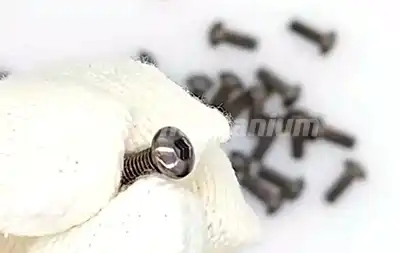
The primary difference lies in size and application specificity. A Mini titanium screw typically ranges from M0.6 to M3.0 in diameter with lengths between 1 mm and 20 mm, engineered for precision-critical applications such as dental implants, orthodontic anchorage, and micro-mechanical assemblies. Regular screws span broader dimensions—commonly M3.0 and above—designed for general construction, automotive assembly, and heavy machinery where load distribution across larger contact areas is paramount. Mini screws prioritize biocompatibility and minimal invasiveness, whereas regular screws emphasize bulk load-bearing capacity.
Understanding Mini Screws and Regular Screws
Defining Mini Screws and Their Specialized Roles
When it comes to size, mini titanium screws are carefully made fasteners that are usually between M0.6 and M3.0 thick and 1 mm to 20 mm long. Titanium is better than stainless steel because it is tougher for its weight (about 4.43 g/cm³ vs. 7.99 g/cm³) and works well with living things, which is important for dental and medical implants. A stable TiO₂ oxide layer forms on its own when oxygen is present. This layer automatically protects against rust, so most of the time, no extra surface coatings are needed. These screws are used for special jobs in dental implantology, orthodontic temporary anchorage devices (TADs), micro-electronic assemblies, and high-precision instrumentation that needs to be light and take up little room.
Characteristics of Regular Screws
There is a big group of fasteners called regular screws. Their sizes range from M3.0 to much larger. Most of the time, they are made of aluminum alloys, carbon steel, or stainless steel. They are made for a lot of different industrial uses, like building frames, making machinery, car assembly lines, and home goods. In the making process, cold heading, thread rolling, and heat treatment are used to get the mechanical properties that are needed. Mini titanium screws need to be very precise and biocompatible. Regular screws, on the other hand, care more about their cost-effectiveness, bulk tensile strength, and shear resistance. Loads are spread out over a bigger area because their touch surfaces are bigger. When used in structures, where a lot of stress could weaken the joint, this makes them good.
Key Differentiators in Design and Functionality
Not all screws are the same. Mini titanium screws are different in some important ways. They need to have the same clamping force but a much smaller diameter because they are so small. This needs accurate thread geometry and better qualities for the material. Titanium mini titanium screws can pull apart more than 900 MPa, which is as strong as or stronger than many regular stainless steel screws, even though they are very small. Compatibility with living things is another important difference. Titanium does not react with anything, so it can be put in direct contact with human tissue. Most other screw materials, on the other hand, damage the immune system or rust in physiological settings. The way the threads are made is also very different. Self-tapping or self-drilling features on mini titanium screws make them easier to put in soft materials like bone tissue. For regular screws, you need to make holes first and make sure the thread contact depth is as high as it can be.
Material Properties and Specifications: Mini Titanium Screw vs. Regular Screw
Titanium Alloy Advantages in Mini Screw Applications
The mini titanium screw market is led by Ti-6Al-4V Grade 5, a titanium alloy that meets ASTM F136 and ISO 5832-3 standards and has its own certain qualities. There are 5.5 to 6.75% aluminum and 3.5 to 4.5% vanadium in the metal. It can be stretched to more than 960 MPa and can take about 880 MPa of force. Spectrographic analysis done during quality control confirms this exact balance of elements, which sets aerospace-grade titanium apart from Grade 2 titanium types, which are less strong. The material is strong at -200°C to +450°C, which is very hot and very cold. On the other hand, it can be used to both freeze and sterilize medical supplies at high temperatures. Because they are not magnetic, they can be used with an MRI. This is very important in modern hospitals, where magnetic interference could mess up diagnostic images or put patients at risk.
It doesn't rust as easily as other types of stainless steel, especially in chloride-rich places like body fluids, sea air, and equipment used to process chemicals. Salt spray tests, according to ASTM B117, show that colored surface treatments (like anodizing or PVD coating) stay sticky and look good for more than 1,000 hours. Problems happen when different metals touch in wet places and galvanic rusting takes place. This security gets rid of those problems.
Detailed Specifications of Mini Titanium Screws
Wisdom Titanium makes mini titanium screws that are safe for the following situations:
- Material Composition: Ti-6Al-4V Grade 5 titanium alloy
- Diameter Range: M0.6 to M3.0, and sizes that don't fit can be made to order.
- Length Options: 1 mm to 20 mm, so they can be used for a lot of different things.
- Thread Standards: ISO metric thread class 6g standards, which means it can be used with fasteners from around the world.
- Surface Treatments: Anodizing (Type II and Type III), ground to make the surface smooth, or given a PVD finish to make it last longer and look better.
- Tensile Strength: At least 900 MPa, as shown by tough tests done on every batch of production.
- Operating Temperature: -200°C to +450°C; a thermal cycle has been used to try and prove it.
To get tolerances of less than 0.02mm in the production process, CNC precision machining is used. This is very important for medical uses where accurate readings have a direct effect on how well a patient does. With laser profiling, the thread geometry is checked to make sure it will reliably engage with tapped holes or self-tapping insertion into a variety of substrates, such as bone tissue, engineered plastics, and aluminum housings. The major diameter, minor diameter, and pitch are all checked.
Comparative Analysis with Regular Screw Materials
Even though they weigh almost twice as much per unit volume, regular screws made from 316L stainless steel only have yield strengths of about 170-310 MPa. This is a lot less than titanium mini-titanium screws. Heat treatment makes carbon steel screws harder, but they can still rust and need coatings to protect them, which add weight and make it more likely that they will break. Even though aluminum alloy screws are lighter, they lose strength and thread durability after being used a lot.
The tensile strength of titanium is about 110 GPa, which is in the middle of steel and aluminum. This makes it better for uses where it's important to spread stress across connected surfaces. This makes it less likely that hip implants will protect against stress, which helps the bone heal faster than stainless steel implants that are harder. Using the Vickers or Rockwell C methods to test the surface hardness of titanium Mini titanium screws that are made correctly shows that they don't bend the drive socket. Screws often break in this way when the Torx or hex sockets round out under installation torque. This can happen if the materials aren't good enough or the heat treatment isn't done right.
Application Comparisons: When to Choose Mini Screws vs. Regular Screws?
Medical and Dental Applications for Mini Titanium Screws
Mini titanium screws have changed the way that minimally invasive surgeries are done. When someone gets braces, temporary anchoring devices (TADs) are used. They are made of screws with a diameter of M1.4 to M2.0 that are put straight into the alveolar bone. These screws give teeth set places to move so that they don't need to touch nearby teeth. The small width keeps the tissue from getting hurt and speeds up the healing process. Because titanium is osseointegrated, bone cells can attach straight to the screw surface. This makes the implant more solid while treatment is going on.
In dental implantology, mini implants that are a bit bigger (M2.4 to M3.0) are used for people who don't have enough bone volume for normal implants as short-term or long-term fixes. Because the surgery takes up less space, there is less chance of getting sick, and some cases can be loaded the same day. This is better for the patient and speeds up treatment. In craniomaxillofacial reconstruction, broken facial bones are fixed with microplate systems held together by M1.0 to M1.5 screws. Regular hardware would make the surgery look bad or not work right.
Automotive and Motorsport Performance Applications
Mini titanium screws are used by racing teams and shops that make changes to cars to connect parts that need to be light, like brake caliper assemblies, upgraded wheel hub bolts, and internal trim. Each screw loses 60% of its weight when you switch from steel M2.5 x 8mm screws to titanium ones. This might not seem like a big deal, but when you add up all the fasteners in a car, it saves a lot of weight. It is very hard for Ti-6Al-4V Grade 5 to wear down, so it can handle the repeated loads and vibrations that happen in racing, where a broken part can be very bad.
This is also true for high-performance motorcycles. Many different types of bolts are used on cars. These include bolts that connect brake discs, bolts that hold hydraulic brake lines in place, and screws for sprockets. When it comes to temperature expansion, titanium is very close to aluminum when it comes to brake parts. This means there is less differential expansion, which can make regular steel fasteners come loose. That it doesn't rust is very helpful for adventure and off-road bikes that have to deal with mud, water crossings, and road salt.
Industrial and General Purpose Regular Screw Applications
Sometimes it's more important to save money and have regular screws on hand than to make sure they are the right weight. M6 to M20 screws and bigger are used to build with structural steel, put together heavy machinery, and make car frames. How well the binding force is spread out and how deeply the threads connect determine how much weight the joint can hold. Standard screws, not stainless steel or zinc-plated carbon steel, are used for non-essential tasks like internal panels, trim pieces, and underbody covers. These work just as well and cost less.
Regular machine screws (M3 to M5) are used in electrical enclosures, industrial control panels, and consumer electronics housings where accuracy isn't very important and the screws won't be exposed to weather. Regular screws are easier to get and take less time to make than mini titanium screws because they can be bought from more places and already have established systems for keeping track of stock.
Conclusion
These mini titanium screws are not the same as regular screws in just one way: size. Different materials are used to make them, and the production process needs to be more or less precise depending on the purpose. Mini titanium screws are very useful in precision mechanical systems that need to be safe, light, and not rust in medical, dental, high-performance automobile, and other fields. Because of these things, the higher prices are worth it. Regular screws are still the best choice for most manufacturing tasks that need to be standardized, cheap, and easy to get to. It's important to know these things in order to buy something successfully. You shouldn't just look at the unit price; you should also look at the total cost of ownership, the skills of the maker, and the certifications of the materials used. Mini titanium screws will be used more often because businesses need fastening solutions that are stronger, lighter, and last longer. To stay ahead of the competition, this will make smart buying choices even more important.
FAQ
1. What advantages do mini titanium screws offer over stainless steel alternatives?
Mini titanium screws are stronger than 316L stainless steel but not as heavy. They have tensile strengths of over 900 MPa and weigh only about 60% as much. Titanium is naturally biocompatible, which means it doesn't make people allergic like stainless steels made from nickel do. It is also less likely to rust than most steel grades in chloride settings because an oxide layer forms on its own. It's not magnetic, so it can be used in MRIs. Its modulus of flexibility lowers stress shielding in orthopedic uses, which helps the bone integrate better than with steel implants that are stiffer.
2. How can buyers verify the quality and certification of mini titanium screws?
Ask to see material certificates that show spectrographic analysis was used to check the alloy's make-up and that it meets the standards for mini titanium screws according to ASTM F136 or ISO 5832-3. Companies that make things should show test results that show the stretch, tension, and yield strengths of samples from different runs. It needs to have either an FDA 510(k) clearance or paperwork with the CE Mark on it for medical uses. As long as the quality management system has ISO 9001 approval, it means that it is following the rules. In the paperwork that shows the product is reliable, there are also dimensional inspection records that check the thread geometry according to ISO 4759 and surface treatment validation tests that use salt spray (ASTM B117).
3. Are mini titanium screws suitable for high-temperature automotive applications?
The structure of Ti-6Al-4V Grade 5 titanium doesn't change much at temperatures between -200°C and +450°C. Because of this, it can be used in most car parts, like brake parts, exhaust systems, and turbocharger units. The material's temperature expansion coefficient is almost the same as aluminum's. This makes it less likely that problems with differential expansion will happen, which can make regular steel bolts come loose. Titanium can handle high temperatures better than stainless steel when it comes to not rusting. Extreme race situations, on the other hand, where temperatures hit 500°C or higher, may need special high-temperature alloys or ceramic coatings to make the parts last longer.
Partner with Wisdom Titanium for Premium Mini Titanium Screw Solutions
Wisdom Titanium sells approved Mini titanium screws that are made to meet the exact needs of racing motorcycles, high-performance cars, bike customization, and certain industrial tasks. We make titanium screws and are certified by ISO 9001. We are in Baoji Titanium Valley, which is China's most complete titanium production hub. We are in charge of the whole supply chain, from getting the screws to making sure the raw materials are good. Our Grade 5 Ti-6Al-4V screws (M0.6-M3.0, lengths 1-20 mm) can pull apart more than 900 MPa. The surface of these screws can be anodized, sandblasted, or PVD coated. Our skilled engineers can help you with every step of the buying process, no matter if you need standard parts or CNC solutions that are custom made for your needs. You can email us at sales@wisdomtitanium.com to talk about your specific needs, get material certifications, or get cheap quotes with clear minimum order amounts and reliable shipping support around the world.
References
1. American Society for Testing and Materials. (2021). ASTM F136-13: Standard Specification for Wrought Titanium-6 Aluminum-4 Vanadium ELI Alloy for Surgical Implant Applications. West Conshohocken, PA: ASTM International.
2. International Organization for Standardization. (2016). ISO 5832-3:2016: Implants for Surgery—Metallic Materials—Part 3: Wrought Titanium 6-Aluminium 4-Vanadium Alloy. Geneva: ISO.
3. Rack, H.J. & Qazi, J.I. (2006). Titanium Alloys for Biomedical Applications. Materials Science and Engineering: C, 26(8), 1269-1277.
4. Boyer, R., Welsch, G., & Collings, E.W. (1994). Materials Properties Handbook: Titanium Alloys. Materials Park, OH: ASM International.
5. American Society for Testing and Materials. (2019). ASTM B117-19: Standard Practice for Operating Salt Spray (Fog) Apparatus. West Conshohocken, PA: ASTM International.
6. Donachie, M.J. (2000). Titanium: A Technical Guide (2nd ed.). Materials Park, OH: ASM International.




