
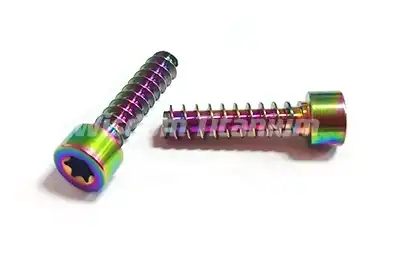
Self tapping screws are fasteners that cut or form their own mating threads as you drive them into a drilled, pierced, or prepared hole. They remove the separate tapping step, which saves assembly time. The name describes how the screw works, not its head, drive, or material, so you can find them in steel, stainless steel, and titanium. Engineers use them in sheet metal, aluminum, plastic, and composite parts across electronics, HVAC, automotive, and medical equipment. In this guide, I explain how they work, how to choose them, and what to ask a supplier before you order.
What Are Self Tapping Screws and How Do They Work?
How Self Tapping Screws Form Threads
It has a rough thread and an end that is either pointy or tapered. When you push the thread into a hole, it either pulls the material away from it or cuts a small groove in it. After the screw is in, the cloth closes up around it. This makes an inside thread that fits the screw perfectly, so there's no need for a nut or a plug at the joint. The result depends on the size of the hole. Because there is more torque when there isn't enough of a hole, the part can break. On the other hand, a hole that is too big makes it harder to hold on. The seller always tells me what the pilot hole width should be, and I build a test piece to make sure it's right.
Thread Forming and Thread Cutting Types
There are two different types of this screw. Some types of screws, like Types A and AB, push things apart and don't break, so they work well with plastics, thin metal sheets, and plastics. Thread-cutting screws have a flute or hole that takes away a little bit of material. This makes the driving torque less in substrates that are tougher or more easily broken. Each family of the inch series is covered by ASME B18.6.4. On the other hand, self-drilling screws have a drill-shaped tip and make their own hole. Most of the time, you have to make a hole first for a self-tapping screw.
Where Engineers Use Self Tapping Screws
Self tapping screws are used in composite panels, drone shells, HVAC pipes, appliance housings, and medical device covers. They work well in parts made of more than one material because a tapped thread or threaded insert would be too expensive for those parts. R&D teams often pick them so that they don't have to tap them, which speeds up the assembly process. For service, you can also take them off and put them back on, but if you do this a lot with soft plastic, the thread will wear out. What the screw is made of is just as important as how it looks. The type of bolt used can also change galvanic rusting. This is one reason why a lot of people who make composites pick titanium over stainless steel.
Self Tapping Screw Types, Heads, and Sizes
Thread and Point Design
How a screw starts and how much torque it needs depend on the thread pitch and point shape. Fine threads are better at holding on to thin or hard metal, while coarse threads are better at holding on to soft things like plastic. Pointy and sharp screws can be turned in without having to walk across the surface. A lot of parts made of plastic or composite have high-low thread shapes that work well when the pressure is low. Titanium self-tapping screws with pointed tips and sharp threads are available from Wisdom Titanium for quick, chip-free fitting. We'll talk about which thread will work best with your substrate after you send us its depth.
Head Styles and Drive Types
The style of the head determines the bearing area and the finish of the surface. Heads that are flat and countersunk fit against the part without sticking out. Pan heads are round and low, and they clamp well. To make thin panels stronger, hex screw heads help spread the load over a bigger area. How power is sent depends on the type of drive. Torx® drives are better for titanium than Phillips drives because they don't need to be stripped down as often. If you need a range of torques, make sure the drive can handle them. Wisdom Titanium can make heads that are flat, pan, hex screw, or countersunk.
Sizes and Pilot Holes
You can choose the unit type (inch or metric) and the size (width, length, thread size, head diameter). The length must be thick enough to cover the joint and have enough thread contact in the part that will receive it. This hole is also very important. A hole that is too small can break the screw or crack the brittle material. A hole that is too big can make the hold less strong. First, check out the hole that the supplier tells you to. Then, test each material on its own, since the carbon fiber laminate, metal, and plastic will all respond in different ways. If the hole is drilled straight, the edge of the composite is less likely to come apart.
How to Install and Choose Self Tapping Screws for Different Materials?
Installation Steps That Protect the Joint
A short list of steps makes it easy to do something. First, know what the screw is for, what it's made of, and how wide it is. To make the hole the right size, drill it and smooth it out. Then, place the screw straight on the surface and keep the axial pressure steady. To get the best results, use a bit that matches and drive at a steady speed and torque. You won't be able to cam-out. Titanium screws can get galling, so use an anti-seize oil that works with titanium, polished screws, or think about putting molybdenum disulfide on them. Lastly, look for damage to the surface, the way the threads fit together, and where the head sits. Note down the torque values so that you can use them again in the next build.
Matching Screws to Substrates
The base makes most of the decisions. Self tapping screws work well with alloys, plastics, magnesium, and aluminum. Since Grade 5 titanium is not as hard as case-hardened steel, the thread can bend in hardened steel. You should use a different nut or a hole that has already been tapped. Do not over-torque when making a hole in a carbon fiber material. Also, make sure the hole is clean. If there is too much load or a bad hole quality, the laminate can crack and come apart. For plastics, choose threads that are rough or high-low with low torque. Outside sealing plates help, but the joint as a whole, not just the screw, is what makes it waterproof. Test a few pieces in your own material before you decide to build something.
Self Tapping Screws vs Other Fasteners
You need a nut, a tapped hole, or an insert to use machine screws. Self-tapping screws make the thread on their own, so that step isn't needed. It is quick and easy to put rivets in, but it is hard to take them out. While rivets can't be fixed or moved, screws can be used for service and rework. Self-drilling screws can be used on thin steel that doesn't have a pilot hole because they have a drill point. In electrical or plastic parts that are more likely to break, a drilled pilot hole gives you more control over the quality of the hole. Metal screws can't be used instead of wood screws because the thread and point are different. Self-tapping screws are fast and useful for experiments, low to medium volume builds, and walls that can be taken off.
Titanium Self Tapping Screws from Wisdom Titanium
Gr5 Titanium Properties
Grade 5 titanium, which is also called Ti-6Al-4V, is mostly titanium (90%), with 6% aluminum and 4% vanadium. It's not nearly as dense as steel, which is 7.85 g/cm³. The bending strength is close to 830 MPa and the hardness is between 30 and 36 HRC most of the time. There is a natural layer of titanium dioxide that chlorides, salt spray, and industrial pollutants can't get through. Also, Gr5 isn't magnetic, which is good for MRI machines and electronics that are easy to break. Grade 2 is softer and can be used to protect against chemicals or for tasks that don't need to be strong. Gr5 is often the best choice when the screw needs to cut or make its own thread. Ti-6Al-4V has also been used in medical items for a long time.
Wisdom Titanium Product Specifications
Here are the primary characteristics of our factory-direct titanium self tapping screws.
- Material and order size: Titanium grade 5 (Ti-6Al-4V) is used in spacecraft because it is strong and doesn't harm living things. For softer, lower-load tasks, grade 2 titanium is used. One can buy as few as 200 pieces, which is enough for samples and test runs. The prices are fair. Tell us what grade works for your load and temperature of service.
- Thread, head, and drive: Sharp, self-tapping threads with a pointy end make installation quick and chip-free. Heads can be flat, pan, hex screw, or countersunk, and drives can be Phillips®, Torx®, or hex. You can also ask for a unique drive. Your team putting things together will be able to use the clamps that work with the tools they already have.
- Finish and temperature range: Natural titanium or anodized finish, and unique colors can be made. When these screws touch aluminum or carbon alloys, they don't rust. They also stay stable between -269°C and 400°C, so they can be used in both hot and cold places. Look at these numbers and see how they match up with your test plan.
Buying Self Tapping Screws in Bulk
Write a Clear RFQ
The price cycle is shorter when there is a clear RFQ. You need to write down the diameter, length, type of thread and point, head and drive, material grade, finish, number, and the model or standard that you use. Describe the base material and how thick it is, such as carbon fiber blend or 6061 aluminum. Write down the service temperature range and any biocompatibility statement your medical file needs. Writing out the specs and drawing the part makes it easier to read, especially after the engineering, quality, and buying teams have signed off on it. Send the package to us early so we can compare it to the heads, drives, and styles we already have in stock.
Sample Testing Before Production
A lot of R&D projects don't spend much on the first day. To try different head and drive styles for pull-out, rust, and temperature changes, ask for samples of them and then place a small pilot order. At that point, our bottom line of 200 pieces works. Tell us what samples you need and when you need the project done in your question. Keep an eye out for threads that aren't as sharp or as hard on different lots. These can cause screws to break or delamination to happen. Print out the results of more than one lot if you have time. This will help your team decide how many lots to review.
Documents, Traceability, and Confidentiality
You should ask for a material certificate and lot tracking for each package. Make sure you know which inspection records come with the order as well. As a general rule, medical programs need a biocompatibility statement. Bring it up when you get quotes. Creative ideas for new goods are valuable, so make sure you both agree to keep them secret before you share files. Wisdom Titanium takes client ideas or models and turns them into one-of-a-kind parts. They have rods, flanges, forgings, and fasteners made of titanium. They also make fasteners out of nickel, tantalum, and zirconium. Our prices stay the same because we have our own research and development department and ready-to-use raw materials.
Conclusion
Sheet metal, plastic, aluminum, and composite materials can all be used together with self tapping screws because they cut or form their own threads, removing the tapping step. Controlling pressure and chips is done in different ways by different types of thread making and thread cutting tools. The choices of head, drive, size, and pilot hole affect how well the joint works. For the right attachment, you need a clean hole, steady pressure, and force that you can control. It is possible to use anti-seize or anodizing to keep titanium from galling. Grade 5 titanium is very strong, has low density, is non-magnetic, and has a metal layer that doesn't rust. It avoids galvanic problems with carbon or aluminum, although it can't tap through hardened steel. When samples are tried, needs are made clear, and records of materials are kept, there is less risk when big orders are placed.
FAQ
Do self tapping screws need a pilot hole?
Yes, most of the time, especially for steel, aluminum, thick parts, and precise assemblies. Self-drilling screws are different because they are designed for suitable thin materials where they can make their own hole.
Can titanium self tapping screws go into hardened steel?
Generally no. The threads can bend because Grade 5 titanium is not as hard as case-hardened steel most of the time. There are steel, aluminum, magnesium, plastics, and alloys that these screws can be used in, or you can pre-tap the steel.
Are titanium screws compatible with carbon fiber?
Yes. This metal is close to carbon on the galvanic scale, and our screws don't show any galvanic corrosion when they are used with aluminum or carbon composites. This is the main reason to use it.
Should I choose Grade 2 or Grade 5?
Level 5 is tougher and lasts longer, so it's better for most self-tapping jobs. Grade 2 is softer and can be used for tasks that don't need to hold weight or be resistant to chemicals.
Do titanium screws need anti-seize?
Yes. The high coefficient of friction in titanium means that it can get stuck or gall during installation. To avoid this, you should use an anti-seize that is safe for titanium. Anodizing also helps.
Contact Wisdom Titanium for Self Tapping Screws
Titanium company Wisdom makes self-tapping screws. They come in Grade 5 and Grade 2 sizes and start at 200 pieces. To sales@wisdomtitanium.com, send your plan, board, number, and choice of head and drive. Someone from our team will get back to you with an idea and a price quote. You can see our titanium screws and one-of-a-kind CNC parts at wisdomtitanium.com.
References
- ASME B18.6.4, Thread Forming and Thread Cutting Tapping Screws and Metallic Drive Screws (Inch Series), 1998
- Materials Properties Handbook: Titanium Alloys, ASM International, 1994
- Titanium and Titanium Alloys: Fundamentals and Applications, Wiley-VCH, 2003
- ASM Handbook Volume 13A: Corrosion: Fundamentals, Testing, and Protection, ASM International, 2003
- Mechanical biocompatibilities of titanium alloys for biomedical applications, Journal of the Mechanical Behavior of Biomedical Materials, 2008
- Composite Materials Handbook-17 (CMH-17), Volume 3, 2012