
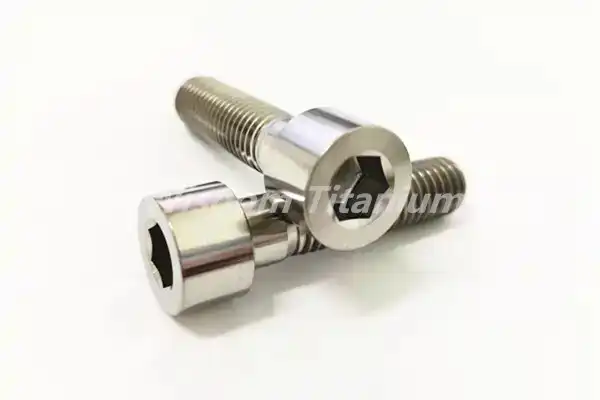
Aerospace fasteners are specialized components engineered to join and secure structural elements in aircraft, spacecraft, and related aerospace systems. These critical hardware pieces—including bolts, screws, nuts, rivets, and washers—must withstand extreme operational stresses such as vibration, thermal cycling, and corrosive environments while maintaining structural integrity throughout the equipment's service life. Among modern solutions, titanium aerospace fasteners have emerged as the preferred choice due to their exceptional strength-to-weight ratio, corrosion immunity, and fatigue resistance, making them indispensable in high-performance aviation applications where safety and efficiency are non-negotiable.
Why Titanium Fasteners Are Preferred in Aerospace
Titanium is the best material for important fastening jobs because the aviation business is always looking for ways to make things work better. Its unique set of properties solves several engineering problems at once, giving it value that makes the extra cost over regular materials worth it.
Superior Mechanical Properties
Titanium alloys have tensile strengths higher than 895 MPa, but they are only 4.43 g/cm³ dense, which is about 45% lighter than steel alloys of the same strength. This advantage in strength-to-weight directly leads to lighter aeroplanes without lowering the safety margins for the structure. The low modulus of elasticity of the material (about 110 GPa) spreads stress evenly across matching parts, which makes the whole system last longer. Fracture toughness stays high even when the load is changing, which stops catastrophic brittle failures that could put flight safety at risk.
In aircraft service, fatigue resistance stands out as being very useful. Titanium bolts can withstand millions of stress cycles from being under pressure, landing shocks, and aerodynamic loads without getting tiny cracks, which happen with steel parts. This makes it last longer and require fewer inspections, which lowers the total cost of ownership even though the initial price was higher.
Corrosion Resistance and Environmental Stability
Normal materials are damaged by moisture, salt spray, chemical exposure, and high temperatures in the harsh conditions where aeroplanes work. Titanium aerospace fasteners make a natural oxide film that protects them from corrosion so well that rust and pitting don't happen, which is what breaks down steel bolts. This passive layer stays stable in hydraulic fluids, jet fuel, and de-icing compounds that are commonly used in aviation. Titanium stays compatible in mixed-material systems, unlike aluminium, which suffers galvanic rusting when joined with different metals.
Because the material is thermally stable, it can be used in temperatures up to 400°C without losing its power or deforming over time. In hot areas near engines and exhaust systems, this feature is very important because aluminium would lose its mechanical properties and steel would be too heavy.
Titanium Grade Selection and Applications
The composition of the material has a big effect on how well the fastener works. Titanium Grade 5 (Ti-6Al-4V) is the most commonly used alloy in aerospace because it has the best mix of strength, flexibility, and workability. Its alpha-beta architecture gives it yield strengths that are usually higher than 828 MPa and great damage tolerance. We make Grade 5 fasteners that meet standards like DIN 933 for hex head bolts, DIN 912 for socket head cap screws, DIN 7991 for flat head screws, and DIN 6921 for flange bolts. This lets us meet a wide range of assembly needs.
When maximum strength is not needed, grade 2 titanium is better for structural uses because it is easier to shape and doesn't rust. Specialised alloys like Ti-6Al-2Sn-4Zr-2Mo (AMS 6242), which can handle high temperatures where regular Ti-6Al-4V would grow too much, are still not used very often in general fastener uses.
Manufacturing Excellence and Quality Assurance
To make reliable aerospace fasteners, you start with premium-grade titanium bar stock that is carefully checked for flaws before it is machined. Forging creates circular grain flow that makes the metal stronger and more flexible than options that are machined from bars. Tight tolerances are reached on thread geometry, head measurements, and surface finish during precision CNC processes to make sure the right fit and load distribution. The microstructure is improved by heat treatment cycles, which also relieve any residual stresses that could cause the structure to fail early.
Multiple checking spots check the accuracy of dimensions, the integrity of the surface, and the mechanical qualities throughout the whole production process. Non-destructive testing finds problems inside screws before they are used. Every shipment comes with full material traceability documentation, which gives aerospace customers the certifications they need for regulatory compliance and fleet management.
Performance and Reliability of Titanium Aerospace Fasteners in Real-World Applications
Theoretical properties of a material are less important than how well it works in real-world situations. Decades of use in flight have produced a lot of field data that shows how reliable titanium fasteners are in a wide range of situations and uses.
Durability Under Extreme Conditions
Throughout their operational lives, both commercial and military aircraft are put through a lot of environmental stress. Temperature changes of -60°C at cruise altitude to 150°C+ on hot asphalt roads cause expansion cycles that wear out and work-harden regular bolts. Titanium has a low thermal expansion rate, which lowers thermal stress. Its stable composition also stops fatigue cracks from starting, even at very high or very low temperatures.
High-frequency switching stresses can loosen threaded connections or cause wear failures in bolts when they are exposed to vibrations from engines, turbulence, and aerodynamic buffeting. Titanium is often used in engine mounts and control surface parts where vibration is a problem because it has a high specific damping capacity that absorbs vibrational energy while keeping the holding force.
Over time, humidity, salt spray, hydraulic fluids, and chemical exposure can corrode fasteners that are not protected. When planes fly near the coast, where salty air speeds up rusting, they are exposed to especially harsh corrosion conditions. Titanium's spontaneous oxide film protects against corrosion without any upkeep. This means that steel fasteners don't need to be treated on the outside, inspected regularly, or replaced before they break in these conditions.
Maintenance Advantages and Operational Efficiency
Cutting down on servicing directly raises the availability of aeroplanes and lowers the cost of running them. Titanium fasteners don't need to be inspected as often as their steel counterparts, which means that more time goes by between thorough checks that stop planes and take a lot of time. Because the material doesn't corrode, it doesn't need to be maintained with protective coatings or the costs that come with chemically stripping and reapplying them.
When upkeep is needed, titanium aerospace fasteners' high fatigue strength means that screws can often be used again and again by being taken off and put back on without breaking. When compared to steel screws that are only used once, this ability to be reused cuts down on the need for replacement parts and the cost of disposal. Consistent torque characteristics over the service life make sure that the joint preload is correct, without the relaxation that can happen with some other materials.
Over and above the direct costs of repairs, unplanned maintenance events cause a lot of problems with operations. When an aeroplane is out of service, it misses revenue trips, disappoints customers with delays and cancellations, and requires expensive changes to the timetable. Because titanium fasteners are known to be reliable, these costly problems happen less often. This improves fleet utilisation and customer happiness measures that give a business a competitive edge.
Industry Validation and Case Evidence
Major aircraft companies use titanium screws in all of their products because they have a lot of testing and service experience with them. Boeing and Airbus engineering standards require titanium to be used in aircraft frames and flight control devices, where its better performance justifies the higher cost of the material. Titanium is used even more in military aircraft programs, which benefit from its low weight and resistance to corrosion for operations on naval carriers.
Racing applications allow for faster testing of durability under conditions that are harsher than those usually found in aerospace service. Teams that race high-performance cars in endurance events like Le Mans and Daytona depend on titanium fasteners for fitting wheel assemblies, chassis, and engine parts. The fact that these fasteners can withstand race distances longer than 24 hours at high temperatures and loads shows that they can handle tough aerospace service.
Specialists in making changes to cars say that putting titanium screws on speed cars makes them handle and accelerate better because the extra weight is taken off the springs. These real-world results from enthusiast applications show that titanium's theoretical benefits lead to real performance gains that make the investment worthwhile for people who value ultimate capability.
Conclusion
When it comes to aerospace fasteners, the choice of material has a direct effect on safety, performance, and operational costs. Grade 5 Ti-6Al-4V titanium alloys have become the best choice because they have the best strength-to-weight ratios, are very resistant to rust, and have been shown to last for a long time. Even though they cost more at first than regular materials, a full lifecycle study shows that they are well worth the extra money because they require less upkeep, last longer between service visits, weigh less, and are more reliable. When purchasing workers are looking for the best fastening options, they should look at certified providers who offer full material traceability, flexible order numbers, the ability to make changes, and quick expert support. Titanium aerospace fasteners are an investment in performance and safety that pays off over the life of the equipment because of the mix of advanced material qualities and outstanding manufacturing.
FAQ
1. What makes titanium fasteners suitable for aerospace applications?
Titanium screws have a great strength-to-weight ratio and are also very resistant to rust and wear. The density of the material, 4.43 g/cm³, makes it about 45% lighter than steel while keeping its tensile powers above 895 MPa. This one-of-a-kind set of properties lets aircraft designers lower the weight of the structure without lowering safety standards. This directly increases fuel efficiency and payload capacity. Titanium's spontaneous oxide film protects against corrosion without any upkeep in tough settings with high temperatures, hydraulic fluids, and a lot of wetness. The substance stays stable at temperatures as high as 400°C, making it good for use in hot areas near engines where aluminium would lose its mechanical properties.
2. How do I determine the correct titanium grade for my fastener application?
Grade 5 titanium (Ti-6Al-4V) is the best choice for most aircraft bolt needs because it is strong, flexible, and easy to get. This alpha-beta alloy has yield strengths higher than 828 MPa and is very resistant to damage and easy to weld. Grade 2 titanium is better for structural uses that don't need the highest strength because it is easier to shape and doesn't rust. Speciality metals like Ti-6Al-2Sn-4Zr-2Mo are made to work at temperatures above 400°C, but normal fasteners don't use them very often. Talk to our technical team about the load you need to carry, the temperature range you'll be working in, and the operating area to find the most cost-effective material specification for your needs.
3. What minimum quantities and customization options does Wisdom Titanium offer?
With a standard minimum order quantity of 200 pieces per size, we can meet a wide range of purchasing needs. This lets us support both development programs and production volumes without requiring customers to commit to too much inventory. Custom fastener solutions are made to fit specific design needs, like non-standard sizes, head shapes, custom thread forms, and features that are only needed for one application. For brand recognition, we can engrave logos and do different surface processes like anodising, passivation, and specialised finishes. During the design optimisation process, the engineering team works with customers to make sure that the product can be made and meets performance requirements. You can talk about your specific needs and get technical advice on how to make custom fasteners.
Partner with Wisdom Titanium for Your Aerospace Fastener Requirements
Wisdom Titanium is an ISO 9001-certified manufacturer with more than eight years of experience making precision-engineered fastening solutions for industries around the world that need them. We use integrated supply chains and specialised metallurgical knowledge that you can't find anywhere else because we're based in Baoji Titanium Valley, which is the world's most complete titanium production ecosystem. Our titanium aerospace fasteners come in a range of standard shapes and sizes, meeting DIN 933, DIN 912, DIN 7991, and DIN 6921 requirements. They are made from a quality Grade 5 alloy that meets AMS and ASTM standards.
We're happy to take special orders, and the minimum order quantity for each size is just 200 pieces. This means that we can support both prototype development and high-volume production needs. Full customisation services include stamping your brand and applying special surface treatments that are made to fit your needs. Our skilled engineering team can help you choose the best fasteners for your unique performance needs by giving you expert advice. As a dependable titanium aerospace fasteners supplier, we keep a large stock of raw materials and have developed our production methods to ensure uniform quality and on-time delivery. Get in touch with our team at sales@wisdomtitanium.com to talk about your needs and find out how our fixing solutions can help your products work better and your business run more smoothly.
References
1. Donachie, Matthew J. (2000). Titanium: A Technical Guide. ASM International, Materials Park, Ohio.
2. Boyer, R., Welsch, G., and Collings, E.W. (1994). Materials Properties Handbook: Titanium Alloys. ASM International.
3. Lutjering, Gerd and Williams, James C. (2007). Engineering Materials and Processes: Titanium. Springer-Verlag Berlin Heidelberg.
4. Federal Aviation Administration (2021). Advisory Circular AC 43.13-1B: Acceptable Methods, Techniques, and Practices - Aircraft Inspection and Repair. U.S. Department of Transportation.
5. Schutz, R.W. and Watkins, H.B. (1998). "Recent Developments in Titanium Alloy Application in the Energy Industry," Materials Science and Engineering A, Volume 243, Issues 1-2.
Aerospace Material Specification AMS 4928N (2018). Titanium Alloy Bars, Wire, Forgings, Rings, and Drawn Shapes 6Al-4V Annealed. SAE International.