
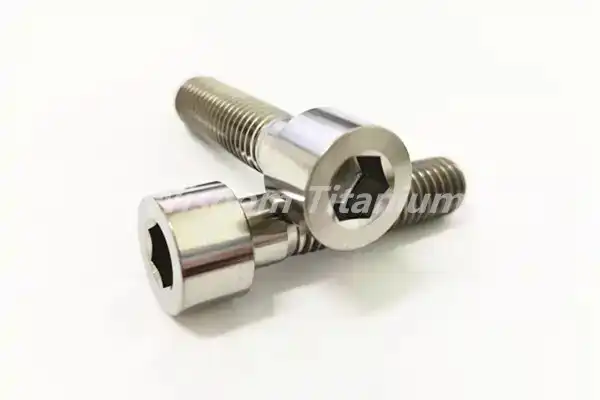
When aircraft components demand the highest levels of reliability under extreme stress, titanium aerospace fasteners emerge as the industry's preferred solution. These precision-engineered components combine exceptional strength-to-weight ratios with unmatched corrosion resistance, making them essential for modern aviation. Manufactured from high-grade titanium alloys like Grade 5 (Ti-6Al-4V), these fasteners maintain structural integrity at temperatures reaching 400°C while reducing overall aircraft weight by up to 45% compared to steel alternatives, directly improving fuel efficiency and payload capacity.
Understanding Titanium Aerospace Fasteners
Titanium aerospace fasteners are a highly specialised type of joining parts that are made to survive the harsh conditions of flight operations and aircraft building. Unlike regular fasteners, these parts are made according to strict rules that make sure they have perfect microstructures and chemical compositions that meet the requirements for aerospace materials.
What Defines Aerospace-Grade Titanium Fasteners?
Titanium Grade 5 (Ti-6Al-4V) fasteners are very important to the aerospace industry. They are made up of about 6% aluminium and 4% vanadium, which keep the alpha-beta phase microstructure stable. The tensile strength of this mixture is more than 895 MPa, but it only weighs 4.43 grams per cubic centimetre. Common types of bolts are those that meet the standards for DIN 933 (hex head), DIN 912 (socket head cap), DIN 7991 (countersunk socket), and DIN 6921 (flange head). Each type meets different assembly needs in aircraft building and engine mounting.
Key Material Properties That Matter
Titanium aerospace fasteners are different from other materials because of three important qualities. Engineers can lower the weight of parts without affecting their structural integrity because the material has a high strength-to-weight ratio. This is important because every gram affects fuel usage. Corrosion resistance comes from a solid oxide film that forms on its own and guards against airborne moisture, hydraulic fluids, and salt spray that are common in coastal operations. Temperature stability makes sure that bolts keep their yield strength above 828 MPa even at high temperatures of up to 400°C, which is very important for parts that are close to engine housings.
Applications Across Aircraft Systems
Titanium aerospace fasteners are used a lot in airframe assembly at joints between wings and fuselage because they reduce weight, which directly improves aerodynamic efficiency. Engine makers use these parts for mounting the turbine case and attaching the nacelle to places that will be exposed to thermal cycling. Titanium is good for control surface parts because it doesn't crack easily when it's stressed over and over again during flight manoeuvres. Titanium hardware is used in landing gear systems because it is resistant to impact and corrosion, which are both important for long-term service reliability.
Comparing Titanium Fasteners with Other Materials
The choice of materials has a big effect on both the starting cost of buying an aircraft and its lifecycle costs over its entire operating life. When purchasing managers know how titanium aerospace fasteners stack up against other options, they can use the total cost of ownership to justify investments instead of just looking at the initial price.
Titanium Versus Aluminum Fasteners
Aluminium alloys like 7075-T6 are cheaper to make and strong enough for many uses, but they don't hold up well against corrosion in coastal settings and don't work as well when temperatures go above 150°C. Titanium aerospace fasteners keep their mechanical properties over a wider temperature range, and they don't need protective coatings, which are heavy and need to be maintained. The 45% weight advantage over steel is especially useful when you multiply it by thousands of screws all over an aeroplane frame. This can save a lot of fuel over many years of use.
Stainless Steel Trade-Offs
Grades of stainless steel like A286 are strong and don't rust, and they're also not too expensive, so they can be used in many aircraft uses. However, their higher density (about 7.9 g/cm³) makes them heavier than titanium, which has a density of 4.43 g/cm³. This extra weight adds up over big units, cancelling out any cost savings that were made at first by using more fuel. Titanium's better performance in settings with crevice corrosion and at high temperatures makes it worth the higher price for important uses where failure risks can't be allowed.
Performance Metrics That Guide Selection
When making decisions about what to buy, it's important to look at the fatigue life under cyclic loading because titanium alloys crack about 50% slower than aluminium alloys. Using composite structure materials with thermal expansion values that are the same lowers the stress levels at the points where different materials meet. The electrochemical corrosion that happens with aluminium and steel bolts in next-generation aeroplane designs can't happen with carbon fibre composites because they are galvanically compatible. Over decades of use, these performance benefits add up, extending the time between maintenance visits and part replacements.
Manufacturing and Quality Assurance of Titanium Aerospace Fasteners
To make titanium aerospace fasteners, strict process controls and the ability to track materials are needed. This is what sets approved providers apart from other industrial makers. Knowing these manufacturing standards helps buying teams check that suppliers can do what they say they can do and make sure they meet aircraft quality standards.
Raw Material Sourcing and Alloy Verification
To start making something, approved titanium bar stock that meets the requirements of AMS 4928 (annealed state) or AMS 4965 (solution treated and aged) is needed. Material papers show that each batch can be traced back to the factory where the titanium sponge was made, and they also show that the chemicals used were within very narrow error bands. Spectroscopic analysis is needed to make sure that the amount of aluminium is between 5.5 and 6.75% and the amount of vanadium is between 3.5 and 4.5%. Interstitial elements like oxygen and nitrogen must be strictly limited to keep the material from becoming weak, which lowers its fatigue resistance.
Advanced Machining and Heat Treatment
During CNC machining, carbide tools made especially for titanium's low thermal conductivity are used to remove material from forged or bar stock. Cutting parameters must stop surface work hardening, which makes stress risers that are easy for cracks to start. When you roll threads, you cold-work the surface to create good compressive stresses that make the threads last longer than cut threads. During heat treatment processes, temperatures and cooling rates are carefully controlled to get the desired microstructures, which are fine, even grains that don't have any alpha case surface layers that weaken the material. To keep oxidation and contamination from happening, these thermal processes must take place in controlled atmospheres.
Certification Standards and Testing Protocols
ISO 9001 approval sets the standard for quality management systems, and AS9100 handles the particular needs of the aerospace industry, covering things like configuration management and tracking. Tensile tests are done on every production run to make sure that the minimum yield strength, final tensile strength, and elongation rates are correct. In fatigue testing, sample bolts are loaded and unloaded over and over again, which is meant to mimic years of use. As required by ASTM B117, testing for salt spray contact is part of validating corrosion protection. These strict rules create paperwork that goes with shipments, which helps aircraft manufacturers keep all the material records that aviation regulators need.
Benefits of Choosing Titanium Fasteners for Aircraft
When you choose titanium aerospace fasteners strategically, you get measured benefits that go beyond the performance of the individual parts and affect the overall cost of running an aeroplane and its impact on the environment.
Weight Reduction and Fuel Efficiency
Every kilogram that is taken off of an airplane's empty weight means that it uses less fuel or can carry more over millions of flying hours. Compared to steel fasteners, titanium aerospace fasteners are 40–45% lighter while still being as strong as or stronger than steel ones. This weight loss adds up to several hundred kilos, which is enough to have a noticeable effect on how much fuel an aeroplane uses. There are about 2.5 million fasteners on a business aeroplane. Airlines that keep their fleets for 20 to 30 years save so much fuel over time that the initial cost of the fasteners is dwarfed by the savings. This is especially true as fuel prices rise.
Extended Service Life and Maintenance Intervals
Corrosion resistance gets rid of the need for protective coatings on steel fasteners. This gets rid of a maintenance task that can cause coatings to wear off and allow water to get in. Titanium aerospace fasteners don't crack under stress in chloride environments, which is very important for planes that fly near the coast or in the ocean. Resistance to fatigue under cyclic loads lowers the number of inspections needed and the time between replacements, which lowers the cost of lifetime maintenance. These advantages of durability cut down on aircraft downtime, which raises fleet utilisation rates and has a direct effect on an airline's ability to make money and run efficiently.
Regulatory Compliance and Sustainability
Aviation officials require all flight-critical parts to have strict material tracking and performance documents. Certified titanium aerospace fasteners come with full material certificates, test results, and compliance statements that meet all legal standards without having to pay extra for proof. Environmental laws are putting more and more pressure on aerospace companies to lower their carbon footprints. Titanium's ability to be recycled and long service life are in line with sustainability goals, and its lighter weight helps lower emissions per passenger-mile. Because of these things, titanium aerospace fasteners are a good choice for makers who need to meet both government requirements and environmental goals.
Conclusion
Titanium aerospace fasteners are an investment in the performance of aircraft, the efficiency of operations, and the management of long-term costs. The mix of high strength-to-weight ratios, excellent resistance to corrosion, and proven durability in harsh situations explains the higher price by saving money on fuel and upkeep. When procurement workers work with certified providers that offer a wide range of services, from standard DIN configurations to custom-engineered solutions, they gain a competitive edge. Material properties that meet AMS standards, thorough quality testing, and full documentation make sure that regulations are followed and that the product will last for decades. As aerospace companies put more emphasis on reducing weight and being environmentally friendly, titanium aerospace fasteners continue to change from high-end parts to necessary parts of modern aeroplane design.
FAQ
1. What makes titanium fasteners cost-effective despite higher initial prices?
Titanium aerospace fasteners have better lifetime value because they save you money in a number of ways. Getting rid of extra weight saves fuel over millions of flight hours, and the extra cost is usually paid back within the first few years of operation. Longer service times lower the costs of upkeep labour and parts replacement. Corrosion protection gets rid of the need for coatings and repairs, and it keeps things from breaking down too soon, which can throw off plans. Titanium aerospace fasteners are always more cost-effective than steel and aluminium options when you look at the total cost of ownership over 20 to 30 year aeroplane lifespans instead of just looking at purchase prices.
2. How can buyers verify supplier certification and quality standards?
Reliable suppliers can easily give you up-to-date ISO 9001 and AS9100 certificates that were issued by authorised registrars. Ask for material test reports for the most recent production batches and check the results of the chemical composition analysis and mechanical property testing. Ask well-known aerospace companies for customer examples from people who can vouch for their delivery performance and quality stability. Physical building reports show what kinds of things can be made, how they are checked for quality, and how they are moved around. Materials should be tracked from qualified titanium makers all the way through to the inspection of the finished fastener. This creates the full chain of custody that aircraft quality systems require.
3. What specifications should procurement teams include when requesting quotes?
Requests for quotes should be very detailed, including the exact type of fastener (using DIN or an equivalent standard), its diameter and length measurements with any necessary tolerances, its titanium grade (usually Grade 5 for aerospace use), any surface treatments or coatings that are needed, and any certifications or material standards that are needed. Include estimates of the annual volume, the delivery schedules you want, and whether you need customisation options like engraving a logo. Make sure everyone knows what the inspection requirements, paperwork standards, and quality hold spots are. By giving sellers clear and detailed instructions up front, you can get accurate quotes and avoid misunderstandings that cause projects to run late.
Partner with Wisdom Titanium for Certified Aerospace Fastener Solutions
Wisdom Titanium makes titanium aerospace fasteners in Baoji Titanium Valley, which is the world's largest titanium production environment. These fasteners are backed by ISO 9001 approval. We know how to make standard patterns like DIN 933, DIN 912, DIN 7991, and DIN 6921, as well as fully customised designs made to your exact specifications. As a sole supplier of titanium aerospace fasteners, we keep full records of all the raw materials we use and follow strict testing protocols that meet the strictest aerospace quality standards. We offer flexible purchasing with minimum order amounts of 200 pieces per size, and our custom design services, surface treatment options, and brand engraving options can meet the specific needs of each project. You can talk to our team at sales@wisdomtitanium.com about your fastener needs, get full technical specs, or set up a sample evaluation that shows how committed we are to precise production and on-time delivery.
References
1. Boyer, R., Welsch, G., & Collings, E.W. (2007). Materials Properties Handbook: Titanium Alloys. ASM International.
2. Donachie, M.J. (2000). Titanium: A Technical Guide (2nd Edition). ASM International.
3. Peters, M., Kumpfert, J., Ward, C.H., & Leyens, C. (2003). "Titanium Alloys for Aerospace Applications." Advanced Engineering Materials, 5(6), 419-427.
4. Society of Automotive Engineers. (2018). AMS 4928: Titanium Alloy Bars, Wire, Forgings, Rings, and Drawn Shapes. SAE International.
5. American Society for Testing and Materials. (2020). ASTM B348: Standard Specification for Titanium and Titanium Alloy Bars and Billets. ASTM International.
6. Federal Aviation Administration. (2019). Advisory Circular AC 43.13-1B: Acceptable Methods, Techniques, and Practices - Aircraft Inspection and Repair. U.S. Department of Transportation.