
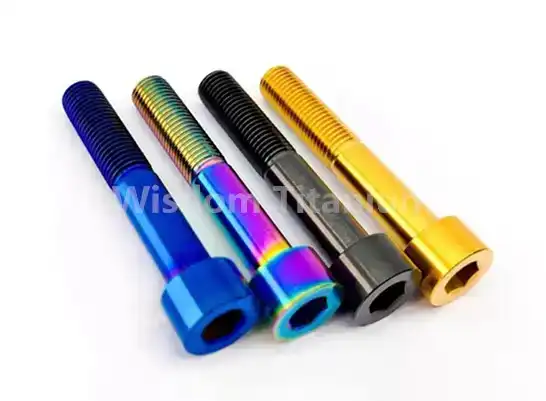
It can be hard to get rid of an Allen head bolt that has become stripped, especially when working with high-performance materials like titanium. When the hexagonal hole of a titanium allen head bolt gets worn down or smooth, the wrench slips, making it almost impossible to remove with regular tools. The answer is to carefully look at the damage, choose the right extraction method (which can be anything from using a rubber band to hold the screw in place and bigger hex keys to specialized screw extractors and thermal shock techniques), and then use controlled force to keep the damage to surrounding parts or threads from getting worse.
Understanding Stripped Allen Head Bolts and Their Causes
What Defines a Stripped Allen Head Bolt
When the internal hexagonal hole gets worn, rounded, or twisted to the point where a hex key can't grip it well anymore, you have a stripped Allen head bolt. This damage usually shows up as smooth, shiny areas inside the hole or deformed metal that can be seen. In places where industrial repair is done, this is more than just a small problem—it can stop production lines and make it harder to put things together correctly.
When compared to regular steel nuts, titanium allen head bolts have their own set of problems. Titanium has a strength-to-weight ratio that is unmatched in industrial uses and is very resistant to corrosion. However, because of these qualities, it needs to be handled in a certain way when it is being installed or removed.
Primary Causes of Stripping in Titanium Fasteners
Maintenance teams can stop this from happening again by understanding why titanium screws strip. The main reason is over-torquing, especially when techs use torque values that are the same for steel bolts on titanium bolts without taking into account the changes in the materials. Titanium Grade 5 (Ti-6Al-4V) screws need about 60 to 70 percent of the power that is used on Grade 8.8 steel fasteners of the same type.
If you choose the wrong tool, it will speed up socket wear. When you use old or wrong-sized hex keys, they make point contact instead of full surface engagement, which concentrates stress and speeds up distortion. Titanium tends to galling, which is a type of cold welding in which metal surfaces join under pressure. If you try to remove it without using the right anti-seize chemicals, like molybdenum disulfide paste, you could do a lot of damage.
Titanium doesn't rust very often, but if the surroundings gets dirty, it can fill in the socket hole and stop the tool from engaging properly. Salt deposits or chemical leftovers build up inside the hex socket in sea and chemical processing settings, blocking the connection between the tool and the fastener. Over time, repeated installation processes cause the hole to get bigger, which makes it harder to get a good grip.
Effective Methods to Remove Stripped Allen Head Bolts
Traditional Removal Techniques and Their Limitations
When maintenance teams come across stripped screws, they usually try the usual ways. Putting a rubber band or duct tape between the broken socket and the hex key can help with the grip temporarily, but this method doesn't work very well with titanium allen head bolt because it needs a lot of force. Tapping a slightly bigger hex key into the broken hole can sometimes fix steel screws, but it could cause titanium's structure to become even more deformed.
When used with titanium screws, penetrating oils aren't very useful. Titanium bolts don't rust or stop like steel bolts do. This means that chemical penetrants can fix a problem that doesn't usually present. But these lubricants can help if galling has happened by making the metal areas that touch less rough.
When using hammer-impact methods on titanium, you need to be very careful. Because it is less flexible than steel, hitting the bolt head hard can crack it instead of loosening the link. This method should only be used as a last option, and it should be used with controlled force and metal or polymer-faced hammers to keep the risk of damage to a minimum.
Advanced Extraction Methods for Titanium Fasteners
Professional extraction needs methods that are specially designed to work with titanium's qualities. Here are some tried-and-true methods that mix efficiency with keeping parts:
Screw Extractor Sets: Spiral extractors for the left hand work by biting into the broken hole as you turn them counterclockwise. The important thing is to choose the right size. Extractors that are too small won't grip well, and ones that are too big can break the bolt head. First, drill a small test hole in the middle of the socket. Then, firmly tap the extractor to make sure it bites. Finally, apply steady spinning pressure. Because titanium is so hard, it needs carbide-tipped extractors instead of high-speed steel ones.
Precision Drilling and EZ-Out Tools: Drilling out the bolt center is needed when the socket is badly damaged. To keep the work from hardening, use cobalt or carbide drill bits that are made to drill titanium. Keep the speeds low (200 to 300 RPM) and use cutting fluid. Progressive drilling, which starts with a small test hole and slowly increases the width, lowers the chance that the drill bit will break. Needle-nose pliers can often be used to get the bolt shell out after the core has been taken out.
Thermal Shock Application: A difference in temperature can free links that are stuck together. Titanium has a different temperature expansion rate than steel, which makes it possible for the threads to come apart. Use a butane micro-torch to apply heat to the bolt head for 15 to 20 seconds, and then use freeze spray or dry ice right away. This quick change in temperature leads to differential expansion, which can break rust bonds or release thread pressure. Do this two or three times before you try to remove.
Welding a Nut onto the Bolt Head: If there is enough room, tack-weld a spare hex nut onto the stripped bolt head to make a new surface to hold. This method works especially well with screws that have a bigger diameter. To keep the bolt shank from getting too hot, which could change titanium's mechanical qualities, clean the bolt head surface, place the nut so that it is concentrically positioned, and use minimal weld depth.
You need to be patient and use these methods in a planned way. When trying to remove something quickly, bolts often break, which requires expensive drilling and thread repair processes that could have been avoided with more care.
Step-by-Step Extraction Protocol
A methodical technique keeps damage to parts to a minimum and cuts down on downtime. First, clean the work area and bolt hole very well, getting rid of any dirt or debris that could get in the way of the tool engaging. Spray penetrating lubricant on the joint and let it sit for 15 minutes. Titanium doesn't rust, but the lubricant stops it from galling.
If you have access to a magnifying glass, check the amount of damage to the socket. For shallow wear, a slightly bigger metric hex key may work if carefully pushed into the hole. If this doesn't work after two tries, give up on this method to stop more damage. Move on to extraction tools based on how bad the damage is, starting with the way that will cause the least amount of harm.
Write down how you extracted the bolts and which techniques worked best for different bolt sizes and amounts of damage. This information base is very helpful for teaching maintenance staff and making standard operating procedures better. For extraction to work, it's often more important to see trends in past data than to have only theoretical knowledge.
Procurement Considerations for Titanium Allen Head Bolts
Identifying Reliable Manufacturers and Suppliers
Getting qualified suppliers is the first step to buying titanium allen head bolts. Don't just believe what the marketing says; also look at the real manufacturing and quality processes. ISO 9001 certification means basic quality management, while AS9100 certification means processes that are made to aircraft standards and are needed for important uses. When buying for regulated businesses, ask for building audit records or third-party inspection certificates.
Where titanium is made has an effect on which suppliers are chosen. The Baoji Titanium Valley in Shaanxi Province, China, is the world's largest center for the titanium industry. It is home to the whole supply chain, from making sponges to finishing parts. This connected environment makes it possible to save money and work together technically in ways that aren't possible in supply lines that are separated.
When choosing titanium fasteners, the professional help that the supplier offers is very important. Metallurgical engineers work for reputable makers and can help you choose the right grades, surface treatments, and fitting methods for your needs. This review stops design mistakes that could be very expensive and might not show up until there are problems in the field.
Navigating Custom Orders and Bulk Purchasing
Standard fastener sizes are good for a lot of uses, but custom sizes are often needed for specific tools. Different suppliers have different minimum order amounts. Some smaller businesses may accept orders of 100 pieces, but for custom specs, big manufacturers usually need 1,000 or more units. Planning purchase timelines in the right way keeps projects from being late.
When you buy in bulk, you save a lot of money. When you buy a certain number of items, usually between 5,000 and 10,000, you can get volume savings of 15 to 30 percent. These levels of demand can be reached through collaborative purchasing deals with other departments or partner businesses. Titanium has an indefinite shelf life, so standard sizes kept as strategic stock don't have to worry about becoming obsolete.
Prices change based on the prices of titanium sponge commodities and changes in demand around the world. The market is affected by aerospace production cycles and military buying in a big way. Setting up framework deals with set prices for 12 to 18 months protects against market volatility and gives budgets peace of mind.
Quality Assurance and Certification Requirements
Set up rules for getting inspections when buying titanium fasteners. Visual inspection finds clear flaws, but using standardized tools to check the dimensions makes sure they are within the allowed ranges. Important measurements that affect fitting and effectiveness are the socket depth, head height, and thread pitch.
Material characteristics are confirmed by mechanical testing of sample lots. Testing for tensile strength confirms the minimum strength needs, and testing for hardness confirms the right way to heat treat the material. Reliable sources give Certificates of Conformance that show these test results and can be linked to particular production batches. This lets you respond quickly if problems happen in the field.
Material verification stops fake or mislabeled goods from being sold. Positive material identification (PMI) with X-ray fluorescence analyzers confirms the elemental makeup in seconds. It can tell the difference between Grade 2 and Grade 5 titanium and find steel or aluminum replacements, which can happen in supply chains run by dishonest people.
Conclusion
Successfully managing stripped Allen head bolts requires understanding material properties, employing appropriate extraction techniques, and implementing preventive measures throughout the fastener lifecycle. Although titanium allen head bolt work very well in tough situations, you need to know a lot about how to install, maintain, and fix problems with them because of how they are made. When purchasing experts work with experienced providers, choose the right grades and treatments, and spend money on the right tools and training, they can keep operations running smoothly and get the most out of titanium's great qualities. Fastener management goes from being a reactive disaster to a controlled, predictable process when systematic extraction methods, quality-focused procurement, and preventative maintenance practices are used together.
Partner with Wisdom Titanium for Premium Fastener Solutions
Stripped screws cause expensive downtime and maintenance problems that can be avoided by buying the right ones in the first place. Aviation-grade titanium allen head bolts from Wisdom Titanium are made to strict standards and come with full material traceability and approval paperwork to back up your quality requirements. We are a seller of titanium allen head bolt that are ISO 9001-certified. We offer reasonable prices without sacrificing quality because we are located in Baoji Titanium Valley, which is China's most important titanium industry cluster.
Our expert team can help you choose the right grade, figure out the right power, and install it in a way that works for your needs. We can support both small prototype orders and large production numbers with reliable quality and service, whether you need standard DIN 912 socket head cap screws or fasteners that are specially designed to meet your needs. Get in touch with our purchasing agents at sales@wisdomtitanium.com to talk about your fastener needs and find out how aerospace-grade titanium can improve the performance of your product while lowering the costs of upkeep over its lifetime.
FAQs
Can I replace Grade 12.9 steel bolts directly with Grade 5 titanium?
For direct replacement to work, engineering research is needed. The tensile strength of Grade 12.9 steel is about 1,200 MPa, while Grade 5 titanium's is only 950 MPa. The difference in strength is important in situations where stress is important. But titanium is often strong enough for bending loads, and it works especially well in places where rust makes steel fail early. Don't assume that safety factors are the same; instead, figure them out based on the specifics of your setup.
What torque specifications should I use for titanium allen head bolts?
Titanium allen head bolt need about 60–70% of the dry torque value given for steel nuts that are the same size, but the type of lubrication has a big impact on this rule. Always look at the fastener's manufacturer's instructions to find out its exact grade, size, and finish. If you use measured torque tools instead of guessing, you won't under-tighten or over-torque, which can damage threads or strip sockets.
Does galling occur during titanium bolt installation?
Titanium has a high rate of friction when it comes to other metals and itself, which means that galling is a real problem. Some ways to reduce the risk are to use MoS2 anti-seize paste on the threads and install the parts slowly and steadily. Diamond-like carbon (DLC) coats on threads make them much less likely to get galled when they are used over and over again in assembly. Never put titanium screws together without lubricating them first; this is an important safety measure that shouldn't be skipped.
References
- Donachie, M.J. (2000). Titanium: A Technical Guide (2nd ed.). ASM International.
- Boyer, R., Welsch, G., & Collings, E.W. (1994). Materials Properties Handbook: Titanium Alloys. ASM International.
- Bickford, J.H. (2007). Introduction to the Design and Behavior of Bolted Joints (4th ed.). CRC Press.
- Schreurs, P.J.G. & Bosch, M.J. (2015). "Galling Resistance of Titanium Fasteners." Journal of Materials Engineering and Performance, 24(8), 3142-3151.
- Budinski, K.G. (1991). "Tribological Properties of Titanium Alloys." Wear, 151(2), 203-217.
- American Society of Mechanical Engineers (2020). ASME B18.3-2020: Socket Cap, Shoulder, Set Screws, and Hexagon Keys (Inch Series). ASME Standards.