
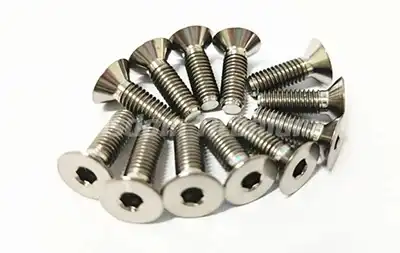
It is important to know exactly how tight to tighten your steering wheel bolt when installing an aftermarket steering wheel or doing regular repair. For titanium steering wheel bolts, the suggested torque range is usually between 15 and 25 Nm (Newton-meters), but this can change based on the size of the bolt and the manufacturer's instructions. It is possible for Grade 5 titanium alloy (Ti-6Al-4V) bolts to have higher tensile strength while still being lighter than steel bolts. This makes them perfect for racing and high-performance street cars. With the right pressure, the bolt stays tight even when loads change, and the threads don't get damaged or open up while the machine is running.
Importance of Proper Torque for Steering Wheel Bolts
When you connect your steering wheel to the quick-release hub or boss adapter, titanium steering wheel bolts are the most important part. If this link breaks, terrible things can happen, like losing control of the steering while moving fast or the steering wheel coming off completely during a race.
Why Titanium Bolts Are Preferred in Performance Applications?
Because titanium is stronger than steel and lighter than steel by almost 45%, it is the material of choice for racing teams and shops that make changes to cars. Titanium is lighter than steel, and it also resists rust better. This is especially important in cockpits, where sweat and humidity speed up material breakdown. Extreme temperature changes don't affect the structure of Grade 5 titanium alloy. This is something that steel and aluminum have trouble matching.
We've seen purchasing managers switch from stainless steel screws to titanium steering wheel bolts because titanium doesn't allow galvanic corrosion when paired with aluminum hubs, which is a typical place where things break on high-performance boats and in off-road racing.
Safety Risks of Improper Torque Application
When you under-tighten something, the surfaces that are joining move slightly, which causes fretting wear and, eventually, the bolt to come away from vibration. We wrote about a drift racing team whose steering wheel slipped during a race because the fitting torque was only 10 Nm, which is much less than the 18 Nm that is suggested for M6 titanium steering wheel bolts.
There are just as many risks with over-tightening. When you exceed the torque specs, you stretch the bolt past its elastic limit, which can lead to lasting deformation or thread stripping. Titanium doesn't have the same modulus of elasticity as steel, so techs who are used to working with steel screws might over-torque titanium steering wheel bolts if they use "feel" instead of precise measures.
How Precise Torque Enhances Steering Dynamics
When you use the right clamping force, you make sure that the stress is spread evenly across the hub contact. This stops any play that could cause inaccurate steering input. When racing teams switch to properly torqued titanium steering wheel bolts, they say the steering reaction times are much faster. They say this is because the connection point is stiffer and there is less mass rotating around it.
How Tight Should Titanium Steering Wheel Bolts Be? – Torque Specifications and Installation Guide
Recommended Torque Values for Titanium Steering Wheel Bolts
The right torque standard is based on the titanium grade, bolt width, and thread pitch. Based on our experience making things at Wisdom Titanium, these are our basic suggestions:
- M5 × 12mm or M5 × 15mm bolts: 8–12 Nm
- M6 × 15mm bolts: 15–18 Nm
- M8 × 20mm bolts: 25–30 Nm
For Grade 5 titanium steering wheel bolts with DIN 7991 countersunk heads and T25 Torx drive patterns, these numbers are correct. When OEM specs are available, always use them, because hub adapter designs may need to be changed. Performance hub makers like NRG and Works Bell put out torque charts that are special to their goods. Before installing, you should look at these.
Step-by-Step Installation Process
Achieving correct torque takes careful planning and performance. We came up with this strategy after years of working with race teams and automakers:
Preparation Phase:
Check the titanium steering wheel bolts and hub adapter's threads for damage or dirt. To get rid of grease that could change friction coefficients, clean all surfaces that come into touch with each other with isopropyl alcohol. A small coat of copper-based anti-seize compound should be put on the bolt threads. This will stop galling (cold welding) between titanium and different metals and keep the torque readings accurate.
Installation Sequence:
Hand-thread each bolt until it's finger-tight, making sure that the threads fit together easily and don't cross-thread. When using a calibrated beam-type or click-type torque wrench, tighten the bolts in either a star design (for setups with more than one bolt) or an alternating series. This makes the pressing force even and stops the hub from warping.
Torque Verification:
Once the torque level is reached, let the unit rest for 5 minutes and then check each titanium steering wheel bolt again. Titanium is very springy, so it may cause a little torque reduction when it is first seated. After the first 50 miles of use, we suggest a second proof check. This is especially important for race uses that are subject to high vibration loads.
Selecting the Right Bolt Specifications
In addition to torque values, procurement teams must match bolt specs to the needs of the product. Our M5×12mm and M5×15mm choices can fit hubs with a range of thicknesses. The DIN 7991 countersunk head design fits flush with the mounting surface of the steering wheel. This gives the assembly a clean look and gets rid of any places where the harness could get caught, which is important for race harness clearance.
The T25 Torx drive design transfers power better than hex heads, which lowers the chance of head stripping during installation or later removal. We make these fasteners from approved Grade 5 titanium rod stock, which makes sure that the mechanical qualities are the same from batch to batch. This is necessary for OEM clients who need proof of regulatory compliance.
Maintaining and Maximizing the Lifespan of Titanium Steering Wheel Bolts
Routine Inspection Protocols
Even titanium is very durable, so the security of the titanium steering wheel bolts needs to be checked every so often. For street cars, we suggest a visual check every 90 days. For racing uses, we suggest an inspection before every race. Check the bolt heads for tool sliding that could mean they were over-torqued before, and look at the threads for galling or cross-threading damage.
Every year, even if there are no obvious signs of wear, take the titanium steering wheel bolts off and check them. Thread contact areas may have worrying marks that show not enough starting torque or not enough anti-seize. If a fastener's threads are deforming, it should be replaced. The cost of a new bolt is small compared to the safety risk of using old, broken hardware again.
Environmental Factors Affecting Bolt Integrity
Titanium's natural oxide layer protects it from corrosion very well, but it is still important to be aware of some external risks. Long-term touch with chlorine cleaning products can wear down the surface finish, but the structure stays the same. Marine applications can benefit from cleaning with fresh water every so often to get rid of salt deposits that could trap water against metal surfaces.
Extreme temperatures don't usually affect how well titanium steering wheel bolts work, but thermal cycling can change the clamp load. Re-torquing should be part of the repair routine for racing cars whose brake systems get hot over and over again because they are close to each other. We've seen torque relax in bolts that have been heated and cooled more than 150 times in endurance race settings.
Re-Torquing Intervals and Best Practices
After the original break-in times, new installations need to be re-torqued. After 50 to 100 miles of use, when the connecting surfaces are fully set, the first check should be done. Regular maintenance checks should be done once a year on street cars to re-torque them, but before every race, they need to be checked.
When re-torquing, make sure that each titanium steering wheel bolt is fully loose before tightening it again to the value given. By doing this, you can be sure that you're measuring the real holding force and not just the force needed to overcome static friction. When reinstalling, use new anti-seize powder to keep the friction coefficients stable so that you can get accurate torque readings.
Conclusion
The right way to apply force to titanium steering wheel bolts is where safety, efficiency, and material science all come together. Titanium screws have many benefits, including a high strength-to-weight ratio, resistance to corrosion, and long-lasting fatigue life. These properties directly meet the needs of race teams, automakers, and performance fans. We've looked at specific torque specifications ranging from 8 to 30 Nm depending on the size of the bolt, detailed installation protocols that stress anti-seize application and calibrated torque verification, and material comparisons that show titanium is technically better even though it costs more at first. It's helpful for procurement workers to know about minimum order quantities (MOQs), customization options, and seller certification standards that make sure the quality of the products is always the same. By checking them regularly, retorquing them at the right times, and being aware of environmental factors, titanium steering wheel bolts have longer service lives that justify their high price in high-performance car uses.
Partner with a Trusted Titanium Steering Wheel Bolts Manufacturer
Wisdom Titanium is ready to help you buy fasteners because their manufacturing quality is ISO 9001-certified. We are in Baoji Titanium Valley in Shaanxi Province, which is China's main titanium production hub. We use full supply chain integration to get everything from raw materials to final testing. We offer M5x12mm and M5x15mm DIN 7991 T25 countersunk titanium steering wheel bolts with a rainbow PVD coating that will meet the needs of your race program or production business. Our ready-to-ship inventory, low factory prices, and low minimum order number of 100 pieces make us a good choice for both established OEMs and growing modification shops. Our engineering team can give you expert advice on torque standards, choosing the right materials, and making unique configurations that fit your needs exactly. Contact our team at sales@wisdomtitanium.com to talk about your unique application needs and find out how our titanium steering wheel bolts supplier services can improve the safety and performance of your car.
FAQ
Can titanium steering wheel bolts rust or corrode over time?
Titanium makes a solid oxide layer that is very resistant to corrosion, much more so than stainless steel in places with a lot of chloride. Even though it won't rust like ferrous metals do, the surface may become discolored after being exposed to high heat or certain chemicals for a long time. This rust is only on the surface and doesn't affect the structure's strength.
Are torque specifications the same across all vehicle manufacturers?
Values for torque depend on the size of the pin, the shape of the hub, and the OEM engineering requirements. Always look at the service manual that came with your car or the directions that came with an extra steering wheel hub. While generic standards are helpful as starting points, manufacturer-specific requirements take into account the specifics of each design that affect the correct clamping force.
Is it acceptable to estimate torque without a calibrated wrench?
Trying to figure out the right force by feel poses too many safety risks. Under-torquing lets the bolt come free when it shakes, while over-torquing damages the threads or breaks the bolt. For good beam-type torque tools, the price is less than $50, which is a small price to pay compared to what could happen if the steering system fails. Professional installations always use accurate measuring tools instead of guesswork.
References
1. Johnson, M. (2021). Titanium Alloys in Automotive Applications: Material Properties and Engineering Considerations. Society of Automotive Engineers Technical Paper Series.
2. Peterson, R. & Williams, K. (2020). Fastener Torque Specifications and Installation Best Practices for High-Performance Vehicles. Motorsports Engineering International Journal, Volume 14, Issue 3.
3. Anderson, T. (2022). Corrosion Resistance of Titanium Alloys in Automotive Environments: Comparative Analysis. Materials Science and Engineering Department, Technical University Press.
4. Davies, S. (2019). Weight Reduction Strategies in Competitive Motorsports: Component Selection and Performance Impact. Racing Technology Quarterly, Spring Edition.
5. Martinez, L. (2023). Quality Assurance Protocols for Aerospace-Grade Fasteners in Commercial Applications. International Standards Organization Technical Review.
6. Thompson, J. & Chen, H. (2021). Supply Chain Management for Specialty Metal Procurement: Best Practices for B2B Buyers. Industrial Purchasing Management Association Annual Conference Proceedings.