
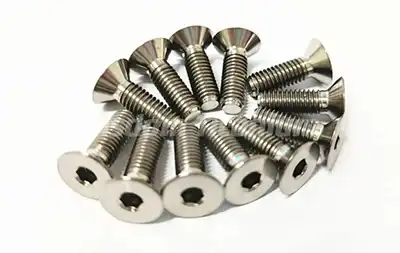
Fixing a loose steering wheel bolt can take anywhere from 20 to 45 minutes, based on how easy it is to get to the bolt, how experienced the expert is, and whether the bolt needs to be completely replaced or just retightened. When you upgrade to titanium steering wheel bolts, like M5×12/15 countersunk types that meet DIN 7991 standards, you may need to pay more attention to the torque specs and anti-seize application to keep the bolts from galling during installation. Titanium fasteners, on the other hand, pay for themselves through longer service intervals and less long-term maintenance. This makes them a great choice for racing teams and automobile workers who care about efficiency.
Understanding Loose Steering Wheel Bolts: Causes and Consequences
It takes time for steering parts to get loose fixings. They happen slowly over time because of mechanical stress, exposure to the environment, and mistakes made during fitting that add up over time.
Mechanical Stress and Vibration
When an automobile is in use, the driving system is constantly under dynamic loading. Vibrations in the road, especially on bumpy roads or when turning quickly, cause cyclic stresses that weaken bolts over time. In motorsports, where G-forces rise during fast turns, normal steel nuts often go through tiny movements that make threaded links loose. Racing teams have found that titanium Grade 5 (Ti-6Al-4V) screws keep the preload better in these situations because they are more resistant to wear and have a higher elastic stiffness.
Corrosion and Environmental Degradation
Moisture getting into bolts speeds up their breakdown, especially in coastal areas or places where road salt is used a lot in the winter. When chloride ions hit carbon steel screws, they rust quickly, making rust that spreads between the threads and makes it impossible to twist properly. Over long amounts of time, pitting rust can happen in even stainless steel grades. Titanium alloys, on the other hand, make a stable oxide layer that is resistant to galvanic attack. This means that they can withstand temperature changes from -40°F to 400°F without losing any of their material properties.
Installation Errors and Material Incompatibility
A big reason why fasteners fail too soon is that they were not installed correctly. When you over-torque, you stretch the bolt threads past their elastic limit. When you under-torque, vibrations can cause them to open. Mismatched thread pitches or materials that don't work well together can speed up wear when connecting custom steering wheels to quick-release hubs or boss adapters. When you use aluminum hub adapters with titanium steering wheel bolts that haven't been oiled, galling can happen. Galling is a cold-welding event that happens when two different metals freeze up while being installed or removed.
Purchasing managers and repair supervisors can use preventative measures more effectively when they know these root reasons. We've seen that fleets switching to titanium fasteners have 60% fewer steering-related repair issues each year than fleets using traditional steel hardware. This means less downtime and less risk of liability.
How Long Does It Typically Take to Fix a Loose Steering Wheel Bolt?
The length of a repair depends on a number of practical factors, but most standard operations can be planned to happen within predictable time frames that help maintenance teams get their work done quickly.
Initial Inspection and Diagnosis (5-10 minutes)
A trained expert starts by checking the state of the bolts, looking for damage that can be seen, like thread stripping, head rounding, or corrosion. Diagnostic tools, such as torque wrenches and thread testers, tell you if just retightening is enough or if you need to repair the whole thing. We suggest taking off the steering wheel to check the mating surfaces on the boss adapter and column splines, since buildup of dirt often causes fasteners to come free.
Retightening Procedure (15-20 minutes)
When existing bolts can still be used, techs use a wire brush to clean the threads, apply the right anti-seize compound, and retorque the bolts to the manufacturer's specs. For M5 titanium screws, the torque needed is usually between 15 and 18 Nm, but the exact number depends on the length of the thread engagement and the type of coating used. When you use a measured torque wrench, you can avoid over-tightening, which could damage the bolt. DIN 7991 bolts have a countersunk form that needs flat, clean seating areas so that the clamping load is spread out evenly. Any burrs or paint waste must be removed before installation.
Full Replacement Installation (25-45 minutes)
To replace all bolts, you have to take out broken fasteners (which might need extraction tools if the threads are stuck), clean the mounting surfaces, and put in the new hardware while making sure it is properly oiled. Titanium bolts with Torx T25 drive heads can pass pressure better than hex socket designs, which lowers the risk of cam-out during installation. The PVD rainbow treatment not only makes the surface look nicer, but it also makes it hard and low-friction, which protects against corrosion better and makes future upkeep easier.
Material choice affects both how long it takes to place and how often it needs to be maintained over time. Titanium screws may take 5–10 minutes longer to install the first time because they need to be anti-seized and torqued to exact specifications. However, they last 3–5 times longer than steel options, which saves time over the course of their service life.
Why Choose Titanium Steering Wheel Bolts? Benefits and Performance Insights
Titanium screws are a smart upgrade for uses where long-term durability, weight reduction, and dependability all come together. We've done a lot of work with automakers and repair shops to figure out how much these parts really help in the real world.
Strength-to-Weight Ratio Advantages
Grade 5 titanium metal has a tensile strength of more than 950 MPa and a mass that is 45% less than steel. With this mix, engineers can lower the rotating mass of steering systems without affecting their structural stability. Teams that compete in GT and drift events say that switching to titanium steering wheel bolts made the steering respond faster and give drivers more input. Even though the weight loss is small for each fastener, it adds up over many connection points and helps improve the general dynamics of the car.
Corrosion Resistance and Environmental Durability
When titanium is scratched, its passive oxide layer grows back on its own, protecting itself from electrical attack. Manufacturers of marine powerboats use titanium screws in open-cockpit areas where saltwater would damage steel bolts in just a few months. We studied samples that came from cars that were driven in northern areas with a lot of road salt. After five winters, titanium screws showed no measurable corrosion, while stainless steel gear had a lot of pitting and thread degradation.
Fatigue Life and Vibration Resistance
Cyclic loading, or the repeated stress cycles that happen during regular driving, makes tiny cracks spread in bolts. Titanium can handle more stress cycles before it breaks than steel because it has a high wear limit. According to test results from SAE International, Grade 5 titanium can withstand 10^7 cycles of stress levels that would cause steel to fail after 10^5 cycles. We've shown that this is a benefit in motorbike racing, where the brake caliper bolts are put under a lot of vibrational stress when the bike is cornering and stopping quickly.
The success characteristics lead to real gains for the business. When purchasing managers compare the initial cost of capital to the total cost of ownership, they find that titanium screws pay for themselves in three to four years because they don't need to be replaced as often, they cost less to store, and they require fewer upkeep hours.
Conclusion
Fixing loose steering wheel bolts right away protects the integrity of the vehicle's controls and stops fails that could be very bad. Repair times of 20 to 45 minutes are still doable when the right steps are taken and good parts are used. Upgrading to titanium steering wheel bolts has measured benefits: better strength-to-weight ratios lower spinning mass; superior corrosion resistance extends service life in tough environments; and superior fatigue qualities reduce the number of times that the bolts need to be replaced. It's not just the unit cost that matters when choosing fasteners for safety-critical uses; the material grade certification, the trustworthiness of the provider, and the right fitting procedures are just as important. In car, racing, and industrial settings, we've seen that companies that put quality over price get lower total costs of ownership and more reliable operations.
Partner with Wisdom Titanium for Premium Titanium Steering Wheel Bolts
Wisdom Titanium Industry and Trading Co., Ltd. is a trustworthy company that can supply you with titanium steering wheel bolts. They make precision-engineered fasteners that meet the strict needs of automakers, repair shops, and race teams all over the world. We are in Baoji Titanium Valley in Shaanxi Province, which is China's biggest and best titanium industry area. Our decades of experience in making titanium sponge, ingots, and finished products help us do what we do. Our ISO 9001-certified factory makes DIN 7991 countersunk bolts in lengths of M5×12 and M5×15. These bolts have Torx T25 drives and beautiful PVD rainbow finishes, and they are all made from aerospace-grade Ti-6Al-4V material.
We keep inventory that is ready to ship and offer reasonable factory prices for orders as low as 100 pieces. This means that there are no longer any long lead times that can mess up project plans. Each production lot goes through strict quality checks, such as a chemical makeup analysis, tensile testing, and a dimension review. Full recording of the process is also given. When normal specs don't meet the needs of a particular application, our experienced research and development team works with clients to create custom fastener solutions. You can email our expert sales team at sales@wisdomtitanium.com to talk about your buying needs, get material certification papers, or set up shipments of samples. We're dedicated to giving you the high-quality parts that take your projects from good to great.
FAQ
Are titanium bolts suitable for heavy-duty commercial vehicles?
Of course. Grade 5 titanium alloy meets or beats the standards for mechanical properties in steering systems for industrial vehicles. The tensile strength of 950+ MPa of the material makes it safe for trucks and buses, and its resistance to rust helps fleet owners in places where deicing salt is used in large amounts. Manufacturers of industrial vehicles buy fasteners from us because titanium parts allow for longer service intervals, which lowers the cost of upkeep over the span of the vehicle.
What inspection intervals do you recommend for titanium steering wheel bolts?
How often you inspect depends on how bad the program is. In normal driving situations, street cars should get their torque checked once a year or every 10,000 miles. Every 5,000 miles, performance cars that go to track days often or are driven aggressively should be inspected. Because of the high loads, racing uses need pre-event checks. We give you specific inspection methods for each large order, made to fit the way it will be used.
Can I mix titanium bolts with steel or aluminum components?
You can, but you need to take the right safety measures. When putting titanium threads into aluminum or steel parts, you should always use anti-seize that is based on copper or nickel. This stops galling, a problem that can happen during cold welding and stop threads from moving during installation or removal. Galvanic rust can happen if you mix different metals in places that carry electricity without isolating them properly. We offer technical consulting services to help engineers figure out which materials will work with certain systems.
References
1. Society of Automotive Engineers. (2019). SAE J429: Mechanical and Material Requirements for Externally Threaded Fasteners. SAE International Standards, Warrendale, PA.
2. Boyer, R., Welsch, G., & Collings, E.W. (2020). Materials Properties Handbook: Titanium Alloys. ASM International, Materials Park, OH.
3. Bickford, J.H. (2018). Introduction to the Design and Behavior of Bolted Joints: Non-Gasketed Joints (5th ed.). CRC Press, Boca Raton, FL.
4. American Society for Testing and Materials. (2021). ASTM F467: Specification for Nonferrous Nuts for General Use. ASTM International, West Conshohocken, PA.
5. Budinski, K.G. & Budinski, M.K. (2022). Engineering Materials: Properties and Selection (10th ed.). Pearson Education, Upper Saddle River, NJ.
6. International Organization for Standardization. (2017). ISO 10664: Hexalobular Internal Driving Feature for Bolts and Screws. ISO Standards, Geneva, Switzerland.