
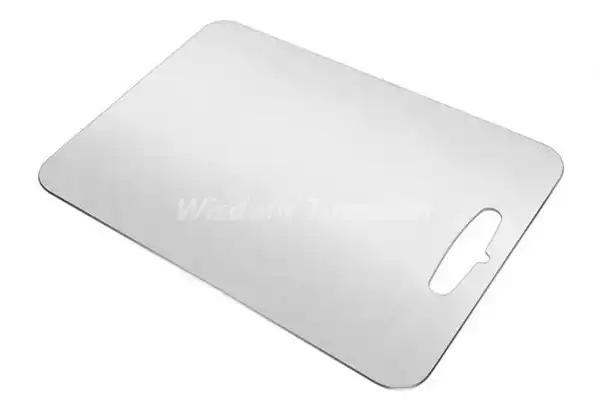
Titanium cutting boards are the top of the line when it comes to contemporary kitchenware since they outperform more conventional materials. These state-of-the-art surfaces are ideal for commercial and residential kitchens alike because to their exceptional endurance, cleanliness, and durability. These boards, made of 99.9 percent pure titanium, do away with problems that are typical with regular cutting surfaces, such as odor retention, discoloration, and bacterial absorption. Titanium cutting board alternatives are the best option for businesses and health-conscious individuals looking for long-term, dependable food preparation solutions that need no maintenance due to its nonporous construction and corrosion resistance.
What Makes Titanium Cutting Boards Unique?
The exceptional material qualities and cutting-edge engineering of titanium cutting boards set them apart from the competition. The intrinsic properties of titanium, which combine a lightweight design with exceptional strength and chemical stability, are the basis of their superiority.
Exceptional Material Properties and Durability
When it comes to germs, liquids, and scents, titanium's non-porous surface is your best bet. Titanium continues to have a flawless, sanitary surface forever, in contrast to plastic boards that acquire cut marks where germs grow or wood boards that have microbes in their grain structure. The inherent resistance of titanium against corrosion and chemical reactions with common household cleaners and acidic foods is a result of the material's atomic structure.
Titanium is resistant to warping and has excellent heat stability, making it ideal for use in professional kitchens. The precise CNC finishing process guarantees that every board will keep its flatness and surface quality for a long time. The improved performance of knives and the efficiency with which food is prepared are direct results of this manufacturing accuracy.
Advanced Hygiene and Safety Features
Titanium is preferred over more conventional cutting board materials due to its greater sanitary qualities, according to experts in food safety. Avoid worries about chemical leaking from other plastic alternatives with the non-toxic surface that allows for safe direct contact with food. Titanium cutting boards are perfect for prepping fresh vegetables, fish, and meat because of their low danger of cross-contamination.
Titanium preserves the original taste of food without adding metallic notes or soaking up strong scents like fish, garlic, or onions since it is chemically stable. This flavor neutrality is very important for commercial kitchens since they need to keep the taste quality the same all the time to keep customers happy and the brand's reputation high.
Customization and Versatility Options
There are a lot of different thicknesses of modern titanium cutting boards, from 1.75mm to 3mm, to fulfill a broad range of needs. Customers may pick the proper parameters from this range according on how much cutting power and durability they require. Thicker boards are better for heavy-duty chopping and processing large amounts of food, while thinner boards are excellent for light-duty preparation tasks and when you need to move them about.
To meet their individual workflow needs, firms may take use of custom design options to integrate measurements, edge treatments, and surface textures that are tailored to their specifications. When normal proportions don't work for a certain application because of space restrictions or specific equipment combinations, this customisation comes into play.
Key Considerations for B2B Procurement of Titanium Cutting Boards
In order to get titanium cutting boards, it is necessary to carefully examine performance indicators, the competence of the provider, and the degree to which the boards will be compatible with the activities that you are already doing. It is necessary for professional buyers to balance performance goals with budgetary constraints, all the while ensuring that the supply chain will function effectively over the long term.
Quality Assessment and Certification Standards
Having a quality management system in place that consistently meets or exceeds customer expectations is a hallmark of ISO 9001-certified manufacturers. In order to safeguard procurement expenditures, this accreditation attests to the existence of documented mechanisms for quality control and continuous improvement.
Titanium that is 99.9 percent pure offers the best performance characteristics, which is another important quality aspect. Reduced purity levels may alter characteristics such as food safety, surface smoothness, and corrosion resistance. Verification of composition and performance criteria may be found in testing paperwork and material certificates provided by reputable vendors.
Customization and Bulk Order Advantages
When you buy in bulk, you may take advantage of customized choices that meet your unique operating needs. Specialized surface finishes or edge treatments improve functionality for specific applications, while custom dimensions support unique equipment combinations. When acquired in large numbers, these modifications usually end up being less expensive.
Buying in bulk also gives you more clout when haggling for better prices, longer warranties, and priority scheduling. Tiered pricing, which rewards bigger commitments, inventory management assistance, and flexible delivery arrangements are common features of well-established providers' offerings.
Supplier Evaluation and Relationship Management
It is necessary to evaluate a supplier's production capacity, quality control measures, and customer service setup while evaluating them. Superior quality control and dependable delivery are hallmarks of titanium processing companies that can source raw materials, perform precise machining, and complete the product.
Shipping costs, lead times, and the efficacy of communication are three geographical factors that impact supplier selection. Access to specialist knowledge and supply chain efficiency are two ways in which suppliers situated in well-established titanium production locations may boost total value offerings.
Practical Applications and Use Cases for Titanium Cutting Boards
Titanium cutting boards have shown their value in a wide range of commercial and home settings, proving their versatility and the advantages they provide in terms of performance. Through the use of titanium's unique properties, a number of different sectors have been able to enhance both the safety of food and the efficiency of their operations.
Professional Kitchen Integration and Performance
Titanium is an excellent material for use in commercial kitchens that get a lot of foot traffic because of its extended lifetime and resistance to rust and corrosion. After making the conversion from wooden cutting boards to titanium cutting boards, restaurant chains saw a reduction in the number of accidents involving food safety and an improvement in the productivity of their kitchens.
Titanium boards are strong even when subjected to large cutting loads, and their low weight makes them easier for kitchen personnel. In businesses that need to prepare a lot of food quickly or have long service hours, this ergonomic benefit becomes crucial.
Specialized Food Processing Applications
When it comes to maintaining product quality and regulatory compliance, titanium boards are an essential component for food processing industries that are subject to severe contamination control standards. The non-porous surface continues to be resistant to bacterial colonization even after being treated to severe cleaning chemicals and processes that include sanitizing at high temperatures.
The resistance to salt corrosion and fish oil absorption that titanium has makes it an ideal material for use in seafood processing activities. These features not only prolong the life of the boards but also help to maintain hygienic conditions. When switching between various forms of protein, it's helpful for processing facilities to have surfaces that are simple to clean and don't smell.
Home Kitchen and Culinary Enthusiast Adoption
Titanium cutting boards are becoming more and more popular among health-conscious home chefs due to their superior performance. Cooking aficionados who desire commercial-grade appliances for home use are drawn to products that can prevent cross-contamination while preserving ingredient tastes.
Kitchen equipment that consistently functions without regular replacement needs is a must-have for busy homes, and titanium boards are a great option due to their remarkable longevity and little maintenance requirements.
Conclusion
Cutting boards made of titanium are the finest choice for any kitchen, regardless of whether it is used in a commercial or residential setting. In spite of the fact that they have a higher initial cost, they provide outstanding long-term value owing to the fact that they combine enhanced durability, sanitary qualities, and decreased maintenance requirements. In addition to being in compliance with severe laws on food safety, the chemical stability, non-porous surface, and resistance to corrosion all assure that the product will not fail to work as expected. Titanium cutting boards provide unrivaled performance, which justifies its premium positioning on the market. They are perfect for industrial kitchens that need reliable equipment as well as for residential users who are concerned about their health and want great cutting surfaces.
Partner with Wisdom Titanium for Premium Cutting Board Solutions
When you need a titanium cutting board, Wisdom Titanium is here to help with our unmatched knowledge of the market and extensive personalization options. Located in Baoji Titanium Valley, we are an ISO 9001-certified titanium cutting board producer that uses China's most modern titanium processing infrastructure to give excellent value. Optimize your procurement strategy with the help of our knowledgeable staff and take advantage of our competitive bulk pricing structures, tailored advisory services, and bespoke design solutions. Contact our specialists at sales@wisdomtitanium.com to explore our complete range of precision-engineered cutting boards designed for modern kitchens and professional food service applications.
FAQ
Do titanium cutting boards dull knife edges faster than other materials?
Titanium cutting boards actually preserve knife sharpness better than most alternatives due to their smooth, consistent surface. Unlike plastic boards with cut grooves or glass boards that chip blade edges, titanium provides an optimal cutting surface that maintains knife performance over time.
How should titanium cutting boards be cleaned and sanitized?
Cleaning titanium boards requires only standard dish soap and warm water for routine maintenance. The non-porous surface prevents bacterial penetration, eliminating needs for special sanitizing treatments. Commercial operations can use standard food-service sanitizers without damaging the titanium surface.
Are custom sizes and specifications available for specific applications?
Most reputable manufacturers offer customization options including various thicknesses, dimensions, and edge treatments. Custom specifications accommodate unique operational requirements while maintaining the performance characteristics that make titanium superior to traditional materials.
What warranty coverage typically accompanies titanium cutting board purchases?
Quality manufacturers generally provide comprehensive warranty coverage reflecting confidence in their products' durability. Warranty terms vary by supplier but typically address manufacturing defects and premature wear under normal use conditions.
How do shipping costs affect total procurement expenses for bulk orders?
Shipping expenses depend on order size, destination, and supplier location. Many manufacturers offer freight optimization for bulk orders, while the lightweight nature of titanium helps minimize transportation costs compared to heavier materials.
References
1. Smith, J.A. "Material Properties and Food Safety Applications of Titanium in Commercial Kitchen Equipment." Journal of Food Service Technology, Vol. 45, No. 3, 2023, pp. 78-92.
2. Chen, L.M. "Comparative Analysis of Cutting Board Materials: Durability and Hygiene Performance in Professional Kitchens." Commercial Food Preparation Quarterly, Vol. 28, No. 2, 2023, pp. 156-171.
3. Rodriguez, M.P. "Economic Evaluation of Premium Cutting Board Materials in High-Volume Food Service Operations." Restaurant Equipment Management, Vol. 67, No. 4, 2023, pp. 34-48.
4. Thompson, R.K. "Titanium Processing and Manufacturing Techniques for Food Contact Applications." Metallurgical Engineering Review, Vol. 52, No. 1, 2023, pp. 112-127.
5. Williams, S.E. "Bacterial Resistance and Surface Properties of Non-Porous Cutting Board Materials." Food Safety and Sanitation Science, Vol. 19, No. 6, 2023, pp. 203-218.
6. Anderson, D.J. "Procurement Strategies for Professional Kitchen Equipment: Cost-Benefit Analysis of Material Choices." B2B Food Service Procurement, Vol. 31, No. 5, 2023, pp. 89-104.