
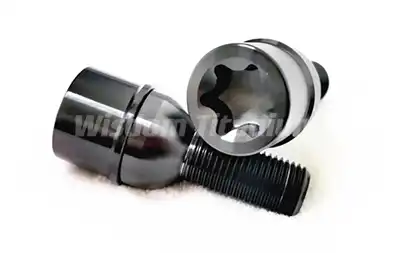
Do titanium wheel bolts need anti-seize? Not always. A titanium wheel bolt does not require anti-seize by default, but a thin, approved film on the threads can reduce galling and make removal easier. This helps most where wheels come off often or roads get salted. The catch is friction. Anti-seize lowers thread friction, so the same torque can stretch the bolt more than intended. I recommend using it only when the bolt or vehicle manufacturer approves it, and only with a matching lubricated torque value. Keep it off the seat and off brake surfaces.
At Wisdom Titanium, we make Grade 5 fasteners for brands that sell under their own name, and our team gets this question often. Below, I cover the thread science, the installation steps, the specification choices, and what to ask a supplier.
Why Titanium Wheel Bolts Can Need Special Thread Care?
Galling Explained
Sticky wear is called galling. There are tiny high spots that join together when two loaded metal surfaces roll against each other, and it tears away. Titanium is known to act in this way. When threads are dirty, out of place, or tightened too quickly, the thin oxide film can break under high contact pressure. Reference texts such as Titanium: A Technical Guide say that the metal is known to be weak against sliding wear. Galling can be seen as rough threads, hard turning, or a bolt that won't come out all the way. The risk goes up when you cross-thread, change wheels often, or use impact tools. Corrosion resistance doesn't protect against this kind of damage, so you should still be careful with the thread.
Galvanic and Seat Concerns
Tin is at the top of the galvanic group, which is called "noble." When salt water gets between titanium and aluminum, the aluminum can rust more quickly. As part of my job, I keep the hubs and wheels dry since many of them are made of steel or aluminum. Both the thread and the seat are important. You can't use a conical, ball, or flat seat in place of another one. If you do, the load will be concentrated on a small contact area. By having clean seats and the right shape, the clamping force stays even across the joint. A mismatched seat can't be fixed with paste or coating, so make sure you know what kind of seat it is before you think about lubricant.
What Hot Forging and Rolled Threads Change?
Good thread starts in the machine. The heads of our Titanium Gr5 (Ti-6Al-4V) bolts are hot-forged, and the threads are rolled. When you forge, you shape the head so that the grain goes with the part. Rolling makes the thread by pressing the metal together instead of cutting it. This keeps the grain flow steady and increases the wear life. The tensile strength of Titanium Gr5 (Ti-6Al-4V) is between 900 and 1050 MPa, or 130,000 and 152,000 psi. That strength doesn't take the place of the right choice of lubrication or torque. It does give brand owners a real, backed-up reason to say what they say about the process on a product page.
Anti-Seize, Threadlocker, or Dry Installation: Comparing the Options
Dry Installation
The easiest way to install is by leaving it alone. A lot of companies put out a dry torque value. If you follow it, you'll get the same preload every time because friction stays the same from bolt to bolt. Also, a dry bolt doesn't leave behind any dust that could get to brake parts. On the other hand, threads that are rough, dirty, or tightened a lot are more likely to gall. Taking care of the surface can help. PVD coatings, like the gold finish on our M7×24.5 bolt, make the surface harder so it doesn't wear down as quickly. The maker's data should still be used to get the coating thickness and friction numbers. When the supplier writes it down, dry installation works well and keeps the threads clean.
Approved Anti-Seize
Anti-seize is a paste that has solid lubricants and sometimes metal particles in it. On threads, it lowers friction, stops seizure, and keeps water and salt from getting into the joint. That helps owners who switch wheels every season in places where roads are salted in the winter. Preload is the price to pay. The work that Bickford did on bolted joints shows that there is a friction-dependent factor that changes torque into tension. This means that for the same torque, less friction means more tension. Also, make sure they are compatible. Some compounds have metals or halogens in them that might not work well with titanium when it's hot. Ask the company that makes the bolt what product it tried, and only put a thin film on the threads.
Threadlocker and Pre-Coated Options
Threadlocker wants to do something else. Anti-seize stops seizures, while it stops loosening. If you mix them without written permission, it can change how the friction and joints work. Threadlocker is not always the best choice for wheel joints because they depend on the clamp load and seat contact being just right. A third way is to use pre-coated titanium wheel bolts and anti-galling treatments. They make process control better because the film thickness is set by the factory instead of being put on by hand by a technician. Ask about the covering details, friction assumptions, curing needs, and written assembly steps before you choose a system. Your customers and the people who put the parts together can then use the same method.
How to Install Titanium Wheel Bolts Correctly, Plus Torque and Safety?
Fitment and Preparation
Start with fitting. Confirm the vehicle model, wheel design, thread diameter, pitch, length, thread contact, seat type, and head shape. It is not possible to use an M12 bolt with an M14 bolt, or a different pitch with a different pitch. Once the hub's threads and holes are clean, check each fastener for galling, cracks, deformation, heat discoloration, or damage to the seat. If the maker says it's okay to use a compound, only put a thin layer on the thread area. To stop cross-threading early, start each bolt by hand. Tighten in a crisscross pattern with a calibrated torque wrench. For the last bit of tightening, don't use an impact gun.
Torque Specifications and Friction
I never write down the force number on a steel bolt. The preload is determined by the wheel's clamp force, the material, the thread shape, the friction, the lube, the seat design, and the seat design. It's easy to see why since T = K × D × F is a normal relationship. When anti-seize is added, the friction factor K changes. This means that the same amount of force makes the bolt strain higher. Titanium is also less malleable than steel, which means it bends more when it is loaded. Ask your supplier for separate values for the oiled and dry parts, along with the test conditions that were used to get those values. For OEM, racing, fleet, and export projects, make sure the engineering team agrees with the use before going into production.
Mistakes to Avoid
Several things can cause a wheel seat to stop up: anti-seize on the seat, the wrong pitch or shape for the seat, mixing washers or locking systems, and a steel bolt torque value. As long as the instructions don't say otherwise, keep any compound away from the rotors, pads, and mating faces. Bolts that are galling, deforming, or showing strange resistance should not be used again. Another risk is buying cheap titanium that hasn't been recorded because you can't be sure of the grade, thread quality, or how it will react to wear. Track and fleet operators should write down the rules for inspections and the maximum amount of work that can be done so that all technicians follow the same set of rules.
Choosing the Right Titanium Wheel Bolt Grade and Specification
Grade 2 vs. Grade 5
Grade 2 titanium is pure enough for use in business. It doesn't rust and is easy to shape, but it's not as strong. Titanium Gr5 (Ti-6Al-4V) contains about 6% aluminum and 4% vanadium. It is much stronger than Grade 2 and is usually used for tough wheel gear. But don't just choose based on weight; also look at tensile, wear, temperature, and repair needs. Titanium's density is about 4.43 g/cm³ dense, while steel is 7.85 g/cm³ dense. How much you save will still depend on the length, shape, and number of washers, bolts, and fasteners used per wheel. Compare whole assemblies before you put a gram number in your ads.
Our Gr5 Specification
This is the information I give to brand owners. Titanium Gr5 (Ti-6Al-4V), which is used in our titanium wheel bolt, has a tensile strength of 900–1050 MPa (130,000–152,000 psi). The threads are rolled, and the head is hot forged. The M7×24.5 size comes in PVD gold, and 200 pieces are required as a minimum order. As a general rule, Titanium Gr5 (Ti-6Al-4V) bar follows ASTM B348. It's important for a gold finish that the colors are the same, so check a sample against a master piece before putting it on the market. All of the numbers above come straight from our product data. This makes sure that your product page is correct and easy to explain.
Inspection and Lifespan
When you change your tires every season, check the road-use bolts. Check the threads, seats, rust, contamination, and torque behavior. Keep the gear that has been taken off clean and dry. When used on a track, the intervals need to be shorter because heat cycles, vibration, and repeated installations wear down threads more quickly. So you can find the source of any problem, write down the dates of installation, the torque levels, and the service cycles. There is no one number for life span. The number of removals, the quality of the tool, cross-threading, heat, salt, and brake dust can all affect it. Replace parts according to the supplier's, vehicle's, or competition's rules, and get rid of any bolts that don't seem right.
How to Choose a Titanium Wheel Bolt Supplier or Manufacturer?
Documents to Request
A photo and a size don't tell you much. For titanium, you should ask about its grade, chemical make-up, tensile data, thread and seat dimensions, surface treatment, torque instructions, and inspection standards. For every batch, ask for a material test certificate (MTC). Before full production, you can expect to look over the drawings, make prototypes, check the sizes, and make pilot batches for custom work. When your brand needs independent proof, tension and salt-spray data can be checked by third-party labs. Written records are most useful when customers and experts speak different languages. They take away the need for guessing and give everyone the same point of reference.
Private Label and Confidentiality
Companies that sell their own sets need more than just good bolts. They need logos that are etched with a laser, custom packaging, labels with clear instructions, barcodes, and a supplier that the end customer can't see. As part of our service package at Wisdom Titanium, we sign NDAs, put logos on lasers, package models privately, and keep their identities secret. We can talk about models that are only available in certain areas in writing, so your idea doesn't show up in another store. Usually, it goes from a concept or sample to an NDA, then to a 10–30-piece prototype with brand and packaging, and finally to the first sale.
MOQ, Lead Time, and Location
Our minimum order quantity is 200 items. Do you have more than one model? Ask us how to plan batches for the whole set. The Baoji Wisdom Titanium Industry and Trading Co., Ltd. was established in 2016 and is an ISO 9001-certified manufacturer. We are in the Baoji Titanium Valley in Shaanxi Province, which is the biggest cluster of titanium businesses in China. Titanium sponge, ingots, bars, plates, tubes, and forgings are all in this group. We always have standard items and raw materials in stock at stable prices. It's important to get lead time in writing before you commit because launch dates are set in stone in this business.
Conclusion
An anti-seize doesn't have to be used on a titanium wheel bolt by default. The answer is based on the instructions from the manufacturer, the condition of the thread, and the service environment. At the same torque value, anti-seize can lower galling and make removal easier, but it can also lower friction and raise preload. This is why a specific greased torque value is needed. There are three ways to fix a problem: dry installation, threadlocker, and pre-coated bolts. Having the right fit, clean threads, a torque wrench that is calibrated, and regular inspections keep most failures from happening. Titanium Gr5 (Ti-6Al-4V), hot-forged heads, and rolled threads help with strength and fatigue life. Buyers can check claims with documents like MTCs. Grade, standard, paperwork, and seller support are all things to think about when picking a bolt, not just how much it weighs.
FAQ
Is copper anti-seize safe on titanium bolts?
Not by default. First, make sure that it works with titanium, the wheel material, the temperature, and the stopping conditions. Use a product that the person who made the bolt has approved.
Do I need a different torque value with anti-seize?
Yes. At the same torque, less friction makes the preload go up. Find out from your source what the lubricated number is and what the compound and test conditions were that came up with it.
Can I reuse titanium wheel bolts?
Only use them again if a close inspection shows that they don't have any galling, cracks, deformation, or seat damage. If a bolt turns rough or doesn't look solid, you should replace it.
What is the MOQ for your Gr5 titanium bolts?
The minimum order quantity (MOQ) for us is 200 pieces. That's how much the M7×24.5 PVD gold bolt starts at, which is made from Titanium Gr5 (Ti-6Al-4V) and has a hot-forged head and rolled threads.
Request a Titanium Wheel Bolt Quote from Wisdom Titanium
When it comes to private-label brands, Wisdom Titanium makes titanium wheel bolts with Titanium Gr5 (Ti-6Al-4V) hot forged, rolled-thread fasteners, NDA protection, laser logos, and custom packaging. Please email sales@wisdomtitanium.com with your drawing, thread size, length, seat type, quantity, and use case. We will then get back to you with technical details and a lead time. Check out our full line of products at wisdomtitanium.com as well.
References
- Titanium: A Technical Guide, ASM International, 2000
- Introduction to the Design and Behavior of Bolted Joints, CRC Press, 2007
- Materials Properties Handbook: Titanium Alloys, ASM International, 1994
- ASTM B348 Standard Specification for Titanium and Titanium Alloy Bars and Billets, ASTM International, 2019
- NASA-STD-5020 Requirements for Threaded Fastening Systems in Spaceflight Hardware, NASA, 2012
- Machinery's Handbook, Industrial Press, 2020