
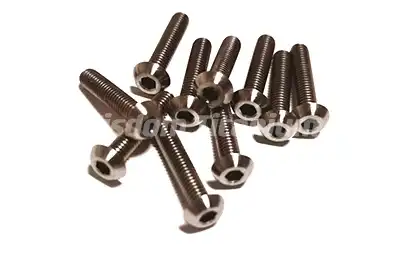
Because of the inherent differences between the imperial and metric thread systems, it is essential to know these differences before choosing titanium m3 bolts for demanding applications. Imperial threads are specified in threads-per-inch and measured in fractions of an inch, whereas metric threads are measured in millimeters with uniform pitches. In the aerospace, automotive, and precision manufacturing industries, these distinctions have a major effect on performance, compatibility, and purchasing choices. In mission-critical assemblies, thread profile differences impact stress concentration, load distribution, and fastener reliability as a whole.
Thread Standards: Metric vs Imperial
diverse production philosophies have developed from diverse industrial traditions, and this is reflected in the growth of threading standards. Throughout the specification process, metric threading—which was defined through ISO standards—uses metric measurements and a thread angle of 60 degrees. Although it uses inch-based measures and distinct pitch criteria, imperial threading, which has its origins in the manufacturing traditions of the United Kingdom and the United States, adheres to comparable geometric concepts.
Origins and Development of Thread Systems
The necessity for worldwide consistency in precision engineering is the acknowledged root of metric threads, according to manufacturing engineers. Pitch, in the context of the ISO metric thread system, is the millimeter-measured distance between neighboring thread peaks. This method makes calculations and specs more understandable for global procurement teams by providing consistent scaling across various titanium m3 bolt diameters.
The Anglo-American manufacturing ecosystems gave rise to imperial threads because of the predominance of fractional measurements in those regions. A new mathematical link between thread geometry and fastener strength is created by these systems, which specify threads per inch instead of pitch distance. Procurement experts can better traverse international supply chains if they have a firm grasp of these underlying distinctions.
Technical Specifications and Measurements
There is one major technical difference between these systems, and that is thread pitch. The thread pitch of normal metric M3 bolts is 0.5 millimeters, which means that the bolt advances half a millimeter for every full thread revolution. To guarantee compatibility and consistent performance in precision assemblies, this standard is maintained across all manufacturers.
The conversion between fractional and decimal measurements is necessary for imperial threading calculations. Threads that are approximately #4-40 or #6-32 in imperial size are comparable to M3, depending on the particular needs of the application. Direct substitution without engineering verification is not possible due to critical dimensions differences that are concealed by these apparent similarities.
The geometry of the thread angle impacts the patterns of stress concentration and load distribution inside the fastener assembly. The thread root radius and crest specifications can affect fatigue resistance and overall performance characteristics, while both systems use 60-degree thread angles. Under the extreme conditions encountered in the aerospace and automotive sectors, these nuanced distinctions take on an even greater significance.
Technical Properties of Titanium M3 Bolts Related to Thread Types
When it comes to fasteners, the performance characteristics are determined by the interplay between material properties and thread shape. Titanium m3 bolts made of Grade 5 titanium alloy have great corrosion resistance and extraordinary strength-to-weight ratios in a variety of applications. To make the most of these material benefits, thread profile accuracy is key.
Mechanical Performance Characteristics
Titanium fasteners' tensile strength and load-bearing capacity are directly affected by thread engagement. Engineers are able to make precise predictions about performance attributes thanks to metric threading's constant engagement depth estimates. M3 bolts strike a good balance between strength and installation ease with their 0.5 mm pitch, which produces ideal thread engagement for the nominal diameter of 3 mm.
With a tensile strength greater than 895 MPa, grade 5 titanium reduces assembly weight while outperforming aluminum and many steel equivalents. Rolled threads increase fatigue resistance via work hardening effects, and the machined head design guarantees dimensional precision. The material qualities are optimized by these manufacturing procedures for the demanding applications of precision machinery, aircraft, and racing.
Thread precision also affects temperature stability, which is an important performance attribute. Titanium serves well in thermal cycling applications due to its ability to retain structural integrity across a wide temperature range, from near-freezing temperatures to around 400°C. Accommodating thermal expansion in a predictable manner, the metric thread profile keeps engagement secure regardless of temperature changes.
Corrosion Resistance and Environmental Durability
As a result of reducing stress concentration locations, which are the usual sites of corrosion initiation, thread profile accuracy has a direct bearing on corrosion resistance. Metric threads, when made correctly, disperse stresses from the environment uniformly, which increases their durability for use in outdoor, chemical, and marine environments. This feature is especially helpful for auto repair firms that deal with automobiles that are exposed to salt from the road and other severe weather.
As long as galling is avoided during assembly, the non-magnetic titanium qualities make it safe to use with dissimilar metals without worrying about galvanic corrosion. Smooth installation and preservation of the precision thread profile necessary for maximum performance are both achieved by thread lubrication using molybdenum disulfide compounds.
Comparing Titanium M3 Threads to Other Fastener Types
Considerations of cost and availability must be balanced with performance requirements when materials are selected. Though titanium m3 bolts have their uses, there are some applications where other materials might be more cost-effective. Procurement decisions can be made with more knowledge of these trade-offs, leading to better project results.
Performance Comparison with Alternative Materials
Although they are less expensive initially, stainless steel fasteners have a substantial weight penalty when it comes to performance applications, but they offer sufficient corrosion resistance. When it comes to automotive applications, the weight of grade 316 stainless steel has a direct impact on acceleration, fuel efficiency, and handling characteristics. It's around 2.3 times heavier than titanium bolts that are equal. On top of that, stainless steel has magnetic qualities that could mess with delicate electrical systems.
Although aluminum fasteners are about the same weight as titanium, they are far weaker and don't last nearly as long. Aluminum bolts usually have a tensile strength of 200–400 MPa, therefore you'll need bigger fasteners or more of them to get the same load-bearing capacity. While this method compromises design flexibility and aesthetic concerns, it often eliminates weight advantages.
A new option for niche uses necessitating drastically reduced weight is carbon fiber composite fasteners. These fasteners aren't good for uses that need constant tweaking or maintenance because of their low reusability and directional strength characteristics. When compared to metallic fasteners, the threading properties of composite materials provide their own set of installation issues.
Industry-Specific Requirements and Applications
Fasteners that minimize weight penalties while maintaining performance over severe temperature ranges are required for aerospace applications. Titanium is the metal of choice for components that are crucial to the flight, as its weight-to-strength ratio and temperature stability minimize the severity of failure. Aerospace companies around the world benefit from the metric threading standard because it makes international supply chain management easier.
Materials used in medical devices must be biocompatible and able to withstand physiological conditions without succumbing to corrosion. Surgical tools and implanted devices cannot be constructed without titanium due to its required non-magnetic characteristics and remarkable biocompatibility. Metric threading's accuracy guarantees dependable operation in applications where dimensional precision affects patient safety, which are life-critical.
Fasteners in racing cars are subjected to chemicals from fuels and lubricants, as well as to high levels of vibration and temperature changes. For applications where weight reduction yields quantifiable performance benefits, such as wheel assemblies, brake components, and suspension systems, racing teams are increasingly opting for titanium fasteners. During time-critical pit stops, maintenance processes are simplified by metric systems' uniform thread engagement.
Procurement Insights for Titanium M3 Bolts With Different Threads
A thorough familiarity with the interplay between thread requirements, quality standards, and supply chain factors is essential for developing effective procurement strategies. Precision production and material certification have a direct impact on the performance and reliability outcomes of titanium m3 bolts, which are a specialist product category.
Quality Assurance and Certification Requirements
When buying titanium fasteners for important projects, it's crucial to be able to trace the materials. For every batch of their products, reputable vendors provide test certificates that detail the materials' chemical make-up, mechanical characteristics, and production procedures. These certifications allow customers to confirm that the product meets industry standards and keep track of quality for regulatory purposes.
Ensuring dimensional accuracy satisfies application requirements is the goal of thread gauge verification. As part of their professional procurement methods, companies often demand verification of gauge inspection results and stipulate thread class tolerances. While finer tolerances may be required for precision assembly or high-stress settings, class 6g tolerance provides standard clearance for general applications.
The variations between the production methods of rolled thread and machined thread are addressed in manufacturing process verification. Machined threads are more accurate in dimensions, making them ideal for precise applications, although rolled threads usually have better fatigue resistance due to work hardening effects. Buyers can better define suitable production techniques for particular application needs when they are aware of these trade-offs.
Pricing and Lead Time Considerations
Titanium fasteners can be pricey and hard to come by depending on thread type specifications. In general, metric requirements provide more competitive pricing and a wider pool of suppliers as a result of worldwide standardization initiatives. Imperial threading could lead to longer lead times and higher unit prices due to the need for specialist tooling or fewer manufacturing runs.
The trade-off between inventory carrying costs and the savings from buying in bulk should be considered when developing an ordering strategy. Due to its high corrosion resistance, titanium is ideal for long-term storage without worrying about degradation, which makes strategic inventory management a practical and affordable option for users who use it frequently. Depending on the specifics of your order, the typical manufacturing time for metric specs can be anything from seven to fifteen days.
Practical Guidance on Transitioning Between Metric and Imperial Threads
Thorough engineering review and project management are necessary for thread system migrations because to the opportunities and hazards they bring. In an effort to streamline global supply chains and simplify inventory management, more and more organizations are adopting metric threading standards. However, there needs to be a methodical approach to managing this shift to ensure compatibility.
Risk Assessment and Mitigation Strategies
The thread system transitional component that is most important is the testing of dimensional compatibility. Problems might arise when fasteners seem to fit but do not engage properly due to seemingly identical sizes in the metric and imperial systems. Each transition should be evaluated by a professional engineer to make sure there are enough safety margins and that the load is distributed properly.
Changing thread systems may necessitate adjustments to the assembly process. Changing thread properties frequently necessitates revising torque specs, installation sequences, and maintenance methods. In order to avoid installation mistakes that could endanger performance or safety, training programs for assembly technicians should take these differences into account.
When companies may specify multiple thread systems, they can diversify their supply chains. Businesses operating in different countries with varying threading preferences might benefit from this flexibility since it reduces supply risks and offers cost savings.
Implementation Best Practices
The applications that are most vital to user safety should be the first targets of standardization efforts, since they are the ones where uniformity may significantly lessen potential dangers. For new designs and major revision cycles, titanium m3 bolts with metric threading are a sensible choice due to the advantages they offer in international procurement and technical documentation.
To make sure the maintenance staff understands the new requirements, documentation needs to be updated whenever there is a modification to the thread system. To avoid any misunderstandings during service operations, thread standards should be explicitly identified in parts catalogs, assembly instructions, and maintenance procedures. To avoid mingling thread types during assembly, color coding or other visual identification methods can be useful.
Conclusion
Considerations in supply chain management, performance optimization, and procurement strategies are just a few areas where the difference between metric and imperial threads in titanium m3 bolts becomes apparent. New applications are increasingly favoring metric threading systems due to their benefits in technical documentation, precision manufacturing, and worldwide uniformity. Having a grasp of these distinctions allows for well-informed decision-making in many industrial applications, taking into account performance needs, cost, and operational complexity.
Partner with Wisdom Titanium for Premium Titanium M3 Bolts
Baoji Wisdom Titanium Industry and Trading Co., Ltd stands ready to meet your precision fastener requirements with ISO 9001-certified manufacturing capabilities and comprehensive quality assurance programs. Located in Baoji Titanium Valley, Shaanxi Province, we leverage China's most advanced titanium production ecosystem to deliver superior titanium m3 bolts manufactured from Grade 5 titanium alloy. Our experienced engineering team provides customized solutions for automotive, aerospace, and precision machinery applications, ensuring optimal performance and reliability. Contact sales@wisdomtitanium.com today to discuss your specific requirements and discover why leading manufacturers choose us as their trusted titanium m3 bolts supplier.
FAQ
Can metric and imperial titanium bolts be used interchangeably?
No, metric and imperial threads are not interchangeable despite similar apparent sizes. The thread pitch, angle geometry, and dimensional specifications differ sufficiently to prevent proper engagement and load distribution. Attempting to force incompatible threads can damage both the bolt and the receiving component, creating safety risks and potential assembly failure.
How can I identify whether a titanium bolt uses metric or imperial threading?
Metric bolts display sizing in millimeters (such as M3) and feature thread pitches measured in millimeters between peaks. Imperial bolts use fractional or numbered sizing with threads-per-inch specifications. Thread pitch gauges provide definitive identification, or you can measure the distance between thread peaks with precision measuring tools.
What are the cost differences between metric and imperial titanium bolts?
Metric titanium bolts typically cost less due to broader global availability and standardized manufacturing processes. Imperial threading may require specialized tooling or smaller production runs, potentially increasing unit costs by 15-30% depending on quantity and specification requirements. Bulk purchasing can help mitigate these cost differences for organizations with significant volume requirements.
References
1. International Organization for Standardization. "ISO 68-1:1998 ISO general purpose screw threads - Basic profile - Part 1: Metric screw threads." Geneva: ISO Press, 1998.
2. American Society of Mechanical Engineers. "ASME B18.2.1-2012 Square and Hex Bolts and Screws (Inch Series)." New York: ASME International, 2012.
3. Boyer, Rodney R. "An overview on the use of titanium in the aerospace industry." Materials Science and Engineering: A, vol. 213, no. 1-2, 1996, pp. 103-114.
4. Lutjering, Gerd and James C. Williams. "Titanium: Engineering Materials and Processes." 2nd ed. Berlin: Springer-Verlag, 2007.
5. Machinery's Handbook Editorial Board. "Machinery's Handbook: 31st Edition Toolbox." New York: Industrial Press, 2020.
6. Bickford, John H. "Introduction to the Design and Behavior of Bolted Joints: Non-Gasketed Joints." 4th ed. Boca Raton: CRC Press, 2008.




