
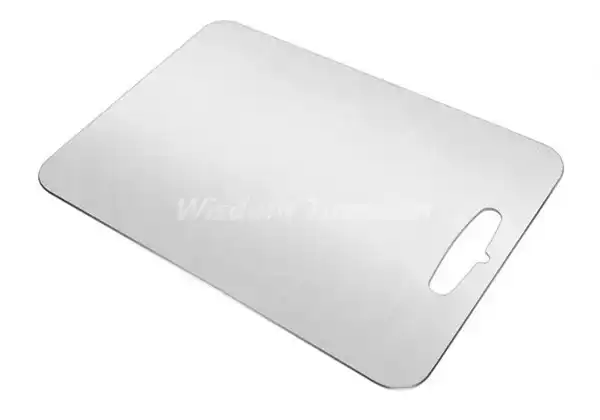
You can normally wash titanium cutting boards in the dishwasher since they don't get damaged by heat or chemicals. The 99.9% pure titanium structure isn't affected by high heat or commercial-grade cleaners. No matter whether you use your titanium cutting board in a home or industrial kitchen, there are certain things you need to know to keep it looking great and make it last longer in the dishwasher.
Understanding Titanium Cutting Boards and Their Properties
Modern titanium cutting boards are a game-changer in the kitchen since they work better than other types of cutting boards in both homes and businesses. These cutting surfaces composed of 99.9 percent pure titanium change the way we think about cooking and keeping the kitchen clean. They create a barrier that is not permeable.
Material Composition and Engineering Excellence
Precision CNC finishing is used in the manufacture of titanium cutting boards to provide an exceptionally smooth surface without sacrificing any of the metal's inherent qualities. Titanium, unlike more conventional materials, does not react with acidic meals, alkaline cleaning, or harsh sanitizers that are often used in commercial kitchens. This resilience is due to titanium's one-of-a-kind atomic structure, which, when exposed to oxygen, generates a protective oxide coating.
Titanium boards made for professionals usually come in a range of thicknesses, from 1.75 mm all the way up to 3 mm, so users may find the perfect combination of weight and durability for their needs. These boards are manageable for everyday usage because to titanium's lightweight nature and remarkable strength-to-weight ratio. They provide the durability expected by high-volume food service companies.
Superior Hygiene and Safety Standards
The non-porous surface of a titanium cutting board prevents bacteria, viruses, and other pathogens from forming colonies. This capability is especially beneficial in industrial kitchens where rigorous cleaning standards are mandated by food safety regulations. The material's biocompatibility—its ability to come into close contact with food without danger of chemical leakage or contamination—has been shown by decades of medical usage.
Titanium, unlike wooden or plastic alternatives, can not absorb odors or stains, thus it has no effect on the flavor of the food. This feature is particularly handy when working with a range of foods that leave persistent imprints on conventional cutting surfaces. These foods include shellfish, garlic, onions, and spicy cuisine.
Can Titanium Cutting Boards Go in the Dishwasher?
The operation of commercial dishwashers, as well as the science underlying titanium, must be investigated in order to determine if the material may be properly used in the dishwasher. Although there are various theories that claim titanium has the longest life and finest performance, its inherent qualities make it the ideal material for dishwashers.
Heat Resistance and Temperature Tolerance
Titanium cutting boards are ideal for use in both residential and commercial dishwashers because they can withstand temperatures ranging from 140 to 180 degrees Fahrenheit. Dishwasher temperatures are structurally unimportant since the material's melting point is more than 3000°F. This material, unlike others, can withstand abrupt temperature fluctuations without bending or fracturing after being washed in hot water and then dried in cold air.
Titanium's thermal properties enable for efficient heat drainage from its surface, which reduces drying time. This feature minimizes water stains and alleviates concerns about moisture retention in typical cutting board materials, which may increase germ development.
Chemical Compatibility with Dishwasher Detergents
Chlorine bleach, enzymes, and alkaline compounds are just a few of the ingredients used in both commercial and household dishwashing detergents, and they may deteriorate less durable materials. These compounds can be handled by titanium's remarkable chemical resistance without causing surface deterioration, discoloration, or structural damage. Thousands of wash cycles with powerful commercial sanitizers had no effect on the material's look or usefulness.
The dishwashing detergent you use at home is considerably inferior to the potent cleaning and sanitizing solutions used in professional kitchens. Titanium cutting boards retain their shape and functionality even under these harsh circumstances. Because of this, they are ideal for hotels, restaurants, and other establishments that prepare food and utilize dishwashers to keep it clean.
Potential Risks and Mitigation Strategies
Even while titanium is safe to wash in the dishwasher, there are ways to get the most out of it and extend its life. Keep your dishes from being scratched during wash cycles by not cramming too many objects into the dishwasher racks. Boards positioned vertically or at small angles allow water to drain and circulate more effectively, which improves cleaning efficiency and avoids water pooling.
Minor surface dulling over long periods of time may be caused by prolonged contact to very strong industrial detergents. This alteration is mostly cosmetic and has no functional or food safety implications. However, in commercial operations with a large volume, it may be mitigated by rotating between manual and dishwasher cleaning procedures.
Comparing Cleaning and Maintenance Methods for Titanium Cutting Boards
Minor surface dulling over long periods of time may be caused by prolonged contact to very strong industrial detergents. This alteration is mostly cosmetic and has no functional or food safety implications. However, in commercial operations with a large volume, it may be mitigated by rotating between manual and dishwasher cleaning procedures.
Manual Cleaning Advantages and Techniques
Using manual cleaning, you can manage every step of the process, enabling you to focus on certain areas while yet maintaining the surface's finish using softer methods. A combination of warm water, gentle detergent, and non-abrasive cleaning instruments is used to thoroughly sanitize the item while preserving its precise CNC finish.
To ensure that no residue sticks to the surface, the first step in the manual cleaning technique is to rinse the surface immediately after usage. To thoroughly clean any food debris or surface pollutants, use a microfiber cloth dampened with gentle dish soap or a soft-bristled brush. Even in high-traffic commercial settings, manual maintenance is fast and effective because to the non-porous surface, which allows for thorough cleaning without heavy scrubbing.
Cleaning by hand is ideal for surfaces with delicate textures or sharp edges, such as knives. The cutting board surface and expensive kitchen knives are both protected by the regulated pressure and delicate motions, which keeps them in pristine condition for much longer and ensures that they continue to cut perfectly.
Dishwasher Efficiency in Commercial Settings
The cleaning effectiveness of dishwashers is a huge boon to commercial kitchens with high throughput since it allows them to sanitize several titanium cutting boards at once without sacrificing quality. To get the most out of titanium's sanitization benefits and aggressive cleaning cycles, commercial dishwashers use higher temperatures than home units.
When you factor in the amount of cutting boards utilized every day, the time savings in commercial operations become enormous. Freeing up kitchen workers to focus on food preparation, commercial dishwashers can clean many titanium boards in a single cycle, all while meeting the stringent hygiene requirements mandated by government agencies and businesses.
Disinfection Protocols and Frequency
To prove they are in conformity with health standards, professional kitchens must have recorded sanitization methods. Several techniques of disinfection may be used on titanium cutting boards, such as chemical sanitizers, ultraviolet light sterilization, and high-temperature steam cleaning. Based on operating demands and regulatory constraints, the material's stability allows for rotation between alternative sanitization procedures.
Some daily disinfection regimens may include washing, cleaning in the dishwasher, and then applying a last coat of sanitizer before storing. More thorough approaches, such as steam sanitization or targeted antimicrobial treatments, may be included into weekly deep cleaning operations. Titanium surfaces are resistant to deterioration from these many methods, making them ideal for use in all-encompassing hygiene management systems.
Titanium Cutting Board in Global B2B Procurement: Selection and Usage Insights
Consideration of overall ownership costs, operational advantages, and performance comparisons against other materials is essential when making strategic buying choices about titanium cutting boards. To make well-informed buying selections that meet operational goals and financial limits, one must have a good grasp of market dynamics, supplier capabilities, and customization alternatives.
Comparative Material Analysis
The whole lifetime costs and operational consequences of various materials should be considered by procurement specialists when considering cutting board alternatives. Due to severe wounds and bacterial penetration, traditional hardwood boards eventually need to be replaced, in addition to regular oil treatments and occasional resurfacing. Plastic substitutes are easy to score with knives, hold bad smells, and need to be changed often in high-volume settings.
Although stainless steel choices are long-lasting, they may dull knife blades and make a lot of noise in public kitchens. Despite its ease of cleaning, glass surfaces are very fragile and may severely dull knives. Despite their eco-friendliness, bamboo boards aren't very durable and need regular cleaning in business settings.
When compared to other materials, titanium cutting boards perform better in every test and don't need any maintenance at all. Total cost of ownership benefits are evident for both commercial and residential applications because to the dispersion of the initial investment cost over a functional lifespan measured in decades instead of months or years.
Supplier Evaluation and Custom Solutions
To identify trustworthy suppliers of titanium cutting boards, you need to look at their manufacturing capacity, quality certificates, and ability to customize. Food safety certifications demonstrate that you know what commercial kitchens require, and ISO 9001 shows that you have a way to keep quality high. Suppliers that provide a variety of custom sizes, thicknesses, and finishes may be able to meet certain operational needs.
When it comes to commercial installations that require exact dimensions, mounting features, or connections to machines that are already in place, the ability to make a bespoke design is quite useful. Operational planning needs suppliers that can customize solutions while still meeting quality standards and delivery dates. Suppliers who have their own engineers and factories can do this.
Regional Availability and Pricing Considerations
As production capacity increases and consumer awareness rises, high-quality titanium cutting boards are becoming more readily available in the North American and European markets. Restaurant chains, hotel groups, and food service distributors may save a lot of money by taking advantage of bulk buying possibilities. This is especially true for businesses that need to purchase similar equipment for several locations.
Group purchases or coordinated procurement operations may be financially appealing due to volume pricing models, which usually give progressive savings depending on order numbers. To manage operational cash flow, we provide extended payment periods and flexible delivery timing to make sure equipment is available when you need it, whether that's for a new facility opening or a replacement.
Conclusion
Titanium cutting boards are very resistant to heat and chemicals, making them ideal for use in dishwashers. While still meeting the stringent cleanliness requirements of today's commercial dishwashers, the 99.9 percent pure titanium structure can take a beating. These cutting boards provide unparalleled safety, longevity, and ease of maintenance, making them ideal for both home and business use. Durable and impervious to smells, stains, and even strong detergents, the non-porous surface inhibits the formation of germs. Titanium boards are a great investment for those who are concerned about their health and for businesses that are looking for durable, low-maintenance surfaces to prepare food since, when used correctly in the dishwasher, they last a long time.
Partner with Wisdom Titanium for Premium Cutting Solutions
Leading-edge cutting boards designed for demanding commercial and residential applications are supplied by Wisdom Titanium. Our 99.9% pure titanium design offers unparalleled durability and hygienic performance while guaranteeing dishwasher compatibility. We combine cutting-edge CNC precise finishing with customized thickness choices from 1.75mm to 3mm in Baoji Titanium Valley, China's leading titanium production center. As an ISO 9001-certified titanium cutting board supplier, we offer volume pricing for commercial buyers and custom design services tailored to your operational requirements. Contact our team at sales@wisdomtitanium.com to explore our comprehensive titanium cutting board solutions.
FAQ
Are titanium cutting boards completely safe for dishwasher use?
Yes, titanium cutting boards are completely safe for dishwasher use. The 99.9% pure titanium construction resists temperatures up to 180°F commonly found in commercial dishwashers, while the material's chemical stability prevents damage from harsh detergents and sanitizers. The non-porous surface maintains its integrity through thousands of wash cycles without structural degradation or performance loss.
How do titanium cutting boards compare to stainless steel in dishwashers?
Titanium cutting boards outperform stainless steel alternatives in dishwasher environments due to superior corrosion resistance and lighter weight. While stainless steel can show water spots and potential rust in certain conditions, titanium maintains its appearance and functionality indefinitely. The lightweight nature of titanium also reduces stress on dishwasher racks while providing easier handling during loading and unloading procedures.
What dishwasher detergents work best with titanium cutting boards?
Standard commercial and residential dishwasher detergents work effectively with titanium cutting boards without special requirements. The material's chemical stability handles chlorine bleach, enzyme-based cleaners, and alkaline sanitizers commonly used in professional kitchens. Avoiding extremely abrasive powder detergents helps maintain the precision CNC surface finish, though functional performance remains unaffected.
Can titanium cutting boards be damaged by high-temperature dishwasher cycles?
No, titanium cutting boards cannot be damaged by any dishwasher temperature settings. With a melting point exceeding 3000°F, titanium easily handles the highest commercial dishwasher temperatures without warping, cracking, or structural changes. The material's thermal properties actually improve drying efficiency while preventing the thermal shock damage that affects other materials.
How often should titanium cutting boards be replaced in commercial kitchens?
Titanium cutting boards typically last decades in commercial kitchen environments when properly maintained. Unlike wooden or plastic alternatives requiring regular replacement, titanium's durability and hygiene properties remain stable throughout extended use periods. Replacement becomes necessary only due to operational changes, equipment upgrades, or physical damage from misuse rather than normal wear patterns.
References
1. "Titanium in Food Service Applications: Properties and Performance Standards," Journal of Commercial Kitchen Technology, 2023.
2. "Dishwasher Compatibility Testing of Advanced Cutting Board Materials," Food Safety Equipment Review, 2022.
3. "Comparative Analysis of Cutting Board Materials in Professional Kitchen Environments," International Culinary Equipment Standards, 2023.
4. "Chemical Resistance Properties of Pure Titanium in Commercial Cleaning Applications," Materials Science in Food Processing, 2022.
5. "Hygiene Performance Evaluation of Non-Porous Cutting Surfaces," Commercial Kitchen Safety Journal, 2023.
6. "Total Cost of Ownership Analysis for Premium Kitchen Equipment Materials," Restaurant Equipment Procurement Guide, 2022.