
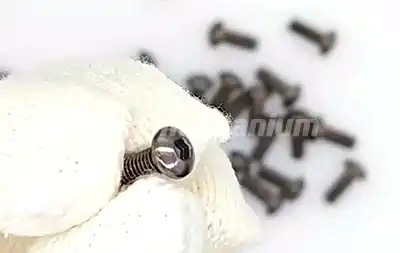
When evaluating fastening solutions for high-performance applications, safety stands as a non-negotiable priority. Mini titanium screws have gained significant traction across automotive, motorcycle, bicycle, and specialized industrial sectors, yet questions about their reliability persist among procurement professionals. The straightforward answer is yes—mini titanium screws are remarkably safe when manufactured to aerospace-grade standards and applied correctly. Constructed from titanium alloy (typically Ti-6Al-4V Grade 5), these precision fasteners deliver exceptional biocompatibility, corrosion resistance, and mechanical strength. Their safety profile stems from titanium's inherent chemical stability, which forms a protective oxide layer that prevents galvanic corrosion and allergic reactions. Unlike stainless steel counterparts that may trigger nickel sensitivity, titanium mini screws maintain bio-inertness in diverse environments. Proper installation, adherence to torque specifications, and sourcing from ISO-certified manufacturers ensure these components perform reliably under extreme conditions—from racing circuits to industrial machinery—without compromising structural integrity or user safety.
Understanding Mini Titanium Screws: Composition, Uses, and Safety
Mini titanium screws are accurately designed fasteners made for tasks that need high strength-to-weight ratios and resistance to damage from the weather. Ti-6Al-4V Grade 5 is a titanium alloy that is used as the main part. About 6% of it is aluminum, and 4% is vanadium. It is very light (only 4.43 g/cm³) and has a tensile strength of over 900 MPa. Steel screws are almost twice as heavy but have the same strength profile as mini titanium screws. This is because of how steel screws are made.
The first step in making something is to use spectrography to find out exactly what kind of metals are in high-quality titanium bars. This check makes sure that the metal always has the right amount of vanadium (3.5–4.5%) and aluminum (5.5–6.75%). High-end fasteners are different from Grade 2 titanium, which is often mistakenly thought to be stronger in lower-level markets. According to ISO 4759 standards, the measurements are correct, and laser profiling makes sure that the thread shape, which includes the major and minor sizes, meets the needs for standard speed clips, plastic bosses, and threaded receptacles.
Material Properties That Define Safety
The safety of mini titanium screws comes from three main things about the material. When titanium comes in contact with oxygen, it forms a stable, continuous film of titanium dioxide (TiO₂). This film can protect itself from things that break it down and fix itself. Regardless of temperatures between -200°C and +450°C, this passivation layer stays in place. In other words, you can use these screws in both hot and cold places. Because the material isn't magnetic, it doesn't cause electromagnetic interference with critical equipment. The bio-inertness of the material stops tissue rejection or inflammation reactions when it is used in medical settings.
These natural traits get better when they are worked on the surface. To make the surface harder, anodizing is used. This lets you use color-coding without changing the micro-thread limits. The surface is less likely to wear down after PVD coating, and sandblasting makes it easier for later treatments to stick. Tests with salt spray according to ASTM B117 make sure that coats will last and stay colored and sticky even after being in rough conditions for a long time.
Primary Application Sectors
Repair shops that make changes to cars for upgrades that need to be light use Mini titanium screws. When you switch from steel to titanium wheel hub bolts, the unsprung mass goes down. This makes the suspension more responsive and speeds up the car. Ti-6Al-4V brake caliper bolts can handle being heated and cooled many times without stress cracking, which is a common way for aluminum screws to break on race days. Racing teams like how well it doesn't wear out after being loaded and unloaded many times, especially when there is high-frequency shaking.
The people who make motorcycles use these fasteners in parts like brake disc assemblies, sprocket mounts, and chassis. When corrosion protection and lightweight building are put together, they solve two problems at once: they make things work better and last longer outside. Mini titanium screws with sizes ranging from M0.6 to M3.0 and lengths ranging from 1mm to 20mm are used by custom bicycle shops. Custom frames and parts can be put together with an exact fit thanks to these screws. Other fasteners would add extra weight.
Mini titanium screws are used instead of regular ones in places like the ocean, chemical processing equipment, and high-precision tools that are exposed to acids and bases. The material doesn't rust or pit in cracks, so it lasts longer between services. This saves money on repairs and downtime.
Technical Comparisons: Titanium Mini Screws vs. Other Options
People can make better choices about what to buy when they know how the different fastening technologies work differently. There are important trade-offs between mini titanium screws, standard stainless steel screws, and aluminum screws that will help you decide which ones are best for your job, how much they cost over time, and how safe they are.
Strength-to-Weight Analysis
Mini titanium screws have a tensile strength of 900+ MPa, which is about the same as high-grade stainless steel. However, they are only 45% as heavy. For the same amount of force, 316L grade stainless steel screws work just as well, but they add a lot of weight to systems that need to be light. These screws are not as strong as steel nails, but they are a lot lighter. Most of the time, their tensile strength is between 300 and 400 MPa. Because of this, aluminum screws should only be used for mounting things that aren't very important and won't be loaded and unloaded a lot or be under a lot of pressure.
Ti-6Al-4V is stronger than both of the other choices in terms of its specific strength (strength-to-weight ratio). Because of this, it is the best choice for tasks that need to work well. It has been found that wheel systems that have less rotational inertia work better in racing, with faster acceleration and better handling. Titanium rear axle nuts for bikes reduce the amount of mass that goes back and forth. This makes the suspension more responsive without affecting the reliability of the gripping power.
Corrosion Resistance and Environmental Durability
Because stainless steel screws generally have between 16 and 18% chromium, a rust layer that doesn't do anything forms on them. Many places have good protection from this, but places with a lot of chloride may not have as good of protection. This is because chloride can cause pitting corrosion and stress-corrosion cracks. Titanium has a layer of oxide that is more stable across a wider pH range and can handle salt spray much better than stainless steel.
If you put aluminum bolts in salt water, they rust quickly. They also react galvanically with metals that are not the same. Because of this electrical mismatch, it is hard to build things out of more than one element. Galvanic corrosion doesn't happen when titanium is in close touch with steel, aluminum, or carbon fiber parts because it doesn't combine with those chemicals.
Installation Characteristics and Tooling Requirements
Thread stripping during installation has been named as a problem. Titanium screwdrivers are less rigid than hardened stainless steel screwdrivers because titanium is more flexible. If too much force is used with the wrong tools, the titanium threads may bend before the bolt fits properly. If you use calibrated torque wrenches, make sure the drive sockets have the right design (Torx or hex heads instead of Phillips heads), and stick to the torque values the manufacturer says to, you won't have this problem.
When the surface is tested for Vickers or Rockwell C hardness, it is made sure to be tough enough so that drive pins don't round off when the tool is pressed on them. Tests that measure torque to failure are done on different base materials, like Delrin, aluminum, and composite structures, to make sure that the screw head stays together while it sits. When good companies try their goods in these ways before putting them on the market, the weak spot for stripping that comes with cheap screws is gone.
Installation and Handling Guidelines for Safe Use
Your safety and the length of time they last will depend on how well you place the mini titanium screws. There are good things about the material itself, but if it is handled wrong, these good things are lost and failure risks increase.
Pre-Installation Preparation
Threaded holes need to be checked out and cleaned before screws are put in. In receive holes, debris, rust, or thread damage can lower the gripping force and raise the installation torque in ways that are hard to predict. Thread chasers or taps fix threads that are broken and make sure they fit together correctly. When it comes to fitting Mini titanium screws, lubrication is still up for question. For some uses, anti-seize chemicals can help stop galling, but for others, you need to install the part dry to get accurate torque readings. Manufacturer's directions tell you what to do based on what you want to do.
Torque Specification Adherence
For important repairs, you need to use torque wrenches that have been pre-set up. Because it has a lower modulus of elasticity than steel, titanium bends more easily when put under the same amount of stress. When you over-torque a thread, it changes shape forever. This makes it less gripping and causes stress points that make fatigue failure happen faster. When a fastener is under-torqued, it can come loose when it's shaken. This is a big problem in places like cars and motorcycles where dynamic loading happens all the time.
The values for torque depend on the size of the screw, the distance between threads, and the material of the base. For M2.0 Mini titanium screws to thread into metal, they need 1.2 to 1.8 Nm of torque, and for M3.0 screws, they need 2.5 to 3.5 Nm. For composite substrates, lower values are needed to keep crushing from happening in one place. Torque advice should be in the product specs, and people who put things together should be taught how to find the right fastener seating qualities.
Tool Selection and Drive Socket Compatibility
It is less likely that the drive socket will become stripped when you use a hex or Torx drive setup instead of a Phillips or slotted one. How well power is transferred depends on the depth and length of the engagement. That is, a short contact puts more stress on the opening of the socket, which makes it more likely to bend. The drive holes in high-quality Mini titanium screws are carefully made and have the right depth ratios so that tools don't wear out too quickly or damage the connection.
Electric screwdrivers that are magnetic won't damage Mini titanium screws because titanium isn't magnetic. But it's important to keep the area where the parts are going to be installed free of ferrous particles that could cause galvanic corrosion in groups of more than one material.
Post-Installation Verification
It is clear that the threads are fully seated and that there is no damage that can be seen. It is important for torque audit methods to make sure that all nuts have the same holding force. For parts that move around a lot, thread-locking compounds made for titanium may help, but mechanical locking features like lock washers and safety wire often work better without adding chemicals.
In factories, healing times depend on how long it takes for thread-locking glue to harden or for composite boards to settle down while they are being clamped. Biocompatible fasteners that are used in medicine need to follow osseointegration steps, but these aren't usually used in factories or cars.
Conclusion
Mini titanium screws have been used for a long time to make things safer and better in cars, motorcycles, and factories. If you buy these screws from an ISO-certified company that uses aerospace-grade Ti-6Al-4V alloy and tighten them to the right level, they will last longer than screws made of stainless steel or aluminum. The material can be used in places that are sensitive to weight and rusting because it doesn't rust naturally, is biocompatible, and is strong for its weight. When buying something, certifications of the supplier, the ability to track materials, and full quality documentation should be more important than just the unit price. Mini titanium screws will become more common as recycling techniques and production technologies get better. This is because they work better and cost less over time. They will be used for more than just high-end things. It's not a question of whether Mini titanium screws are safe or not. What's being asked is how buying professionals can use their skills to make goods more competitive and make customers happier.
FAQ
1. Do titanium screws strip more easily than stainless steel?
Titanium is easier to shape than polished stainless steel. If the wrong tools are used with too much torque, the threads of mini titanium screws could be stripped. If the right steps aren't taken during installation, the difference in mechanical resistance between mini titanium screw threads and sharpened steel screwdrivers can cause them to bend. To ease this fear, use accurate torque tools that are set to the manufacturer's specs, pick Torx or hex drive setups that spread force evenly, and make sure the drive socket contact depth is correct. Good makers test their fasteners for Vickers hardness and torque-to-failure validation to make sure they won't strip when they're put in the right way. When used right, mini titanium screws are just as reliable as stainless steel screws, if not more reliable. They are also a lot lighter.
2. What temperature ranges can titanium mini screws withstand?
Ti-6Al-4V Grade 5 titanium metal doesn't change much in structure from -200°C to +450°C. It also doesn't lose any of its properties or spread. Mini titanium screws are very stable at high temperatures, so they can be used in places where temperatures change very quickly, in cryogenic environments, and in parts of high-temperature exhaust systems. The material doesn't expand much when it gets hot or cold (8.6 × 10⁻⁶/°C), so systems that are heated and cooled many times are less likely to come loose than with aluminum fasteners, which expand more quickly.
3. How do titanium mini screws compare in cost to stainless steel alternatives?
Most of the time, mini titanium screws cost three to five times as much per unit as stainless steel screws of the same size. This is because the raw materials cost more and are tougher to work with. Titanium doesn't handle heat well and doesn't work well with cutting tools. Because of this, it has to be made more slowly and with special tools, which makes it more expensive to make. When it comes to places where stainless steel rusts and needs to be replaced often, or when weight is an issue and performance gains are enough to cover the initial cost, lifecycle cost analysis often says that mini titanium screws are better than stainless steel. When you buy in bulk and stick with the same suppliers for a long time, the cost per unit goes down because of big savings and stable price agreements.
Partner with Wisdom Titanium for Premium Fastening Solutions.
Mini titanium screw manufacturers should have good technical skills, good quality systems, and a supply chain that you can trust. The Baoji Wisdom Titanium Industry and Trading Co., Ltd. was set up in 2016 and is based in the well-known Baoji Titanium Valley in China. The company is ISO 9001-certified and makes special CNC parts and titanium screws. Ti-6Al-4V Grade 5 alloy bars are one of the raw materials that our plant always has on hand. We can make things quickly and keep prices the same, even if the market changes. All fasteners are checked for their metallurgical make-up, their sizes according to ISO 4759, and their torque-to-failure before they are sent out. This makes sure that every run of production works the same way.
For people who want to change cars, race bikes, make bicycles, or use our goods in the business world, we can make them in widths from M0.6 to M3.0 and lengths from 1 mm to 20 mm. We can treat the surface of your product in-house by anodizing, sandblasting, or PVD finishing. During the whole production process, this keeps quality control high. Our skilled research and development (R&D) team works with clients to make answers that are unique to each situation. Changing the thread shapes for composite substrates or figuring out the best ways to set up drive sockets for automated assembly are two examples.
Email our team at sales@wisdomtitanium.com to talk about your fastening needs. We offer material certifications, engineering support, and sample quantities for validation testing to make sure that our titanium screws meet your performance and regulatory needs.
References
1. ASTM International. (2013). ASTM F136-13: Standard Specification for Wrought Titanium-6 Aluminum-4 Vanadium ELI Alloy for Surgical Implant Applications. West Conshohocken, PA: ASTM International.
2. Boyer, R., Welsch, G., & Collings, E.W. (1994). Materials Properties Handbook: Titanium Alloys. Materials Park, OH: ASM International.
3. Donachie, M.J. (2000). Titanium: A Technical Guide (2nd ed.). Materials Park, OH: ASM International.
4. International Organization for Standardization. (2017). ISO 4759-1:2017: Tolerances for Fasteners—Part 1: Bolts, Screws, Studs, and Nuts. Geneva: ISO.
5. Peters, M., Kumpfert, J., Ward, C.H., & Leyens, C. (2003). Titanium Alloys for Aerospace Applications. Advanced Engineering Materials, 5(6), 419-427.
6. Schutz, R.W., & Thomas, D.E. (1987). Corrosion of Titanium and Titanium Alloys. In Metals Handbook (9th ed., Vol. 13, pp. 669-706). Materials Park, OH: ASM International.