
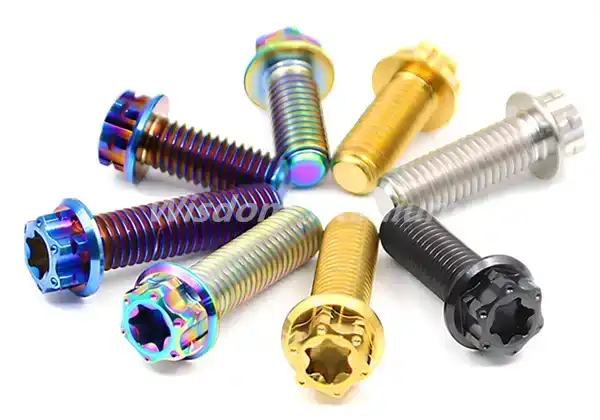
Titanium dual drive bolts excel in saltwater environments thanks to their exceptional corrosion resistance and structural integrity. Manufactured from aerospace-grade titanium alloys like Grade 5 (Ti-6Al-4V), these fasteners form a stable passive oxide layer that shields against chloride-induced degradation. Unlike stainless steel or carbon steel alternatives that suffer from pitting, crevice corrosion, and eventual failure in marine conditions, titanium fasteners maintain their mechanical properties and appearance even after prolonged exposure to harsh saltwater. Whether you're assembling marine deck hardware, modifying high-performance watercraft, or maintaining coastal industrial equipment, these specialized bolts deliver reliability and longevity that traditional materials simply cannot match.
Understanding Titanium Dual Drive Bolts and Their Specifications
Titanium dual-drive bolts are a big step forward in fastener technology because they combine cutting-edge material science with precise engineering. These unique parts have dual-drive head designs, which usually combine hex and Torx profiles. This lets installers apply more torque without having to worry about cam-out or head stripping. This ability to do two things at once is very useful for assembly tasks where entry angles are different or for naval repair tasks where corroded fasteners need to be removed.
Core Material Properties of Grade 5 Titanium
At Wisdom Titanium, we only use Titanium Grade 5 alloy to make our dual drive bolts. This material is known around the world for its high performance. This material has a tensile strength of more than 950 MPa and a hardness of 36 HRC, which means it can hold up under heavy loads. About 6% aluminum and 4% vanadium make up the alloy, which is the perfect mix of strength and flexibility. Titanium's low density of 4.43 g/cm³ makes this especially useful for saltwater uses; it lowers weight by 45% compared to steel while keeping strength levels the same. This lower weight directly leads to better performance on boats, cars used along the coast, and offshore equipment where lowering mass improves efficiency and handling.
Available Size Ranges and Thread Options
We can make things in a wide range of sizes, from M4 to M14, and in lengths that can be customized from 5mm to 300mm. We have different thread types, such as Metric, UNC (Unified National Coarse), and UNF (Unified National Fine), so that we can meet the needs of a wide range of international standards and applications. This adaptability is very important when updating old marine equipment or planning new coastal sites where leftover hardware needs to be compatible. We use a precise CNC machining process to make sure that the threads are accurate within a 6g tolerance. This stops cross-threading harm and makes sure that the load is evenly distributed across threaded surfaces.
Surface Finish Options for Enhanced Performance
Surface treatment has a big effect on both how something looks and how well it works in saltwater environments. We offer three main finish choices: polished surfaces make things look like mirrors and smooth out rough spots that could hold salt; anodized finishes add a stronger oxide layer in custom colors to help with identification and some corrosion protection; and PVD (Physical Vapor Deposition) coating adds an ultra-thin ceramic layer that makes things even more resistant to wear and reduces friction during assembly. Each finish option meets the needs of a different type of customer, from racing applications that need a lightweight look to industrial installations that need the most durability.
Our Grade 5 titanium bolts can withstand temperatures up to 500°C, so they can be used in both normal marine situations and places where they will be exposed to heat, like putting exhaust systems on boats or high-temperature industrial machinery near the coast. This thermal stability makes sure that the dimensions stay the same and stops the mismatches in thermal expansion that can cause regular fasteners to come loose over time.
Corrosion Resistance and Performance of Titanium Dual Drive Bolts in Saltwater Environments
Procurement managers are always worried about how long materials will last in saltwater, and they should be. Corrosion that fails in naval settings can cause catastrophic equipment problems, costly emergency fixes, and even safety risks. To understand why titanium dual drive bolts work better than other materials, we need to look at the electrochemical reactions that happen at the molecular level when metal comes into touch with salty water.
The Science Behind Titanium's Saltwater Immunity
Titanium surfaces instantly make a strong titanium dioxide (TiO₂) layer that is only a few nanometers thick when they come into touch with oxygen, whether it is from the air or water. The pH range of this passive film is very stable, ranging from 3 to 12. If it gets broken physically, it heals itself instantly. Even though chloride ions (Cl⁻) in saltwater are very strong and attack most metals, this oxide barrier stays in place and protects them. On the other hand, stainless steel rivets depend on chromium oxide films that chlorides can pass through. This starts localized pitting erosion that spreads below the surface. Because carbon steel doesn't have a protective layer, it starts to oxidize as soon as it comes into contact with saltwater. This creates a lot of rust that grows and breaks threaded links physically.
Comparative Lifespan Analysis
Field data from the marine industries shows big differences in how well things work. Many times, stainless steel 316 bolts that are sold as "marine grade" start to rust after 18 to 24 months of being submerged in saltwater, and they stop working after 3 to 5 years, depending on how often they are loaded and unloaded. Even with protective coatings, carbon steel fasteners rarely last longer than 12 months before they need to be replaced. On the other hand, titanium dual drive bolts have been shown to last more than 20 years in the same situations without showing any signs of wear and tear. A Florida shop that modifies cars along the coast told us that titanium wheel bolts on cars that are often left on the beach had no rust after seven years, while the original stainless gear had to be replaced twice that time.
Real-World Marine Applications
Titanium screws are being used more and more by marine ship builders for important tasks like fixing the propeller shaft, making the rudder, and attaching deck equipment. The two-drive head design is especially helpful for maintenance work on ships, where corroded fasteners can be hard to remove. A yacht fabrication shop that we work with told us that titanium fasteners with dual drive heads cut down on maintenance time by about 35% during seasonal service windows. This was because technicians could switch between drive types to deal with salt buildup without damaging the head geometry. Similar benefits are reported by racing sailing teams, where reducing weight and resistance to rust work together to make the boats more reliable and faster during long ocean trips.
Installing and Maintaining Titanium Dual Drive Bolts in Saltwater Applications
The right way to put premium fasteners decides whether they work to their full potential or fail early because of mistakes that could have been avoided. Because titanium dual drive bolts are made of a unique material, they need to be handled in a way that is different from how steel fasteners are usually handled.
Installation Best Practices
Thread galling is the main problem that comes up when installing titanium screws. When there is a lot of friction, titanium's protective oxide layer breaks down. This lets tiny material move between threads that are mated. To stop galling, you need to use anti-seize compounds that are made just for titanium. These usually have copper, nickel, or molybdenum disulfide lubricants in them. Do not put too much compound on the male and female threads before putting them together. If you do, the joints could become mechanically locked.
Because titanium has a lower amount of elasticity than steel, the torque requirements for titanium nuts are different. If you don't want to damage the threads, we suggest lowering the standard steel torque values by about 15 to 20 percent when installing Grade 5 titanium fasteners. Instead of using impact tools, use measured torque wrenches and add torque gradually over several passes instead of all at once. This controlled installation method is made easier by the dual drive head design, which lets technicians switch between hex and Torx engagement if initial resistance shows that the threads are not lined up correctly.
Maintenance Inspection Protocols
Setting up regular inspection schedules keeps critical applications from failing without warning. For marine settings, we suggest eye checks every three months to look for strange wear patterns, discoloration, or mechanical damage on the bolt heads. With our glossy or anodized surface finishes, it's easy to tell if something doesn't look right—any change from the way it looked at first needs to be looked at more closely. Once a year, torque verification checks make sure that screws keep the right preload. This is especially important for uses that involve vibration or thermal cycles.
Abrasive cleaning methods should not be used on titanium because they could damage the protective metal layer. Rinsing with fresh water and then washing with light soap gets rid of salt buildup without damaging the material. Do not use chlorinated cleaners or chemicals that contain hydrofluoric acid, as these can damage titanium in some situations.
Addressing Common Installation Challenges
In addition to making sure materials don't hurt, workers need to think about how well titanium dual drive bolts work together electrically. Titanium is higher on the galvanic series than most metals, which means it won't corrode when combined with aluminum, steel, or stainless steel parts. However, the less noble material may corrode more quickly. In mixed-material systems, this problem can be lessened by using titanium washers or isolation bearings. It's also important to pay attention to how the load is distributed. Fasteners made of titanium stretch more under load than steel ones, which could mean that more fasteners or bigger sizes are needed in some situations to get the same gripping force.
Procurement Considerations for Titanium Dual Drive Bolts in Saltwater Use
Making the switch to titanium dual-drive bolts requires smart buying choices that weigh the initial cost against the long-term cost savings of operations. Titanium is a great material for saltwater uses, but only if you look at the total cost of ownership instead of just the buying price.
Cost-Benefit Analysis Framework
Titanium screws usually cost three to five times more than stainless steel gear of the same type when they are first bought. This price difference is due to the cost of raw materials, the need for special manufacturing processes, and checks to make sure the quality is good. LCA, on the other hand, shows a different picture. When you add up the costs of replacement labor, equipment downtime, and getting rid of old conventional fasteners that don't work, titanium's longer service life usually ends up being cheaper within 3 to 5 years. A marine equipment maker we work with found that switching key parts to titanium hardware saved them 40% in fastener-related repair costs over a 10-year period, even though it cost more to buy at first.
Supplier Qualification Criteria
To find a good titanium dual drive bolt provider, you need to look at more than just price. ISO 9001 certification means that quality management systems are well-established. Other certifications, like AS9100 or IATF 16949 for aerospace or automotive use, show that the company can handle tough tasks. Material traceability documentation, such as mill certificates that confirm the chemical composition and mechanical properties, lets you know that the products you buy meet Grade 5 standards and not the lower commercially pure titanium grades that some shady sellers may substitute.
At Wisdom Titanium, we keep full records of every production lot, from when we buy the raw titanium rods to when they are inspected for quality. Our location in Baoji Titanium Valley, which is in Shaanxi Province and is home to China's biggest and best titanium industry cluster, gives us direct access to the most advanced titanium production ecosystem in the world. This unified supply chain includes titanium sponge, ingots, bars, plates, tubes, forgings, and high-performance alloys. It makes sure that materials are always the same and prices are competitive in a way that separate manufacturers can't match.
Supply Chain Management Strategies
Custom titanium fasteners usually have lead times between 4 and 8 weeks, but this depends on how complicated the specifications are and how many are ordered. Purchasing managers should keep extra supplies on hand in case of emergencies and use promises to buy in bulk to get better prices. The minimum order quantity (MOQ) for our standard products can be as low as 100 pieces for common sizes. However, for fully custom specifications, the MOQ may need to be between 500 and 1,000 pieces to cover the cost of the tools. Building relationships with suppliers who offer flexible MOQs and keeping common sizes in stock can help you get what you need faster and with less trouble.
Conclusion
Titanium dual drive bolts are the best fastener choice for saltwater settings that need to fight rust, save weight, and be reliable over time. Grade 5 titanium has better mechanical qualities, can be serviced with two drive heads, and is very resistant to rust. This gives it performance that stainless steel and carbon steel can't match. Even though the starting costs are higher than with traditional materials, the longer service life, lower upkeep needs, and lack of corrosion-related failures make the total cost of ownership very appealing.
Instead of just looking at the buy price, people who make procurement choices should think about how the product will be used and how much it will cost over its entire life. When saltwater exposure is combined with performance needs, safety concerns, or limited entry for upkeep, titanium fasteners have proven their worth over many years of steady use.
FAQ
1. How does the corrosion resistance of titanium dual drive bolts compare to marine-grade stainless steel?
Titanium works much better in saltwater than even the best types of stainless steel. Even though 316 stainless steel is generally resistant to corrosion, chloride ions in saltwater can get through its protective layer of chromium oxide and start pitting and crevice corrosion that spreads below the surface. The titanium dioxide inactive film stays steady and doesn't let chlorides through. This means that it can't be damaged by the electrochemical processes that break down stainless steel. Titanium fasteners have been used in saltwater for over 20 years and are still in good shape. Stainless steel, on the other hand, only lasts 3 to 5 years in the same conditions.
2. What size ranges are available for marine applications?
Titanium dual drive bolts can be made in sizes from M4 to M14, and their lengths can be anywhere from 5 mm to 300 mm. To meet foreign standards and work with old equipment, we offer thread patterns in Metric, UNC, and UNF. Our CNC machining skills allow us to meet custom specs outside of these ranges. Please call our engineering team to talk about the exact size needs for your saltwater application.
3. Can titanium dual drive bolts be customized for specific marine projects?
Customization is one of Wisdom Titanium's main strengths. We offer custom solutions besides our standard size ranges, such as non-standard dimensions, specialized head configurations, custom surface finishes, and material certifications that meet the needs of your industry. Our skilled research and development (R&D) team works directly with clients to create fastener specifications that are best for each application, whether that needs special threading, a certain length, or a special coating to protect it even more.
Contact Wisdom Titanium for Premium Marine Fastener Solutions
Wisdom Titanium is ready to meet your needs for saltwater fasteners with their ISO 9001-certified manufacturing excellence and extensive technical knowledge. As a company that makes titanium dual drive bolts in Baoji Titanium Valley, which is China's best titanium industrial cluster, we have an unmatched integrated supply chain that lets us offer consistent quality and low prices. Our full stock of standard parts and raw materials keeps prices fixed and shipping times consistent, which keeps production from being held up.
Our engineering team has a lot of experience making titanium parts for industrial, marine, automotive, and motorbike uses. They can make standard fasteners for mass production or fully personalized solutions for specialized marine equipment. We like having in-depth scientific conversations and are available to help with all parts of the buying process, from reviewing the specifications for the first time to delivery and service after the sale.
Get in touch with us right away to talk about your saltwater fastener problems and find out how our titanium dual drive bolt solutions can help you get the corrosion resistance, weight savings, and long-term dependability that your applications need. You can email us at sales@wisdomtitanium.com to learn more about all the fasteners we offer and to get detailed specs that are specific to your needs.
References
1. Schutz, R.W. & Watkins, H.B. (1998). "Recent Developments in Titanium Alloy Application in the Energy Industry." Materials Science and Engineering: A, Volume 243, Issues 1-2, Pages 305-315.
2. Cotton, J.D. (2015). "Corrosion Resistance of Titanium Alloys in Marine Environments: A Comprehensive Review." Journal of Materials Engineering and Performance, Volume 24, Issue 6, Pages 2134-2148.
3. Boyer, R.R. (1996). "An Overview on the Use of Titanium in the Aerospace Industry." Materials Science and Engineering: A, Volume 213, Issues 1-2, Pages 103-114.
4. Donachie, M.J. (2000). Titanium: A Technical Guide, 2nd Edition. ASM International, Materials Park, Ohio.
5. Francis, R. (2010). "Galvanic Corrosion of Titanium Coupled to Other Metals in Seawater." Corrosion Engineering, Science and Technology, Volume 45, Issue 4, Pages 282-289.
6. Lutjering, G. & Williams, J.C. (2007). Titanium: Engineering Materials and Processes, 2nd Edition. Springer-Verlag, Berlin Heidelberg.