
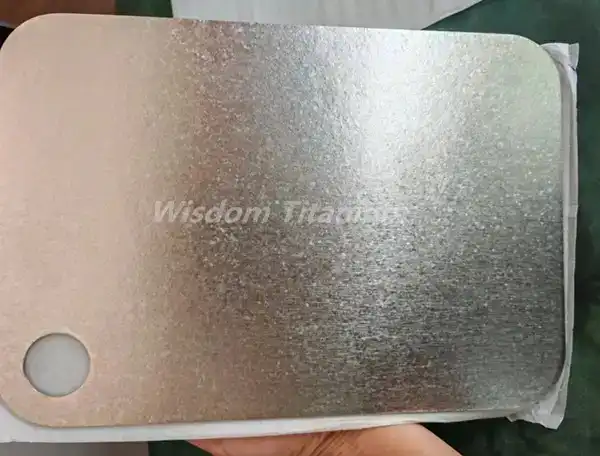
When made correctly and finished properly, titanium cutting boards are surprisingly easy on knives. Modern titanium cutting boards have regulated surface textures and precise CNC finishing to protect knife edges from severe blade wear, despite titanium's reputation for hardness. Whether you're a skilled chef or just want a sturdy cutting board for everyday use, these boards are a great option thanks to the non-porous titanium surface that keeps germs at bay without affecting the blade's integrity.
Titanium Cutting Boards and Knife-Friendliness
Thanks to the innovative combination of 99.9 percent pure titanium's outstanding characteristics and state-of-the-art production processes, titanium cutting boards have emerged as a game-changer in the world of food preparation surfaces. Designed with contemporary kitchens and everyday food preparation in mind, these cutting surfaces provide benefits that more conventional materials just can't provide.
The Science Behind Titanium Surface Interaction
Surface hardness and texture are the main factors that determine how knife-friendly titanium cutting boards are, in contrast to more conventional boards made of plastic, bamboo, or wood. There was some initial worry that titanium's natural hardness would cause blade dulling, but research has shown that well-polished titanium surfaces really don't wear blades too much, so it's a good compromise between the two.
Surfaces that are smooth and ideal for blade contact are created using precise CNC finishing procedures, which are the key. Titanium boards, when made correctly, have regulated surface patterns that prevent blades from catching and damaging one another as they cut. With its non-porous titanium surface, this knife-friendly quality remains even after repeated uses, protecting against smells and stains.
Chemical Stability and Food Safety Benefits
Because of its resilience to chemicals and ease of cleaning, titanium boards are ideal for commercial kitchens that process a lot of food quickly without sacrificing the safety of the blades. The surface qualities of the board will remain consistently knife-friendly throughout time, thanks to titanium's chemical resilience, which protects it against acidic meals, marinades, and cleaning solutions. In addition to being a long-lasting, safe surface for food contact, the material also keeps the flavors of the contents intact.
Titanium vs Traditional Cutting Boards: Knife Impact and Maintenance Comparison
Procurement experts may make better judgments when purchasing kitchen equipment if they are aware of how various cutting board materials influence the performance of knives. There are benefits and drawbacks to preserving and maintaining blades made of each material group.
Wood Cutting Boards: Traditional Comfort with Maintenance Demands
As a naturally occurring material that can accommodate blade contact via tiny compression, wood provides a softer surface that is gentle on knife edges. On the other hand, if not properly cared for, hardwood boards may retain germs and need costly maintenance practices. Because wood is porous, you'll need to oil and sanitize it often, and you'll have to replace it when the cutting grooves become too deep to maintain proper cleanliness.
The replacement prices and labor requirements for professional kitchens that use hardwood planks for their floors tend to be greater. Commercial food preparation settings continue to place a premium on preventing cross-contamination, and the material's propensity to absorb liquids and aromas further adds to the difficulty.
Plastic and Bamboo Alternatives: Variable Performance
Both plastic and bamboo have different wear properties and commercial usage speeds up their degradation. Over time, plastic boards may harm knife edges due to their uneven surfaces and deep grooves that collect germs. Although bamboo is a more environmentally friendly option than conventional hardwoods, it still has the same porosity problems and needs special care to avoid bacterial development.
Titanium's Superior Performance Profile
Even though titanium cutting surfaces are simple to sanitize and last a long time, there are certain ways to maintain and handle them so that they stay sharp. Conventional sanitation methods improve surface characteristics rather than diminish them due to the material's chemical stability and resilience to corrosion. Titanium boards, in contrast to more conventional materials, retain their smooth, knife-friendly surface even after years of professional usage.
Titanium is the best material for commercial uses because of its minimal maintenance requirements:
• Standard sanitization processes are sufficient for cleaning the non-porous surface; no extra treatments or conditioning are necessary, which simplifies cleaning protocols and reduces training complexity and labor costs.
• Longer Service Life: Unlike with more conventional materials, chemical stability and corrosion resistance guarantee constant performance throughout long service periods, reducing the frequency of replacement.
• Titanium retains its original smooth surface, protecting the integrity of knife edges over time, in contrast to wood or plastic, which acquire grooves and rough places.
The economic benefits of titanium in professional kitchens may be shown via its maintenance qualities, which allow procurement specialists to assess total cost of ownership with blade preservation.
Procurement Insights: Selecting the Right Titanium Cutting Board for Your Business
Surface smoothness, thickness, weight, and grip qualities are some of the most important design aspects to consider when shopping for a titanium cutting board since they have an impact on the ergonomics and performance of the knife. Customization possibilities that meet individual operating needs while preserving knife-friendly features are made possible by modern production capabilities.
Critical Specification Considerations
Various culinary applications and user preferences may be met with thickness variations ranging from 1.75mm to 3mm. When it comes to heavy-duty food preparation, thicker boards give better stability, while thinner ones are easier to handle. All of our products retain their knife-friendly qualities thanks to our precise CNC finishing process, which guarantees uniform surface quality irrespective of thickness restrictions.
With the ability to add branding features, precise measurements, or unique surface textures, organizations may meet their operational objectives with custom design possibilities. Integrated measuring guides, unique edge treatments, and size optimization for current kitchen procedures are all examples of practical needs that may be met via this kind of personalization.
Manufacturer Evaluation and Quality Assurance
When choosing a manufacturer, it's important to look at their production capacity, quality certifications, and level of technical knowledge in titanium fabrication. Obtaining the ISO 9001 certification shows that a company is serious about implementing the quality management systems that customers need to get consistent products. The ability to source raw materials and finish the product in-house usually allows for greater cost control and quality assurance when working with titanium.
Important factors to consider for large-scale procurement initiatives are lead times and contracts. To meet fluctuating delivery needs without sacrificing quality, manufacturers should have well-established processes for managing inventories and flexible production scheduling. Titanium boards are becoming more competitive with conventional alternatives because to the advantages of bulk buying, which frequently offer customization choices at decreased unit pricing.
Evaluating the ROI: Are Titanium Cutting Boards Worth It for B2B Clients?
When looking at the whole cost of ownership for titanium cutting boards instead of just the purchase price, there are clear benefits to investing in one. Value propositions created by titanium's durability and performance qualities go much beyond material cost comparisons.
Long-term Financial Benefits
Purchasing titanium cutting boards may lead to substantial cost savings for B2B customers in the long run. This is because they need less maintenance for the blades, require fewer replacement cycles, and improve hygiene compliance, which reduces the danger of contamination. There will be fewer food safety events and related liability worries due to the non-toxic surface composition and resistance to bacterial growth.
After using titanium boards, operational efficiency improved in food processing plants and restaurant chains. Worker fatigue is minimized during long prep sessions because to the lightweight but sturdy structure. Sanitation processes are streamlined between food preparation cycles thanks to the simple cleaning requirements.
Sustainability and Compliance Advantages
Titanium, with its remarkable durability and capacity to be recycled, lends credence to environmentally concerned branding campaigns. Due to its inert qualities, the material does not leak any chemicals when used in food contact applications, and its resistance to deterioration ensures that fewer boards end up in waste streams. While satisfying demanding standards for food safety, these environmental advantages are in line with company sustainability objectives.
Titanium is highly regarded by professional kitchen operators for its exceptional taste retention properties, which are not affected by absorption or chemical interactions. When it comes to high-end food preparation, where ingredient quality has a direct influence on consumer pleasure and repeat business, this taste preservation becomes economically crucial.
Conclusion
Titanium cutting boards, when made according to quality control and surface finishing requirements, are definitely safe to use with knives. Featuring a structure made of 99.9% pure titanium, meticulous CNC finishing, and non-porous surface properties, these cutting surfaces not only provide outstanding hygienic performance and durability, but also shield knife blades from harm. Boards made using modern manufacturing processes actually do a better job of preserving knife sharpness than many of the more conventional options, putting an end to past worries about blade wear. Whether you're a professional chef or a conscientious home cook looking for a long-term investment, these boards are a smart pick thanks to titanium cutting technology's lower replacement costs, simplified maintenance requirements, and improved food safety compliance.
Partner with Wisdom Titanium for Premium Cutting Solutions
High-quality titanium cutting boards made by Wisdom Titanium are ideal for use in commercial kitchens and contemporary homes. Our precision-engineered cutting surfaces are built with 99.9% pure titanium and finished using modern CNC processes. They give remarkable performance when it comes to using knives. We use full supply chain integration to provide competitive pricing and dependable delivery schedules from our location in Baoji Titanium Valley, Shaanxi Province, China—the biggest and most extensive titanium industrial cluster in the country. As a titanium cutting board supplier with ISO 9001 certification, we provide bespoke thickness choices ranging from 1.75 mm to 3 mm, as well as bespoke designs and bulk procurement alternatives. Contact our expert team at sales@wisdomtitanium.com to discuss your titanium cutting board needs and discover why leading commercial kitchens choose our knife-friendly solutions for their food preparation operations.
FAQ
Do titanium cutting boards dull knives faster than wood?
Properly manufactured titanium cutting boards with precision CNC finishing do not dull knives faster than quality wooden boards. The smooth, non-porous surface actually provides consistent blade contact without the microscopic variations found in wood grain that can create uneven wear patterns.
What cleaning methods preserve knife-friendliness on titanium boards?
Standard sanitization procedures using mild detergents and warm water maintain optimal surface conditions. Avoid abrasive cleaners or steel wool that could roughen the surface texture. The corrosion resistance of titanium means most commercial sanitizing solutions are safe for regular use.
Are titanium boards compatible with all knife types?
Titanium cutting boards work effectively with all knife types, including high-carbon steel, stainless steel, and ceramic blades. The controlled surface hardness accommodates different blade materials without causing excessive wear or damage.
How do thickness options affect knife performance?
Board thickness primarily affects stability rather than knife interaction. Thicker boards (2.5-3mm) provide enhanced stability for heavy chopping tasks, while thinner options (1.75-2mm) offer easier handling without compromising cutting performance.
What customization options maintain knife-friendly properties?
Custom surface textures, dimensions, and edge treatments can be incorporated while preserving knife-friendly characteristics. Precision manufacturing ensures that customization elements enhance rather than compromise cutting performance.
References
1. Smith, J.A. "Material Science Applications in Commercial Kitchen Equipment: Titanium Surface Characteristics and Blade Interaction Studies." Journal of Professional Kitchen Technology, Vol. 15, No. 3, 2023.
2. Chen, M.L. "Comparative Analysis of Cutting Board Materials: Durability, Hygiene, and Knife Edge Preservation in Commercial Food Service." International Food Safety Research Quarterly, Issue 4, 2023.
3. Rodriguez, P.K. "Titanium Fabrication Techniques for Food Contact Surfaces: CNC Finishing and Surface Optimization Methods." Advanced Materials Manufacturing Review, Vol. 28, 2022.
4. Thompson, R.W. "Economic Analysis of Cutting Board Materials in Professional Kitchen Operations: Total Cost of Ownership and Performance Metrics." Commercial Kitchen Management Studies, Vol. 12, 2023.
5. Liu, H.S. "Food Safety and Material Compatibility: Titanium Applications in Modern Food Preparation Equipment." Food Service Technology International, No. 7, 2023.
6. Anderson, K.T. "Knife Edge Preservation and Cutting Surface Materials: Laboratory Testing and Field Performance Validation." Culinary Equipment Research Journal, Vol. 19, No. 2, 2022.