
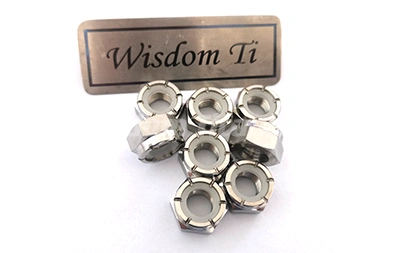
Electric vehicle platforms keep evolving, but one rule has not changed: every gram matters. As battery packs grow, and ranges increase, EV engineers look for weight savings in places that used to be ignored. Fasteners, once a simple catalog choice, now sit inside range models and safety calculations. In this context, many design teams are turning to the titanium nylock nut to lock critical joints without adding extra mass.
From battery enclosures and underbody shields to powertrain mounts and crash structures, lightweight lock nuts help protect both passengers and high‑value components. At the same time, they must stand up to vibration, thermal cycles, and harsh road environments year after year. Baoji Wisdom Titanium, located in China’s “Titanium Valley” in Shaanxi Province, supports global EV manufacturers with titanium fasteners designed for these demands. The following sections explain why this specific fastener solution suits modern EV design, how it supports your engineering targets, and how to move from curiosity to a concrete inquiry.
Lightweight Locking Performance for Modern EV Platforms
Weight Reduction and Energy Efficiency in Electric Vehicles
Range anxiety still shapes many buyer decisions. Original equipment manufacturers invest heavily in improving battery energy density, aerodynamics, and rolling resistance. Yet studies by organizations such as the International Energy Agency show that basic mass reduction continues to deliver clear benefits: lower vehicle weight reduces energy consumption per kilometer, improves acceleration, and allows smaller brake systems.
Traditional carbon steel or alloy steel nuts contribute more mass than many engineers expect. A complete EV uses thousands of threaded fasteners. When you replace a portion of these with titanium versions, including the titanium nylock nut, the cumulative weight reduction can reach several kilograms. This gain may not sound dramatic in isolation, but it directly influences range, battery size options, and even the size of cooling systems.
Titanium offers an excellent strength‑to‑weight ratio. It typically weighs around 40 % less than steel but maintains comparable tensile strength when you select the proper grade. For EV manufacturers chasing every percentage point of efficiency, this density advantage supports both performance and sustainability goals, especially when you apply it in areas with high fastener counts such as battery modules and body‑in‑white.
How Nylock Inserts Help EV Assemblies Resist Vibration
Electric drivetrains produce a different vibration spectrum compared with internal combustion engines. Frequency peaks shift, and the noise profile changes, but mechanical loads still pass through mounts, frames, and enclosures. Battery packs see vibration from road inputs rather than engine cycles, yet those inputs can be severe, especially in light trucks and SUVs.
A nylock nut uses a nylon insert at its top section. When the nut is tightened, the bolt threads displace the nylon slightly and create a prevailing torque. This friction resists rotation, so the nut does not loosen easily under repeated micro‑movements. For EVs that must stay safe for over ten years of daily use, this extra layer of security around critical joints is valuable.
Engineers who work on battery housing frames, busbar supports, and under‑floor covers often select a titanium nylock nut where they need a non‑welded joint that stays locked across millions of vibration cycles. By combining titanium’s mechanical stability with nylock technology, they reduce the risk of shock‑induced loosening without resorting to heavy locking plates or bulky secondary hardware.
Corrosion Resistance in Road Salt and Moisture Exposure
EVs still drive on the same roads as conventional vehicles. They face the same splashes of water, mud, and winter road salts. Corrosion is not just a cosmetic issue. If a standard steel nut corrodes on a battery tray or underbody shield, service work becomes difficult, and technicians may damage parts while trying to remove seized fasteners.
Titanium forms a thin, stable oxide film that protects it from many corrosive agents, including chlorides present in road de‑icing salts. Research covered in titanium reference guides from ASM International confirms that titanium offers outstanding resistance in many chloride‑rich and mildly acidic environments. In EV applications, this resistance helps hardware remain removable and functional during long vehicle life cycles.
For fleet operators or ride‑sharing companies that push high mileage in short time frames, less corrosion on EV fasteners means fewer delays during maintenance, faster turnaround, and reduced risk of fastener failure in safety‑ relevant locations such as subframes and crash structures.
Critical EV Systems That Benefit from Titanium Nylock Nuts
Battery Pack Structures and Enclosure Sealing
The traction battery is the most valuable component in an electric vehicle. It must stay mechanically protected in collisions, keep a tight seal against water and dust, and allow safe service operations. Fasteners around the battery enclosure, cooling plates, and mounting brackets work inside a demanding envelope of safety rules and test standards.
Many EV battery pack designs rely on perimeter bolts and nuts that clamp the upper and lower case halves. They must keep a stable gasket compression to preserve IP ratings and prevent moisture ingress. If nuts loosen under vibration, the seal can fail. Here, a titanium nylock nut offers both a secure locking function and reduced mass along the battery perimeter.
In addition, titanium’s non‑magnetic nature suits high‑voltage areas where stray magnetic fields need to stay low. The material’s good behavior under repeated thermal cycling between ambient and battery operating temperatures also supports long‑term sealing performance. While engineers still need to confirm torque and thermal expansion models, titanium lock nuts provide a solid base for those calculations.
Chassis, Suspension, and Underbody Protection
EVs often carry heavy battery packs in the floor, which changes the load paths through the chassis and suspension. To protect the pack, many OEMs add reinforced underbody shields and specialized subframes. These new structures often require a high count of fasteners in areas exposed to spray, stones, and debris.
In such locations, a titanium nylock nut can sit on control arm brackets, cross‑member connections, or shield mounts. Weight saved in the unsprung or near‑unsprung mass helps improve ride comfort and handling response. More importantly, the nylon insert promotes stable pre‑load under road‑induced vibration. That means fewer re‑torque operations during service and a lower chance of rattle complaints from customers.
Because titanium resists many forms of galvanic corrosion when paired with compatible materials, it can also play a role in mixed‑material chassis, where aluminum, composites, and coated steels meet in one assembly. Careful design and material pairing are still necessary, but choosing corrosion‑resistant fasteners is a strong first step.
Thermal Management, Power Electronics, and HV Connections
Compact inverters, DC‑DC converters, and onboard chargers generate significant heat while operating. They sit near coolant lines and may be mounted on or near the battery. Fasteners in these zones see both vibration and temperature swings, particularly during fast charging cycles and high‑power driving states.
While the nylon insert in a nylock nut has a limited temperature range and must stay below typical softening thresholds, many EV thermal management assemblies operate in a range that suits these inserts. In such cases, a titanium nylock nut can fix enclosures, mounting rails, and support brackets without fear of corrosion from coolants or humidity.
Another benefit is that titanium fasteners produce less conductive debris if fretting occurs. In dense power electronics compartments, any reduction in the risk of metallic contamination supports long‑term reliability and electrical safety.
How Baoji Wisdom Titanium Supports EV Manufacturers with Titanium Nylock Nuts
From China’s Titanium Valley to Global EV Supply Chains
Baoji Wisdom Titanium Industry and Trading Co., Ltd operates in Baoji, Shaanxi Province, widely known as “China’s Titanium Valley.” The area hosts hundreds of titanium and titanium‑alloy enterprises and maintains one of the most complete titanium production chains in the world. From titanium sponge to high‑performance alloys, everything can be sourced and processed within this industrial cluster.
This ecosystem feeds advanced sectors such as aerospace, marine engineering, petrochemicals, medical implants, energy, and high‑end equipment manufacturing. As global demand for lightweight metals grows, Baoji’s companies, including Wisdom Titanium, have deepened their involvement in international standards and export supply chains. EV manufacturers and Tier‑1 suppliers benefit from this mature environment because it reduces material risk and speeds up development cycles for titanium fasteners.
For EV customers, having a partner within this cluster means stable access to high‑quality titanium rods, forgings, and bars, which form the base of every titanium nylock nut. Shorter internal logistics and strong local research support make it easier to deliver consistent products at scale.
Product Range: Fastener Styles, Colors, and Customization
Baoji Wisdom Titanium focuses on titanium fasteners and custom CNC parts and holds ISO 9001 certification. In the field of titanium nylock nuts, the company offers several styles tailored to different EV assembly conditions, including 12pt flange, hex flange, and standard hex forms. Each style addresses a specific combination of tool access, load distribution, and packaging constraints inside densely packed EV systems.
For engineers who also consider visual identification or branding, surface finishes play a role. Wisdom Titanium supplies titanium nylock nuts in black, red, gold, burnt blue, green, blue, rainbow, and natural titanium color. These finishes come from surface treatments such as titanium anodizing, which enhance appearance and maintain the material’s protective oxide layer.
Color coding can assist assembly workers and service technicians. For example, one color might indicate a high‑voltage system bracket, another might mark a safety‑critical suspension joint. Combining color with part marking helps reduce errors during fast installation cycles on automated or semi‑automated production lines.
The company’s in‑house R&D team can also support customized geometry. If your EV platform requires special flange shapes, weight‑reduced pockets, or non‑standard thread pitches, Wisdom Titanium can develop a tailored titanium nylock nut based on drawings, CAD data, or physical samples. Minimum order quantities typically start at 200 pieces, which suits pilot projects as well as low‑volume performance models.
Quality Control, Service, and the Path from Interest to Inquiry
EV manufacturers must align with strict quality systems, and suppliers must follow the same direction. Baoji Wisdom Titanium runs under ISO 9001 processes. The company monitors every step, from incoming titanium rod inspection to machining, thread forming, surface finishing, and final packaging. Whole‑process detection checks dimensions, thread integrity, and appearance in line with customer requirements.
Stable staff and mature production methods help keep lead times predictable, which matters when EV programs operate under tight launch schedules. A complete inventory of raw materials and standard parts supports quick response for both new projects and repeat orders. For customers in automotive and EV supply chains, this stability can help de‑risk sourcing decisions, especially when platform volumes are ramping up.
Communication does not end once parts leave the factory. Wisdom Titanium records feedback from customers, including any installation issues, torque concerns, or surface observations. This feedback loop allows continuous product improvement instead of one‑off deliveries. Over time, it leads to more robust fasteners that better match the realities of EV assembly plants and field use.
If you are an EV OEM, Tier‑1 supplier, or component designer and want to explore titanium nylock nuts for your platform, the next step is straightforward. You can send an inquiry with your technical details and quantity requirements to sales@wisdomtitanium.com. Including drawings, 3D models, or at least basic dimensions will help the engineering team provide an accurate quotation and, where useful, suggest design improvements.
FAQs
Q1: Do titanium nylock nuts justify the higher material cost in EV applications?
A: In many EV programs, they do. While titanium costs more per kilogram than carbon steel, you use smaller volumes in fasteners, and the weight saved supports range and performance targets. When you factor in better corrosion resistance, reduced risk of seized hardware, and less re‑torque work, the total cost of ownership often improves. For high‑value systems such as battery packs and crash structures, many EV manufacturers accept a higher fastener unit cost in exchange for improved safety and durability.
Q2: What information should EV engineers provide when requesting a quote from Baoji Wisdom Titanium?
A: To receive a precise quotation and technical feedback, please provide at least the following information: nut style (12pt flange, hex flange, or hex), thread size and pitch, material or strength requirements if defined, expected operating temperature range, and environmental conditions such as exposure to road salt, coolant, or humidity. It also helps to state the target quantity, project timeline, and any preferred colors or surface treatments. Drawings, CAD files, or reference standards are ideal.
Q3: Are titanium nylock nuts suitable for all EV temperature zones?
A: They suit many, but not all, temperature zones. The titanium body of the nut handles high temperatures well, but the nylon insert has a limited range and should stay below its softening point, usually around 120 °C to 135 °C depending on the nylon grade. For areas that go beyond this, such as exhaust systems on hybrid vehicles or some power electronics heat sink joints, OEMs may use all‑metal lock nuts instead. For most EV chassis, body, and battery pack structural fastenings, a titanium nylock nut operates inside a safe temperature envelope when correctly specified.
References
- International Energy Agency (IEA). Global EV Outlook – Data and analysis on electric vehicle efficiency and technology trends.
- Donachie, M. J. (2000). Titanium: A Technical Guide (2nd ed.). ASM International – Mechanical properties and corrosion behavior of titanium alloys.
- Leyens, C., & Peters, M. (Eds.). (2003). Titanium and Titanium Alloys: Fundamentals and Applications. Wiley‑VCH – Applications of titanium in transportation and corrosive environments.
- ISO 2320:2015 – Prevailing torque type steel hexagon nuts – Functional properties – Background on nylock and prevailing‑torque lock nut performance.
- European Aluminium and related industry reports on vehicle lightweighting and mass reduction impacts on energy consumption.