
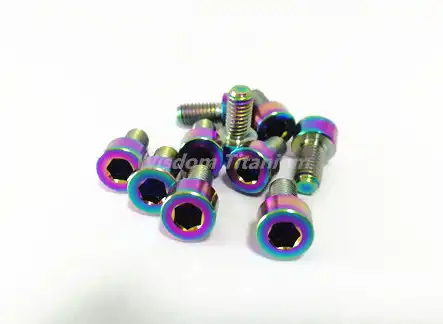
When your products ship to Europe or the United States, fasteners stop being small parts. They become a compliance issue. Regulators, notified bodies, and OEM customers will ask how each DIN 912 titanium bolt meets the rules. They check drawings, test reports, and certificates, not only price.
Many engineers know DIN 912 as the classic metric socket head cap screw. But fewer people connect it with EN and ASTM standards, or with EU and US legal demands. This article closes that gap. It explains how DIN 912 geometry fits global standards, how titanium grades align with accepted material norms, and how Baoji Wisdom Titanium builds a quality system that supports strict audits.
Core Standards Behind DIN 912 Titanium Bolts in Europe and the US
DIN 912, ISO 4762, and ASME Equivalents
DIN 912 defines a hexagon socket head cap screw with metric threads. It sets head shape, socket dimensions, and thread length. This standard started in Germany, yet it now links with global norms.
In Europe, engineers often use EN ISO 4762 for the same style screw. That standard is technically the international version of DIN 912. It covers metric socket head cap screws with properties defined for steel and stainless materials. U.S. designers reach for ASME B18.3, which covers inch and some metric socket head cap screws.
So what does this mean in practice? If you buy a DIN 912 titanium bolt from China, an ISO 4762 titanium bolt in Germany, or a socket head cap screw with the same metric dimensions in the U.S., they share very similar geometry. Tools match, clearances stay consistent, and you avoid redesigns.
For cross‑border projects, this geometric interchangeability matters more than many people think. It lets you change suppliers or locations while keeping the same 3D models and torque tables, as long as you control material and performance in parallel.
Material Standards That Support Titanium Fasteners
Geometry alone never proves that a bolt meets EU or US requirements. Authorities care about strength, ductility, and toughness. Those properties come from the titanium material standard, not from DIN 912 itself.
Titanium bar for fasteners usually follows well known norms. Many suppliers use ASTM B348 for titanium and titanium alloy bars and billets. European buyers may accept equivalent EN material standards or aerospace specifications like AMS 4928 for Ti‑6Al‑4V bar.
Baoji Wisdom Titanium selects Grade 5 (Ti‑6Al‑4V) and Grade 2 titanium according to these global references. Grade 5 gives high strength, with typical ultimate tensile strength around 895–930 MPa, based on public datasheets. Grade 2 offers good ductility and strong corrosion resistance, which helps in marine or chemical environments.
In EU markets, mechanical properties are usually checked against material standards and, where relevant, against general fastener rules like EN ISO 898‑1 for steel. Titanium sits outside the steel property classes, so buyers rely on titanium‑specific standards plus their own design calculations. U.S. customers refer to ASTM and, in some sectors, to aerospace or medical device regulations.
When you combine DIN 912 geometry with titanium that follows ASTM B348 or similar standards, you build a chain that regulators understand. The drawing shows the dimensions. The material standard defines the mechanical limits. Test reports prove that each heat of titanium stays within those limits.
Documentation and Compliance Expectations in EU and US Markets
Even when a DIN 912 titanium bolt uses the right material, you still need documents. Auditors in the EU and U.S. do not simply take verbal promises from suppliers.
European customers often request EN 10204 inspection certificates, especially type 3.1 reports. These show chemical composition and mechanical test results for a specific batch. They link the product to the melt source and test lab. U.S. companies ask for mill test reports that contain similar data and traceability.
For safety‑critical projects, buyers may request:
- Dimensional inspection records for thread and head geometry.
- Hardness or tensile test data for each heat lot.
- Surface finish and coating descriptions.
- Process flow charts and control plans.
Baoji Wisdom Titanium builds these records into its workflow. The team tracks titanium bar batches from warehouse storage through cutting, machining, finishing, and final inspection. Each lot of DIN 912 titanium bolts leaves the plant with clear identification. When a customer asks for traceability, staff can link that lot to raw material certificates and in‑house test results.
This chain of dimensions, standards, and documents is what allows a simple bolt to meet demanding EU and US fastener expectations. Without it, a DIN 912 marking on the drawing does not hold much weight during an audit.
How DIN 912 Titanium Bolts Are Manufactured to Meet Compliance?
Controlled Titanium Grades From Bar to Finished Bolt
Compliance with EU and US standards starts with the correct raw material. Baoji Wisdom Titanium keeps a dedicated inventory of titanium bars and rods. Staff record grade, heat number, and supplier documentation for each batch as it arrives.
The company focuses on two grades. Titanium Grade 5 (Ti‑6Al‑4V) supports applications that need high strength with low weight, for example in aerospace brackets or racing parts. Titanium Grade 2 serves components in corrosive media, such as marine hardware, chemical equipment, or some medical devices, where ductility and corrosion resistance matter more than peak strength.
Bars are cut to length and then enter CNC machining. Because titanium has a lower thermal conductivity than steel, cutting parameters must stay under tight control. Skilled operators manage speed, feed, and coolant to keep threads and hex sockets clean. This minimizes work hardening and prevents micro‑cracks, which could later cause fatigue problems.
Every DIN 912 titanium bolt from Baoji Wisdom follows a defined route. Staff record each operation in the ISO 9001 quality system. They log set‑up approvals, in‑process checks, and final inspections. In EU and U.S. audits, this level of record-keeping often makes the difference between approval and long delays.
Dimensional Accuracy, Threads, and Drive Integrity
A bolt can use excellent titanium and still fail inspection if dimensions drift. That is why dimensional control receives strong attention.
Technicians check head height, head diameter, and socket depth against DIN 912 or ISO 4762 drawings. They also verify thread pitch and length for metric sizes from M1.6 up to M24. For critical applications, customers can request 100% thread gauging or sampling to an agreed plan.
Drive integrity matters in both EU and US markets. A shallow or poorly machined hex socket can strip under torque. Baoji Wisdom Titanium machines hex and Torx drives with sharp tools and stable fixtures. Operators then test tightening with suitable keys to confirm that heads carry the expected torque without damage.
Bolt length also needs tight control. Baoji Wisdom produces standard and custom lengths from 6 mm to 250 mm. Many European and North American buyers send their own gauges or drawings. The factory matches those specifications to avoid fit issues in assemblies and jigs.
Surface Finishes and Cleanliness for Regulated Industries
EU and US regulators pay attention to surface conditions when fasteners work in medical, marine, or aerospace environments. Rough or contaminated surfaces can shorten fatigue life or increase corrosion risk.
Baoji Wisdom Titanium offers several finishes on DIN 912 titanium bolts:
- Natural machined surface for general industrial use.
- Anodized surfaces, often used for color coding and improved oxide layers.
- PVD coatings for enhanced wear or decorative effects where projects require it.
Before finishing, bolts go through controlled cleaning steps. These steps remove cutting fluids and small chips. In industries like medical devices or food machinery, buyers may add extra cleanliness demands. The engineering and production teams then adapt the process, for example by specifying special washing agents or packing methods.
With this combination of material control, machining discipline, and surface management, DIN 912 titanium bolts from Baoji Wisdom align with expectations in aerospace, medical, automotive, and marine projects across Europe and the U.S.
Why Global Buyers Trust Baoji Wisdom Titanium for Standard‑Compliant Bolts?
Sourcing from China’s “Titanium Valley”
Baoji Wisdom Titanium operates in Baoji, Shaanxi Province. The city is widely known as China’s Titanium Valley. It hosts one of the world’s most concentrated titanium industry clusters.
In this region, the supply chain stretches from titanium sponge and ingots to plates, tubes, forgings, and high‑precision components. Hundreds of enterprises focus on titanium and titanium alloys. Many of them support aerospace, marine engineering, petrochemicals, medical implants, and energy projects.
For a buyer in Europe or the United States, this concentration brings real advantages. Suppliers can obtain titanium bars quickly. They can coordinate with local forges and labs. Research institutes and national laboratories nearby help push process innovation. When a new titanium grade or heat treatment appears, Baoji manufacturers see it early.
Baoji Wisdom Titanium draws on this ecosystem while keeping its own identity as a specialized fastener and CNC parts manufacturer. The company started in 2016 and has since built a stable export customer base in several high‑tech industries. That background reduces the risk that often troubles buyers who move production to a new region.
Product Portfolio Aimed at EU and US Applications
Fastener needs differ between markets. European projects may pay more attention to EN and ISO references, while U.S. buyers focus on ASTM and ASME norms. Baoji Wisdom Titanium structures its titanium bolt range to serve both sides.
The DIN 912 product line includes:
- Metric thread sizes from M1.6 to M24.
- Lengths between 6 mm and 250 mm.
- Hex socket cap bolts and Torx drive cap bolts.
- Natural, anodized, and PVD‑coated finishes.
- Material choices of Titanium Grade 5 and Grade 2.
These options cover many use cases in:
- Aerospace brackets, interiors, and test rigs.
- Medical devices and equipment frames.
- Automotive and motorsport components.
- Marine fittings and offshore structures.
- Electronics, energy, and chemical processing equipment.
Outside titanium fasteners, Baoji Wisdom Titanium also machines customized CNC parts and fasteners from nickel, tantalum, and zirconium. It supplies titanium rods, flanges, and forgings as well. This wider metal capability helps engineers who want a consistent supply base for several critical materials, not titanium alone.
Quality System, Service, and Support Through the Audit Process
Many buyers hesitate when they hear “new overseas supplier.” They fear uneven quality, slow responses, or weak documentation. Baoji Wisdom Titanium addresses these concerns through its quality system and service structure.
Production follows an ISO 9001‑certified management system. The company maintains stable staff in key roles, so process knowledge does not disappear. An in‑house R&D and engineering team supports custom designs and helps interpret complex standards from EU and U.S. customers.
Because the factory holds a solid stock of raw materials and many standard bolts, price and lead time remain stable, even when markets fluctuate. Staff track every order from quotation to shipment and keep records for later review. When customers share feedback or questions, the company treats that input as a driver for process improvement, not as an inconvenience.
For buyers who must pass internal or third‑party audits, Baoji Wisdom Titanium prepares data packs. These can include material certificates, inspection reports, and process descriptions that show how each DIN 912 titanium bolt meets the agreed specification. Many European and American customers now see the company not just as a vendor, but as a technical partner during qualification and PPAP‑style approval stages.
If you need this level of support, you can start with a drawing, 3D model, or sample. The team will review it, match it to relevant DIN, ISO, and ASTM references, and propose a solution that meets both engineering and regulatory needs.
From Standards on Paper to Bolts in Your Warehouse
EU and US fastener rules may look complex on paper. They mention DIN, ISO, ASTM, EN, and many other codes. In daily work, however, you only need a few solid links. A DIN 912 titanium bolt must match the right geometry, rely on a trusted titanium grade, and come with transparent test data and traceability.
Baoji Wisdom Titanium builds these links into each order. The company combines its position in China’s Titanium Valley with focused experience in titanium fasteners and custom CNC parts. With metric sizes from M1.6 to M24, lengths up to 250 mm, and finishes tailored to your industry, it provides a practical way to meet EU and US fastener expectations without losing control of cost or schedules.
If you plan a new project or need to qualify a second source, you can move from reading to action now. Send your drawings or requirement list to sales@wisdomtitanium.com. The team will respond with technical feedback, pricing, and lead times, so your next shipment of DIN 912 titanium bolts arrives ready for both performance and compliance.
FAQs
Q1: Does a DIN 912 titanium bolt automatically comply with EU and US standards?
A: Not automatically. DIN 912 only defines the screw’s geometry and basic tolerances. To satisfy EU and U.S. expectations, you also need the correct titanium material standard, verified mechanical properties, and proper documentation such as EN 10204 or mill certificates.
Q2: How should I specify DIN 912 titanium bolts for a regulated project?
A: Start by listing the full set of requirements in your inquiry. Include thread size, length, head type, titanium grade, and surface finish. Add references to applicable standards, such as DIN 912 or ISO 4762 for geometry and ASTM or EN standards for the titanium material. Indicate whether you need EN 10204 3.1 certificates, specific mechanical tests, or special cleanliness levels.
References
- International Organization for Standardization. “ISO 4762: Hexagon socket head cap screws.”
- Deutsches Institut für Normung (DIN). “DIN 912 – Zylinderschrauben mit Innensechskant.”
- ASTM International. “ASTM B348/B348M – Standard Specification for Titanium and Titanium Alloy Bars and Billets.”
- European Committee for Standardization (CEN). “EN 10204: Metallic products – Types of inspection documents.”
- International Titanium Association. “Titanium: Physical Properties and Applications.”