
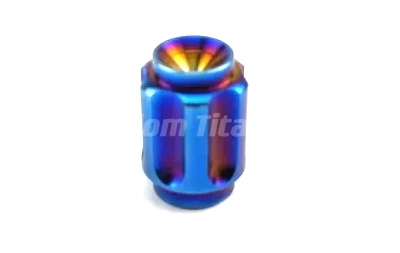
The corrosion-resistance, lightweight design, and long-lasting structure of titanium valve stem caps make them clearly better than other materials. These accurate parts are made from an aerospace-grade Ti-6Al-4V metal and solve major problems like valve seizing, material failure in harsh conditions, and thermal degradation. Because they can handle temperatures above 400°C and still keep their threads intact, they are essential for high-performance car, motorbike, and industrial uses where dependability cannot be compromised.
Understanding Titanium Valve Stem Caps
What Are Titanium Valve Stem Caps?
Titanium valve stem caps are safety features made to fit over Schrader or Presta valve stems on car, motorbike, and bicycle wheels. Normal plastic caps break when heated up, and aluminum caps suffer from galvanic rust when they touch brass valve stems. These titanium parts, on the other hand, protect against environmental damage forever. The Grade 5 titanium metal design makes sure that each cap keeps working properly for the life of the car. This means that there are no guarantee claims for fused or corroded valve covers.
Core Material Properties That Define Performance
The effectiveness of these caps is largely determined by the materials they are made of. Grade 5 titanium (Ti-6Al-4V) has a tensile strength of about 895 MPa and a mass of only 4.43 g/cm³, which means that it is about 45% lighter than steel versions. This ratio of strength to weight is especially useful in racing, where lowering the unsprung spinning mass has a direct effect on how the suspension works and how accurately the wheels are balanced.
Titanium naturally makes a spontaneous oxide surface (TiO₂) when it comes in contact with oxygen. This protects the metal from corrosion caused by air, road salts that contain calcium chloride, and the acidic chemicals in brake dust. When scratched, this passive layer grows back on its own, giving self-healing defense that painted or anodized metal can't match. The material stays structurally stable at temperatures ranging from -40°C to over 400°C. This keeps the structure from coming loose near superheated brake pads when driving aggressively or racing.
Solving Industry Pain Points
Modification shops and race teams that work on cars often run into aluminum caps that cold-weld to brass valve stems, making them impossible to remove without damaging the valve core. Titanium is chemically inert, which greatly lowers the risk of galvanic corrosion. However, in heavy salt settings, it is still common to use a small amount of nickel-based anti-seize substance. Plastic caps break down in the sun and get weak in cold places, so they often crack when the tire pressure is checked regularly. These problems make the secondary seal less effective, letting dirt in and causing pressure to slowly drop.
Professional-grade titanium caps have holes cut into them to fit EPDM or Viton O-rings. This makes a seal that is waterproof up to IP67 standards. This design keeps wetness out and slows down air leaks while still letting pressure tracking systems work. The accurate CNC-machined threads (which usually meet 8V1-32 standards and have limits of less than 0.01mm) make sure that the force is applied consistently, without the risk of cross-threading that comes with cheaper options.
Titanium Valve Stem Caps vs. Other Materials: A Rational Choice Approach
Comprehensive Material Comparison
The choice of material has a direct effect on the costs of ownership over time and the dependability of operations. We compared the performance of the titanium valve stem cap to that of popular options using measurable criteria that are important for making purchasing decisions.
Aluminum Alloy Caps: Aluminum has a good price point at first and doesn't rust in warm conditions. Galvanic corrosion makes the cap forever bond to brass valve stems in salty seas or places with a lot of road salt. This is the material's weak spot. To get the cap off, you often have to drill it out, which can damage the valve core. Aluminum's lower melting point (660°C) also means it can't be used for high-performance brakes, where carbon-ceramic rotors can produce heat that is higher than 400°C. The anodized finishes that are usually put on aluminum caps wear off after several installation rounds, leaving the metal itself open to rust.
Stainless Steel Options: Steel caps last longer and prevent rust better than aluminum ones, but they are much heavier than titanium ones because they are much denser (7.8 g/cm³). When precision wheel balancing, this extra weight is a problem, especially for race wheels that are very light and every gram counts. Steel also doesn't have the natural oxide passivation that titanium does, so expensive wheels need to be treated regularly to keep them from getting rust stains.
Plastic and Rubber Composites: These represent the cheapest choice, but they break down quickly when exposed to UV light and changes in temperature. When it's below freezing, plastic caps become weak and often break when they are taken off to change the tire pressure. Because they don't last long, they need to be replaced often, which raises the total costs even though the initial investment is cheap. Also, these materials don't have the high-end look that people who own expensive cars expect.
Brass Constructions: Brass caps are immune to corrosion, but they are very heavy and don't have the thermal stability needed for performance uses. Because the material is soft, threads often come off during fitting, which causes problems with tightness that weaken the seal.
When you look at the total cost of ownership instead of just the purchase price, the efficiency edge becomes clear. Titanium's strength means it doesn't need to be replaced often, its inertness keeps valves from breaking, and its thermal stability makes it reliable in situations that would kill other materials. Teams that compete in endurance races value this dependability even more—one broken valve during a 24-hour race can cost places worth a lot more than the cost of premium parts.
Application-Specific Advantages
Different working conditions put more emphasis on different qualities of materials. Off-road enthusiasts who ride through salty mud or beach sand depend on titanium's anti-seize properties to make sure they can accurately change tire pressure while going on a trail with inflated tires. Customizers of high-end cars choose titanium valve stem caps as finishing touches that go well with titanium lug nuts and exhaust systems, making packages that look good together. Because brand logos can be laser-etched onto cap heads, wheel makers can use them as useful advertising items because customers interact with them every time they check their tire pressure.
Procurement and Ordering: How to Buy Titanium Valve Stem Caps Efficiently
Sourcing Channels and Options
There are big differences between B2B procurement platforms in terms of price, minimum orders, and the ability to customize. When you buy a lot of things and need to make sure that all of the specs are the same, dealing directly with the maker is the best way to get the best prices and the best expert support for your titanium valve stem cap inventory. Online manufacturing platforms make it easier to buy and sell things, but they often add middlemen who raise prices without adding any technical value.
Wholesale wholesalers help small businesses that need a wide range of products but don't want to commit to maker minimums. This method gives up lower cost per unit in exchange for more inventory freedom and faster completion of mixed orders. When you order more than a few thousand units a year, custom OEM arrangements become cost-effective. This lets you use your own specifications, put your own label on the products, and handle shipping times that work with your production plans.
Pricing Considerations and Cost Optimization
Titanium valve stem cap prices depend on the cost of raw materials, how hard they are to machine, and how many are ordered. You can expect normal requirements to cost between $3 and $8 per unit when bought in bulk. Custom finishes, laser etching, or unique thread setups will cost more. When repair rounds are taken into account and valve damage is avoided, these numbers look good when compared to the total cost of ownership.
When you reach 100, 500, or 1000 units, most volume discounting systems give you significant breaks. Wisdom Titanium keeps ready-to-ship inventory that can handle sales of at least 100 pieces at factory-direct prices. This makes it easy for smaller businesses to get what they need while also saving the company money on production. By negotiating multi-order agreements, you can get better prices and make sure that you have a steady supply of goods throughout the fiscal year.
When you compare materials, you can see that titanium caps are 3–5 times more expensive than aluminum ones at first. But because they don't need to be replaced and don't damage valves, they pay for themselves within 2–3 years in business fleet uses. Different racing teams figure out what value is—preventing a single failure that ends the race is worth any acceptable investment in a component.
Building Strategic Supplier Partnerships
For long-term buying success, ties must go beyond simple transactions. As your needs for components change, suppliers who consistently provide high quality products, communicate effectively, and are willing to solve problems will become very useful business partners. Building ties with makers who can do custom development helps you differentiate your products in the future and give you a competitive edge.
As apps need more specific solutions, the ability to work together technically becomes more important. Can your provider change the way the threads are set up to fit different valve stem standards? Do they have engineers on staff who can work together on unique projects? With these skills, sellers stop being just customers and start being strategic partners.
Being close to the facilities needed to make titanium gives suppliers clear benefits when it comes to accessing raw materials, process knowledge, and cost structure. Baoji Titanium Valley is one of the most important places in the world to make titanium products. It has a full industry chain that covers all stages of production, from making titanium sponge to making finished parts. The factories in this area keep the supply chain running smoothly and build technical knowledge networks that help customers get better quality goods at lower prices.
Partner With Wisdom Titanium for Superior Valve Stem Solutions
Precision-engineered Ti-6Al-4V titanium valve stem cap solutions from Wisdom Titanium mix the efficiency of aerospace-grade materials with low factory prices. Our Baoji plant is in China's best titanium production cluster, which gives us access to the best raw materials and process knowledge. Every titanium valve stem cap is very light—only 2 grams—and measures 18 mm tall by 10 mm wide. It comes with your choice of a polished or anodized finish.
Our ISO 9001-certified production processes make sure that each batch is the same and that the measurements are correct. We also keep a full store of raw materials, which keeps prices stable and speeds up delivery. As a seller with a lot of experience in titanium valve stem caps, we keep stock that is ready to ship with minimums of 100 pieces and can also make unique caps for specific uses. Get in touch with our technical team at sales@wisdomtitanium.com to talk about your needs and get thorough specifications that are made to fit your unique needs.
Conclusion
Titanium valve stem caps are a sensible upgrade that improves performance by a measured amount due to their better material qualities. Their ability to fight corrosion, keep their shape at high temperatures, and be lightweight make up for important flaws in metal, steel, and plastic alternatives. Getting rid of valve seizing, stopping thermal degradation, and increasing service life all add up to good lifetime economics that make the initial investment worth it in industrial, motorbike, and car settings. To make sure that parts work as expected in real-world situations, purchasing choices should put material approval, thread precision, and source dependability at the top of the list. Strategic relationships with makers in well-established titanium production hubs give you access to technical know-how and help the supply chain run more smoothly, which is good for long-term buying success.
FAQ
Will titanium caps seize to brass valve stems like aluminum?
Titanium is chemically neutral much more than aluminum, which makes galvanic corrosion much less likely when it comes into touch with brass valve stems. The natural creation of the oxide film stops the cold-welding problem that happens at the interfaces of aluminum and brass. Best practice in the industry says to use a nickel-based anti-seize product in places with a lot of salt to get rid of any remaining seizing risk. However, because of the way the titanium valve stem cap works, this is more of a protection than an absolute necessity.
How does the weight affect wheel balance?
A full set of four titanium caps usually weighs between 8 and 10 grams. This mass doesn't make a difference in dynamic wheel balance formulas, even when it's placed on the edge of the rim, where the effects of rotation are stronger. The lightweight design is a big plus compared to showy steel caps that can add 50 grams or more, which could cause stability problems that need extra wheel weights to fix.
Can I replace the internal O-ring seals?
Titanium caps made for professionals use standard-sized Nitrile or EPDM O-rings that can be replaced in the field. Over years of use, thermal cycle makes rubber materials harder, which makes sealing less effective. A simple annual checkup and replacing of the airtight seal as needed keeps it working well at a low cost. Most stores that sell parts for cars keep O-rings in sizes that are interchangeable, which makes upkeep easy without having to find special parts.
References
1. American Society for Testing and Materials. (2021). ASTM B348: Standard Specification for Titanium and Titanium Alloy Bars and Billets. West Conshohocken, PA: ASTM International.
2. Donachie, M.J. (2000). Titanium: A Technical Guide, 2nd Edition. Materials Park, OH: ASM International.
3. Peters, M., Kumpfert, J., Ward, C.H., & Leyens, C. (2003). Titanium Alloys for Aerospace Applications. Advanced Engineering Materials, 5(6), 419-427.
4. Schutz, R.W. & Watkins, H.B. (1998). Recent Developments in Titanium Alloy Application in the Energy Industry. Materials Science and Engineering A, 243(1-2), 305-315.
5. Boyer, R., Welsch, G., & Collings, E.W. (1994). Materials Properties Handbook: Titanium Alloys. Materials Park, OH: ASM International.
6. Lutjering, G. & Williams, J.C. (2007). Titanium, 2nd Edition. Berlin: Springer-Verlag.