
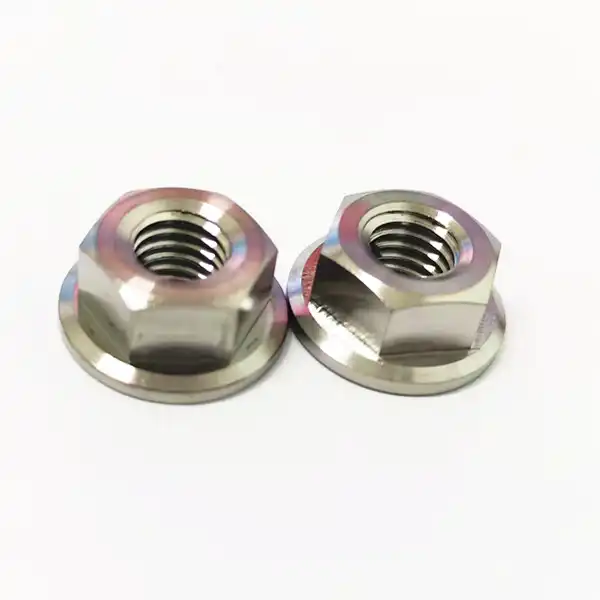
There are a lot of reasons why DIN 6923 titanium hex flange nuts are so expensive. These include the high cost of titanium alloy raw materials, the difficulty of making them precisely, and the strict quality control rules set by DIN standards. These bolts are usually made of Grade 5 titanium alloy (Ti-6Al-4V), which has a great strength-to-weight ratio and doesn't rust, but it needs special tools and skill to be made. The combined flange design gets rid of the need for separate washers while spreading loads widely. This requires tight tolerances that make production more difficult. These technical and material factors work together to make a high-value fixing solution that is worth the money because it will last and work well for a long time.
Understanding DIN 6923 Titanium Hex Flange Nuts
What Makes These Fasteners Unique
DIN 6923 titanium hex flange nuts are precision-engineered ways to fasten things together. They have a flange built into the base of the hexagonal body. With this setup, you don't need different washers, and the clamping forces are spread out over a larger surface area. The underside of the flange usually has serrations that bite into mating surfaces. This makes a self-locking system that doesn't let vibrations loosen it, which is very important in high-performance car, motorbike, and aircraft uses.
Technical Specifications and Standards Compliance
The dimensions and performance of these nuts are very strict and meet DIN 6923 standards. These nuts are made by Wisdom Titanium from Grade 5 titanium alloy (Ti-6Al-4V). They come in sizes from M3 to M24 and thread pitches of 1.0mm, 1.25mm, and 1.5mm. The material has a tensile strength of more than 950 MPa, which is about the same as high-grade steel bolts but about 45% lighter. There are different types of surface finishes, such as natural, anodized, and PVD coatings. Each meets different stylistic and environmental needs.
DIN 6923 standards call for very precise measurements, which means that manufacturing processes must be very advanced. Most thread tolerances are within the 6H grade range, which means that you need precise CNC tools and skilled workers. The flange's width, thickness, and design of serrations must all be exactly right for each production batch to make sure that the load is evenly distributed and the lock works properly.
Key Factors Contributing to the High Cost
Raw Material Economics and Market Dynamics
Getting titanium out of the ground and refining it is much more expensive than making steel or aluminum. The Kroll process, which is still the main way that titanium sponge is made, needs a lot of energy and a lot of steps to be done. Titanium rock isn't very hard to find, but it is mostly found in a few places. This makes the supply chain vulnerable, which affects market costs. Changes in demand for titanium in the aircraft and military sectors affect the whole supply chain and make prices less stable.
Grade 5 titanium alloy (Ti-6Al-4V) has about 6% aluminum and 4% vanadium in it, which makes the material more complicated and expensive. These alloying elements improve the mechanical qualities, but they need to be made with careful metallurgical control. At our facility in Baoji Titanium Valley, which is China's biggest and best titanium industry cluster, we have direct relationships with companies that make titanium sponges and ingots. This protects us from changes in the market and makes sure that the quality of our materials is always the same.
Precision Manufacturing Requirements
Specialized tools and methods are needed to machine titanium metals, which greatly raises the cost of production. Titanium doesn't transfer heat well, so heat builds up at the cutting edges instead of spreading out through the workpiece. This speeds up tool wear. Even though they are more expensive than high-speed steel options, carbide and polycrystalline diamond (PCD) cutting tools are needed to keep the same level of accuracy in measurements and surface finish quality across production runs.
The flange serration design needs extra cutting steps on top of what is normally needed to make nuts. The depth and angle of these serrations must be just right for the closing mechanism to work without affecting the flange's structural stability. At Wisdom Titanium, our CNC machines can accurately set positions to within microns, which means that every nut meets DIN 6923 titanium hex flange nuts standards no matter how many are made.
When cutting threads, titanium materials are especially hard to work with. Because the metal tends to work stiffen and gall, cutting speeds, feed rates, and cleaning methods need to be carefully managed. We use special thread-cutting oils that keep the thread profiles clean while preventing cold welding between the tool and the workpiece. This is necessary for the fastener to work properly.
Quality Assurance and Certification Processes
To meet DIN 6923 standards, strict quality control rules must be followed throughout the whole manufacturing process. Chemical spectrometry analysis confirms the exact Ti-6Al-4V makeup, making sure that the amounts of aluminum and vanadium are within the acceptable ranges while excluding impurities like air and iron that weaken the material. This check is done on every production batch, and the paperwork that goes with shipping makes it possible to track down materials.
Go/No-Go thread gauges and other high-precision measuring tools are used for dimensional testing to make sure that the flange width, hex geometry, and thread profiles all meet the tolerance standards. Statistical process control keeps an eye on important measurements during production, looking for patterns that could mean that tools are wearing out or the process is drifting before parts that don't meet specifications are made.
Random samples are put through proof load tests in mechanical testing, which uses axial tensile forces to make sure the structure is solid without causing plastic deformation or thread pulling. Testing the material's hardness shows that it has the right qualities, especially for the flange serrations that need to effectively bite into mating surfaces. A surface check finds any cracks, laps, or breaks that might affect how well it works or how long it lasts.
Our dedication to organized quality management is shown by our ISO 9001 certification. From receiving the raw materials to the final review, every step is done according to written instructions. This gives our customers the consistency they need for their important uses. This strict quality system costs more, but it provides the dependability that makes the higher price worth it.
Procurement Insights: How to Source DIN 6923 Titanium Hex Flange Nuts
Evaluating Supplier Capabilities and Credentials
A careful evaluation of the seller is the first step to successful procurement. Having ISO 9001 approval doesn't mean that a company's products are of high quality, but it does show that they follow systematic quality management methods. Ask for proof of quality control methods that are special to titanium machining. This should include details about the tools that can be used, how it will be inspected, and how it will be tracked. Suppliers should easily be able to show material approvals that show the makeup of titanium alloys all the way back to when the ingots were made.
When making titanium fasteners, the ability to manufacture them is very important. The quality of the surface finish and accuracy of the measurements are directly affected by the CNC equipment specs, tooling strategies, and amount of experience of the user. Wisdom Titanium's position in Baoji Titanium Valley gives us special benefits because we are close to the whole titanium supply chain, from the factories that make sponges and ingots to the ones that make bar stock and finished parts. This connected environment makes quality control better and supply more responsive than in places that depend on long material pipelines.
The ability to provide technical help sets exceptional sellers apart from commodity providers. When engineers work together to make specifications for complicated uses, it helps them choose the best fasteners for the load cases and weather conditions. Suppliers with knowledgeable technical staff can help you choose the right surface treatments, thread lubricants to keep your threads from galling, and torque specs that fit the needs of your assembly.
Understanding Minimum Order Quantities and Lead Times
Titanium fastener production usually needs a minimum order quantity to cover setup costs and the cost of buying materials. Our normal MOQ is 200 pieces per specification. This makes it easy for smaller projects to get what they need while also keeping production costs low. If you need non-standard sizes, thread pitches, or surface treatments, you may have to pay more for the minimum order quantity to cover the extra costs of tooling and setup.
Lead times show how hard it is to machine titanium precisely. Standard setups from stock can be shipped within days, but special orders usually take four to six weeks from the time the order is confirmed until it is fully inspected and packed. For pressing needs, rush production may be possible, but it usually costs more because the plan has to be sped up and workers may have to work extra hours.
Cost-effectiveness can be achieved by planning purchases well in advance of when they are needed. When you combine multiple standards into one order, you can save money on each unit by making better use of tools and materials. Manufacturers can improve production schedules with yearly or semi-annual buy deals that include scheduled deliveries. This could lead to lower volume prices while making sure that inventory is available when you need it for your DIN 6923 titanium hex flange nuts.
Navigating International Procurement and Compliance
When buying titanium nuts from around the world, you need to pay attention to export rules, shipping processes, and import paperwork. Titanium is subject to different export controls because it is used in flight and military, but most commercial fasteners don't have to follow these rules. Make sure that the sellers you're working with know what paperwork is needed in the country where your goods will be sent and can give you the certificates of origin, material licenses, and compliance statements you need.
When it comes to shipping, thick metal parts are more difficult to handle than many other industrial goods. People who aren't used to buying titanium may be surprised by how much air freight costs. For bigger orders, ocean freight is cheaper, even though it takes longer to get there. Choose providers who have experience with foreign logistics. They can help you choose the best shipping methods, take care of the paperwork for customs, and give you accurate figures of the landed cost, which includes duties and fees.
The economics of foreign buying are affected by payment terms and currency issues. Letters of credit and other trade finance tools that protect both parties during the early stages of building a relationship with a well-known provider are commonplace. Price changes caused by changes in the value of the currency can have a big effect on repeat orders, so it's worth talking about ways to keep prices stable or multi-order deals that make things more predictable.
Conclusion
The higher price of DIN 6923 titanium hex flange nuts is due to their real value, which comes from the material's qualities, the difficulty of making them, and their long-term performance benefits. The strength-to-weight ratio of Grade 5 titanium alloy (Ti-6Al-4V) is very high, and it doesn't rust, so it lasts longer than other materials in harsh conditions. The strict machining needed to meet DIN 6923 standards, along with strict quality control procedures, guarantees consistent dependability that pays for itself over time through lower maintenance costs and higher operating trust.
Think about the total cost of ownership instead of just the purchase price when deciding whether to use these fasteners for changes to cars, motorcycle races, or industrial equipment. In situations where efficiency is important or where the climate is harsh, the weight saves, resistance to corrosion, and longer service life usually pay off. By understanding the factors that affect the price of titanium fasteners, you can make smart purchasing choices that meet your performance needs and budget goals.
Partner with a Trusted Titanium Hex Flange Nut Manufacturer
Wisdom Titanium offers precisely designed fastening solutions that are backed by ISO 9001 approval and full expert support. We have direct access to high-quality raw materials and specialized industrial knowledge because we are located in Baoji Titanium Valley, which is the world's most integrated titanium production environment. Our stock of DIN 6923 titanium hex flange nuts includes common sizes from M3 to M24. They are all made from Grade 5 Ti-6Al-4V and have a tensile strength of more than 950 MPa.
No matter if you need standard fasteners to connect production lines or custom solutions for unique uses, our experienced team can help you with the whole process of creating specifications, buying the products, and putting them into action. Please email our sales team at sales@wisdomtitanium.com for full quotes, material certifications, and suggestions that are tailored to your unique needs and will help you get the best performance while staying within your budget.
FAQs
How can I be sure that the Grade 5 titanium I'm buying is real?
Request material certificates with spectrometry data (≈6% Al, 4% V). Ensure full traceability to ingot batches. Density check (~4.43 g/cm³) can provide additional confirmation.
What are typical lead times for bulk orders?
In-stock standard parts: ~1 week.
Custom orders (size, threads, coatings): ~4–6 weeks.
Lead times may increase with high demand or large volumes.
Can these fasteners be customized for special applications?
Yes—options include non-standard sizes, thread pitches, titanium grades, and surface treatments (e.g., anodizing, PVD). Custom orders usually require higher MOQs and longer lead times.
References
- German Institute for Standardization. "DIN 6923: Hexagon Nuts with Flange - Technical Specifications and Performance Requirements." Berlin: Beuth Verlag, 2018.
- Boyer, R., Welsch, G., and Collings, E.W. "Materials Properties Handbook: Titanium Alloys." ASM International, Materials Park, Ohio, 2020.
- Donachie, Matthew J. "Titanium: A Technical Guide, 2nd Edition." ASM International, 2019.
- American Society for Testing and Materials. "ASTM B348: Standard Specification for Titanium and Titanium Alloy Bars and Billets." West Conshohocken, Pennsylvania, 2021.
- Society of Automotive Engineers. "SAE AMS 4967: Titanium Alloy Bars, Wire, Forgings, Rings, and Drawn Shapes, 6Al-4V, Annealed." Warrendale, Pennsylvania, 2020.
- Lutjering, Gerd and Williams, James C. "Titanium: Engineering Materials and Processes, 2nd Edition." Springer-Verlag Berlin Heidelberg, 2017.