
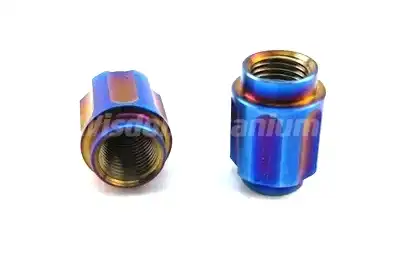
When looking at valve safety choices for high-performance uses, titanium valve stem caps always beat rubber alternatives when it comes to longevity, resistance to corrosion, and weight savings. Rubber caps are cheaper at first, but titanium, especially Grade 5 Ti-6Al-4V alloy, is more valuable over its lifetime because it can withstand high temperatures (up to 400°C), doesn't react with road salts, and doesn't experience galvanic corrosion, which is what usually happens when aluminum or steel caps get stuck on brass valve stems. Titanium is a smart investment for automakers, racing teams, and performance modification shops that want to make things that will last in tough conditions. It eliminates warranty claims, shortens maintenance intervals, and helps engineers reach lightweight goals that are important for vehicle dynamics and fuel efficiency.
Valve Stem Caps: Rubber vs Titanium
Titanium valve stem caps keep dirt and other things from getting into tire valve systems. They have a direct effect on how well pressure stays in the valves and how safe they are to use in automobile, motorcycle, and industrial settings. These small parts are often forgotten, but they keep dust, moisture, and other debris from damaging valve cores. If this happens, slow leaks, uneven pressure, and early valve failure can happen.
The Role of Valve Stem Protection
To keep the right air pressure in the tires, every valve system needs a solid seal. The internal spring-loaded core of the valve is protected by a stem cap that acts as a physical barrier against external dangers. In heavy-duty settings, like racetracks and off-road environments, this safety is necessary to avoid expensive downtime and keep the machine running at its best. Professionals in procurement know that parts that don't seem important can have big effects on the total cost of ownership when they keep systems from breaking down.
Material Properties: Rubber Characteristics
Rubber caps have been the most popular aftermarket part for cars for decades because they are easy to make and work well on most consumer cars. EPDM or nitrile materials, which offer basic flexibility and weather protection, are usually used to make these caps. Their main benefits are that they are cheap (often between $0.10 and $0.30 per unit in bulk) and easy to get through normal marketing methods. Because rubber is naturally flexible, they can be put on without any tools, so most people can use them.
But rubber caps have big problems in places that are hard on things. UV light breaks down materials over 12 to 24 months, making them weak and prone to breaking. Thermal cycling from brake heat speeds up the wear and tear on rubber, especially in high-performance cars with strong brakes. Chemicals from road salts, brake dust, and fuel products make rubber even less durable. These things make it necessary to replace things more often, which raises the lifetime costs even though the original investment was low.
Material Properties: Titanium Advantages
When aerospace-grade Ti-6Al-4V (Grade 5) titanium is used to make titanium alloy caps, they have unique properties that make up for rubber's main flaws. Titanium is stronger than steel and lighter than steel by 45%. Its tensile strength is between 895 and 1000 MPa and its density is 4.43 g/cm³. This is very important for moving wheel parts because unsprung mass has a direct effect on how the suspension responds and how the car handles.
The material is resistant to rust because it has a naturally occurring oxide film (TiO2) that forms quickly when it is exposed to air. This film blocks chlorides, acids, and moisture from getting through. Titanium caps don't suffer galvanic rust when paired with brass valve stems, so they can be removed even after years of service in tough conditions. Aluminum caps, on the other hand, often seize permanently and need to be replaced with a new stem.
Another important benefit is that it is thermally stable. Titanium stays structurally sound and accurately sized at temperatures ranging from -240°C to 400°C. This makes it perfect for race uses where brake rotors produce a lot of radiant heat. In this situation, regular rubber caps melt or change shape, but metal caps can get bigger and looser. The Wisdom Titanium Grade 5 metal caps, which are 18 mm tall and 10 mm in diameter and weigh only 2 grams each, keep the threads engaged precisely even when the temperature rises.
Comparative Analysis of Rubber and Titanium Valve Stem Caps
To understand the difference in performance between rubber and titanium valve stem caps, you need to look at certain operating factors that affect choices about what to buy and how to produce long-term value.
Durability and Service Life
Titanium caps usually last 10 years or more in car settings and forever in controlled environments, while rubber caps usually need to be replaced every 1 to 3 years. This longer durability immediately leads to less upkeep needs and lower total costs of ownership. Racing teams have found that titanium caps can withstand more than 500 heat cycles without breaking down. On the other hand, rubber caps need to be replaced every 20 to 30 track sessions because they get damaged by heat.
The material's ability to fight wear is especially useful in places with a lot of vibration. Titanium's ability to keep threads tight without coming loose is useful in motorcycle uses where engine vibration and road impact cause constant mechanical stress. When rubber caps get compressed, they permanently change shape, which makes the seal less effective and lets water in.
Corrosion Resistance in Real-World Conditions
Coastal areas and winter road salt exposure make conditions that are very acidic and quickly wear down normal valve protection. Aluminum caps usually bond to brass stems within 6 to 12 months in these conditions, making them impossible to remove without damaging the valve. Rubber caps soak up salty water, which speeds up their breakdown and makes them less effective at closing.
The inactive oxide layer of titanium will always protect itself from chlorides, sulfates, and acidic brake dust. Automotive makers tested titanium samples in rapid salt spray tanks (ASTM B117 standard) and found that there was no corrosion at all after 2000+ hours, which is the same as driving in harsh winter conditions for 15+ years. This resistance to corrosion gets rid of the common issue where caps become stuck and can't be removed. During tire service, techs often have to cut or drill out seized aluminum caps, which adds to the cost of work and risks damaging the valve stem.
Weight Impact on Vehicle Performance
Even though the weight of a single valve cap might not seem like much, efficiency engineering looks at every gram of spinning mass. A set of four Grade 5 titanium caps weighs about 8 grams all together. Steel novelty caps weigh 16–20 grams, while plastic caps weigh 6–8 grams. Even though the exact difference seems small, being at the edge of the wheel makes the impacts of inertia stronger.
Performance repair shops and race teams focus on lowering the weight of rotating parts because taking away one gram of wheel mass makes the vehicle handle better than taking away several grams from the body. When paired with titanium lug nuts, lightweight wheels, and other improvements to rotating parts, titanium valve protection helps reduce overall weight. This makes acceleration response and suspension compliance much better.
Cost-Effectiveness and Lifecycle Value
Procurement research shows strong economic reasons to choose titanium, even though it costs more up front. When you buy more than 1000 pieces, rubber caps usually cost $0.15 to $0.30 each. Titanium caps, on the other hand, cost between $2.50 and $5.00 each, based on the finish you choose and the size of your order. Wisdom Titanium has reasonable factory prices for orders of at least 100 pieces, and distribution partners and OEM buyers can get savings for buying in bulk.
Titanium is a better deal when you look at the total cost of ownership over the life of a car, which is 10 years. Every 18 to 24 months, rubber caps need to be replaced. This adds up to $1.20 to $2.40 per wheel spot (6 to 8 replacements at an average of $0.20 each), plus the cost of work for each service. Titanium costs $3.00 to $4.00 per position, but it never needs to be replaced. This saves you money because you don't have to worry about damaged valve stems from seized metal alternatives, which can cost an extra $15 to $25 per stem in parts and work.
Automotive modification shops and distribution partners like titanium's high-end standing, which allows for higher store margins (usually 200–300% markup) compared to common rubber caps (50–100% profit). The high price and good looks of the product, especially when it has anodized color finishes in burnt blue, gold, or black, make it worth it and help businesses stand out in competitive markets.
Conclusion
When you compare rubber and titanium valve stem caps, you can see that they have different performance, longevity, and value offerings that are best for different uses. Rubber caps can be used in situations where cost is an issue, replacements are needed often, and the setting doesn't require high resistance. Titanium valve safety has clear benefits in high-performance motorcycles, racing, and harsh industrial settings where corrosion resistance, thermal stability, and lowering lifetime costs make the extra cost worth it. When purchasing for performance-driven markets, OEM specifications, or quality-conscious channels of distribution, procurement professionals find that titanium's superior material quality, operational dependability, and premium market positioning create compelling value that goes beyond initial cost considerations and helps businesses stand out.
Partner with a Trusted Titanium Valve Stem Cap Manufacturer
For companies and procurement workers who care about performance, Wisdom Titanium offers precision-engineered Grade 5 Ti-6Al-4V titanium valve stem caps made from aerospace-grade materials at factory prices that are hard to beat. Our factory in Baoji Titanium Valley is ISO 9001-certified and has full quality control from getting the raw materials to the final review. This makes sure that the measurements are always correct and the materials are real. Each cap weighs only 2 grams and has a width of 10 mm and a height of 18 mm. It has precise CNC-machined threads and a finish that you can choose from: polished or anodized. We offer customization options, such as laser cutting for brand recognition, can handle orders as low as 100 pieces, and offer quick technical support backed by full material certifications. You can email our procurement team at sales@wisdomtitanium.com to talk about bulk discounts, unique specs, and supply chain solutions that are made to fit your needs for distribution. You can look through our full catalog of titanium bolts and specialized car parts at wisdomtitanium.com.
FAQ
Do Titanium Valve Stem Caps Seize to Brass Valve Stems Like Aluminum?
Titanium is much less likely to react chemically with other materials than aluminum. This makes it a much better choice for valve stems made of brass. When water and road salts are present, aluminum and brass make a galvanic couple that speeds up rusting and cold welding. However, titanium valve stem caps feature a passivating oxide layer that stops these reactions from happening. Testing in places with a lot of salt shows that titanium caps are still easy to take off after years of use. Adding a little nickel-based anti-seize solution during installation gives you extra peace of mind in harsh seaside or winter conditions, but because of the way titanium naturally works, this is usually more of a safety measure than something that needs to be done.
How Does Cap Weight Affect Dynamic Wheel Balance?
A full four-cap titanium set weighs about 8–10 grams—not very much on its own, but a lot when placed at the wheel rim diameter, where spinning inertia makes mass effects stronger. Professional wheel balance won't be affected by this weight, but titanium novelty caps are 40–50% lighter than steel ones, which helps performance engineering techniques for reducing unsprung mass. To get measurable gains in acceleration and suspension response, racing teams and modification experts use titanium gear like lug nuts, valve caps, and specialized screws in wheel assemblies. The benefit in weight is especially useful for motorcycles, where the total weight of the vehicle has a bigger effect on how it handles than in cars.
References
1. Davis, J.R. (2000). Nickel, Cobalt, and Their Alloys. ASM International Materials Park, Ohio.
2. Lutjering, G., & Williams, J.C. (2007). Titanium: Engineering Materials and Processes (2nd ed.). Springer-Verlag Berlin Heidelberg.
3. Donachie, M.J. (2000). Titanium: A Technical Guide (2nd ed.). ASM International.
4. Boyer, R., Welsch, G., & Collings, E.W. (1994). Materials Properties Handbook: Titanium Alloys. ASM International.
5. Schutz, R.W., & Watkins, H.B. (1998). Recent developments in titanium alloy application in the energy industry. Materials Science and Engineering: A, 243(1-2), 305-315.
6. Peters, M., Kumpfert, J., Ward, C.H., & Leyens, C. (2003). Titanium alloys for aerospace applications. Advanced Engineering Materials, 5(6), 419-427.