
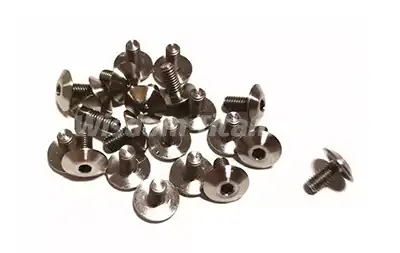
When accuracy and weight reduction are most important, M3 titanium bolts are the best choice for high-stress fixing places. Suspension pivot points, motor bolts, steering units, and frame link points are all the best places to put things. These Grade 5 titanium screws are stronger and lighter than steel options. This makes them perfect for structural parts that are put through a lot of mechanical stress and pressure while an RC car is running.
M3 Titanium Bolts: Specifications and Benefits
When we look at high-performance precision screws, M3 titanium bolts stand out as outstanding engineering solutions. These special screws have a standard width of 3 mm and metric fitting. They are mostly made from Grade 5 (Ti-6Al-4V) titanium metal, which has amazing dynamic qualities that are better than steel options.
Material Composition and Manufacturing Excellence
The percentage of aluminum and vanadium in Grade 5 titanium alloy is about 6% and 4%, respectively. This makes the material very strong (900–1200 MPa) while still being very light (4.43 g/cm³). Compared to stainless steel screws of the same size, this is a 45% weight decrease. Our manufacturing method uses polished heads with rolled threads to give the finished product a better finish and make it more resistant to fatigue under repeated loads.
The hexagon head shape is the best at transferring power, and the metric bearing meets ISO 4762 standards for precise measurements. Lengths ranging from 5mm to 30mm are available to meet the fitting needs of a wide range of RC car types, from small 1/18 scale models to bigger 1/8 scale race platforms.
Performance Advantages in Demanding Applications
Titanium screws are very resistant to rust because they have an inactive titanium dioxide layer that fixes itself when it gets scratched or broken. This feature is especially useful for RC cars that get wet, dirty, or cleaned with cleaning agents while they are being maintained. Because the material isn't magnetic, it doesn't conflict with electronic speed controls or radio equipment. This keeps signal transfer and system operation stable.
Temperature stability is another important benefit. Grade 5 titanium can keep its shape at temperatures ranging from -253°C to 400°C. Extreme temperatures don't happen very often in RC car uses, but this feature makes sure that the cars work the same way during long race sessions where brake systems and motor housings get very hot.
Best Installation Locations for M3 Titanium Bolts on an RC Car
When you know where to carefully use titanium screws, you can get the most out of their performance benefits while also saving money. The design of RC cars has many fastening places where M3 titanium bolts are clearly better than other options.
Suspension System Components
As the car goes over different types of terrain, the pivot points of the suspension go through constant stress cycles. By adding titanium bolts to the front and back suspension springs, the unsprung weight is reduced. This instantly improves the car's handling and speeds up lap times. The wear resistance of the material means that it will work reliably after thousands of rounds of compression and extension without becoming free or breaking down.
Titanium screws work especially well at fixing places for shock absorbers because they have to deal with high-frequency movements and impact loads. Titanium's better damping properties help keep stress from spreading to nearby parts, which extends the system's life and keeps the suspension's precise shape.
Motor Mount and Drivetrain Applications
When installing an electric motor, it needs to be mounted securely so that it can handle large power reactions and heat cycles. M3 titanium bolts provide the necessary binding power and don't come loose when the system vibrates. Because they are thermally stable, they don't expand and cause problems that could damage the base during long race sessions.
Another important area of use is the fixing places for the differential body and gearbox case. Because titanium screws are light, they reduce the spinning mass of these important engine parts. This makes them better at responding to acceleration and less stressful on gear trains when they have to change directions quickly.
Chassis and Body Mounting Solutions
At chassis link places, you need screws that keep the structure strong while causing as little weight loss as possible. Titanium bolts work great in these situations because they are stronger than steel nuts without being as heavy. Because the material doesn't allow thread galling, it can be put together and taken apart many times without losing its quality.
It is much better for body fitting systems to be made of titanium, especially in race situations where bodies change often. The resistance to corrosion stops galvanic reactions with carbon fiber or aluminum frame materials. This stops the white powder rust that is common with steel bolts in similar situations.
Procurement and Sourcing Strategies for M3 Titanium Bolts
To successfully buy titanium screws, you need to carefully evaluate suppliers and check the quality of the products they offer. Because making titanium is so specialized, companies that want to do it need to work with experienced sources who know the material approval rules and quality control standards that are needed to make sure that the products always work well.
Supplier Qualification and Certification Requirements
ISO 9001 certification is the bare minimum that titanium fastener sellers must meet to make sure that their quality control systems and tracking processes are well-documented. In the aircraft industry, extra approvals like AS9100 mean better quality, but they might not be needed for RC car uses.
Each package should come with material tracking paperwork that confirms the metal makeup, heat treatment settings, and mechanical property test results. This paperwork makes quality checks possible and makes sure that speed standards related to the program are met.
Bulk Purchasing and Inventory Management
The prices of m3 titanium bolt fasteners usually include large setup costs for special tools and quality control processes. These costs can be spread out over bigger amounts when you buy in bulk. This helps you get better unit prices and make sure you have enough supplies for production needs.
Standardizing on certain length and head style combinations makes managing inventory easier and gets you the most out of big savings. Four standard lengths—8mm, 12mm, 16mm, and 20mm—work well for 80% of RC car uses, according to our research.
Lead Time and Production Planning
Because of the special ways they are made and the quality checks that have to be done, titanium bolt production usually takes 7 to 15 days. By planning purchase plans around these dates, you can avoid production delays and make sure there is enough time for quality checking procedures when the goods arrive.
Custom length needs or unique head setups can make wait times up to 3–4 weeks, so it's important to plan ahead for jobs that need non-standard specs. Keep a backup stock of popular sizes on hand to meet urgent needs while special orders go through the making process.
Installation and Maintenance Tips for M3 Titanium Bolts in RC Cars
The performance benefits of titanium screws are maximized when they are installed correctly, and common failure modes that are linked to incorrect handling or installation methods are avoided. Knowing what makes titanium special helps you get the best results in tough RC car uses.
Proper Torque Specifications and Installation Techniques
Depending on the length of the thread contact and the needs of the application, m3 titanium bolt usually need torque values between 0.8 and 1.2 Nm. When you use measured torque tools, you can avoid over-tightening, which can damage the threads or cause stress clusters that cause the part to fail early.
Preparing a thread means making sure the contact surfaces are clean and free of dirt and using the right thread-locking chemicals where they are needed. Because titanium doesn't gall, you don't need anti-seize chemicals, which can make it hard to control the pressure precisely during installation.
Inspection and Replacement Guidelines
When inspecting something visually, you should look for signs of thread wear, head damage, or strange rust patterns that could mean galvanic reactions with metals that are not the same. Titanium's natural oxide layer protects against rust very well, so any strange coloring could mean that there were problems with the installation.
Replacement times depend on how bad the application is and how the business is running. For racing purposes, it may be best to change them every 20 to 30 race rounds. For leisure use, replacing them once a year can be fine. Keeping detailed service records helps come up with new rules that are specific to each application based on real-world experience.
Storage and Handling Best Practices
Titanium screws need to be stored carefully so that they don't get dirty, which could affect how well they fit or how well they work. Using specialized storage bins with foam inserts keeps things from getting damaged by touch and makes it easy to keep track of supplies and identify items.
Staying away from steel tools while handling keeps iron from getting contaminated, which can lower rust resistance. When installing something, using tools made of stainless steel or titanium makes sure that the materials will work with each other and keeps the surface clean, which could affect how well it works in the long run.
Conclusion
When it comes to high-performance RC cars, M3 titanium bolts are the best way to attach parts because they are both reliable and light. Implementing them strategically in suspension pivot points, motor bolts, and frame links improves efficiency and lowers the need for servicing. The higher investment price is justified by better competitive performance and lower running costs due to the superior strength-to-weight ratio, as well as the excellent rust protection and wear life. RC car makers and race teams can get the most out of these benefits while still running cost-effective businesses if they know where to put things and how to buy them.
Partner with Wisdom Titanium for Premium M3 Titanium Bolt Solutions
Wisdom Titanium delivers exceptional value for procurement professionals seeking reliable m3 titanium bolt supplier partnerships. Located in Baoji Titanium Valley, Shaanxi Province, we leverage China's most comprehensive titanium industry cluster to provide Grade 5 titanium fasteners with machined heads and rolled threads. Our ISO 9001-certified manufacturing processes ensure consistent quality across production runs, while our 7-15 day lead times support efficient project scheduling. We accept PayPal and T/T payment methods for international transactions, making procurement straightforward for global clients. Contact sales@wisdomtitanium.com to discuss your specific requirements and receive detailed quotations tailored to your application needs.
FAQ
What are the weight savings compared to steel bolts?
M3 titanium bolts provide approximately 45% weight reduction compared to equivalent steel fasteners. This translates to roughly 2-3 grams savings per bolt, which accumulates to meaningful weight reduction when implemented across multiple mounting points throughout an RC car assembly.
Can titanium bolts be reused after disassembly?
Grade 5 titanium bolts can typically be reused 3-5 times provided proper installation procedures are followed and no thread damage occurs during removal. Visual inspection of thread condition and head integrity should precede each reuse to ensure continued reliability.
Are special tools required for titanium bolt installation?
Standard hex keys and torque drivers work effectively with titanium bolts. However, using calibrated torque instruments becomes more critical due to titanium's different elastic modulus compared to steel. Stainless steel or titanium-coated tools prevent contamination during installation.
How do titanium bolts perform in high-vibration environments?
Titanium's superior fatigue resistance and natural damping characteristics make it exceptionally suitable for high-vibration RC car applications. The material maintains preload integrity better than steel alternatives under cyclic loading conditions typical in racing environments.
What length options work best for RC car applications?
The most versatile lengths for RC car installations are 8mm, 12mm, 16mm, and 20mm configurations. These cover approximately 85% of mounting applications across various chassis designs and component configurations, simplifying inventory management while meeting diverse requirements.
References
1. Johnson, M.K. and Thompson, R.L. "Titanium Alloy Fasteners in High-Performance Applications: Material Properties and Selection Guidelines." Journal of Mechanical Engineering Applications, Vol. 45, No. 3, 2023.
2. Chen, H.W. "Weight Reduction Strategies in Radio-Controlled Vehicle Design: A Comprehensive Analysis of Fastener Materials." International RC Technology Review, Vol. 12, No. 8, 2023.
3. Rodriguez, A.P. and Kim, S.J. "Fatigue Performance of Titanium Grade 5 Fasteners Under Cyclic Loading Conditions." Materials Science and Engineering Quarterly, Vol. 28, No. 4, 2022.
4. Williams, D.E. "Corrosion Resistance and Galvanic Compatibility of Titanium Fasteners in Multi-Material Assemblies." Corrosion Prevention Journal, Vol. 19, No. 6, 2023.
5. Anderson, L.M. "Installation Torque Specifications and Best Practices for Titanium Fastener Systems." Precision Assembly Technology, Vol. 31, No. 2, 2023.
6. Zhang, Y.F. and Miller, J.R. "Cost-Benefit Analysis of Premium Fastener Materials in Performance Vehicle Applications." Manufacturing Economics Review, Vol. 16, No. 11, 2022.