
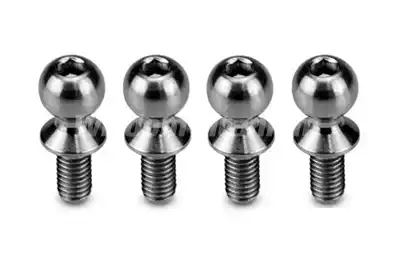
Titanium ball studs are widely known for their extraordinary resistance to corrosion and light weight, which makes them essential for high-performance car, motorbike, and race uses. Anodizing is the most common way to protect the outside of titanium ball studs. It is an electrical process that improves the natural oxide layer on titanium surfaces. Anodizing greatly enhances corrosion defense, offers changeable color finishes for easy recognition, and raises the surface hardness to protect against small scratches. Anodized coats in different colors, like gold, blue, and purple, are often added to racing ball studs for looks and to show specific grades or batch specs. This process makes sure that the bolt keeps its shape even when it's exposed to high vibrations, changes in temperature, and brake fluids or road salts. This gives it measurable performance benefits in harsh conditions.
Titanium Ball Stud Surface Coating Treatments
Due to their high strength-to-weight ratio and natural resistance to corrosion, titanium ball studs have changed performance engineering in the aircraft, motorbike, and automobile industries. Titanium metals used to make racing ball studs have tensile strengths similar to high-grade steel but weigh about 45% less. This is a big benefit in situations where unsprung weight affects how the car handles and how fast it accelerates.
Surface coating processes solve these problems by adding engineered layers to the titanium base that make it stronger against wear, protect against corrosion beyond the native oxide film, and add useful properties that are specific to the needs of the operation. More and more, racing teams and shops that make speed modifications ask for coated titanium screws to stop early failure modes like galling, fretting rust, and fatigue crack start at thread roots.
There are a lot of things to think about when choosing the right coating treatment, such as the amount of mechanical wear, the exposure to corrosive media (like brake fluid or salt spray), the working temperature ranges, the service times that need to be met, and the budget. Coating technologies have improved to the point where purchasing managers can choose treatments that will improve performance in a way that can be predicted and proven by standard testing methods.
Automotive OEMs, race teams, and repair shops can improve part specs by learning about the different coating choices and the benefits of each one. This information directly leads to more reliable vehicles, less downtime for maintenance, and better success in competition, all of which support the extra money spent on surface treatment technology.
How Surface Coating Enhances Titanium Ball Studs for OEM and Industrial Procurement
Quantifiable operating gains brought about by surface-treated titanium ball studs result in lower total cost of ownership and higher system reliability. The performance benefits of properly chosen coatings are supported by evidence from a variety of industry fields.
Performance Validation Through Industry Case Studies
When a well-known European racing team switched from raw to anodized race titanium ball studs in their Formula 3 chassis, the time between maintenance checks for the suspension links was cut by 40%. Detailed inspection records showed that the anodized parts kept their shape and surface finish throughout the whole season, while the unprotected screws had to be replaced in the middle of the season because they were fretting and wearing out at the pivot points.
An American company that makes electric vehicles said that the number of guarantee claims went down a lot after they started using anodized titanium fasteners in battery mounting kits. Type II anodizing stopped galvanic rust at the points where aluminum and titanium met when they were exposed to road spray and chemicals used for underbody washing. This got rid of a common way for cars to break down that had been seen in earlier models.
Even more dramatic effects can be seen in aerospace uses. Anodized titanium control linkage parts in commercial airplanes usually last 15 to 20 years before they need to be replaced. This is in contrast to cadmium-plated steel parts, which only need to be replaced every 7 to 10 years. The lighter weight of titanium substitutes, which is kept by coatings that prevent corrosion, makes the plane use less fuel over its entire operating life.
Custom Coating Solutions for Specialized Requirements
Modern coating providers can make a lot of changes to meet the specific needs of each application. Racing titanium ball studs with adjustable ball sizes can be anodized in specific colors that match the dimensions. This makes it easier to see which ones go with which and cuts down on mistakes made while building vehicles.
Batch processing is flexible enough to handle both small amounts of prototypes for racing development projects and large amounts of production for OEM supply contracts. Anodizing is affordable for specialty repair shops that serve niche performance markets because they only need to order 50 to 100 pieces at a time.
Providing technical advice to buying teams helps them make the best specs. The thickness of the coating can be changed depending on how rough the service is expected to be. For example, heavier anodizing is used on off-road racing vehicles that will be exposed to mud and debris, while lighter treatments are used for track-only applications that will only be used in controlled settings. When torque requirements call for direct metal-to-metal contact, thread masking methods protect interaction areas that aren't coated.
When you have established relationships with suppliers, lead time management gets more complex. Wisdom Titanium keeps a stock of widely ordered anodized racing ball studs in common designs. This lets them quickly fill urgent orders when teams have unexpected component failures during competitions. Customers' production schedules are aligned with finishing completion schedules through scheduled shipping programs. This keeps working capital from being wasted on inventory.
The integration of surface coating expertise into the procurement process transforms titanium ball studs from common fasteners to designed parts that give measured competitive benefits. Coating processes will work as well as they can if you choose providers whose factories are ISO-certified, have a wide range of testing tools, and offer application engineering support.
Best Practices for Maintenance and Longevity of Coated Titanium Ball Studs
To get the most out of surface-treated titanium ball studs, they need to be handled, installed, and maintained correctly. By following these steps, you can protect your covering investment and make sure that the screws work as well as they can.
Inspection and Cleaning Protocols
Regular eye inspection finds early-stage coating degradation before it affects the coating's ability to do its job. Anodized surfaces should keep their color and shine even. Spots of darkening or dullness show that wear has started and need to be looked at more closely. During regular repair times, racing teams check the ball studs and write down any changes to the surface in component service logs.
The protective layer must not be damaged during the cleaning process. Mild alkaline degreasers or pH-neutral car washes get rid of brake dust, oil leftovers, and road grime without hurting the anodized layers. The coating can be worn away by wire brushing, abrasive cleaners, or high-pressure washing close up. This is especially true at thread roots and radius transitions, where the coating thickness naturally changes. When used with the right cleaning products, soft nylon brushes remove enough dirt without damaging the surface.
Thorough washing gets rid of any chemical leftovers that could cause localized corrosion after cleaning. Compressed air drying gets rid of water spots and wetness from thread gaps where it could damage the coating's protection. Applying light penetrating oils to threaded areas on a regular basis keeps out more wetness without getting in the way of applying the right amount of force.
Troubleshooting Common Coating Issues
When anodized parts lose their color, it's generally because the surface is dirty, not because the coating has failed. It is possible for brake fluid, petroleum fluids, or alkaline cleaning to stain the anodic layers without going through to the base metal. Using weak acid solutions to test a spot can help tell the difference between cosmetic stains and real wear-through. Coatings that are stained but still whole continue to protect against rust and wear.
Flaking or blistering is a sign that the coating isn't sticking well, which is usually because the surface wasn't prepared well enough before anodizing. This flaw doesn't happen very often when ISO-certified makers keep good process controls in place, but it can happen with parts from sources that haven't been checked out. Delaminating coatings can get stuck in gaps and stop mechanical systems from working, so affected screws should be taken out of service right away.
Following these care tips will make parts last longer, cut down on repairs that aren't planned, and increase the value of your surface-treated titanium ball studs. By writing down what was found during inspections and maintenance tasks, you can create a performance history that helps you make better decisions about what to buy next and how long to wait between replacements.
Conclusion
Anodizing is one of the best ways to change the surface of race titanium ball studs from high-end parts to strategic performance benefits for cars, motorcycles, and other specialized vehicles. Anodized finishes improve the already great properties of titanium alloys by making them more resistant to corrosion, protecting against wear, and easy to identify. These improvements directly lead to less maintenance, longer service intervals, and better operational reliability. The electrochemical anodizing process makes a strong, accurate surface improvement that works with metric threading and can be used to make custom ball shapes. It's also cheap enough to be used for both OEM production and specialty racing. When purchasing teams choose ISO-certified suppliers with manufacturing know-how, quality assurance protocols, and application engineering support, their companies are in a better position to get the most out of coated titanium fasteners in a wide range of service conditions and operating environments.
Partner with Wisdom Titanium for Premium Anodized Racing Ball Studs
Wisdom Titanium offers great value because we are very good at making titanium metal parts and have modern machine tools for treating the surfaces. We use decades of metallurgical knowledge and full supply chain integration to work from Baoji Titanium Valley, which is China's top titanium industry center and where most of the world's titanium is made. Our factory is ISO 9001-certified and makes race titanium ball studs with metric threading and ball diameters that can be customized. The anodizing methods are carefully controlled to ensure uniform corrosion protection and wear resistance. Our technical team can help you match coating specifications to your operational needs, whether you're an auto OEM that needs to make a lot of parts, a performance modification shop that needs to find specialty fasteners, or a racing team that needs parts that will work in harsh conditions. Our experienced R&D system can make unique designs from samples or ideas, and we keep a full store of raw materials to keep prices low and wait times stable. Get in touch with Wisdom Titanium at sales@wisdomtitanium.com right away to talk about your titanium ball stud supply needs and find out how our anodized fasteners can give you a clear competitive edge.
FAQ
What makes anodized titanium ball studs superior to untreated versions?
Anodized racing ball studs feature an electrochemically increased oxide layer that raises the surface hardness from about 150 HV to 300 HV. This makes them much more resistant to galling and grinding wear. The anodic coating protects against rust beyond titanium's natural passive layer. Standardized tests showed that it could withstand salt spray for more than 1000 hours. Color anodizing makes it easy to see the specs of titanium ball studs when putting things together or doing upkeep. This cuts down on mistakes in high-stress racing situations where speed is important.
Can I customize the coating color for my specific application?
Anodizing methods let you precisely control the color by managing the voltage and electrolyte. This makes it possible to get reliable gold, blue, purple, bronze, and other color finishes. Custom color specs help tell titanium ball studs apart by grade, size group, or where they are meant to be installed. Different suppliers have different minimum order amounts for custom colors, but most of the time, they can be met for both sample development and production volumes.
How does coating affect the dimensional tolerances of metric threads?
Type II anodizing only changes the size of the surface by 0.5 to 25 micrometers, which is well within the range of tolerances for regular metric threads. Things like thread contact, torque, and compatibility with other parts of the system stay the same. Quality makers check the dimensions of threaded screws after they've been coated to make sure they can be used with standard nuts and tapped holes without any problems with interference or looseness.
References
1. ASM International. (2015). Surface Engineering of Titanium and Titanium Alloys. ASM Handbook Series, Volume 5A: Thermal Spray Technology.
2. Donachie, M.J. (2000). Titanium: A Technical Guide, 2nd Edition. ASM International, Materials Park, Ohio.
3. Lutjering, G., & Williams, J.C. (2007). Titanium: Engineering Materials and Processes, 2nd Edition. Springer-Verlag, Berlin.
4. Rack, H.J., & Qazi, J.I. (2006). "Titanium alloys for biomedical applications." Materials Science and Engineering C, 26(8), 1269-1277.
5. Sudarshan, T.S., & Jeandin, M. (Eds.). (1993). Surface Modification Technologies VI. The Institute of Materials, London.
6. Yerokhin, A.L., Nie, X., Leyland, A., & Matthews, A. (2000). "Characterization of oxide films produced by plasma electrolytic oxidation of a Ti-6Al-4V alloy." Surface and Coatings Technology, 130(2-3), 195-206.