
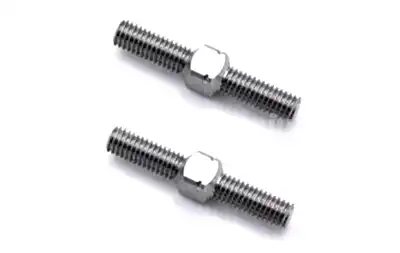
Choosing the proper size makes all the difference whether you need to change the tension in cables, rods, or suspension systems. Engineers, amateurs, and industrial experts who need both lightweight construction and great strength have chosen titanium turnbuckles as the best option. But what sizes are really out there? How do you know which sizes are right for your project?
There are several thread sizes available, such as M3 (3mm turnbuckles), M3.5, M4, and M5, thus they may be used in a wide range of situations. In addition to these common alternatives, specialized manufacturers provide larger size ranges and bespoke designs to meet specific needs. If you're updating parts for an RC car, working on aerospace assembly, or making marine equipment, knowing all the different sizes that are available can help you make smart choices.
This tutorial covers all you need to know about measuring titanium turnbuckles, from typical metric sizes to thread types, length differences, and the options for customisation that contemporary CNC manufacturing makes possible.
Standard Titanium Turnbuckle Sizes and Specifications
The titanium turnbuckle market has changed to fit the demands of different industries, and manufacturers have set standard size ranges that work for most uses. Knowing these specs will help you choose parts that work well with the hardware you already have.
Metric Thread Sizes: M3 Through M5
You may usually get 6AL4V aerospace-grade titanium turnbuckles in sizes M3, M3.5, M4, and M5. These metric sizes match the outside diameter of the threading, and each step is made for a different type of load-bearing use. The M3 size is great for lightweight precise assemblies where bulk doesn't matter much. The M5 size is better for larger loads when strong connections are a must.
At Baoji Wisdom Titanium, we make turnbuckles in sizes M3, M3.5, M4, M4.5, and M5. The M4.5 size is an important addition to the range since it covers a need for particular uses. This larger range gives engineers more options when it comes to matching parts to specific needs.
The tensile capacity of the turnbuckle is directly affected by the diameter of the thread. Larger diameters spread stress across a larger area of material, which is especially significant in situations where there is vibration, shock loads, or constant cycling. Smaller diameters, on the other hand, save weight, and this effect is stronger when more than one turnbuckle is used in a system.
Length Variations and Custom Options
You may get premium titanium turnbuckles in many lengths, such as 3x18mm, 3x25mm, 3x30mm, 3x35mm, 3x45mm, 3x50mm, and 3x55mm. They have an M3 thread size and can be adjusted with a 4mm wrench. These length specs show the overall size of the turnbuckle, which tells you how much you may change it for your need.
To choose the right length, you need to figure out your minimum and maximum tension settings. If a turnbuckle is too short, you can't make as many adjustments. If it's too long, it adds more weight and might cause clearance problems. Most of the time, experienced fabricators choose lengths that give them around 20–30% more room to alter than their predicted nominal setting.
If you purchase a lot of them, you can even get custom thread sizes. This flexibility is very helpful when working with old equipment, custom designs, or applications that need parameters that aren't standard. Baoji Wisdom Titanium offers comprehensive customisation services, so clients may choose the precise dimensions, thread pitches, and other characteristics that are best for their applications.
Why Grade 5 Ti6Al4V Dominates the Titanium Turnbuckle Market?
There are several types of titanium. The type of alloy used to make turnbuckles has a big impact on how well they work, how long they last, and how reliable they are. Ti-6Al-4V, which is also known as TC4, Ti64, or ASTM Grade 5, is an alpha-beta titanium alloy that is very strong and resistant to corrosion. This specific mix has proven the best for precise fasteners and adjustable hardware.
The Science Behind Ti6Al4V Performance
Grade 5 titanium, or Ti6Al4V, is the most prevalent kind of titanium alloy. Because of its great mix of qualities, including as a high strength-to-weight ratio that makes it perfect for uses where weight is very important, it's a workhorse alloy in the titanium sector. The substance is made up of around 90% titanium, 6% aluminum, and 4% vanadium, which makes it better than many other materials in various ways.
It has a density of 4.43 g/cm³ and a tensile strength of 900 to 1100 MPa. This means it is around 45% lighter than steel yet can still perform as well or better. This strength-to-weight ratio makes a big difference in situations when every gram matters. This amazing feature of the material is useful for racing cars, high-performance drones, and aerospace systems.
Grade 5 (6Al 4V) titanium is a better alloy than standard low-grade steel and will be substantially stronger. When comparing titanium turnbuckles to regular steel ones, this difference is really important. Grade 5 titanium really improves performance, not simply makes things lighter.
Corrosion Resistance and Longevity
Titanium doesn't rust easily, even when it's in a tough environment or when it becomes wet. This corrosion resistance is especially useful for things that are used outside, where they could come into contact with water, dirt, or other corrosive materials. Steel turnbuckles need protective coatings or need to be replaced often in tough conditions, whereas Grade 5 titanium stays strong without breaking down.
NACE standard tests show that 316 stainless steel bolts can only last roughly 1000 hours without corroding in a salt spray environment. In the same conditions, titanium bolts can last more than 20 years without any problems. This longer service life means lower maintenance expenses and a more reliable system over time.
The alloy doesn't rust because a coating of titanium dioxide develops on the surface and heals itself. This protective coating heals itself in milliseconds when damaged or rubbed, so it keeps protecting without needing any more treatments. This natural resilience is especially useful for marine applications, chemical processing equipment, and outdoor installations.
Thread Types and Their Impact on Turnbuckle Function
Thread arrangement has a big impact on how titanium turnbuckles work in your application, in addition to diameter and length. A turnbuckle usually has two eye bolts with threads on them. One is screwed into either end of a tiny metal frame. One has a standard right-hand thread and the other has a left-hand thread. You may change the tension by turning the frame, which will screw both eye bolts in or out at the same time without twisting the eye bolts or the wires that are linked to them.
UNC vs. UNF Thread Standards
Unified National Coarse (UNC) and Unified National Fine (UNF) are the two main thread specifications for titanium turnbuckles. The peaks of UNC threads are further apart, which makes them easier to adjust and less likely to break. These traits make UNC perfect for uses where you need to change things often or where contamination might get in the way of fine threads.
UNF threads have more threads per unit length, which means they can be adjusted more finely and have a little bit greater tensile strength for the same diameter. UNF requirements are typically helpful for precision applications where small changes in tension are important, such suspension tuning or alignment systems. The tighter thread engagement also does a better job of keeping things from coming free when they vibrate than coarse options.
Customers can choose between UNC and UNF thread types for turnbuckles made by Baiji Wisdom Titanium. Our CNC machines make threads that are exactly what they need to be, so they fit with existing hardware and work well for a long time.
Left-Hand and Right-Hand Thread Coordination
The turnbuckles' opposing thread pattern is very important for how they work. When you turn the body, both end fittings move forward or backward at the same time. This lets you change the tension without having to detach or twist any of the parts that are already connected. Both ends need to be threaded perfectly with the same pitch.
A machined dimple marks the left-hand thread end so you can easily find it. This simple visual cue avoids mistakes during installation that might cause the device to not work well or be damaged. Good manufacturers always include obvious marks on their products that make it easy to see which way the threads go.
Selecting the Right Size for Your Project
Choosing appropriate titanium turnbuckle dimensions requires evaluating several interconnected factors. Load requirements, space constraints, adjustment range needs, and compatibility with existing hardware all influence the optimal selection.
Load Calculations and Safety Factors
Begin by determining the maximum tension your application will experience during normal operation. Include dynamic loads, shock factors, and any cyclical stresses the turnbuckle must withstand. Most engineering standards recommend applying a safety factor of 3:1 to 5:1 for lifting applications, with critical assemblies potentially requiring higher margins.
Thread diameter directly correlates with load capacity. An M3 titanium turnbuckle handles significantly different loads than an M5 version of the same material and length. Consult manufacturer specifications for working load limits and never exceed rated capacities, regardless of how substantial the components appear.
High Tensile Strength: Titanium 6-4 boasts a tensile strength of 1,170 MPa. Combined with its low density of 4.43 g/cm³, this high tensile strength makes it a top choice for applications requiring strong yet lightweight materials. These exceptional material properties enable smaller turnbuckle sizes to handle loads that would require larger steel components, potentially saving both weight and space.
Compatibility and Integration Considerations
Existing rod ends, clevises, and attachment hardware dictate compatible turnbuckle threading. Mixing metric and imperial threads creates problems, as does attempting to mate UNC and UNF components. Verify thread specifications before ordering to ensure seamless integration.
Physical clearance around the turnbuckle body affects accessibility for adjustment. Ensure adequate space for tools and human hands to operate the device once installed. Turnbuckles positioned in tight spaces may function perfectly but become impractical to adjust during service operations.
Partner with Baoji Wisdom Titanium
For more than 10 years, Baoji Wisdom Titanium Industry and Trading Co., Ltd has provided clients in the aerospace, energy, oil and gas, medical, electronics, chemical, marine, automotive, motorcycle, and bicycle sectors with quality titanium fasteners and CNC parts. Our ISO 9001:2015 accreditation shows that we are still committed to providing quality that matches worldwide standards.
We take every customer comments carefully and answer any queries. We use this communication method to keep improving our goods so that they match the changing demands of the market. Our staff is ready to provide you with the exact solutions you need, whether you need conventional titanium turnbuckles from our stock or unique specifications based on your ideas.
Ready to discuss your titanium turnbuckle requirements?
Contact our team today for competitive pricing, technical consultation, and fast quotes. Simply send an enquiry to sales@wisdomtitanium.com. We look forward to becoming your trusted titanium components partner.
FAQs
Q1: What are the most common titanium turnbuckle sizes available?
A: The most common metric thread diameters are M3, M3.5, M4, and M5. Baoji Wisdom Titanium adds M4.5 for intermediate-sized applications. To meet specific needs, lengths can be 18mm to 55mm or longer. From lightweight RC components to industrial tensioning systems, each size has varied load capabilities and applications.
Q2: Why is Grade 5 Ti6Al4V the preferred material for titanium turnbuckles?
A: Grade 5 Ti-6Al-4V is a versatile titanium alloy. The most used titanium alloy, it accounts for 50% of uses. This alloy weighs 45% less than steel yet is just as strong. For quality turnbuckle manufacture, its corrosion resistance, biocompatibility, and proven performance in demanding sectors make it the obvious option.
Q3: Can I get titanium turnbuckles in custom colors?
A: Yes. Red, blue, black, rainbow, purple, gold, burned blue, and green anodized Baoji Wisdom Titanium turnbuckles are available. Anodizing provides lasting colors by adjusting oxide layer thickness, not paint or dye. This keeps colors from chipping, peeling, or fading while preserving material qualities.
Q4: What thread types are available for titanium turnbuckles?
A: We make titanium turnbuckles with UNC and UNF threads. UNC offers quicker adjustment and higher contamination tolerance, whereas UNF gives finer adjustment increments and vibration resistance. To ensure hardware compatibility, provide thread type when ordering.
Q5: How do I determine the correct turnbuckle size for my application?
A: Calculate maximum load requirements and application-specific safety factors. Thread diameter influences load capacity—larger diameters handle more. Next, examine turnbuckle length-dependent adjustment range demands. Finally, check rod ends and attachment hardware compatibility. Give our technical staff application specifics to help pick.
References
- Titanium Turnbuckles for RC Cars.
- Wikipedia. "Ti-6Al-4V."
- What is a Turnbuckle? A Look at the Types, Parts, Installation, and Uses.
- All About Titanium Alloy 6-4: Definition, History, Properties, and Applications.
- Ti-6Al-4V Titanium Alloy: Properties, Advantages, Applications.