
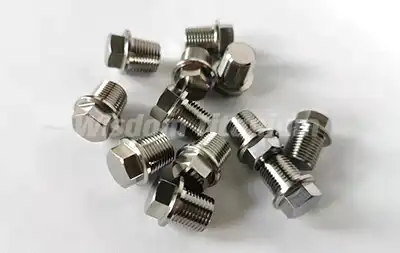
A titanium 1/8 NPT bolt follows the National Pipe Thread (NPT) standard with a nominal pipe size designation of 1/8 inch. The actual outside thread diameter measures approximately 0.405 inches (10.29 mm) with a thread pitch of 27 threads per inch (1/8-27). Made from high-grade titanium alloy (typically Grade 5), these specialized fasteners offer exceptional strength-to-weight ratios and outstanding corrosion resistance. Understanding these precise specifications becomes essential when sourcing titanium NPT fasteners for demanding industrial applications where dimensional accuracy and material performance directly impact system reliability and operational safety.
Understanding the Dimensions of a Titanium 1/8 NPT Bolt
The National Pipe Thread (NPT) standard shows how to make the size and threads of pipe fittings and fluid system fasteners. When procurement professionals who don't know this standard see a 1/8 NPT designation, they get confused because "1/8" refers to the nominal pipe size and not the actual thread diameter.
Information about Actual Size
When sourcing teams buy a titanium 1/8 NPT bolt, there are a few important things they need to check. There are 27 threads per inch of pitch, and the outside thread diameter is 0.405 inches (10.29 mm). This creates a pointy shape that makes a tight seal when there is a lot of pressure. The taper angle is based on the common 1:16 ratio, which makes certain that it fits well with the parts it is connected to.
Calibrated thread gauges and precision calipers should be used to make sure these fasteners are measured correctly. When the thread is hand-tight, the pitch diameter is about 0.3739 inches and the thread depth is usually 0.0180 inches. These specifications are very important for titanium Grade 5 material because machining tolerances affect performance and cost.
Looking for and Checking Material
Inspectors can be sure that Titanium Grade 5 (Ti-6Al-4V) fasteners are made of the right material because they look and feel different from others. If the material is machined correctly, it normally has a great surface finish and looks like a shiny silver-gray color. Magnetic tests have shown that titanium does not have magnetic properties. This is a way to tell that it is not steel. Comparing a bolt's weight with that of another bolt made of titanium and steel is another way to tell which one it is. When they're the same size, titanium bolts are about 43% lighter than steel ones.
Properties and Benefits of Titanium 1/8 NPT Bolts
Titanium Grade 5 NPT bolts are expensive in the industrial market, but they work well in machines. This material meets many performance needs at once, making these fasteners useful in tough situations due to its natural properties.
Superior Strength and Durability Characteristics
Grade 5 titanium can withstand 130,000–140,000 pounds per square inch without breaking. Unlike many steels and alloys, this can withstand more stress before breaking down. This strength lets it work reliably in automotive and aerospace applications where load changes frequently. The substance's strength-to-weight ratio is useful when every ounce counts.
Durability features go beyond strength. Despite temperatures over 400°F, titanium remains strong. This thermally stable material will always work in extreme temperatures, unlike other materials that may break or lose their usefulness.
Exceptional Corrosion Resistance Performance
Titanium forms a corrosion-resistant oxide layer with oxygen. This passive film effectively protects against salt water, acids, and industrial chemicals. Chloride in the air or water can pit or crevice corrosion stainless steel. Titanium, however, survives rough seas.
Corrosion-resistant materials last longer and require less maintenance. Field studies show that titanium screws can last decades in harsh conditions. In the same situation, steel screws may need to be replaced in months or years.
Titanium 1/8 NPT Bolt vs. Alternative Materials: Making the Right Choice
There are many things to consider when picking the right material for NPT fasteners, such as cost, longevity, and the requirements of the specific application. People can make smart purchases that meet both technical needs and budget limits when they know how titanium compares to other materials.
An analysis that looks at performances side by side
When you look at titanium next to 316 stainless steel, aluminum, and carbon steel, there are a few important performance factors to think about. Titanium has the best ratio of strength to weight. It's 43% lighter and about as strong as steel. Stainless steel 316 resists corrosion less well than other metals in most places, especially ones that have chlorides or organic acids.
It works well in a range of temperatures, which is another big plus. At high temperatures, aluminum quickly becomes weaker, and regular steels may rust. Titanium, on the other hand, maintains its strength and hardness at very high and low temperatures. This stability is very important for automotive applications where the temperature changes due to engine heat and changes in the environment.
The Total Cost of Ownership: What to Consider
Titanium 1/8 NPT bolts usually cost 300–500% more than aluminum, steel, or brass ones, at least at first. But thinking about maintenance, how often things have to be replaced, and the cost of downtime makes looking at the total cost different. In important situations where a failure would be very bad, titanium's longer service life often makes it worth the higher price.
Titanium has benefits that help the chemical processing, marine equipment, and high-performance automotive industries by lowering costs over the course of its lifetime. Even though the initial cost is higher, the overall cost is lower because maintenance is needed less often, parts last longer, and there are fewer rust-related failures.
Practical Applications and Usage Guidelines
Titanium NPT bolts are useful in many areas for specific reasons since they are strong but light and don't rust. Knowing how to install and take care of a fastener correctly makes sure it works well for as long as it is supposed to.
Industry-Specific Applications
In aerospace, using titanium NPT bolts in fuel systems, hydraulic connections, and instrumentation mounting helps cut down on weight, which makes the fuel more efficient and increases the payload capacity. The material doesn't break down as easily as others do when they are used with aviation fuels and hydraulic fluids.
In automotive performance and racing, titanium is used to make brake systems, suspension parts, and engine changes lighter by using titanium's properties. More and more, high-end car makers are using titanium fasteners on their best models because they are lighter and help with speed and handling.
Installation Advice and Mistakes People Make a Lot
Thread engagement practices and torque specifications are important to keep in mind when you properly install titanium NPT bolts. If you don't tighten it enough, the seal can be hurt, and if you tighten it too much, the threads can get galling or damaged. The suggested torque values are often between 40% and 60% of yield strength. This is based on how long the thread will be used and what the application needs.
It's easy to use sealants or lubricants that don't work with titanium, cross-threading the first time you connect the parts, and not checking the thread pitch before installation. These mistakes can cause early failure or poor sealing performance. This means that the material's built-in benefits are lost.
Procurement Guide: Where and How to Buy Titanium 1/8 NPT Bolts
In order to successfully get titanium 1/8 NPT bolts, you need to be careful when choosing a supplier and make sure that the quality of the goods is high. Because these parts are so specialized, sellers with the right manufacturing skills and quality certifications are needed.
Supplier Certification and Qualification Needs
Suppliers that are qualified should keep their ISO 9001 certification and, even better, certifications in the aerospace industry like AS9100. These standards make sure that the same quality control methods are used and that it is possible to trace the whole production process. For every production lot, chemical composition analysis and mechanical property verification should be part of the material certifications.
When you do a manufacturing capability assessment, you look at a supplier's CNC machining tools, how well they can do thread rolling, and how they check the quality of their work. Suppliers should show that they have worked with Grade 5 titanium before and provide references from similar applications or industries.
Quality Testing and Verification Steps
Incoming inspection procedures should make sure that the dimensions, thread pitch, and material properties are correct by using the right tests. For important uses, ultrasonic inspection and other non-destructive testing methods may be needed to find issues or inconsistencies in the material.
Certification of materials, reports on dimensional inspection, and records of any special processing should all be part of the batch documentation. This paperwork is very important for quality checks and keeping records, especially in industries like aerospace or medical device manufacturing where the rules are strict.
Conclusion
Knowing the exact size and details of titanium 1/8 NPT bolts helps you make smart purchasing decisions that find a balance between performance needs and cost. These specialized fasteners are very useful in tough situations where their light weight, high strength, and ability to resist corrosion give you an edge. The 0.405-inch outside diameter with 27 threads per inch makes sure that pressurized systems stay sealed and keeps the accuracy of the dimensions even after long use. Choosing the right suppliers, following the right steps for installation, and doing regular maintenance that makes the most of the material's natural benefits are all things that need to be done for it to work. Since fastening systems need to work better and better, titanium NPT bolts are a proven choice for important uses where failure isn't an option.
Partner with Wisdom Titanium for Premium NPT Fasteners
Wisdom Titanium stands as your trusted titanium 1/8 NPT bolt manufacturer, delivering precision-engineered fasteners that meet the demanding requirements of automotive, aerospace, and industrial applications. Our ISO 9001-certified manufacturing facility combines advanced CNC machining capabilities with rigorous quality control procedures to ensure consistent product excellence. As an experienced titanium 1/8 NPT bolt supplier, we maintain comprehensive inventory of Grade 5 titanium materials and offer customization options to meet specific dimensional or performance requirements. Our technical team provides expert consultation to help optimize your fastener specifications and reduce total cost of ownership through proper material selection. Discover how our premium titanium NPT fasteners can enhance your applications by contacting us at sales@wisdomtitanium.com for detailed specifications and competitive pricing.
FAQs
①How is 1/8 NPT bolt thread diameter compared to standard?
The true outer thread is 0.405" (10.29 mm). Nominal pipe size is "1/8". Because the diameter is much larger than the nominal designation, this NPT standard is confusing.
②Grade 5 NPT titanium bolts for high-pressure hydraulics?
Titanium Grade 5 bolts properly threaded and torqued can withstand pressure. Ideal for high-pressure situations, they last.
③How do I verify that I'm receiving genuine titanium Grade 5 material in my NPT bolts?
Verification methods include magnetic testing (titanium is non-magnetic), weight comparison (43% lighter than steel), material certification documentation, and chemical composition analysis. Reputable suppliers provide complete material traceability and testing certificates.
References
1. American Society of Mechanical Engineers. "ASME B1.20.1 - Pipe Threads, General Purpose (Inch)." ASME Standards, 2019.
2. Boyer, Rodney, Gerhard Welsch, and E.W. Collings. "Materials Properties Handbook: Titanium Alloys." ASM International, 1994.
3. Lutjering, Gerd and James C. Williams. "Titanium: Engineering Materials and Processes." Springer-Verlag, 2007.
4. National Institute of Standards and Technology. "Mechanical Properties of Titanium Alloys." NIST Technical Publication 1301, 2018.
5. Society of Automotive Engineers. "SAE AMS 4928 - Titanium Alloy Bolts and Screws." SAE International Standards, 2020.
6. Threadwell Corporation. "Industrial Fastener Standards and Specifications for NPT Threading." Industrial Fastener Institute Technical Manual, 2021.