
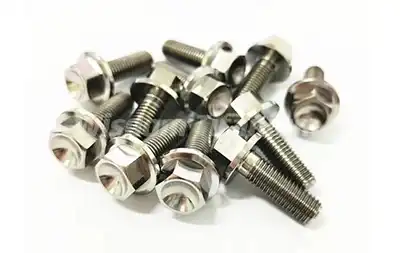
In metric units, hex flange bolts are usually sized between M5 and M20. In the car and industrial worlds, popular sizes include M6, M8, and M10 diameters. These special screws have a flange built into the bottom of the hex head that spreads the load out evenly, so you don't need to use separate nuts. When looking for titanium hardware for high-performance uses, it's important to know exact size standards for things like thread pitch, flange diameter, and bolt length to make sure that the hardware will work with other parts in motorcycles, cars, and factories.
Hex Flange Bolt Sizes
What Makes Hex Flange Bolts Different?
Hex flange bolts are different from regular hex head bolts because they have a flange built right in. This addition that looks like a round washer fits right under the hexagonal head. It makes a bigger bearing surface that spreads the pressing force over a larger area. This design gets rid of the need for different bolts, makes assembly easier, and lowers the risk of losing parts during installation. This is especially helpful in racing and production lines where time is of the essence.
The bottom of the flange is usually serrated and has teeth that bite into the mating surface. This locks the two surfaces together and keeps them from coming free when they are vibrated. This feature keeps the part from rotating, which is very useful for racing teams and car modification shops when fitting wheel hub bolts or brake caliper assemblies, where part security directly affects safety.
Key Dimensional Standards for Procurement
When ordering hex flange nuts from another country, there are three main measurement methods that are used to decide on the right size. In Europe and Asia, ISO (International Organization for Standardization) and DIN (Deutsches Institut für Normung) standards are the most common. In North America, however, ANSI (American National Standards Institute) standards are still the most common.
Thread diameter is the threaded shaft's standard outer diameter. It can be given in metric units (M5, M6, M8, M10, M12) or imperial units (1/4", 5/16", 3/8"). Thread pitch, which is usually defined as coarse or fine pitch, is the space between two threads that are next to each other. The outer edge of the built-in cleaning surface is measured by the flange diameter, which is usually 1.5 to 2 times the thread diameter. The bolt length is the distance from the bottom of the head to the end of the threaded shaft. It is measured in millimeters or inches, based on the method being used.
To avoid expensive mistakes, engineering plans and purchase orders should make it clear whether measurements are based on ISO 4162, DIN 6921, or ASME B18.2.1 standards. A titanium M8×25mm flange bolt that meets ISO standards is slightly different from one that meets ANSI standards. This means that thread contact and pressure requirements are different.
Measuring Techniques and Common Mistakes
For accurate measurements, you need digital calipers that can get within 0.01mm of the thread width and flange measures. Thread pitch gauges show how far apart the threads are, which is especially important when matching new parts to old systems. The full shaft should be measured from the bottom of the base to the end of the bolt, not from the top of the head.
When assumptions are used instead of proof, procurement workers often make mistakes. Installations go wrong when nominal size is confused with real dimensions. For example, "M8" refers to the major thread diameter, not the across-flats measurement of the hex head. Cross-threading and broken parts happen when coarse and fine thread types are mixed up. If you don't pay attention to the flange width specs, it can cause problems with nearby parts or not enough bearing surface contact. Before making bulk orders, check measurements against maker datasheets to avoid costly mistakes and project delays.
Titanium Hardware Properties Relevant to Hex Flange Bolts
Mechanical Advantages in High-Performance Applications
Titanium hardware alloy fasteners have an amazing strength-to-weight ratio that changes the way performance engineering is done in the car and racing industries. Grade 5 titanium (Ti-6Al-4V) has a tensile strength of 900 to 1050 MPa and weighs about 43% less than steel alternatives. This mix lets race teams lower the unsprung mass in wheel systems without affecting the strength of the structure, which directly improves how the suspension responds and how fast the wheels move.
Another important benefit is that it doesn't rust or corrode. Titanium makes a stable oxide layer that stops degradation, while steel bolts rust when they come into contact with water, road salt, or marine settings. The torque specs and look of motorcycle brake disc bolts and bicycle frame parts stay the same over long service periods, which cuts down on repair needs and replacement costs. Electric vehicle makers really value this durability because the gear in the battery area needs to work reliably for decades in a wide range of humidity conditions.
Material Grades and Selection Criteria
There are two main types of titanium that are used to make hex flange bolts. Grade 2 commercially pure titanium is very resistant to corrosion and has a middling strength (340–450 MPa tensile), making it good for uses that care more about environmental stability than maximum load capacity. When aluminum and vanadium are added to Grade 5 titanium metal (Ti-6Al-4V), it makes it much stronger (900–1050 MPa tensile). This makes it the best choice for engine bay bolts, suspension parts, and brake system tools that are stressed over and over again.
Our Titanium Engine Bay Bolts in M6, M8, and M10 sizes are made from Grade 5 material and are made through CNC cutting. The threads are rolled instead of cut, which makes them more resistant to wear. The polished finish makes fitting easier and lets force specs be the same as those for steel parts. Among the colors that are available are black, gold, rainbow, blue, and purple. These colors are used for both looks (for show cars) and functionality (for race pit operations).
Maintenance Considerations for Maximum Lifecycle
Titanium parts don't break down too soon if they are installed correctly. Thread oils made especially for titanium stop galling, which is a type of sticky wear that happens when two metals that are similar slide against each other. Due to different friction factors, titanium hardware torque requirements are usually 10-15% lower than steel versions. Following the manufacturer's instructions will keep you from over-tightening, which can stretch or crack the bolt shaft.
Visual checks for deformation or darkening that could mean too much heat contact should be the main focus of periodic inspections. Even though titanium doesn't rust, it can still be damaged mechanically by contact or bad tool use. Cleaning with water and gentle soap keeps the surface looking good without adding rough chemicals that could damage the protective oxide layer. How often something needs to be replaced depends on how hard it is used. For example, racing parts need to be inspected after every race, while gear for street cars usually works well for years with little maintenance.
How to Choose the Right Size and Material of Hex Flange Bolt for Your Application?
Defining Application-Specific Requirements
To choose the right hex flange bolts, you must first fully comprehend the working conditions and performance needs. Load-bearing estimates should take into account the weight that is not moving, the forces that are moving during operation, and the right safety factors for the criticality of the application. During repeated stops, the bolts on the brake caliper are subjected to cycle shear loads. On the other hand, the bolts on the wheel hub are subjected to both clamping preload and spinning forces. Talking to skilled sources or consulting engineering references can help you turn these complicated stress conditions into the right material grades and bolt sizes.
Assessment of environmental exposure finds rust risks, temperature ranges, and chemical contact opportunities. Applications in the engine bay involve heat, pressure, and the possibility of coming into contact with coolants and oils. Hardware on a motorcycle sprocket is affected by mud, water, and road debris. Extreme temperature cycling and high-frequency shaking are added for racing uses. The choice of material is based on the situation. Grade 5 titanium works well in all of these situations, while Grade 2 titanium is enough for lower-stress settings where resistance to rust is more important than strength.
Balancing Performance Against Cost Constraints
Minimum performance levels are set by engineering standards. Where going above and beyond those minimums adds value is determined by buying strategy. Assembling a whole car with titanium hardware instead of steel would be too expensive and pointless. Using it strategically in places with a lot of impact, like suspension parts, spinning sections, and areas that are sensitive to weight, gets the best return on investment.
Performance car builders usually choose titanium for wheel parts because less unsprung mass directly improves how the car handles. Titanium lug bolts and brake gear save weight, which helps the suspension respond faster and reduces rotational spin. Dress-up bolts for the engine bay reduce weight and look good at the same time, especially when you choose anodized color finishes that make the bolts look better. Motorcycle race teams use titanium parts mainly on the chassis and brake gear, where weight limits require them to be as light as possible.
Partnership Value in Custom Manufacturing Solutions
For complicated jobs, it's common to need non-standard sizes, thread forms, or material standards that go beyond what's normally available off the shelf. Custom fasteners can be made to exacting specifications from engineering models or sample components by reputable titanium hardware sources with in-house CNC machining capabilities. This versatility comes in handy when adding extra parts to production vehicles or making custom kits for vehicles that will only be made in small numbers.
Costly design changes can be avoided by consulting a technical expert during the planning phase. Before they start making something, experienced makers look for problems like thread engagement length, flange clearance with neighboring components, or torque standard compatibility with current tooling. Material test certifications, dimensional inspection records, and compliance paperwork help make sure that quality standards are met in businesses that are controlled. They also make it possible to track products for warranty and liability reasons. Having fast providers who understand both the science of materials and the needs of applications gives you more than just a competitive edge when you're looking for parts.
Wisdom Titanium: Your Partner in Precision Titanium Hardware
Baoji Titanium Valley in Shaanxi Province is home to Baoji Wisdom Titanium Industry and Trading Co., Ltd. This is China's biggest and best-connected titanium business hub. This prime spot in one of the most important titanium production hubs in the world gives direct access to a supply chain that includes titanium scrap, ingots, bars, plates, tubes, forgings, and high-performance alloys that can't be beat anywhere else in the world. Since we started in 2016, we've been providing standard and custom CNC parts to the aerospace, automobile, motorbike, bicycle, marine, and industrial equipment industries. We are also ISO 9001 certified.
We offer hex flange bolts in popular car sizes (M6, M8, and M10) that are made from Grade 5 (Ti-6Al-4V) alloy using CNC machining and threads that are rolled. Each bolt has a tensile strength of 900–1050 MPa and weighs 43% less than steel bolts of the same size. They come with either a natural silver finish or anodized colors like black, gold, rainbow, blue, and purple. Having a full stock of raw titanium bars lets production schedules be flexible without the long wait times that come with working with specialized materials.
Our skilled research and development (R&D) team can help you with unique design by making new parts from your samples, technical drawings, or performance requirements. We can help you with standard bolts for production assembly, custom measurements for developing prototypes, or unique fasteners for racing. Our solutions are made to fit your exact needs. During production, we have strict quality control. Both in-process checking and final proof make sure that every part meets the required tolerances before it is shipped.
We value contact with our customers and answer quickly to technical questions. We also give our customers a lot of information about our products so they can make confident decisions about what specifications to choose. Shipments come with material test results, dimensional inspection data, and ISO 9001 paperwork, which makes it possible to track them in controlled situations. Our competitive pricing structures include bulk discounts that reward bigger promises, and our flexible manufacturing skills can handle small batches of prototypes for research and development projects.
You can talk to our expert team about your fastener needs, ask for sample parts, or get quotes for future projects by emailing sales@wisdomtitanium.com. As a dedicated titanium hardware provider, we have the knowledge, production skills, and customer service to help you meet your buying goals with precise parts that are supplied on time.
Conclusion
To choose the right hex flange bolt sizes and materials, you need to know about measurement standards, the qualities of the materials, and the performance requirements for your application. Titanium hardware has great strength-to-weight ratios and doesn't rust, which makes it useful in high-performance, automotive, and motorbike uses where steel fasteners are too heavy or won't last long enough. Grade 5 titanium hex flange bolts in M6, M8, and M10 sizes have a tensile strength of more than 900 MPa and make assemblies more than 40% lighter than steel ones of the same size.
A good procurement process combines scientific requirements with budget limits, using high-quality materials only when they will improve performance enough to warrant the cost. Working with skilled makers that keep quality certifications, large stockpiles, and the ability to make custom parts guarantees access to both standard and custom parts that are perfectly matched to engineering needs. When you carefully choose a provider based on their qualifications, responsiveness, and expert support skills, you can build relationships that support current projects and allow for future growth.
FAQs
What is the most common hex flange bolt size for automotive applications?
The most common sizes for hex flange bolts in automotive chassis, suspension, and accessory mounting are M8×1.25 (metric) and 5/16"-18 (imperial). These sizes are strong enough for moderate load-bearing needs while still being reasonably priced and light. M6 bolts are used for lighter-duty tasks like attaching trim panels, while M10 and larger sizes are used for suspension parts and structural connections that need higher clamping forces.
Can titanium hex flange bolts replace steel bolts directly?
Titanium bolts can be used instead of steel fasteners of the same grade and size, but there are a few things to keep in mind. Because titanium has a different friction coefficient, torque specifications usually drop by 10 to 15 percent. Thread lubricants made for titanium keep threads from galling during installation. Grade 5 titanium is as strong as or stronger than Grade 8.8 steel, so it can be used in most industrial and automotive settings. Checking the head dimensions and flange diameter makes sure the right tool fit and enough bearing surface contact.
How do I prevent galling when installing titanium fasteners?
Galling happens when titanium surfaces cold-weld under pressure and friction. To stop this from happening, anti-seize lubricants made just for titanium must be applied to the threads and bearing surfaces before installation. Following the torque specs will keep you from over-tightening, which raises the contact pressure above what is safe. Using titanium bolts with steel or aluminum parts lowers the risk of galling compared to using titanium-on-titanium assemblies. Controlling the installation speed and not cross-threading the threads will also help protect against this mechanism.
Are colored titanium bolts purely cosmetic or do they affect performance?
Anodizing processes that give titanium hardware black, gold, rainbow, blue, or purple finishes involve electrochemical oxidation that slightly raises the surface hardness while adding a very thin layer (usually 1 to 5 microns). This treatment improves wear resistance and corrosion protection beyond what raw titanium already has. Performance effects are negligible—the color is mostly for identification and looks, while the thin oxide layer slightly raises the surface's durability. Anodized finishes are better at resisting scratches than paint or powder coating alternatives.
References
- American Society of Mechanical Engineers. ASME B18.2.1: Square and Hex Bolts and Screws (Inch Series). ASME International Standards, 2018.
- Donachie, Matthew J. Titanium: A Technical Guide, 2nd Edition. ASM International Materials Park, Ohio, 2000.
- International Organization for Standardization. ISO 4162: Hexagon Flange Bolts – Small Series. ISO Standards Catalogue, 2012.
- Lutjering, Gerd and James C. Williams. Titanium, 2nd Edition: Engineering Materials and Processes. Springer-Verlag Berlin Heidelberg, 2007.
- SAE International. AMS 4967: Titanium Alloy Bars, Wire, Forgings, Rings, and Drawn Shapes 6Al-4V Annealed. SAE Aerospace Material Specifications, 2019.
- Schutz, R.W. and Watkins, H.B. "Recent Developments in Titanium Alloy Application in the Energy Industry." Materials Science and Engineering: A, Volume 243, Issues 1-2, March 1998, Pages 305-315.