
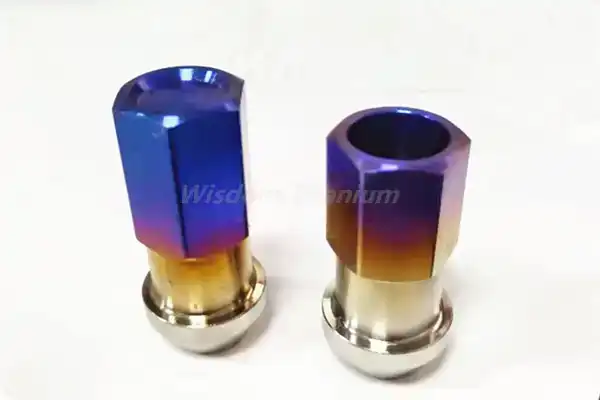
When it comes to high-performance racing, every component matters – right down to the smallest fastener. Forged titanium race nuts are a critical element in ensuring the safety and performance of race cars. But with various sizes and specifications available, it's crucial to understand which ones are right for your vehicle.
Standard sizing and specifications explained
Forged titanium race nuts come in a range of sizes to accommodate different vehicle specifications and racing requirements. The most common sizes you'll encounter are M12 and M14, which refer to the diameter of the thread. However, it's not just about the diameter – the thread pitch, hex size, and overall length also play crucial roles in determining the right fit for your race car.
Let's break down the standard specifications you need to know:
- Thread diameter: Typically M12 (12mm) or M14 (14mm)
- Thread pitch: Usually 1.25mm or 1.5mm
- Hex size: Varies, but common sizes include 17mm, 19mm, and 21mm
- Overall length: Can range from 20mm to 45mm or more
It's worth noting that while these are standard sizes, custom specifications are also available for specialized racing applications. Always consult your vehicle's manual or a professional racing mechanic to ensure you're selecting the correct size for your specific needs.
Choosing the right size for different race cars
Selecting the appropriate forged titanium race nut size isn't just about matching thread diameters. You need to consider the entire package of specifications to ensure optimal performance and safety. Here's a guide to help you choose the right size for different race car types:
Formula and Open-Wheel Racing
These lightweight, high-speed machines often use smaller diameter nuts to reduce unsprung weight. M12 forged titanium race nuts are common in this category. The reduced weight can make a noticeable difference in handling and acceleration, especially on twisty circuits where every gram counts.
GT and Touring Cars
For GT and touring car racing, M14 forged titanium race nuts are more prevalent. These larger nuts provide additional strength and durability needed for heavier vehicles that endure longer races and more varied track conditions.
Rally and Off-Road Racing
In rally and off-road applications, the choice of nut size often leans towards M14 or even larger. The extreme conditions and impacts experienced in these disciplines demand robust fasteners that can withstand significant stress.
Remember, choosing the right size isn't just about the thread diameter. You must ensure that the nut's overall length and hex size are compatible with your wheel and hub assembly. A nut that's too short may not engage enough threads, while one that's too long could interfere with the wheel's mounting surface.
How does incorrect sizing affect performance and safety?
Using the wrong size forged titanium race nut can have serious consequences for both performance and safety. Let's explore the potential issues that can arise from incorrect sizing:
Reduced Thread Engagement
If the nut is too short for the stud, it may not engage enough threads. This can lead to a weaker connection, increasing the risk of the wheel coming loose during a race. The general rule of thumb is to have at least 1.5 times the diameter of the stud engaged in the nut.
Interference with Wheel Mounting
Conversely, a nut that's too long can protrude beyond the wheel's mounting surface. This can prevent the wheel from seating properly, leading to vibrations, uneven wear, and potentially catastrophic failure during high-speed cornering or braking.
Increased Unsprung Weight
Using oversized nuts when smaller ones would suffice adds unnecessary weight to the wheels. In racing, where every gram matters, this extra unsprung weight can negatively impact acceleration, braking, and handling performance.
Improper Torque Application
If the hex size of the nut doesn't match your torque wrench socket perfectly, you risk applying incorrect torque. This can lead to either over-tightening (which can damage threads or cause the nut to seize) or under-tightening (which can allow the wheel to work loose).
Stress Concentration
Nuts that are too small for the application can create stress concentration points, potentially leading to fatigue cracks in the wheel studs over time. This is particularly dangerous in high-stress racing environments.
Given these potential issues, it's clear that choosing the correct size forged titanium race nut is crucial for both performance and safety. Always consult with experienced mechanics or the vehicle manufacturer to ensure you're using the right specifications for your particular racing application.
The advantages of forged titanium race nuts
Now that we've covered the importance of correct sizing, let's delve into why forged titanium race nuts are the preferred choice for many racing teams:
Exceptional Strength-to-Weight Ratio
Titanium's high strength-to-weight ratio makes it ideal for racing applications. Forged titanium race nuts can be up to 45% lighter than their steel counterparts while maintaining comparable or even superior strength. This weight reduction contributes to improved acceleration and handling performance.
Corrosion Resistance
Titanium naturally forms a protective oxide layer, making it highly resistant to corrosion. This is particularly beneficial in racing environments where exposure to various chemicals, fuels, and environmental conditions is common.
Heat Resistance
Titanium maintains its strength at high temperatures better than many other materials. This is crucial in racing scenarios where brake heat can transfer to the wheel assembly, potentially weakening standard fasteners.
Durability
The forging process aligns the grain structure of the titanium, enhancing its already impressive strength and durability. This means forged titanium race nuts can withstand the extreme forces encountered during high-speed racing without deformation or failure.
Customization Options
Many manufacturers offer customization options for forged titanium race nuts. This can include special coatings for even greater corrosion resistance, color anodizing for easy identification, or custom designs to meet specific racing regulations or team preferences.
Forged Titanium Race Nuts Supplier
Understanding the correct size and specifications of forged titanium race nuts is crucial for any serious racing enthusiast or professional team. These high-performance fasteners play a vital role in ensuring both the safety and optimal performance of race cars across various disciplines.
If you're looking for top-quality forged titanium race nuts with T70 torx head for your tuning or racing car, look no further than Wisdom Titanium. Our products are crafted from Grade 5 titanium alloy (Ti-6Al-4V), offering unparalleled strength and a 45% weight reduction compared to steel alternatives. Available in M14, M12, and 1/2-20" sizes, our nuts boast a tensile strength above 950 MPa and a hardness of 36 HRC. We offer custom designs with a minimum order quantity of 100 pieces, and our nuts come with either PVD or anodized finishes for enhanced durability and aesthetics.
Contact Wisdom Titanium today for a quote or to discuss your custom requirements. Email us at sales@wisdomtitanium.com and let's work together to elevate your racing experience!
References
- Society of Automotive Engineers. (2021). "Racing Fastener Standards and Specifications."
- International Journal of Motorsport Engineering. (2022). "The Impact of Lightweight Fasteners on Race Car Performance."
- American Society for Testing and Materials. (2023). "ASTM F468 - Standard Specification for Nonferrous Bolts, Hex Cap Screws, and Studs for General Use."
- Titanium Industry Association. (2022). "Titanium in Motorsports: Applications and Advancements."
- FIA Technical Regulations. (2023). "Formula One Technical Regulations."