
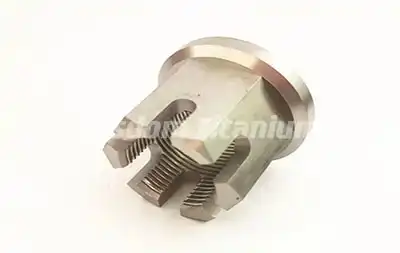
Castle nuts are important fastening parts that can be identified by their crowned tops with circular holes that let you lock them securely with safety wire or cotter pins. These special nuts don't come loose when there is shaking or dynamic load, so choosing the right material is important for safety and efficiency. Castle nuts are made from a number of different materials, such as carbon steel, stainless steel, aluminum alloys, and more and more titanium alloys. The titanium castle nut is the best choice for situations that need high strength-to-weight ratios and resistance to corrosion. This is especially true in racing cars, tuning vehicles, aerospace assemblies, and high-performance motorcycles where weight is an issue and dependability must be maintained.
Overview of Castle Nut Materials
Castle nuts are used as locking fasteners in the defense, aircraft, industrial machinery, and car industries. The choice of material affects not only how well the system works mechanically, but also how long it lasts, how often it needs upkeep, and how much it weighs all together. Getting to know the basic features of popular castle nut materials can help procurement workers make smart choices that meet operational needs and stay within budget.
Steel Castle Nuts – Traditional Strength
It is still most common for castle nuts to be made of carbon steel because it is cheap and strong enough for most uses. Tensile strengths of heat-treated steel grades are higher than 120,000 psi, which means they can be used for big tools and building structures. Usually, zinc plating or black oxide coating is done to steel castle nuts to make them more resistant to rust. However, these surface treatments only offer limited protection in chemical or marine settings. The main problem with steel is that it is heavy. Its density of about 7.85 g/cm³ makes it unsuitable for uses that need to be light, like race cars or airplane parts.
Stainless Steel Options – Corrosion Protection
When it comes to rust protection, stainless steel castle nuts, especially those made from 304 or 316 grades, are better than carbon steel ones. The chromium creates an inactive oxide layer that shields against oxidation and chemical attack, which makes it last longer in tough settings. These screws are used a lot in seafaring equipment, food processing equipment, and things that are outside that get wet. Stainless steel has good strength, with tensile values around 90,000 psi for 316 grade. However, it is still about 40% heavier and costs about the same as carbon steel, which makes it hard to use in situations where cost is important, like when buying in bulk.
Aluminum Alloys – Lightweight Compromise
Because aluminum has a mass of about 2.7 g/cm³, which is about one-third that of steel, castle nuts made of aluminum are much lighter. Tensile strength of aircraft-grade 7075-T6 aluminum is around 70,000 psi, which means that these fasteners can be used in non-critical military and automobile uses. When the material is anodized, an oxide layer forms that protects it from erosion. When aluminum is under a lot of stress, its weaknesses become clear. Its lower resistance to fatigue and thread wear makes it less useful in places with changing loads, like suspension systems or engine bearings, where stress cycles happen over and over again.
Each of the standard materials we've talked about so far has pros and cons when it comes to price, weight, power, and resistance to the elements. These trade-offs push procurement managers to use more advanced materials when the needs of the product go beyond what is normally possible. Titanium metal stands out as the best option because it performs well enough to warrant spending in important, high-value tasks.
Titanium Castle Nuts – Material Properties and Benefits
Titanium Grade 5 (Ti-6Al-4V) is the standard for high-performance castle nuts. It is made of aluminum and vanadium alloying elements, which give it great dynamic qualities. This substance has the same tensile strength as high-grade steel, but it is only 4.43 g/cm³ dense, which is about 45% lighter than steel. Titanium is the best metal for uses where reducing mass directly affects performance because it has the highest strength-to-weight ratio of any common industrial metal.
Superior Mechanical Performance
Titanium Grade 5 castle nuts have tensile strengths of 130,000 to 140,000 psi when they are annealed. Better types can reach 160,000 psi after being heated. The material stays structurally sound at very high and very low temperatures, from -200°C to 400°C, without losing many of its properties. Titanium's fatigue resistance is especially impressive—it can handle millions of stress cycles without cracking. This is a very important property for race car suspension parts and airplane control systems that can't afford to fail.
The material's elastic value of about 16.5 million psi gives it enough stiffness while still letting it bend a little, which keeps stress from building up at the thread roots. This feature makes threads last longer in places with a lot of vibration, like motorbike engines and car brake systems. According to ASTM B348 standards, testing shows that titanium castle nuts are more stable in terms of size and torque retention than aluminum versions when loaded and unloaded many times.
Exceptional Corrosion Resistance
When titanium is exposed to air, its natural oxide film forms right away, making a shield that can't be broken through by chloride, acidic conditions, or saltwater. Titanium castle nuts exhibit minimal rust even after years of use in coastal or chemical processing facilities, unlike steel bolts that need to be replaced every so often in marine applications. Because of this built-in protection, extra coatings like zinc plating or anodizing are not needed to stop corrosion. However, ornamental anodizing and PVD coating are often used for looks or to make the surface harder.
When paired with aluminum or carbon fiber parts, the material doesn't react chemically with most vehicle fluids, like brake fluid, coolant, and synthetic lubricants. This stops galvanic rusting. When putting together mixed-material chassis and suspension systems, where different metals usually wear down faster, racing teams really value this flexibility.
Biocompatibility and Non-Magnetic Properties
Titanium's biocompatibility passes ISO 10993 medical device standards, which means it is safe to use in modified cars for disabled drivers, but this is less important for automotive uses. The fact that it isn't magnetic is useful in precision instruments and electronic systems where ferrous fasteners could get in the way of sensors or navigation equipment. This is something to think about for advanced electric vehicle architectures and self-driving systems that use magnetic field sensors.
Each batch of titanium castle nuts can be tracked back to mill test results that show the chemical make-up and mechanical features of the nuts. This quality control is very important for buying things for aerospace and military, where certification standards for materials are higher than those in the market world.
Titanium Castle Nuts vs Other Materials – A Comparative Table
To choose the right materials for castle nuts, you have to weigh a number of performance factors against the needs of the application and your budget. The next section directly compares titanium to other materials in the ways that are most important for buying parts for cars, motorcycles, and sports equipment.
Material Performance Comparison Table:
| Property | Steel (Grade 8) | Stainless 316 | Aluminum 7075-T6 | Titanium Grade 5 |
|---|---|---|---|---|
| Tensile Strength | 120,000 psi | 90,000 psi | 70,000 psi | 140,000 psi |
| Density | 7.85 g/cm³ | 7.98 g/cm³ | 2.7 g/cm³ | 4.43 g/cm³ |
| Weight (M24 nut) | 68g | 69g | 23g | 38g |
| Corrosion Rating | Fair (with coating) | Very good | Very good (anodized) | Very good |
| Temperature Range | -40°C to 300°C | -100°C to 400°C | -50°C to 175°C | -200°C to 400°C |
| Fatigue Resistance | Good | Good | Okay | Very good |
| Relative Cost | 1x | 1.4x | 2.5x | 8–10x |
Conclusion
The choice of material for castle nuts has a direct effect on how well the system works, how reliable it is, and how much it costs over its lifetime in automobile, motorcycle, aircraft, and industrial settings. While steel, stainless steel, and aluminum are all useful in some situations, titanium Grade 5 castle nuts are the only ones that offer a unique mix of high strength, excellent rust resistance, and significant weight reduction. Titanium's high cost is worth it for uses that need extreme dependability, weight optimization, or long service life in harsh settings because it improves performance and requires less upkeep. Titanium castle nuts can be specified with confidence by procurement professionals for racing cars, speed bikes, custom-built cars, and important industrial assemblies where component failure would have unacceptable results. Because the material has been used successfully in many challenging situations, titanium is the best choice for buyers who want the best performance.
Get Premium Titanium Castle Nuts from a Trusted Manufacturer
Wisdom Titanium is an expert at making high-performance titanium castle nuts for used in racing cars, tuning vehicles, and high-end motorcycles. As an ISO 9001-certified titanium castle nut supplier based in Baoji Titanium Valley—China's largest and one of the world's most important titanium manufacturing hubs—we have full control over our supply chain, from finding the raw materials to making sure the nuts are perfect. Precision CNC cutting is used to make our M22 and M24 titanium Grade 5 castle nuts. You can choose from polished, anodized, or PVD coating finishes, and you only need to order 100 pieces to get them. We provide reliable shipping, full material certifications, and quick expert help to automakers, racing teams, motorbike builders, and performance shops all over the world. Get in touch with our team at sales@wisdomtitanium.com to talk about your unique needs and get a detailed quote for your next job.
FAQ
How does titanium compare to steel in terms of strength?
Titanium Grade 5 castle nuts have a tensile strength that is the same as or higher than high-strength steel (140,000 psi vs. 120,000 psi for Grade 8 steel), but they are 45% lighter. Titanium has a much better strength-to-weight ratio than most other metals, which makes it better for uses where both strength and weight reduction are important.
Can titanium castle nuts be used in high-temperature applications?
The tensile qualities of titanium Grade 5 stay the same at temperatures ranging from -200°C to 400°C, which is higher than aluminum and the same as stainless steel. Because of this, titanium can be used for parts of the brake system and engine assemblies that work at high temperatures.
What certifications should I look for when purchasing titanium castle nuts?
Reliable sellers certify materials according to ASTM B348 or AMS 4928 standards, which list the materials' chemical make-up and mechanical qualities. Having ISO 9001 quality control approval makes sure that the way things are made is always the same. For aerospace uses, AS9100 approval and extra tracking paperwork may be needed.
Are titanium castle nuts compatible with steel or aluminum components?
Titanium is very good at galvanic compatibility with carbon fiber and aluminum composites, which means that rusting doesn't happen where the materials touch. When connecting steel parts, using the right torque and anti-seize additives stops galling and makes sure the joint works well.
References
1. American Society for Testing and Materials. (2021). ASTM B348: Standard Specification for Titanium and Titanium Alloy Bars and Billets. West Conshohocken, PA: ASTM International.
2. Boyer, R., Welsch, G., & Collings, E.W. (2019). Materials Properties Handbook: Titanium Alloys. Materials Park, OH: ASM International.
3. Donachie, M.J. (2020). Titanium: A Technical Guide (3rd Edition). Materials Park, OH: ASM International.
4. SAE International. (2018). AMS 4928: Titanium Alloy Bars, Wire, Forgings, Rings, and Drawn Shapes 6Al-4V Annealed. Warrendale, PA: Society of Automotive Engineers.
5. Lutjering, G. & Williams, J.C. (2021). Engineering Materials and Processes: Titanium (2nd Edition). Berlin: Springer-Verlag.
6. Veiga, C., Davim, J.P., & Loureiro, A.J. (2017). Properties and Applications of Titanium Alloys: A Brief Review. Reviews on Advanced Materials Science, 32(2), 133-148.




