
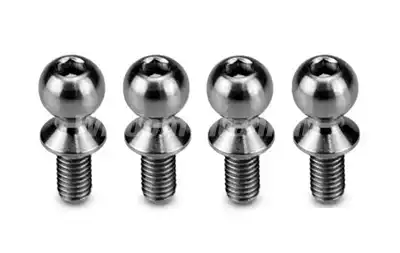
Racing ball studs are predominantly manufactured from high-performance materials like steel, aluminum, and increasingly, titanium alloy. Among these, the titanium ball stud has emerged as the preferred choice for demanding racing applications due to its exceptional strength-to-weight ratio and corrosion resistance. While traditional steel variants offer adequate strength, and aluminum provides weight savings, titanium alloys—particularly Grade 5 (Ti-6Al-4V)—deliver superior fatigue performance under extreme vibration and temperature conditions. Racing-grade titanium ball studs typically feature metric threading, customizable ball diameters, and anodized coatings that enhance surface hardness while maintaining the material's inherent lightweight properties, making them indispensable for professional motorsport teams and performance automotive applications.
Understanding Racing Ball Stud Materials: An Overview
Common Material Choices in High-Performance Applications
In racing settings, titanium ball studs need to be able to handle harsh conditions like constant vibration, changing temperatures, and mechanical stress, which would quickly break down regular parts. Choosing the right materials is an important technical decision that has a direct effect on how well the car works, how safe it is, and how often it needs to be serviced.
In entry-level racing, steel is still widely used because it has known mechanical qualities and is cheap. When properly heat-treated, carbon steel variants have tensile strengths of more than 1000 MPa. However, their higher weight and tendency to rust make them unsuitable for top racing. Grades of stainless steel like 316 make things less likely to rust, but they also make things heavier, which is bad for the power-to-weight ratios that are important in racing.
Brass and ceramics are both used in specific situations. Brass is better in low-friction situations because it naturally lubricates itself, and ceramics work best in very high temperatures, but they are too fragile to be widely used.
Why Material Properties Define Performance Outcomes?
When you look at how things fail in the real world, you can see that there is a link between the properties of the material and how well it works. About 30% of fastener failures happen in race conditions with salt spray and chemical residues because of stress concentration caused by corrosion. Motorsport engineering studies show that lowering unsprung mass by 500 grams can cut lap times by 0.1 seconds on technical courses. This is because weight distribution affects driving dynamics in a measurable way.
Titanium alloys are able to deal with these problems because they have a special mix of properties. Titanium is 45% lighter than steel and provides the same level of strength, thanks to its density of 4.43 g/cm³. The natural growth of a solid titanium dioxide layer on the surface protects against rust without the need for extra coatings that add weight or make delamination points.
Maintenance and Longevity: Caring for Titanium Ball Studs
Routine Maintenance Practices for Extended Service Life
Titanium ball studs retain their performance traits for the duration of their useful lives when they are maintained properly. Regular inspections should happen at set times based on how often the vehicle is used. For example, every 500 track miles for professional racing and once a year for high-performance street cars that only use the track occasionally. A visual inspection can show harm to the surface, thread warping, or galling that means the part needs to be replaced.
Titanium has a different surface chemistry than steel, so cleaning it is different from cleaning steel. Do not use cleaners that contain hydrochloric acid or chlorine solvents because they can damage the protected oxide layer. Mild alkaline soaps or isopropyl alcohol can get rid of brake dust and road grime without affecting the materials. Ultrasonic cleaning gets rid of all the dirt and grime on thread forms and joint surfaces, which makes inspections more accurate.
How you lubricate threads has a big effect on how long they last. Copper or nickel-based anti-seize products should never be used on titanium fasteners because they speed up corrosion through galvanic reactions. Molybdenum disulfide-based lubricants or special titanium assembly pastes keep things from galling while taking into account the fact that titanium has a lower friction coefficient than steel. Don't use too much oil, because extra product pulls rough particles that speed up wear.
Durability Comparison and Performance Monitoring
Titanium ball studs have a longer wear life than other options when they are kept in good shape. In the lab, titanium parts can withstand 3 to 5 million load cycles before they start to show wear cracks. For comparison, aluminum parts can only handle 1 to 2 million cycles and heat-treated steel parts can handle 2 to 4 million cycles under the same loading conditions. This means that parts made of titanium can be replaced more often—steel parts need to be replaced every year, but titanium ball studs can last for more than one race season.
The benefits of corrosion protection are especially clear in harsh settings. Racing operations that take place in sea climates or places where the roads are treated harshly in the winter say that titanium parts last a lot longer. Unlike stainless steel, which corrodes in cracks in areas that are protected, titanium's oxide layer heals itself when it gets broken, so it stays protected even when salt is present.
Monitoring performance by checking the force on a regular basis protects the health of the joint. Titanium has an elastic value of 114 GPa, while steel has 200 GPa. This means that titanium fasteners stretch more under the same loads, which could lower the preload if they are not properly installed. After the first heat cycles, tighten the titanium ball stud attachment hardware again. Then, check the preload maintenance every so often to find loosening before it changes how the vehicle moves.
Procurement Guide: Where and How to Buy Titanium Ball Studs?
Navigating Supply Chain Options
Getting titanium ball studs can be done in a number of different ways, each with its own benefits. Direct ties with manufacturers give you the best prices for large orders and give you access to engineering tools for unique needs. Distributors and specialized racing providers have a wider range of products and lower minimum order sizes, which is good for teams that need to get a lot of different types of parts from one place.
Expected lead times depend on how complicated the design is. Standard store items ship in two to four weeks, but special sizes that need to be made with tools take eight to twelve weeks. There are choices for faster output, but they usually cost 30–50% more. Build ties with suppliers during the off-season so that you don't have to rush to get cars ready for competition seasons.
Initiating Procurement Inquiries Effectively
Provide full technical specs up front to speed up the quote process. Important details include thread specifications (size, pitch, and class), ball diameter needs, total length measurements, preferred material grade (Grade 5 vs. Grade 23), surface treatment needs (anodized, passivated, or as-machined), and expected order numbers. Include information about the application, such as whether the parts are for suspension or brakes, the type of racing, and the expected load conditions. This will help sellers suggest the best specs.
Make sure you understand the payment terms, shipping options, and return rules before you place your order. When buying something from another country, you might need a letter of credit or an advance payment. To make a good budget for overall landing costs, you need to know how titanium parts are classified by customs and how much they cost. Set up clear ways for expert contacts at supply companies to talk to you about installation questions or changes to the application while the car is being developed.
Conclusion
Choosing the right material has a big effect on how well a race part works, and titanium alloys are now the best choice for difficult ball stud uses. Titanium ball studs are important parts for professional race operations and serious performance enthusiasts due to their mix of exceptional strength-to-weight ratio, better corrosion resistance, and longer fatigue life. Even though the beginning costs are higher than with traditional materials, the overall value proposition—which includes weight savings, durability, and lower upkeep needs—justifies the investment in situations where performance benefits lead to competitive success. Carefully choosing the right provider, paying close attention to the right specs, and following the maintenance guidelines are all things that make sure these precision parts work at their best for a long time, which improves the way the vehicle moves and how reliable it is to use.
Partner with Wisdom Titanium for Premium Racing Ball Stud Solutions
Racing requires parts to be of the highest quality, and getting them from well-known titanium experts will make sure your cars work at their best. Wisdom Titanium is an ISO 9001-certified company in Baoji Titanium Valley, which is China's main titanium production hub and one of the most important titanium manufacturing hubs in the world. They make racing-grade titanium ball studs that are designed to be the best in their class. We can do everything from checking the raw materials to doing the final inspection. This makes sure that each batch is the same and that materials can be tracked, which is important for professional racing uses.
We make racing ball studs out of aerospace-grade titanium alloy. You can choose from different ball sizes, metric threading, and professional anodized finishes that are made to fit your performance needs. Our experienced engineering team can help you find the best component standards for your needs, whether you're putting together a championship race team or making high-performance changes to your car. We can keep our lead times cheap without lowering the quality of our work because we keep a full store of raw materials and have developed our CNC machining processes.
To talk about your titanium ball stud needs, email our expert sales team at sales@wisdomtitanium.com. As a reliable titanium ball stud provider that can make a lot of changes, we can help you with all of your buying needs, from making prototypes to producing large quantities. We can give your racing program the reliability and performance it needs.
FAQ
What makes titanium ball studs superior to steel alternatives in racing applications?
Titanium ball studs are much better than steel ones because they have a much higher strength-to-weight ratio. They have the same tensile strength but are 45% lighter. This lower weight in the suspension parts lowers the unsprung mass, which directly improves how well the car handles and how smooth the ride is. Titanium doesn't rust, so its surface doesn't wear down like steel does in tough race conditions. This makes the material last a lot longer. Titanium has better fatigue properties than steel, so its parts can withstand 3–5 million load cycles instead of 2–4 million. This means they don't need to be replaced as often, which saves money on upkeep costs during competition seasons.
Can titanium ball studs be customized for specific racing vehicle requirements?
One big benefit of working with expert titanium makers is that they can make things just the way you want them. It is possible to change the ball diameter specifications by as little as 0.5 mm to get the best movement for a certain suspension geometry. Thread specs allow for both normal metric sizes and fine-pitch variations that make them more resistant to wear and tear. The overall length, taper angles, and mounting contact sizes can be changed to fit the needs of each car. Anodized coats can be put on in different colors to help you find parts and make the surface harder. Reliable providers offer technical help to look over specific needs and make sure designs meet the structural needs of the intended uses.
How frequently should titanium ball studs be inspected and maintained in racing environments?
The regularity of inspections relies on how often they are used and how the machine is being used. Every 500 track miles or after major accidents involving suspension loading, professional race teams should check their titanium ball studs. High-performance street cars that are sometimes used on the track do better with yearly inspections and seasonal repair. The examination should find surface damage, thread wear, or joint binding that means the part needs to be replaced. Performance is kept up by cleaning with the right chemicals and reapplying molybdenum disulfide lubricants during checks. Checking the torque makes sure that the mounting gear keeps the right preload, which stops it from loosening and affecting the vehicle's performance or the quality of a part.
References
1. Boyer, R., Welsch, G., & Collings, E.W. (2007). Materials Properties Handbook: Titanium Alloys. ASM International, Materials Park, Ohio.
2. Donachie, M.J. (2000). Titanium: A Technical Guide, 2nd Edition. ASM International, Materials Park, Ohio.
3. Lutjering, G. & Williams, J.C. (2007). Titanium, 2nd Edition. Springer-Verlag, Berlin Heidelberg.
4. Schutz, R.W. & Watkins, H.B. (1998). Recent developments in titanium alloy application in the energy industry. Materials Science and Engineering A, 243(1-2), 305-315.
5. Society of Automotive Engineers (2016). Aerospace Material Specification AMS 4928: Titanium Alloy Bars, Wire, Forgings, Rings, and Drawn Shapes. SAE International, Warrendale, Pennsylvania.
6. Veiga, C., Navim, J.P., & Loureiro, A.J.R. (2012). Properties and applications of titanium alloys: A brief review. Reviews on Advanced Materials Science, 32(2), 133-148.