
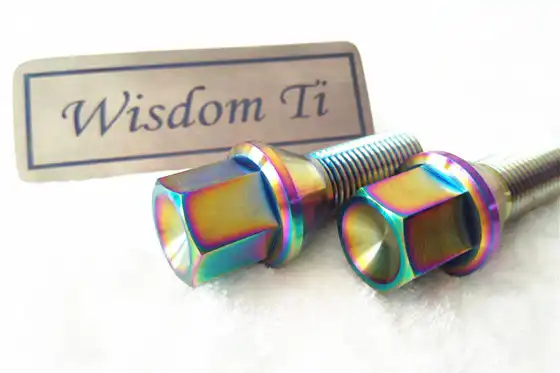
Changing your car's wheels can improve both its performance and its looks. But if you choose the wrong fasteners, your dream arrangement could quickly turn into a nightmare. A titanium conical seat lug bolt is the best way to fasten wheels since it uses aerospace-grade materials and precise engineering. These particular fasteners are made for high-end and performance cars like Lamborghini, Ferrari, BMW, Mercedes-Benz, and Subaru that need nothing less than ideal. This complete guide tells you everything you need to know about conical seat lug bolts. It helps you make smart choices for your aftermarket wheel projects by showing you how they are better than other options.
What is Titanium Conical Seat Lug Bolt?
The titanium conical seat lug bolt is a new type of automobile fastening technology made just for cars with taper hub systems. These bolts have a carefully machined conical surface that fits the wheel's tapered mounting holes flawlessly, unlike ordinary flat-seat fasteners. The conical shape makes sure that the bolt head makes the best contact with the wheel surface, which spreads the pressure evenly over the mounting interface.
These fasteners are made from aerospace-grade titanium alloy (usually Grade 5 Ti-6Al-4V), which gives them great strength while keeping their weight very low. The 60-degree angle of the conical seat makes it easy for the bolt head to find its center when it is being installed. This self-centering action takes the uncertainty out of the process and cuts down on installation time by a lot.
These bolts are perfect for severe environments since they are made of titanium, which is more resistant to corrosion than steel. High-end manufacturers like Wisdom Titanium make these fasteners to exact specifications, so they will work with high-end European cars and performance applications. Titanium conical seat lug bolts are the best choice for car lovers because they are light, strong, and precisely made.
The Problem It Solves and Need It Fulfills
For people who own fast cars or want to buy wheels on the aftermarket, traditional steel lug bolts can be a pain. Weight is a major issue since steel fasteners provide extra rotational mass that makes acceleration, braking, and fuel efficiency worse. Every ounce of weight that moves around influences how a vehicle moves more than weight that stays still. This is why lightweight options are so important for performance applications.
Another big difficulty with regular fasteners is that they might rust. Steel bolts that are exposed to road salt, moisture, and changes in temperature can rust over time. This can cause them to get stuck in wheel hubs or shatter when you try to take them off. This rust can hurt pricey aftermarket wheels and make it dangerous to change tires or do maintenance.
Many aftermarket installations have trouble with getting the right fit. Fasteners that aren't made well and don't have regular tolerances can cause vibration, noise, and uneven wear patterns. The conical seat design fixes these problems by making sure that the seat is centered and that the clamping force is spread evenly. This exact fit keeps the wheels from wobbling and makes sure they will last for a long time.
Parts that meet the engineering criteria of high-performance automobiles are needed. Luxury cars like the BMW M-series or the Mercedes AMG sometimes have factory wheels that use sophisticated fastening mechanisms that regular hardware can't copy. Titanium conical seat lug bolts fill this gap by delivering OEM-quality fitting with better performance that works well with improved wheel packages.
Core Features and Functionality Deep Dive
These high-quality fasteners are made from aerospace-grade titanium alloy. Grade 5 titanium (Ti-6Al-4V) has a tensile strength of more than 130,000 PSI and a density that is about 45% lower than steel. This amazing strength-to-weight ratio lets manufacturers make fasteners that are better than steel ones while also making vehicles much lighter overall.
The titanium conical seat lug bolt design is a complex piece of engineering that makes the most of contact area and stress distribution. The finely machined 60-degree taper makes sure that the surface is fully engaged with matched wheel seats. This gets rid of stress concentration spots that can cause flat-seat designs to break too soon. This shape also lets you see if the seats are in the right place during installation, since gaps will show up right away if there are any alignment problems.
Different thread standards are needed for different vehicles. Some frequent patterns include M12x1.5, M12x1.25, M14x1.25, and M14x1.5. Length choices usually go from 26mm to 50mm, which lets different wheel and hub combinations fit properly. Premium manufacturers machine threads to Class 6g tolerances, which makes sure that the installation goes smoothly and that the torque values stay the same.
There are more surface finish options than only the unique gray color of natural titanium. The Physical Vapor Deposition (PVD) coating technology provides long-lasting colorful finishes including black, gold, rainbow, and burnt blue. These coatings make the wheels more resistant to rust and provide you the chance to customize the look of your wheels to match certain patterns or themes for your vehicle.
varied head designs work with varied socket and wrench needs. Hex socket heads take regular Allen keys, and external hex patterns operate with regular sockets. Some companies make specific head designs that need particular tools, which makes them harder to steal.
Conclusion and Future Outlook
Titanium conical seat lug bolts represent the ultimate fusion of performance, reliability, and aesthetics for discerning automotive enthusiasts. Their superior strength-to-weight ratio, corrosion immunity, and precision engineering make them essential upgrades for luxury and performance vehicles. While initial costs exceed traditional alternatives, the long-term benefits of weight reduction, maintenance-free operation, and enhanced appearance justify the investment. As automotive technology continues advancing toward lighter, stronger materials, titanium fasteners will become increasingly common in both OEM and aftermarket applications, setting new standards for wheel mounting systems.
Choose Wisdom Titanium for Premium Titanium Conical Seat Lug Bolts
Wisdom Titanium Industry and Trading Co., Ltd delivers ISO 9001-certified quality in every titanium conical seat lug bolt we manufacture. Our aerospace-grade titanium fasteners serve discerning customers worldwide, providing customized solutions that exceed industry standards. As a trusted titanium conical seat lug bolt supplier since 2016, we combine advanced CNC machining capabilities with rigorous quality control processes. Contact us at sales@wisdomtitanium.com to discuss your specific requirements and discover why performance enthusiasts choose our premium fastening solutions.
FAQs
Q1: Are titanium conical seat lug bolts compatible with all aftermarket wheels?
A: Titanium conical seat lug bolts work specifically with wheels designed for conical seat applications, typically found on European vehicles like BMW, Mercedes-Benz, and Audi. The 60-degree taper must match your wheel's seat design. Flat-seat wheels require different bolt types. Always verify your wheel specifications before ordering to ensure proper fitment and safety.
Q2: What torque specifications should I use for titanium lug bolts?
A: Titanium lug bolts typically require torque values 10-15% lower than steel equivalents due to different material properties. Common specifications range from 80-120 Nm (59-89 ft-lbs) depending on thread size and vehicle requirements. Always consult your vehicle manual and bolt manufacturer recommendations, as over-tightening can damage threads or create stress concentrations.
Q3: How long do titanium conical seat lug bolts last compared to steel?
A: Quality titanium lug bolts can last indefinitely with proper installation and maintenance, as titanium doesn't corrode like steel. While steel bolts may need replacement every 3-5 years due to corrosion, titanium fasteners maintain their performance characteristics throughout their service life. The higher initial investment typically pays for itself through longevity and consistent performance.
References
1. ASM International Handbook Committee. "Properties and Selection: Nonferrous Alloys and Special-Purpose Materials." ASM Handbook Volume 2, 10th Edition, ASM International, 1990.
2. Boyer, Rodney R. "An Overview on the Use of Titanium in the Aerospace Industry." Materials Science and Engineering: A, Volume 213, Issues 1-2, August 1996.
3. Donachie, Matthew J. "Titanium: A Technical Guide, 2nd Edition." ASM International, 2000.
4. Lutjering, Gerd and James C. Williams. "Titanium: Engineering Materials and Processes, 2nd Edition." Springer-Verlag Berlin Heidelberg, 2007.
5. Society of Automotive Engineers. "SAE J429: Mechanical and Material Requirements for Externally Threaded Fasteners." SAE International Standards, 2014.
6. Zwicker, Ulrich. "Titan und Titanlegierungen (Titanium and Titanium Alloys)." Springer-Verlag Berlin, 1974.