
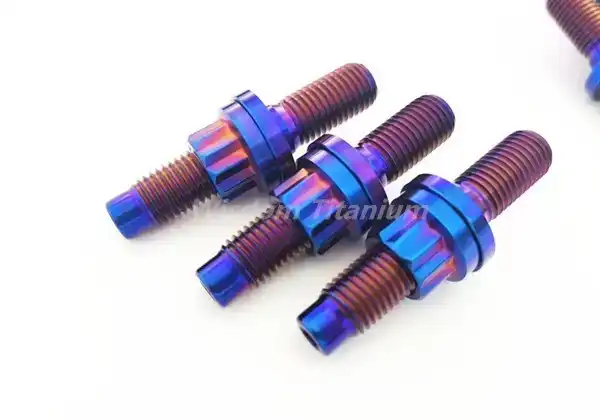
Material strength isn't just a technical feature when you're looking for fasteners for high-performance exhaust systems; it's the difference between steady operation and catastrophic failure. When they are annealed, titanium exhaust bolts made from Grade 5 Ti-6Al-4V metal usually have a tensile strength between 895 MPa and 930 MPa, which is about 130,000 to 135,000 psi. Their great strength-to-weight ratio makes them very useful in racing, motorcycles, and cars, where both toughness and weight reduction have a direct effect on performance.
Understanding Tensile Strength of Titanium Exhaust Bolts
Tensile strength is the most stress that a substance can take when it is pulled or stretched before it breaks. When looking at exhaust bolts, this number is very important because they are constantly being exposed to changing temperatures, vibration loads, and corrosive conditions that test their structural stability.
Defining Tensile Strength in Fastener Applications
Tensile strength testing is done according to ASTM E8 and ASTM F606 guidelines. Samples of fasteners are pulled with controlled forces until they break. The number tells you how much weight the material can hold in total per unit area. The best performance of Grade 5 Ti-6Al-4V alloy comes from its aluminum-vanadium mix, which forms a balanced alpha-beta microstructure. This microstructure gives Grade 5 titanium alloy strength and flexibility that carbon steel can't match at the same weights.
How Ti-6Al-4V Grade 5 Achieves Superior Performance
About 6% aluminum and 4% vanadium make up Grade 5 titanium alloy, which has a number of functional benefits. Vanadium stabilizes the beta phase, which makes it more flexible and easier to shape, while aluminum stabilizes the alpha phase, which makes it stronger and less dense. This mix makes a material that is 45% lighter than most types of stainless steel but has a tensile strength that is higher than most of them. The alloy keeps its mechanical qualities at temperatures ranging from -240°C to 400°C. This makes it perfect for exhaust manifolds that need to quickly go from room temperature to temperatures above 300°C for operation.
Industry Testing Standards and Real-World Data
Manufacturers test batches all the time to make sure the mechanical qualities meet aerospace-grade standards. Independent tests by groups like NASA and SAE International have shown that Ti-6Al-4V that has been properly heated always has tensile strengths between 895 and 930 MPa. Before being approved for shipment, Wisdom Titanium makes sure that every batch of titanium exhaust bolts goes through strict quality control measures. These include tensile testing, hardness verification, and measurement inspection.
How to Choose the Right Titanium Exhaust Bolts Based on Tensile Strength and Application Needs?
To choose the right fasteners, you need to make sure that the material requirements, size requirements, and source certifications match your unique application needs. Making smart decisions keeps you from over-engineering costs and under-specification mistakes.
Critical Selection Parameters
Thread pitch, shank thickness, and total length all have a direct effect on how clamping force is distributed and how well the joint holds together. The most popular sizes for exhaust flanges in cars and motorcycles are M8×1.25×45mm and M10×1.25×45/54mm, which are part of our basic product line. Custom size makes it possible for non-standard uses like race header collectors, naval exhaust risers, and high-temperature ductwork in industry. The 12-point flange nut design is better at wrench contact and torque transfer than standard hex setups. This cuts down on installation time and keeps corners from rounding off during assembly.
Grade Selection and Heat Treatment
For exhaust uses, Grade 5 Ti-6Al-4V is the norm, but Beta-C or Grade 23 alloys, which are stronger, may be better in some extreme racing conditions. Titanium exhaust bolts and the state of heat treatment have a big effect on the mechanical qualities. For example, annealed material is the most flexible and good at absorbing pressure, while solution-treated and aged conditions make it the strongest. We work directly with engineering teams to suggest the best material states based on duty cycle needs and practical stress analysis.
Supplier Certification and Quality Assurance
Certifications for aerospace use, like AS9100 and NADCAP verification, make sure that the mechanical qualities and makeup of materials are always the same. Wisdom Titanium keeps its ISO 9001 certification, which ensures that quality management is carried out in a planned way throughout all of its manufacturing processes. For each package, you should ask for material test records (MTRs) that show the chemicals used, the results of tensile tests, and how each lot can be tracked. We are in Baoji Titanium Valley, which is the best place in China to make titanium in Shaanxi Province. This gives us direct access to the world's largest titanium supply chain, which guarantees the accuracy of our materials and prices that coastal trading companies can't beat.
Installation Best Practices and Maintenance Tips for Titanium Exhaust Bolts
When titanium screws are installed correctly, they keep their tensile strength benefits and avoid common failure modes that are caused by bad handling rather than material flaws.
Pre-Installation Preparation
Thoroughly clean all areas that touch, getting rid of carbon buildup, old gasket material, and rust products. Use thread gauges to check threads for damage or distortion. Titanium has a lower amount of elasticity than steel, which means it bends more under the same loads. Because of this, you need to pay attention to the thread contact length. To reach full strength, the minimum engagement should be 1.5 times the specified width.
Torque Specifications and Anti-Seize Application
Titanium has a lower friction coefficient than steel, which changes the way force and strain are related. Use anti-seize chemicals minimally to avoid over-tightening; too much lubrication lowers friction below what is assumed in calculations, which could lead to joint failure due to not enough preload. Follow a staged tightening process, which is usually 50%, 75%, and then 100% of the standard in a cross-pattern, and use torque wrenches that have been calibrated. Our technical paperwork lists the exact torque values for each product setup, taking into account the type of finish (natural or burnt blue) and the shape of the washers.
Long-Term Maintenance Strategies
Check bolts for obvious distortion, discoloration that means they're too hot, or loss of preload at regular maintenance times. Titanium is very resistant to stress, which means that bolts that are properly fitted rarely need to be replaced because the material is wearing down. Record the times of installation and service intervals to keep track of how well the car is running over its lifetime. Fasteners with damaged threads should be replaced right away. Unlike steel, titanium work-hardens when it is bent plastically, which creates stress concentrations that speed up the crack spreading.
Conclusion
Titanium exhaust bolts made from Grade 5 Ti-6Al-4V metal have a tensile strength of 895 to 930 MPa, which means they can hold a lot of weight while being 45% lighter than steel options. Because of this, they are essential for race cars, high-performance bikes, and OEM lightweighting projects where the properties of the materials directly affect how well the cars do in competition. To make the right choice, you need to match the bolt's specs to the needs of the application, check the supplier's certifications, and use fitting best practices that keep the material's benefits. Buying titanium exhaust bolts from well-known companies with complete quality control systems guarantees that the bolts will work reliably in harsh heat and mechanical service conditions.
Partner With Wisdom Titanium for Your High-Performance Fastener Needs
Choosing a trustworthy titanium exhaust bolts supplier has a direct effect on the success of your project, the cost of upkeep, and your place in the market. Wisdom Titanium has been making specialty parts for automakers, racing teams, and speed modification shops around the world for more than eight years. Our factory in Baoji Titanium Valley is ISO 9001-certified and makes Grade 5 titanium fasteners that can be fully tracked back to the raw materials they come from. These include stud-and-nut assemblies with 12-point flange configurations and built-in washers. Natural titanium and burnt blue anodizing are two styles that can be used. Sizes range from M8×1.25×45mm to M10×1.25×45/54mm, and they can be fully customized for non-standard uses. We can meet the needs of both concept research and large-scale production, as our minimum order quantity as low as 100 pieces. You can email our expert team at sales@wisdomtitanium.com to talk about your unique application needs, get material certifications, or get prices for your next purchase cycle.
FAQ
Do titanium exhaust bolts require special tools for installation?
Ti screws fit nicely in standard metric socket sets. The 12-point flange nut design works with both 12-point and 6-point sockets, but 12-point tools work better with it. Use torque tools that have been adjusted because titanium has unique friction properties that change the relationship between torque and tension. It is better to use hand tools or controlled electric torque boosters instead of impact tools, which can cause microcracking through shock loading.
Can I reuse titanium exhaust bolts after removal?
Grade 5 titanium screws can be installed more than once as long as they are treated correctly. Before using, carefully check the threads for galling or distortion. Clean it well and put on new anti-seize substance. Because titanium is very resistant to wear, nails that are taken off without damaging the material still have full tensile strength. If you see obvious thread damage or necking near the head-shank change on a bolt, you should replace it because these are signs that it is getting close to failing.
How does finish type affect bolt performance?
Through the stable oxide layer, the natural titanium finish keeps the highest level of rust resistance. Burnt blue anodizing gives something an artistic look and makes the surface a little harder without lowering the tensile strength. Both styles work the same in mechanical applications; the choice relies on personal taste and how visible the finish is in the installation. For long-term resilience, neither finish needs extra surface cleaning or protective coatings.
References
1. Boyer, R., Welsch, G., & Collings, E.W. (1994). Materials Properties Handbook: Titanium Alloys. ASM International, Materials Park, Ohio.
2. Donachie, M.J. (2000). Titanium: A Technical Guide, 2nd Edition. ASM International, Materials Park, Ohio.
3. American Society for Testing and Materials. (2021). ASTM F606/F606M-21: Standard Test Methods for Determining the Mechanical Properties of Externally and Internally Threaded Fasteners, Washers, Direct Tension Indicators, and Rivets. ASTM International, West Conshohocken, Pennsylvania.
4. Society of Automotive Engineers. (2019). SAE AMS 4928: Titanium Alloy Bars, Wire, Forgings, Rings, and Drawn Shapes 6Al-4V Annealed. SAE International, Warrendale, Pennsylvania.
5. Lütjering, G., & Williams, J.C. (2007). Titanium, 2nd Edition, Engineering Materials and Processes. Springer-Verlag, Berlin Heidelberg.
6. Bickford, J.H. (2008). Introduction to the Design and Behavior of Bolted Joints: Non-Gasketed Joints, 4th Edition. CRC Press, Boca Raton, Florida.