
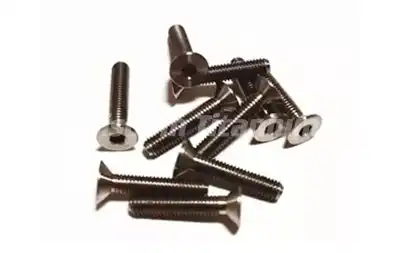
Grade 5 titanium alloy usually has a tensile strength of 1,034 MPa (150 ksi), whereas Grade 2 titanium normally has a tensile strength of 895 MPa (130 ksi). In high-performance applications where structural integrity cannot be compromised, these precise metric fasteners with a nominal diameter of 3mm provide remarkable strength-to-weight ratios, making them indispensible. M3 titanium bolts fasteners with a crystalline structure and an alloy composition provide dependable performance even in the most challenging environments, thanks to their exceptional mechanical qualities.
Tensile Strength of M3 Titanium Bolts Explained
In engineering, where structural integrity dictates system safety, tensile strength is an essential characteristic to have. It indicates the maximum stress that a fastener can endure before failing. In order to choose fasteners that can withstand a certain load with sufficient room for error, engineers and procurement experts need to be familiar with tensile strength numbers.
Grade-Specific Tensile Strength Values
Grade 2 titanium bolts are dependable for general-purpose applications with modest strength requirements, with tensile strengths ranging from 345-450 MPa (50-65 ksi). When corrosion resistance is more important than maximum strength, as it is in maritime applications or chemical processing equipment, these fasteners shine.
Titanium alloy grade 5 has a much greater yield strength, which may range from 895 to 1,034 MPa, or 130 to 150 ksi, depending on the production method and heat treatment circumstances. Fasteners of Grade 5 are ideal for use in aircraft constructions, high-performance automobile parts, and precise equipment due to their increased strength-to-weight ratios, which are crucial in these demanding environments.
Factors Affecting Tensile Strength
The ultimate tensile strength properties of M3 titanium bolt are highly affected by the manufacturing process. Thread rolling, a cold working method, increases tensile strength by 10-15% compared to machined threads and improves fatigue resistance via favorable compressive stresses. In addition to influencing strength qualities, heat treatment processes have an effect on microstructure optimization for optimal mechanical performance via the use of appropriate aging cycles.
The effective tensile strength might be reduced under dynamic loading circumstances due to stress concentration effects, which are directly impacted by thread quality and surface polish. By minimizing surface imperfections and ensuring optimal thread geometry, premium production techniques prolong the fastener's service life while retaining the material strength capabilities in full force.
Comparing M3 Titanium Bolts with Other Bolt Types for Procurement Decisions
It is necessary to thoroughly examine the performance characteristics, economic consequences, and application requirements while making material selection judgments. Procurement experts may improve project results while efficiently managing budget limits by understanding how titanium fasteners compare with other materials.
Strength-to-Weight Performance Analysis
When compared to more traditional materials, titanium fasteners provide unparalleled strength-to-weight ratios. Although stainless steel bolts have comparable tensile strengths, applications that are sensitive to mass will find that their 7.9 g/cm³ density makes them much heavier than other options. Aluminum alloys are lighter than titanium, but they only have around 60% to 70% of titanium's tensile strength, so you'll need bigger fasteners or more attachment sites to make them work.
In dynamic applications that undergo repeated stress cycles, titanium's greater fatigue resistance becomes crucial. Titanium has a much higher fatigue strength than aluminum and most steel alloys, which means it lasts longer and requires less maintenance. Its fatigue strength is usually 50-60% of its ultimate tensile strength.
Application-Driven Selection Criteria
Since titanium is both lightweight and very strong, it finds widespread use in the automotive industry. These fasteners are used by racing teams in essential parts including suspension systems, brake assemblies, and engine mounting hardware because they help reduce weight, which in turn increases the vehicle's performance. Modern automobiles increasingly rely on electrical systems and sensors, and titanium's non-magnetic characteristics ensure that they won't be interfered with.
Because of its dimensional stability across temperature ranges and electromagnetic neutrality, titanium fasteners are highly valued by electronics makers. Consistent clamping pressures and assembly integrity over heat cycle circumstances prevalent in electronic equipment operation are ensured by the material's low thermal expansion coefficient.
Sourcing and Procurement Insights for M3 Titanium Bolts
If you want your titanium fasteners purchase to go well, you need to be familiar with the certification criteria, quality standards, and supply chain factors that affect product dependability and the success of your project. In order to choose suppliers that can fulfill their technical criteria and delivery deadlines, professional buyers need to familiarize themselves with the capabilities and production standards of different suppliers.
Quality Certifications and Standards Compliance
In order to guarantee consistent procedures and traceable documentation throughout production, titanium fastener manufacturers strive for ISO 9001 certification, which serves as the basis of quality management. Obtaining additional certifications like AS9100 for aerospace applications or TS 16949 for automotive suppliers shows a company's dedication to meeting the unique quality standards of each sector.
For mission-critical systems requiring material traceability, reports on chemical analyses and certifications of the materials used are necessary documents. The certifications allow customers to certify that the alloy complies with engineering standards and regulatory requirements by verifying its composition, mechanical qualities, and production methods.
Manufacturing Capabilities and Lead Times
Titanium fasteners usually take 7–15 days to make in basic configurations, however this might vary greatly according on the quantity ordered and the intricacy of the specifications. Shorter lead times and consistent quality are commonplace among manufacturers that have implemented comprehensive inventory management systems for raw materials.
When it comes to prototype development or low-volume applications, specialist manufacturers frequently accommodate lower orders, but minimum order quantities might vary greatly across vendors. A greater grasp of the minimum order quantity (MOQ) allows for more strategic ordering, which in turn improves project planning and optimizes costs.
Practical Applications and Benefits of M3 Titanium Bolts
Titanium fasteners are very versatile and may be used in a wide range of sectors. Their unique mix of features gives them significant performance advantages. These fasteners provide long-term value via increased service life and decreased maintenance needs, as shown in real-world applications that address particular technical issues.
Industrial Applications and Use Cases
Because of its high strength-to-weight ratio, titanium is used in structural assemblies in the aerospace industry. Every gram of weight reduction means better fuel economy and more payload capacity. To ensure the safety of navigational and electrical components, avionics systems use non-magnetic M3 titanium bolts fasteners.
Titanium is ideal for use in automotive performance applications because to its low unsprung weight and resistance to harsh operating conditions. For applications where durability under load is critical, such as in brake calipers, wheel assemblies, and engine parts, these fasteners are used by high-end manufacturers.
Titanium is a go-to material for implanted gadgets and surgical tools since it is biocompatible and resistant to corrosion. Even in biological settings, these fasteners keep their mechanical qualities and don't respond in ways that may harm patients.
Long-Term Value Proposition
Titanium fasteners often pay for themselves in the long run because to their increased durability and less maintenance needs. Superior fatigue resistance avoids unanticipated failures that might cause expensive downtime or safety problems, and corrosion resistance gets rid of the need to replace steel fasteners often seen in severe settings.
Reduced assembly weight, increased system efficiency, and greater dependability under challenging circumstances are operational benefits that extend beyond mechanical qualities and contribute to performance. Total cost of ownership estimates often favor titanium solutions, despite greater initial purchase prices, because to these considerations.
Conclusion
The corrosion resistance, unrivaled strength-to-weight ratios, and outstanding tensile strength (ranging from 895-1,034 MPa for Grade 5 alloys) of M3 titanium bolts make them perfect for rigorous uses in the aerospace, automotive, and precision manufacturing sectors. Titanium fasteners are an investment that pays off in the long run because to its improved performance, longer service life, and lower maintenance needs. Procurement experts may maximize performance and cost-effectiveness for their unique needs by making educated judgments based on an understanding of these technical parameters and application advantages.
Partner with Wisdom Titanium for Premium M3 Titanium Bolt Solutions
When your applications call for top-notch titanium fasteners, Wisdom Titanium is here to help as your reliable source for m3 titanium bolts. Grade 5 titanium bolts with machined heads and rolled threads may be delivered within 7–15 days from our ISO 9001–certified facilities in Baoji Titanium Valley, China's leading titanium manufacturing center. Our extensive supply chain ensures a smooth production process. With our extensive experience in the automotive, aerospace, and precision manufacturing industries, we can guarantee that the fasteners you order will be of the highest quality, delivered on time, and at a price that won't break the bank.Contact our technical team at sales@wisdomtitanium.com to discuss your specific requirements and discover why leading manufacturers choose Wisdom Titanium for their critical fastening solutions.
FAQ
What is the exact tensile strength of Grade 5 M3 titanium bolts?
Grade 5 M3 titanium bolts typically achieve tensile strength values between 895-1,034 MPa (130-150 ksi), depending on specific heat treatment conditions and manufacturing processes. This strength level significantly exceeds most stainless steel alternatives while providing substantial weight savings.
How does corrosion resistance affect the lifespan of M3 titanium bolts?
The natural oxide layer formation on titanium creates self-healing protection against environmental degradation, often extending service life by 3-5 times compared to steel fasteners in corrosive environments. This eliminates the need for protective coatings and reduces long-term replacement costs.
Are custom lengths available for M3 titanium bolts beyond standard sizes?
Custom length options are readily available from specialized manufacturers, typically ranging from 5mm to 30mm with intermediate sizes possible based on specific application requirements. Custom manufacturing usually adds 2-3 days to standard production lead times.
What payment methods are typically accepted for M3 titanium bolt orders?
Most professional suppliers accept both PayPal for smaller orders and bank transfers (T/T) for larger commercial purchases, providing flexibility for different procurement processes and company payment policies.
References
1. American Society for Testing and Materials. "Standard Specification for Titanium and Titanium Alloy Bars and Billets." ASTM B348-19, 2019.
2. Boyer, R., Welsch, G., and Collings, E.W. "Materials Properties Handbook: Titanium Alloys." ASM International, Materials Park, OH, 1994.
3. International Organization for Standardization. "Mechanical Properties of Fasteners Made of Carbon Steel and Alloy Steel." ISO 898-1:2013, 2013.
4. Lutjering, G. and Williams, J.C. "Titanium: Engineering Materials and Processes." Springer-Verlag Berlin Heidelberg, 2nd Edition, 2007.
5. Peters, M., Kumpfert, J., Ward, C.H., and Leyens, C. "Titanium Alloys for Aerospace Applications." Advanced Engineering Materials, Vol. 5, No. 6, 2003.
6. Donachie, Matthew J. "Titanium: A Technical Guide." ASM International Materials Park, Ohio, 2nd Edition, 2000.