
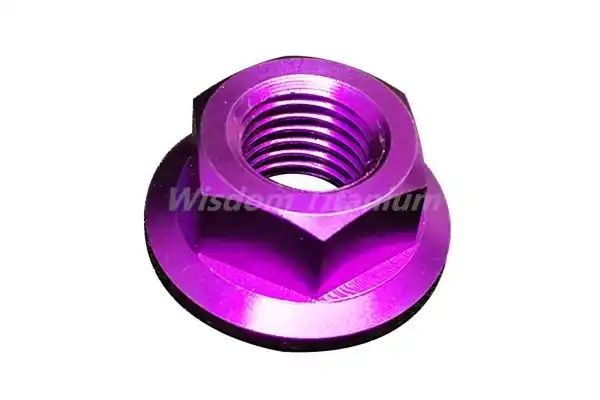
When looking for nuts for high-performance uses, it's important to know about foreign standards. The DIN standard for titanium hex flange nuts is DIN 6923. This is a German document that lists the size requirements, material qualities, and performance standards for hex flange nuts. These DIN 6923 titanium hex flange nuts have a hexagonal drive and a flange built into the base. This means that you don't need to use separate washers and the mounting loads are spread out over a larger surface area. These fasteners are mostly made from Grade 5 titanium alloy (Ti-6Al-4V). They have a tensile strength of over 950 MPa, great corrosion resistance in marine and chemical environments, and a lot less weight than steel alternatives. This makes them essential parts in automotive, aerospace, motorcycle, and precision machinery assemblies.
Understanding the DIN 6923 Standard for Titanium Hex Flange Nuts
What Makes DIN 6923 Different from Other Fastener Standards?
DIN 6923 sets the technical standards for DIN 6923 titanium hex flange nuts with built-in flanges. These nuts are different from DIN 934 hex nuts, which don't have flanges, and DIN 6926 wing nuts. This standard sets exact limits for sizes like total height, width across flats, and flange diameter. This makes sure that parts fit the same way on all assembly lines. The built-in flange does two things: it raises the bearing surface area to keep it from digging into softer materials, and it has serrations on the bottom that create a mechanical locking effect to keep it from coming away due to vibration.
What sets titanium versions apart is the material specification. The DIN 6923 standard allows a lot of different metals, but Grade 5 (Ti-6Al-4V) and Grade 2 (commercially pure titanium) are the strongest and lightest. With a density of only 4.43 g/cm³, grade 5 titanium has a tensile strength between 895 and 1000 MPa, which is about the same as medium-carbon steel but about 45% lighter. This mix solves some of the biggest problems in the industry: it lowers the weight of vehicles so they use less gas, stops galvanic corrosion when paired with carbon fiber composites, and keeps the structure strong in temperatures ranging from -196°C (cryogenic) to 400°C (continuous service).
Material Grades and Mechanical Properties
Titanium flange nuts that meet DIN 6923 usually come in two main grades. Grade 5 titanium (Ti-6Al-4V) is the most common alloy used in structural uses. It has a yield strength of about 828 MPa and a maximum tensile strength of more than 950 MPa. This alpha-beta alloy has 6% aluminum and 4% vanadium in it. It is very easy to weld and doesn't wear down easily, which is important for dynamic loading conditions in brake parts and motorbike suspension systems.
Grade 2 titanium is fairly pure and has few alloying elements. It has better protection to corrosion but lower mechanical strength (about 345 MPa tensile). This type is good for places where chemical resistance is more important than load-bearing needs. For example, this could be used on equipment used in chemical handling or on ships that is exposed to saltwater spray. Both grades are nonmagnetic, which is important for keeping sensitive electronic parts from being affected by electromagnetic interference. They also both form a passive titanium dioxide layer on the surface that heals itself when scratched, making them better at protecting against corrosion than stainless steel in chloride-rich environments.
The DIN 6923 guidelines for mechanical tests check not only the tensile strength but also the proof load, hardness (usually 30 to 38 HRC for Grade 5), and the accuracy of the dimensions. For internal threads, thread tolerance generally follows class 6H. This makes sure that they work with nuts that are made to standard specs and keeps the right preload qualities when force is applied.
Technical Dimensions and Identification of DIN 6923 Titanium Hex Flange Nuts
Critical Dimensional Parameters
The most important part of DIN 6923 approval is that the dimensions must be met. As an example, a normal M10 flange nut has a width across flats (AF) of 15mm, which means that a standard wrench can be used to fit it. The width of the flange is about 21.8 mm, which gives it enough bearing area without being too big. For coarse threads (M10 x 1.5), the thread pitch choices are 1.5 mm, and for fine threads, they are 1.25 mm. Fine pitch is chosen in situations that need more preload control or where vibration resistance is very important.
Smaller sizes, like M6, have a 10mm wrench size and a 14.2mm flange diameter. Larger sizes, like M16 nuts, have 24mm wrench flats and flanges that are about 30mm in diameter. On the underside of the lip, which is usually between 2 and 3 mm thick based on the size of the nut, there are serrations or knurling. When tightened, these serrations bite into mating surfaces, creating friction that stops the threads from coming free on their own when the assembly is vibrated, without the need for thread-locking chemicals that make taking the part apart more difficult. DIN 6923 titanium hex flange nuts must meet basic standards for thread contact length to ensure full load transfer. The standard says that the nut should be at a height that makes the bolt strong, generally by engaging the threads to a diameter equal to or greater than the specified diameter. This keeps the threads from breaking under the highest loads, which is especially important because titanium doesn't wear like steel does.
Verification and Quality Control
To find real DIN 6923 titanium flange nuts, you need to look at the verification marks and be able to track down the materials. Parts from reputable makers are stamped with marks that show the material grade, batch number, and safety certifications. Shipments should come with material certificates that show the results of chemical makeup tests and mechanical tests that can be linked to specific production lots.
The testing procedures make sure that the dimensions are correct by using precise measuring tools to check the thread pitch with go/no-go gauges, the flange width and concentricity, and the hardness through Rockwell testing. Spectrographic analysis may be part of a metallurgical study to confirm the grade of titanium and find flaws that could affect its performance. Sample pieces from each batch are put under tension to make sure that the tensile strength meets the minimum requirements.
Stopping counterfeiting is still very important in B2B buying. Low-quality titanium or even metal with surface treatments that make it look like titanium may be used instead in low-quality goods. Titanium's density of 4.43 g/cm³ makes weight ranges reliable for each nut size, so weight testing is a quick test that can be done in the field. Magnetic tests shows that the material is not made of iron, but this doesn't make titanium different from aluminum. Chemical spot testing or XRF (X-ray fluorescence) research is the only way to be sure of a material's makeup when there are questions about its authenticity.
Advantages and Applications of Titanium Hex Flange Nuts According to DIN 6923
Performance Benefits in Demanding Environments
DIN 6923 titanium hex flange nuts are more expensive than steel ones in some situations, but they work better and last longer. The most important thing is corrosion resistance. Titanium's passive oxide layer protects against chloride attack, which makes these fasteners perfect for naval settings where stainless steel grades finally rust through pitting and crevice corrosion. Titanium is resistant to sulfuric acid, hydrochloric acid (in certain amounts), and oxidizing conditions where other materials break down quickly. This makes it useful in chemical processing plants.
Getting rid of extra weight directly leads to better performance in racing and airplanes. When you switch a racing motorcycle's steel wheel hub nuts for titanium ones, the unsprung mass goes down. This makes the suspension respond better and the bike handle more precisely. In car uses, reducing the weight of hundreds of fasteners leads to better acceleration, braking, and fuel economy. This is especially helpful for electric vehicles, where every kilogram affects range.
Temperature stability makes sure that the holding force stays the same over time. Titanium keeps its mechanical qualities even when it's at very low temperatures, like -100°C in space uses, or 300–400°C near brake and exhaust systems. The coefficient of thermal expansion is very similar to that of carbon fiber composites and aluminum alloys that are widely used to build modern cars. This means that there isn't much difference in the amount of expansion, which can loosen joints or cause stress concentrations during thermal cycling.
These benefits are increased by the combined flange design, which gets rid of different washers that can break. Washers can move around while being put together, rust on their own, or get lost while being serviced. The fact that DIN 6923 nuts are made of a single piece cuts down on the number of parts needed to make bills of materials, makes managing supplies easier, and speeds up the assembly process. These benefits add up when thousands of cars or machines are being made.
Industry Applications and Use Cases
Titanium flange nuts are being used more and more by automakers for fitting brake calipers, wheel hubs, and suspension parts in high-performance and luxury cars. Corrosion resistance, weight savings, and vibration resistance all work together to directly address longevity issues in rough driving situations. In Formula 1, rally racing, and endurance competitions, where stability under high stress and temperature cycles decides whether a team wins or fails, these fasteners are very important.
The uses for motorcycles are similar to those for cars, but the focus is even more on weight reduction. Titanium is used for all the gear on high-performance street bikes and off-road machines, from the engine covers and axle nuts to the mounting brackets for the brake discs. Because it has a high strength-to-weight ratio, engineers can meet structural needs while also setting bold weight goals that make power-to-weight ratios and control better.
Titanium fasteners have been used for a long time in the aerospace and military industries for airplane structural parts, landing gear components, and rotor systems where weight, corrosion resistance, and nonmagnetic properties meet strict performance standards. Titanium hardware is used in the chemical processing and naval industries for pumps, valves, and structural links that are exposed to corrosive media and can't be easily maintained over a long period of time.
Precision tools and making bikes to order are two areas that are growing. More and more high-end road and mountain bikes have frames made of titanium and gear made of titanium that matches. This makes the bikes look good and works better. Custom machine builders switch from steel fasteners to titanium ones to stop galvanic corrosion in mixed-metal setups and to make robotic systems and automatic equipment lighter.
Conclusion
DIN 6923 titanium hex flange nuts are precision-engineered ways to fasten things together that combine German standards with the unique qualities of titanium. Understanding this standard helps you make smart purchasing choices that are in line with the needs of the application, whether you're trying to reduce weight for racing, protect against corrosion in marine settings, or lower the cost of ownership over the life of industrial equipment. The combined flange design gets rid of the need for separate washers and improves load distribution and resistance to shaking. Grade 5 titanium has great strength-to-weight ratios and is stable at high temperatures. Grade 2 titanium, on the other hand, is completely resistant to rust where loads allow. To make implementation go smoothly, you need to work with qualified suppliers who can provide certified products, make sure measurements are followed, and offer expert help during the whole purchase process.
Partner with Wisdom Titanium for Premium Titanium Hex Flange Nuts
Baoji Wisdom Titanium Industry and Trading Co., Ltd is a reliable company that makes DIN 6923 titanium hex flange nuts. They use Grade 5 titanium (Ti-6Al-4V) to make nuts that meet DIN 6923 standards. We use a seamless supply chain that goes from raw titanium sponge to finished precise parts. We are located in Baoji Titanium Valley, which is China's most important titanium production cluster in Shaanxi Province. Our ISO 9001-certified facility keeps a full stock of standard sizes from M3 to M24, and our minimum order quantity (MOQ) is just 200 pieces. We also offer natural, anodized, and PVD coating options so that we can meet your exact needs.
Since our start in 2016, we've learned how to work with automakers, motorbike performance shops, race teams, aerospace suppliers, and custom machinery builders all over the world. Our skilled research and development (R&D) team offers unique engineering help for non-standard uses, and strict quality control measures, such as batch tracking and pre-shipment inspections, make sure that every fastener meets the required dimensions and technical requirements. We can offer competitive prices because we have direct access to Baoji's titanium production infrastructure. Our expert team is also ready to help with choosing materials, figuring out torque requirements, and designing applications.
Contact our team at sales@wisdomtitanium.com to discuss your titanium flange nut requirements. Whether sourcing DIN 6923 titanium hex flange nuts for sale in standard configurations or developing custom fastener solutions, Wisdom Titanium delivers the quality, expertise, and supply chain reliability your projects demand.
FAQs
How can I be sure that titanium flange nuts I receive are in line with DIN 6923?
The verification process includes several steps:
1. Request documents showing chemical composition and mechanical test results linked to specific production batches.
2. Check the nuts for manufacturer markings indicating material type and compliance.
3. Measure part dimensions precisely.
4. Use gauges to verify thread pitch, flange diameter and width across flats, and compare total height to DIN 6923.
5. Quickly verify titanium by weight, as mass is consistent per size.
6. For critical applications, conduct third-party testing such as spectrographic analysis for titanium grade and tensile testing for strength.
How much force do I need to use with titanium hex flange nuts?
Although titanium and steel have similar tensile strength, DIN 6923 titanium hex flange nuts require different torque values. Due to differences in friction coefficient and yield properties, using full steel torque may damage threads or cause failure. A general rule is to apply 70–80% of the dry torque for equivalent steel bolts, adjusted for lubrication. Anti-seize is required for titanium-on-titanium threads to prevent galling, but lubrication reduces friction and requires lower torque. Always follow the manufacturer’s instructions based on thread engagement, bolt grade, and torque features.
Can DIN 6923 titanium flange nuts be used again after they have been taken apart?
Reusability depends on installation and inspection. Properly handled titanium fasteners can often be reused and generally outperform steel. Check for thread damage, galling, or distortion—replace if present. Inspect flange serrations; if worn smooth, locking is reduced. Titanium resists corrosion but must be correctly torqued and removed carefully. For critical safety applications (e.g., brakes, suspension), single-use is often recommended to minimize risk.
References
- German Institute for Standardization (DIN). "DIN 6923: Hexagon Flange Nuts with Non-Metallic Insert." Berlin: Beuth Verlag, 2018.
- Donachie, Matthew J. "Titanium: A Technical Guide, 2nd Edition." Materials Park, OH: ASM International, 2000.
- International Organization for Standardization. "ISO 4161: Hexagon Flange Nuts for High-Strength Structural Bolting with Large Width Across Flats." Geneva: ISO, 2012.
- Boyer, Rodney, Gerhard Welsch, and E.W. Collings. "Materials Properties Handbook: Titanium Alloys." Materials Park, OH: ASM International, 1994.
- Bickford, John H. "Introduction to the Design and Behavior of Bolted Joints: Non-Gasketed Joints, 4th Edition." Boca Raton, FL: CRC Press, 2007.
- Schutz, R.W. and Thomas, D.E. "Corrosion of Titanium and Titanium Alloys." In ASM Handbook Volume 13B: Corrosion Materials. Materials Park, OH: ASM International, 2005.