
When it comes to fasteners, understanding the nuances between different types can be crucial for selecting the right component for your project. Today, we're diving into the world of bolts, specifically exploring the differences between standard bolts and hex drilled bolts. This comparison will shed light on their unique features, applications, and why you might choose one over the other.
Design Distinctions
At first glance, a standard bolt and a hex drilled bolt might appear similar, but their designs have some key differences that set them apart. Standard bolts are solid fasteners with a threaded shaft and a head designed for tightening. They come in various head styles, with the hexagonal head being one of the most common.
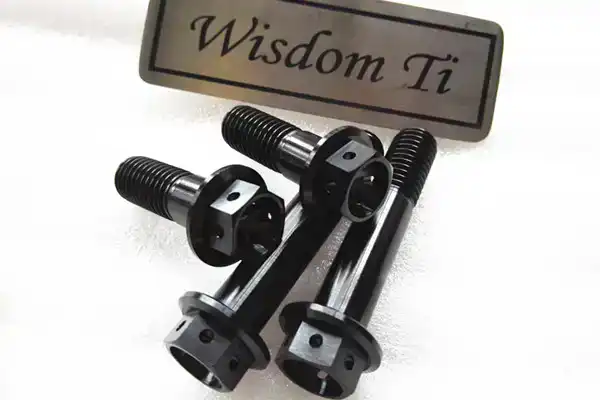
Hex drilled bolts, on the other hand, share the basic structure of a standard bolt but with a crucial modification. As the name suggests, these bolts feature a hole drilled through the center of the shaft, extending from the head to the tip. This seemingly small change has significant implications for the bolt's functionality and applications.
The hexagonal head design, common to both types, allows for easy tightening and loosening using standard wrenches or socket sets. However, the drilled feature in hex drilled bolts adds a new dimension to their utility. For instance, titanium hex drilled bolts combine the strength and corrosion resistance of titanium with the versatility of a drilled shaft, making them ideal for specialized applications.
Key Functional Differences
The functional differences between standard bolts and hex drilled bolts stem primarily from the drilled shaft in the latter. This feature affects several aspects of the bolt's performance and utility:
1. Weight Reduction: The hollow core of hex drilled bolts makes them lighter than their solid counterparts. This weight savings can be significant, especially when using materials like titanium. In aerospace or high-performance automotive applications, where every gram counts, titanium hex drilled bolts offer a substantial advantage.
2. Fluid Passage: The central hole in hex drilled bolts can serve as a conduit for fluids, gases, or even electrical wiring. This feature is particularly useful in complex mechanical systems where routing of materials through fasteners can simplify design and improve efficiency.
3. Safety Wire Installation: In applications where vibration could potentially loosen bolts, the drilled shaft allows for the installation of safety wire. This wire runs through the bolt and secures it to adjacent components, preventing unintended loosening.
4. Stress Distribution: While the drilled hole does reduce the cross-sectional area of the bolt, it can actually improve stress distribution in certain loading conditions. This can be particularly beneficial in applications subject to fatigue loading.
Standard bolts, while lacking these specialized features, offer their own advantages. Their solid construction provides maximum shear strength, making them ideal for applications where lateral forces are a primary concern. They're also generally more cost-effective and easier to manufacture in large quantities.
Application Scenario Differences
The unique properties of hex drilled bolts and standard bolts lead to different ideal application scenarios for each:
Hex Drilled Bolts:
- Aerospace: Titanium hex drilled bolts are frequently used in aircraft construction due to their lightweight nature and the ability to route fluids or wiring through them.
- Racing and High-Performance Vehicles: The weight savings and potential for improved cooling (by routing oil through the bolts) make them popular in this sector.
- Marine Applications: In boat building, especially for high-performance or luxury vessels, these bolts can serve multiple functions while resisting corrosion.
- Medical Devices: The biocompatibility of titanium, combined with the versatility of drilled bolts, makes them suitable for certain medical implants and devices.
Standard Bolts:
- General Construction: For most building and assembly tasks, standard bolts provide sufficient strength and functionality at a lower cost.
- Automotive Manufacturing: While high-performance vehicles might use drilled bolts, standard production cars typically rely on solid bolts for their reliability and cost-effectiveness.
- Heavy Machinery: Applications requiring maximum shear strength often favor solid bolts.
- Furniture Assembly: Standard bolts are the go-to choice for their simplicity and effectiveness in joining wood or metal components.
The choice between a standard bolt and a hex drilled bolt often comes down to the specific requirements of the application. When weight reduction, multi-functionality, or specialized safety features are paramount, hex drilled bolts, especially those made from advanced materials like titanium, offer clear advantages. However, for many general applications, standard bolts remain the most practical and cost-effective solution.
As technology advances and materials science progresses, we're seeing an increasing demand for specialized fasteners like titanium hex drilled bolts. These components are pushing the boundaries of what's possible in fields ranging from aerospace to medicine, enabling designs that are lighter, stronger, and more efficient than ever before.
FAQ
Q1: Are titanium hex drilled bolts more expensive than standard bolts?
A: Yes, titanium hex drilled bolts are generally more expensive than standard bolts due to the cost of titanium as a raw material and the additional machining required for drilling. However, their unique properties often justify the higher cost in specialized applications where weight savings, corrosion resistance, and multi-functionality are critical.
Q2: Can hex drilled bolts be used in all applications where standard bolts are used?
A: While hex drilled bolts can be used in many applications, they're not always a direct replacement for standard bolts. The drilled shaft can affect the bolt's strength in certain loading conditions, particularly shear strength. It's essential to consult with an engineer or fastener specialist to ensure the bolt meets the specific requirements of your application.
Q3: What are the advantages of using titanium for hex drilled bolts?
A: Titanium offers several advantages for hex drilled bolts, including: - Exceptional strength-to-weight ratio, making it ideal for weight-critical applications - Excellent corrosion resistance, suitable for harsh environments - Biocompatibility, useful for medical applications - High temperature resistance - Non-magnetic properties
In conclusion, the choice between standard bolts and hex drilled bolts depends on the specific requirements of your application. For those in industries where weight savings, corrosion resistance, and multi-functionality are paramount, titanium hex drilled bolts offer a compelling solution. If you're considering incorporating these advanced fasteners into your project, it's crucial to work with a reputable supplier who can provide high-quality, reliable products.
Titanium Hex Drilled Bolts Manufacturer
Wisdom Titanium, an ISO 9001-certified manufacturer since 2013, specializes in titanium fasteners and customized CNC parts. With our expertise in titanium grade 5 (Ti-6Al-4V) bolts, offering exceptional tensile strength of 950 MPa and yield strength of 880 MPa, we can provide solutions that are 40-50% lighter than steel equivalents while maintaining excellent corrosion and temperature resistance.
Our titanium hex drilled bolts are available with various surface finishes, including natural, gold, black, rainbow, green, burnt blue, and purple blue through anodizing and PVD coating processes. We accept custom orders with a minimum order quantity of 200 pieces, ensuring flexibility for your specific project needs.
If you're interested in exploring how our titanium hex drilled bolts can enhance your project or if you need more information, we're here to help. Don't hesitate to reach out to our team of experts. Simply send an enquiry to sales@wisdomtitanium.com, and we'll be happy to provide you with a quote or answer any questions you may have. Let's work together to harness the potential of advanced titanium fasteners for your next innovative project.
References
- ASM International. (2015). Titanium: A Technical Guide. Materials Park, OH: ASM International.
- Budynas, R. G., & Nisbett, J. K. (2020). Shigley's Mechanical Engineering Design (11th ed.). New York: McGraw-Hill Education.
- Federal Aviation Administration. (2018). Aviation Maintenance Technician Handbook - Airframe, Volume 1. Oklahoma City, OK: U.S. Department of Transportation.
- Machinery's Handbook (31st Edition). (2020). New York: Industrial Press.
- Society of Automotive Engineers. (2019). Aerospace Material Specifications. Warrendale, PA: SAE International.