
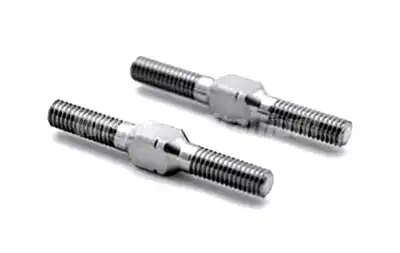
Turnbuckles are mechanical fasteners that allow for the adjustment of rope, cable, tie rod, and other tensioning system lengths and tensions. The two threaded eye bolts that make up this crucial rigging part are attached to a central body that has opposing threading, allowing for fine-tuned adjustment of the tension. Titanium turnbuckles are the material of choice for high-performance applications due to their superior strength-to-weight ratios and outstanding corrosion resistance.
Understanding Turnbuckles: Definition, Function, and Types
With their adjustable tension control, turnbuckles provide structural stability and operational precision, making them crucial mechanical devices in innumerable industrial applications. Rotating the center body with internal threading brings the two end fittings closer together or farther apart, alleviating tension in connected systems, according to the basic design.
Basic Mechanical Functions and Operation
Titanium turnbuckles work by connecting their central bodies with opposite-threaded connectors. The threading is done with the right hand on one end and the left hand on the other. Both threaded ends draw inward as the central body rotates clockwise, decreasing the overall length and creating stress. Turning the assembly counterclockwise lengthens it, which eases strain or makes system adjustment possible.
Because of this mechanical advantage, operators may manage the tension precisely without using complicated methods or specialized tools. When precise tension specifications need to be maintained for long periods of time, the threaded design's delicate adjustment capabilities come in handy.
Common Turnbuckle Configurations
A variety of turnbuckle configurations, tailored to meet specific operational needs, are used in industrial applications:
During operation, the threaded connections may be seen through the open body turnbuckle's frame-style middle piece. Applications requiring frequent inspections, such as those involving safety-critical components, benefit greatly from this architecture. The open design not only makes maintenance easier, but it also clearly shows the depth of thread engagement.
The closed body turnbuckle's tubular middle part serves to both increase structural strength and shield the internal threads from outside contaminants. The enhanced resistance to seawater, chemicals, and debris entry makes this design ideal for marine and outdoor applications.
Various rigging circumstances can be accommodated via hook and eye setups, which give numerous connection choices. Hook configurations allow for rapid attachment for applications that require regular modification or for temporary installations, while eye-to-eye designs are compatible with cable and rope systems.
Titanium Material Advantages in Turnbuckle Applications
The outstanding material qualities of titanium turnbuckles meet the demanding performance standards of many different sectors. Ti6Al4V alloys have tensile strengths that are on par with high-grade steel yet weigh about half as much, making them ideal for use in aircraft and high-performance automobiles.
Titanium construction also has the essential benefit of being corrosion resistant. Without the need for protective coatings that could alter the dimensions or ruin the aesthetics, the creation of natural oxide layers offers outstanding protection against atmospheric corrosion, chemical exposure, and seawater.
Key Benefits and Performance of Titanium Turnbuckles
Titanium turnbuckles are used in high-stress situations because of their exceptional performance, which results in significant operational benefits. When purchasing professionals are aware of these advantages, they are better able to consider the whole cost of ownership when making substantial purchases.
Superior Strength-to-Weight Performance
Superior mechanical qualities are a result of titanium alloy construction, which outperforms more conventional materials in a variety of tests. Titanium grade 5 (Ti6Al4V) has a density that is much lower than steel equivalents and ultimate tensile strengths that are close to 130,000 PSI.
Aerospace applications directly benefit from this strength-to-weight advantage because of the influence that every ounce has on fuel efficiency and payload capacity. Improving acceleration and handling qualities and decreasing unsprung weight is a win-win for racing teams and performance car upgrades.
In high-cycle applications, where repeated loading happens, titanium's fatigue resistance qualities are especially useful. Titanium components can endure millions of stress cycles without crack initiation, according to laboratory tests. This means they will be reliable in crucial systems for the long term.
Exceptional Corrosion Resistance Properties
Corrosion is a major problem in marine settings and can quickly deteriorate metal parts made of steel and aluminum. Titanium's hard oxide layer, formed by its inherent passivation process, is impervious to acids, chloride compounds, and other harsh chemicals often found in marine environments.
Because of its resilience to corrosion, protective coatings, galvanizing, or frequent replacement schedules—all of which add unnecessary expense and downtime to maintenance—are unnecessary. The environmental endurance of titanium is greatly enhanced by its use in offshore drilling platforms, marine rigging systems, and coastal infrastructure.
Because titanium is resistant to harsh media, it is frequently used in chemical processing facilities. The material's structural integrity is preserved even when subjected to high-temperature conditions, caustic solutions, and acids, which would swiftly destroy other materials.
Long-Term Cost Effectiveness
Titanium components may be more expensive up front, but when you add in the whole cost of ownership over the lifetime of the product, you might find that titanium is the better choice. Save a ton of money in the long run by reducing maintenance needs, increasing service intervals, and doing away with coating systems.
Installing and handling titanium is easier and cheaper because of its lightweight properties. Even if large-scale projects initially cost more to build, the reduced labor demands, easier shipping logistics, and smaller cranes make up for it.
Procurement Guide for Titanium Turnbuckles in B2B Markets
Obtaining titanium turnbuckles successfully necessitates familiarity with supplier capacities, quality standards, and market trends impacting availability and pricing. Expert procurement tactics satisfy technical requirements and delivery deadlines while maximizing value.
Supplier Qualification and Certification Standards
Reputable titanium component suppliers are required to have ISO 9001:2015 certification as a minimum requirement for quality management. Maintaining product reliability is ensured by this certification's standards of consistent manufacturing processes, documented quality control procedures, and strategies for continual improvement.
Titanium alloy mechanical qualities and composition can be traced with the use of material certifications, which also guarantee high quality. For every batch of raw materials, suppliers should present mill test certifications that confirm the heat treatment, tensile strength, and chemical analysis.
The accuracy of CNC machining, threading, and surface finish quality should be evaluated as part of the manufacturing capacity assessment. To guarantee precise dimensions under strict tolerances, advanced providers use coordinate measurement machines and multi-axis machining centers.
Customization Options and Bulk Ordering
Since standard titanium turnbuckle sizes might not work for every application, the ability to customize is a crucial factor to consider when choosing a supplier. Depending on the project requirements, seasoned manufacturers can adjust thread specs, end fitting combinations, and overall dimensions.
Factors to think about when placing a bulk order include the minimum order quantity, pricing tiers, and the flexibility of the delivery schedule. With many vendors offering steep discounts for orders above 500 units, quantity discounts can be yours for as little as 100 pieces.
You may customize the aesthetics and provide extra corrosion protection with color anodizing options. Red, blue, black, rainbow, purple, gold, burnt blue, and green are some of the hues that are usually available, and they can all be used to satisfy both practical and aesthetic needs.
Quality Assurance and Testing Protocols
Verifying thread specifications guarantees appropriate engagement characteristics and system compatibility. While UNC and UNF thread standards are suitable for the majority of applications, unique equipment may necessitate bespoke threading.
Examination of the surface's quality verifies that the polished surfaces are up to par in terms of both form and function. In high-cycle applications, smooth surfaces improve fatigue resistance by reducing stress concentration spots.
Overall length, thread pitch, and end fitting configurations should be checked against prescribed drawings and specifications as part of dimensional inspection methods.
Maintaining and Optimizing the Life of Titanium Turnbuckles
The service life and durability of titanium rigging components are maximized by proper maintenance practices, which also ensure continuing safety compliance. Operators can create efficient inspection and replacement schedules when they have a good grasp of maintenance requirements.
Inspection and Maintenance Best Practices
In order to ensure operating safety, visual inspection processes should be used to check threads for signs of wear, damage, or contamination. In order to provide sufficient connection security under design loads, it is necessary to periodically check the thread engagement depth.
An evaluation of the surface's condition can reveal areas of high stress or damage that might lead to the formation of fatigue cracks. Titanium has great fatigue resistance, but for applications where safety is paramount, it is vital to follow inspection methods.
Because titanium galls easily at high contact pressures, lubrication needs for titanium components are different from those for steel substitutes. Titanium-specific anti-seize chemicals eliminate thread seizure and make subsequent adjustments easier.
Environmental Protection Strategies
A primary goal of marine environmental conservation is the avoidance of pollution that can clog adjustment mechanisms or cause stress concentrations. Rinsing with freshwater on a regular basis will remove any pollutants or salt buildup.
Titanium alloys have unique chemical compatibilities that must be understood via chemical exposure techniques. Although titanium is chemically resistant, it can be degraded under certain conditions by fluoride compounds and reducing acids.
When variances in thermal expansion could cause stress levels or changes in clearance that aren't anticipated, it's important to account for the effects of temperature cycling.
Replacement Criteria and Safety Protocols
Instead of using random time intervals, thread wear limitations set quantitative degradation as the goal criterion for component replacement. The engagement depth and integrity of the thread profile can be confirmed using specialized thread gauges.
When problems are detected after visual inspection, load testing can confirm the retained strength capacity. Validation of continuous serviceability is achieved through proof load testing at a percentage of design capacity.
In order to stay in compliance with regulations, safety-critical applications must keep extensive records to guarantee traceability and maintenance history.
Conclusion
Titanium turnbuckles represent the pinnacle of rigging hardware performance, combining exceptional strength-to-weight ratios with unmatched corrosion resistance for demanding industrial applications. The Ti6Al4V alloy construction delivers mechanical properties that exceed traditional materials while providing decades of reliable service in harsh environments. While initial costs exceed alternative materials, the total cost of ownership favors titanium selection through reduced maintenance requirements and extended service life. Professional procurement strategies that emphasize supplier certification, customization capabilities, and quality assurance protocols ensure optimal value and performance in critical applications.
Source High-Quality Titanium Turnbuckles for Your Projects
Discover the performance advantages of precision-engineered titanium turnbuckles from Wisdom Titanium, your trusted titanium turnbuckles supplier for demanding applications. Our ISO 9001:2015 certified manufacturing facility in Baoji Titanium Valley produces Ti6Al4V turnbuckles in sizes M3 through M5, featuring polished finishes and multiple color options including red, blue, black, and rainbow anodizing. With competitive pricing, 100-piece minimum orders, and extensive customization capabilities, we deliver solutions that meet your exact specifications. Contact our technical team at sales@wisdomtitanium.com to discuss your titanium rigging requirements and experience the reliability that has made us a preferred partner for automotive, aerospace, and marine industries worldwide.
FAQ
What makes titanium turnbuckles superior to stainless steel alternatives?
Titanium turnbuckles offer approximately 45% weight reduction compared to stainless steel while maintaining equivalent or superior strength characteristics. The natural corrosion resistance of titanium eliminates stress corrosion cracking concerns and provides extended service life in marine environments without protective coatings.
Are titanium turnbuckles suitable for high-load industrial applications?
Yes, Ti6Al4V titanium alloy exhibits ultimate tensile strength approaching 130,000 PSI, making it suitable for demanding load applications. The excellent fatigue resistance properties ensure reliable performance under repeated loading cycles common in industrial environments.
How do I verify supplier certification and reliability for titanium components?
Look for ISO 9001:2015 certification, material traceability documentation, and mill test certificates that verify alloy composition and mechanical properties. Reputable suppliers provide comprehensive quality documentation and maintain consistent manufacturing processes.
What thread specifications are available for titanium turnbuckles?
Standard offerings include both UNC (Unified National Coarse) and UNF (Unified National Fine) thread specifications in sizes ranging from M3 to M5. Custom threading options accommodate specialized applications requiring non-standard configurations.
Do titanium turnbuckles require special maintenance procedures?
Titanium components require minimal maintenance but benefit from periodic inspection for thread wear and contamination removal. Use titanium-compatible anti-seize compounds to prevent thread galling and facilitate future adjustments.
References
1. Boyer, R.R. "An Overview on the Use of Titanium in the Aerospace Industry." Materials Science and Engineering: A, Vol. 213, 1996.
2. Lutjering, G. and Williams, J.C. "Titanium: Engineering Materials and Processes." Springer-Verlag, Second Edition, 2007.
3. American Society for Testing and Materials. "Standard Specification for Titanium and Titanium Alloy Bars and Billets." ASTM B348-19, 2019.
4. Donachie, Matthew J. "Titanium: A Technical Guide." ASM International, Second Edition, 2000.
5. Peters, M. and Leyens, C. "Titanium and Titanium Alloys: Fundamentals and Applications." Wiley-VCH, 2003.
6. International Organization for Standardization. "Quality Management Systems - Requirements." ISO 9001:2015, 2015.