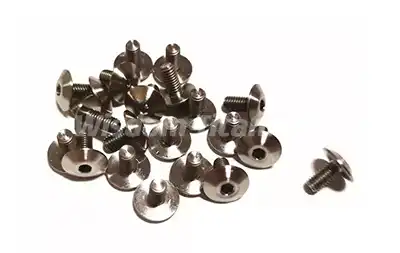
M3 titanium nuts are very flexible because they come with different head configurations that are made for different uses and fitting needs. The most popular types of heads for cap screws are button heads, flat (countersunk) heads, hexagon socket head caps, and pan heads. Each type of m3 titanium bolt head has its own benefits when it comes to tool access, load distribution, and how it looks. Hexagon heads are still the most popular choice because they transmit power better and work with normal Allen keys. This makes them perfect for industrial, aircraft, and automobile settings where solid fastening performance is important.
M3 Titanium Bolt Head Types
The wide range of head styles for M3 titanium screws is the result of many years of engineering progress and application-specific improvement. These precisely made parts are very important in many fields where weight reduction, rust protection, and mechanical dependability are all must-haves.
Hexagon Socket Head Cap Screws
Hexagon socket head cap screws are the best choice for high-performance tasks that need to transfer maximum power and ensure a secure fit. These screws usually meet DIN 912 or ISO 4762 standards and have a cylinder-shaped head with a triangular drive that is set into the head. The hex socket design lets you apply exact force with normal Allen keys. This makes them especially useful in tight areas where regular tools can't work well.
The machined head design makes sure that all production runs are the same size, and the rolled thread technology makes them more resistant to wear than cut threads. With tensile strengths of over 900 MPa and a density of only 4.43 g/cm³, Grade 5 titanium material has an amazing strength-to-weight ratio.
Button Head Socket Screws
Button head versions offer a smaller profile option that keeps the hexagonal drive system. The rounded, dome-shaped head of these connectors makes them look better and makes them less likely to get caught on things when smooth surfaces are needed. The bigger bearing surface spreads tightening loads more evenly than regular cap screws, which makes thin-walled parts less stressed in specific places.
Tolerances for making button heads usually follow ISO 7380 rules, which makes sure that they work the same way all over the world's supply chains. Because the head height is lower, these screws are great for places where space is limited but still allow for easy installation and removal with a tool.
Flat (Countersunk) Head Options
Flat-head designs let you put things flush in places where visible screws would get in the way of nearby parts or mess up the flow of air. For proper load transfer and to avoid stress clusters, the cylindrical bottom of countersunk heads needs receive holes that are carefully made. Depending on the power needed and the tools that are available, these screws usually have Phillips, Robertson, or hexagonal drives.
The included angle of 82 degrees is the most popular countersunk angle, but 90-degree and 100-degree angles are also available to fit different material sizes and application needs. To get the best function and look, fitting must be done correctly, paying close attention to the countersink's depth and angle.
Comparing Head Types for Different Industrial Uses
When choosing the right head design for an industrial application, you need to carefully think about the mechanical qualities, the resistance to the surroundings, and the fitting needs. The way different head styles work depends a lot on how the load is distributed, how the tool is engaged, and the physical limitations.
Mechanical Strength and Load Distribution
Because their heads are strong and they contact tools better, socket head cap screws work great in high-stress situations. The thick-walled cylinder head doesn't bend easily when high installation torques are applied, and the deep hexagonal socket engages securely with drive tools. Test results show that m3 titanium bolt Grade 5 titanium socket head cap screws that are placed correctly can handle tension loads of more than 2,850 N without breaking.
Button head designs give up some ultimate power in exchange for better load distribution. Because the bearing area is bigger, there are fewer contact pressures on the parts that fit together. This makes them perfect for uses with composite materials or thin metal sections. It is important to carefully weigh the pros and cons of head power and bearing area based on the needs of the application.
Because they are shaped like wedges, countersunk heads focus loads in different ways. The ability to place something flush is nice to look at and works well, but the angle load transfer system needs careful attention to the features of the material and how the holes are prepared. When you do it right, countersinking spreads the load evenly across the cylindrical bearing surface, which keeps it from breaking or becoming loose too soon.
Environmental Performance and Durability
All head shapes can benefit from grade 5 titanium's natural resistance to rust, though differences in shape can affect performance in some settings. The inactive oxide layer that forms on titanium surfaces protects them very well from rusting in air, sea, and chemicals at a lot of different temperatures.
Because they have a deep hexagonal socket shape, socket head cap screws do a great job of protecting the drive system. This arrangement keeps dirt from building up and keeps the tool engaged even after being out in the environment for a long time. The deep socket design makes it easy to clean and fix things when they break.
Button heads have a little more surface area that is exposed to the world, but the smooth, bent shape makes them easier to clean by letting air or water flow over them. Not having any sharp edges or spaces makes it easier to clean and lessens the chance of contamination.
Tool Compatibility and Installation Efficiency
The triangular drive system found in socket head cap screws and button heads is very helpful in production settings where applying force consistently is very important. Standard Allen keys and power tools can get accurate torque values with little training, and the positive contact features keep the cams from coming loose and damage to the tool.
Depending on the type of drive, countersunk heads need different ways of making tools. Phillips and Robertson drives can connect quickly but can only handle a small amount of force. Hexagonal drives, on the other hand, keep the accuracy of socket head designs. Which type of drive to use usually relies on how much is being made, how much power is needed, and how skilled the person is.
How to Choose the Right M3 Titanium Bolt Head for Your Procurement Needs?
To successfully buy titanium screws, you need to carefully consider the needs of the product, the surroundings, and the supply chain. The method of making a choice has to find a mix between performance needs, cost-effectiveness, and availability.
Application-Specific Requirements Analysis
For automotive uses, socket head cap screws are often used for important frame and brake system parts that need to be strong and reliable. Hexagonal drives allow for precise torque control, which makes sure that locking forces stay the same, which is important for car safety and performance. When used in racing, Grade 5 titanium construction is especially useful because it reduces weight and resists wear.
When motorcycle uses want to place bodywork and accessories, button heads are often used because they look good and are less likely to get caught. The smaller shape makes it easier for riding equipment to work, but it's still strong enough for dynamic loading situations. In high-performance settings where fasteners coming loose could put people at risk, vibration protection is very important.
Bicycle uses often use countersunk heads for efficient reasons and for reasons of style. The ability to place flush lowers air turbulence, and the lightweight titanium construction helps optimize the total weight. Custom bike makers really like how resistant it is to rust for riding all year.
Material Grade Considerations
For most bolt uses, Grade 5 titanium (Ti-6Al-4V) is the best combination of strength, weight, and workability. The alpha-beta lattice has great dynamic qualities and is easy to machine for making precise head shapes. The ability to heat treat materials lets properties be improved based on the needs of a particular application.
The production time frame of 7–15 days allows for the complex machining and quality control steps needed for aerospace-grade m3 titanium bolt screws. Machined heads make sure that the dimensions stay the same, and rolled threads last longer than cut ones when they're stressed. ISO 9001 approval makes sure that the quality system is followed at all times during the production process.
Supply Chain and Procurement Considerations
Long-standing providers with complete inventory management systems make sure that typical lengths from 5mm to 30mm are always available. The design for metric threads is in line with world norms and works with current tools and fitting equipment.
Payment choices like PayPal and T/T make it easy for organizations to use different buying methods while keeping transactions safe. Most precision fastener uses are covered by the M2/M3 size range, which also makes it easier to consolidate supplies and find what you need.
Where and How to Buy M3 Titanium Bolts with Specific Head Types?
Finding suitable sources with proven manufacturing skills and thorough quality systems is key to successful procurement. Because making titanium fasteners is so specialized, suppliers need to be carefully evaluated and their work needs to be proven.
Supplier Qualification and Certification
With ISO 9001 approval, you can be sure that the quality management systems and process controls will stay the same throughout the whole production process. This certification is very important for uses that need to be able to track lots and show proof of material approval. For aerospace and automobile uses, extra standards like AS9100 or TS16949 are often needed.
Locating a factory in an established titanium industry center can help with getting raw materials, getting professional help, and making the supply chain work more efficiently. With combined skills that range from handling raw materials to making finished parts, Baoji Titanium Valley is one of the world's most complete titanium production hubs.
When compared to spread manufacturing methods, the full industry environment allows for better quality control and faster wait times. Having access to specialized tools and skilled workers makes sure that the quality of the product stays the same across all production levels, from small prototypes to large production runs.
Customization Capabilities and Technical Support
Thanks to improvements in CNC technology, head shapes can be changed to fit specific uses that need non-standard sizes or special performance traits. With experienced tech help and adaptable production systems, both standard stock items and fully customized solutions can be made.
Getting technical advice can help you choose the best fasteners for your needs while also making sure you follow all the rules and standards for your business. This joint strategy lowers the risks of buying while improving the long-term performance and cost-effectiveness of the application.
Quality feedback tools let you keep getting better and quickly fix problems or meet the needs of a specific application. Keeping in touch with customers during the whole buying and delivery process is important for ensuring a good project and building long-term relationships with suppliers.
Future Trends and Innovations in M3 Titanium Bolt Head Designs
The evolution of titanium fastener technology continues to be driven by demanding applications in aerospace, automotive, and electronics industries. Advanced materials science and manufacturing techniques are enabling new approaches to fastener design and performance optimization.
Advanced Drive Systems and Installation Technologies
New drive technologies try to improve power transmission while cutting down on tool wear and installation time. When compared to standard hexagonal designs, m3 titanium bolt multi-lobular drive systems have more contact area and less stress buildup. When making a lot of things, these new ideas are especially useful because tool life and cycle time have a direct effect on the cost of making things.
Magnetic drive systems that are still being developed could get rid of the need for standard mechanical contact while still allowing fine torque control through electromagnetic coupling. These systems look like they could be very useful in places where electronics are very sensitive and where regular tools might cause problems with interference or contamination.
Material Science Advancements
The next generation of titanium alloys that are being made claim to have better strength-to-weight ratios while still having the rust resistance and biocompatibility that make titanium useful for tough uses. Beta titanium alloys show a lot of promise for fastener uses that need great spring-back properties and resistance to wear.
With additive manufacturing, it's possible to make parts with complex internal shapes and built-in features that aren't possible with standard cutting. These features could make it possible for bolts to have built-in sensors or adaptable binding features that change based on the surroundings.
Digital Procurement and Supply Chain Integration
The buying process is becoming easier with the help of new digital platforms that automatically match specifications, show goods in real time, and connect quality recording systems. These tools make it easier to make choices about where to get custom fasteners and make the paperwork that goes along with it easier.
Blockchain-based tracking systems that are still being worked on offer full supply chain openness, from where the raw materials come from to how they are used in the end. This feature is important for apps that need to know the full history of a material and check its performance throughout its entire lifecycle.
Conclusion
Choosing the right head type for M3 titanium nuts has a big effect on their performance and how quickly they can be bought in motorbike, car, and bike uses. For important uses, socket head cap screws offer the most power and tool contact, while button heads look better and distribute load better. When space or airflow are important, countersunk choices let you put something flush. Grade 5 titanium construction gives all head designs great strength-to-weight ratios and resistance to rust. To make sure long-term performance and dependability, it's important to carefully look at application needs, source skills, and quality certifications when you're buying something.
Partner with Wisdom Titanium for Premium M3 Titanium Bolt Solutions
Automotive, motorcycle, and bicycle manufacturers seeking reliable m3 titanium bolt suppliers benefit from Wisdom Titanium's comprehensive manufacturing capabilities and quality assurance systems. Our ISO 9001-certified facility in Baoji Titanium Valley delivers precision-machined Grade 5 titanium fasteners with hexagon head configurations ranging from 5mm to 30mm lengths. The integrated production approach ensures consistent quality while our 7-15 day delivery schedule supports demanding project timelines. Technical consultation services help optimize fastener selection for specific applications while our flexible payment options through PayPal and T/T accommodate diverse procurement requirements. Contact sales@wisdomtitanium.com to discuss your titanium fastener requirements and experience the advantages of partnering with an established titanium industry leader.
FAQ
What is the strongest head type for M3 titanium bolts?
Socket head cap screws provide the highest strength characteristics due to their robust cylindrical head geometry and deep hexagonal drive engagement. The thick-walled construction effectively resists deformation under high installation torques while providing superior tensile and shear strength compared to other head configurations.
Can M3 titanium bolts with different head types be used in automotive brake systems?
Yes, M3 titanium bolts are suitable for automotive brake applications when properly specified for the specific mounting requirements. Socket head cap screws are typically preferred for critical brake caliper mounting due to their superior strength characteristics, while button heads may be appropriate for brake line mounting and accessory components where clearance is limited.
What are the typical lead times for custom M3 titanium bolt head configurations?
Standard lead times range from 7-15 days for common head types and lengths, while custom configurations may require additional time depending on the complexity of modifications. The production timeline includes material procurement, machining operations, quality inspection, and shipping preparation to ensure consistent quality standards.
How do I determine the correct head type for my specific application?
Application selection should consider factors including available installation space, required torque values, aesthetic requirements, and environmental conditions. Socket heads excel in high-stress applications, button heads provide improved clearance and load distribution, while countersunk heads enable flush mounting for aerodynamic or aesthetic requirements.
Are M3 titanium bolts with hexagon heads compatible with standard tools?
Yes, hexagonal drive systems utilize standard Allen keys and power tools commonly available in automotive and industrial environments. The metric sizing ensures compatibility with existing tooling while the precision machined sockets provide reliable engagement and torque transmission characteristics.
References
1. ASM International. "Titanium Alloys for Fastener Applications: Properties and Performance Characteristics." Materials Engineering Handbook, 2019.
2. Society of Automotive Engineers. "SAE AMS Specifications for Titanium Fasteners in Automotive Applications." SAE Technical Standards, 2020.
3. American Society for Testing and Materials. "ASTM F467 Standard Specification for Nonferrous Bolts, Hex Cap Screws, and Studs for General Use." ASTM Standards, 2018.
4. International Organization for Standardization. "ISO 4762 Socket Head Cap Screws - Dimensional and Performance Requirements." ISO Fastener Standards, 2017.
5. Aerospace Industries Association. "Titanium Fastener Design Guidelines for Aircraft and Space Vehicle Applications." AIA Technical Report TR-2021, 2021.
6. European Committee for Standardization. "DIN 912 Socket Head Cap Screws - Technical Specifications and Quality Requirements." European Fastener Standards, 2019.