
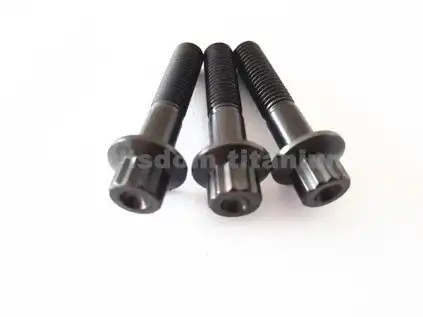
Knowing the different types of bolts is important when choosing fasteners for high-performance uses. What kind of bolts are 12-point bolts? The answer changes based on the question. The grades of steel used in 12-point bolts are usually between 8 and 12; for titanium 12 point bolts, the grades used are usually 2 or 5 (Ti-6Al-4V). With a tensile strength of over 950 MPa and a yield strength of over 880 MPa, Grade 5 titanium has an amazing strength-to-weight ratio. This makes it perfect for uses in the automobile, aircraft, and racing industries where weight reduction and reliability are very important.
12-Point Bolts Grades
What Makes 12-Point Bolts Different?
The head of a 12-point bolt has twelve contact points instead of the usual six that are on hex bolts. This arrangement gives the wrench and bolt more surface contact, which speeds up the process of installing and removing it and lowers the chance that the tool will slip. The extra points make it easier for workers to move tools around without needing full rotation room in tight areas or places that need to be maintained often.
Standard Grade Systems for Bolt Materials
Different materials and rules have different bolt grade methods. The Society of Automotive Engineers (SAE) and ASTM International set the grades for steel bolts. These grades are based on numbers that show the minimum tensile and bending strengths. Steel grades usually have numbers between 2 and 8, with higher numbers meaning stronger steel. ASTM standards divide stainless steel nuts into different groups, such as A2 and A4, based on their mechanical traits and resistance to corrosion.
Bolts made of aluminum usually follow rules set by groups like the Aluminum Association. Numbers like 2024-T4 or 7075-T6 show what kind of metal it is and how it was heated. Titanium 12 point bolts meet ASTM B348 and other similar standards. Grade 2 has good corrosion protection and average strength, while Grade 5's titanium-aluminum-vanadium composition gives it aerospace-level performance.
Titanium 12-Point Bolts: Grades and Key Characteristics
Grade 5 Titanium: The Performance Standard
Ti-6Al-4V, which is the formal name for grade 5 titanium metal, is the most common type of titanium used in high-performance fasteners. About 6% of this metal is aluminum and 4% is vanadium. The aluminum and vanadium make it stronger and better at resisting rust. Our Grade 5 bolts at Wisdom Titanium have a tensile strength of over 950 MPa and a yield strength of up to 880 MPa. They can stretch 18% before breaking and are 36 HRC hard.
These mechanical qualities give the material real-world benefits in harsh conditions. The same-sized Grade 5 titanium 12 point bolts are about 40% lighter than its steel counterpart, but it is just as strong, if not stronger. In racing, this weight loss is very helpful because lowering the unsprung mass of wheel systems makes them faster and better at handling. The metal stays strong at temperatures ranging from -200°C to 400°C, so it can be used safely in both cryogenic systems and high-heat brakes.
Grade 2 Titanium: Corrosion Resistance Leader
Grade 2 titanium, which is also known as "commercially pure titanium," is very resistant to rust and not too strong. This grade is great for chemical processing equipment, marine gear, and medical devices where the ability to bend over rough conditions is more important than ultimate strength. Its tensile strength is about 345 MPa.
Even though Grade 2 titanium isn't as strong mechanically as Grade 5, it can be shaped and welded more easily, which makes it good for custom production and other unique uses. If procurement managers are thinking about long-term exposure to acidic, alkaline, or salty conditions, Grade 2 is a good option because it has been shown to last in these conditions.
Thread Sizes and Surface Finish Options
Wisdom Titanium can make fasteners with thread sizes ranging from M5 to M14, which is enough to meet most needs in the car, motorcycle, and industry sectors. The M5 and M6 sizes are used for bicycle parts and electronics systems. The M10 to M14 sizes are used for heavy-duty tools and cars.
The choice of surface finish has a big effect on both how it looks and how well it works. Polished finishes give things a smooth look that is popular in custom car builds and show cars. Anodized finishes give you more color choices and make the surface harder and more resistant to wear. Physical Vapor Deposition (PVD) coatings are very durable and reduce friction, which makes them last longer in high-cycle uses like race engines and equipment that needs to be serviced often.
Procurement Guide for Titanium 12-Point Bolts in B2B Markets
Certification and Quality Standards
To get titanium 12 point bolts, you need to check that the materials you're using are certified and that the manufacturing quality standards are met. Mill test reports (MTRs) from reputable sources show the chemical makeup, mechanical properties, and heat treatment methods for each output lot. These papers show where the materials came from and that they meet standards like ASTM B348 for titanium bar stock.
If a company has ISO 9001 certification, it means they have quality control systems in place for the planning, production, and inspection processes. Our ISO 9001 certification shows that we have a method for quality control from the time we receive the raw materials to the time we ship the finished product. We were founded in 2016 and are based in Baoji Titanium Valley in Shaanxi Province, which is China's biggest and most complete titanium industry center.
Evaluating Supplier Capabilities
When choosing a supplier, you should look at how well they can make more than just fasteners. CNC machining skills allow for customizing for non-standard uses, and in-house testing equipment makes sure that the dimensions are correct and the surface finish is good. Suppliers who keep raw materials on hand can quickly fill urgent orders without having to wait for materials to be delivered.
Production ability is important when planning large purchases or making long-term supply deals. Quality is always the same and wait times are always known when a manufacturer has a stable workforce and well-developed production methods. We can keep our prices stable and our delivery times predictable even when the market changes because we have a full stock of raw materials and standard parts and our production teams are very experienced.
Customization and Engineering Support
For many high-performance uses, fasteners with special features that aren't found in normal catalogs are needed. Custom thread lengths, head shapes, or surface processes may improve the functionality or speed of an assembly. Manufacturers with skilled research and development teams can turn your design ideas into goods that can be made.
Our in-house engineering support system lets us offer personalized services by coming up with solutions based on samples, technical drawings, or application needs. This feature is especially useful for OEM customers who want to use titanium 12 point bolts in new products or for race teams that want to get ahead by making the specs of their parts better.
Bulk Purchasing Considerations
Regular users of titanium 12-point bolts can get a lot of benefits from buying in bulk. Quantity deals lower unit costs by a large amount, which helps the economics of a project or increases wholesalers' profit margins. By making supply deals with makers, you can make sure that production schedules are prioritized and that products are always available.
When you buy all of your titanium 12 point bolts from one source, it's easier to keep track of everything and build relationships that make it easier to get expert help and quickly adapt to changing needs. Trading companies and wholesalers that serve the car, motorcycle, and industrial markets can benefit from wholesale price systems that make their downstream markets more competitive.
Applications and Case Studies of Titanium 12-Point Bolts
Automotive Performance and Racing Applications
High-performance car makers know that titanium 12 point bolts are important for lowering weight without lowering safety standards. Titanium hub bolts and ring nuts are most useful when putting wheels together because they lower the unsprung mass, which makes the suspension more sensitive and the brakes work better. Getting a full set of titanium wheel fasteners can help you lose a few pounds per turn, which will make your balance and acceleration much better.
Titanium is stable at high temperatures and doesn't rust, which makes it useful for brake system uses. Caliper attachment bolts and brake disc fasteners are exposed to high and low temperatures and brake dust and other road debris. Grade 5 titanium keeps its binding power even after being exposed to heat many times, which would weaken other materials. In multi-hour races where brake system efficiency is very important, racing teams that take part in endurance events like it when fasteners stay the same.
Motorcycle Customization and Competition
The benefits of motorcycle uses are similar to those of cars, but they focus on weight spread even more. When you upgrade, titanium 12 point bolts can make a noticeable difference in how well your brake lines, sprocket mounting tools, and rear axle nuts work. Titanium's natural resistance to vibrations makes sure that fasteners stay in place during the high-frequency waves that happen when a motorbike is being used.
Custom motorcycle makers who work with picky customers choose titanium 12 point bolts as finishing touches that show they pay attention to detail and are dedicated to quality. The unique look of the material, especially when colored with anodization, adds to its visual appeal and usefulness. Competition bikes in motocross and road racing use every speed advantage they can find. This is why 12-point bolts are common in professional paddocks.
Aerospace and Industrial Equipment
Materials used in aerospace must be certified and able to be tracked in a way that meets strict government standards. Titanium 12 point bolts are used by aircraft makers in parts of the airframe, engine mounts, and control systems where weight reduction has a direct effect on fuel economy and payload capability. The aircraft business was one of the first to use titanium technology. This led to the creation of new materials and improvements in the manufacturing process that now help other industries.
Titanium's resistance to corrosion is used in industries like making medical devices, chemical processing equipment, and naval gear. In these situations, fasteners are exposed to harsh chemicals, saltwater, or body fluids, and the long life and suitability of the materials used make the higher fastener costs worthwhile.
Conclusion
To choose the right bolt grades, you need to know about both the material's qualities and the needs of the application. When it comes to weight reduction, corrosion protection, and high-strength needs, titanium 12 point bolts outperform steel 12-point bolts in many ways. Grade 5 titanium has mechanical qualities similar to those found in aerospace while being much lighter than steel alternatives. This makes it the ideal material for racing cars, improving motorbike performance, and high-stress industrial uses. When making a purchase choice, the original cost should be weighed against the long-term value, taking into account things like how often the parts need to be replaced, how much maintenance they need, and the improved operational performance that titanium can provide in certain situations.
Partner with Wisdom Titanium for Premium Fastener Solutions
You can trust Baoji Wisdom Titanium Industry and Trading Co., Ltd to make titanium 12 point bolts that meet the strict requirements of automobile, aircraft, and industry uses. They offer certified Grade 5 fasteners. We are in Baoji Titanium Valley, which is one of the most important places in the world to make titanium. We use fully integrated supply chains and ISO 9001-certified manufacturing methods to offer low prices without sacrificing quality. Our experienced engineering team can create custom solutions for non-standard needs, and our large collection of raw materials means we can quickly meet your buying needs. Email us at sales@wisdomtitanium.com to talk about how our titanium screws can improve the performance and dependability of your next project.
FAQs
How strong are titanium 12-point nuts compared to steel ones?
Grade 5 titanium 12 point bolts have a tensile strength of more than 950 MPa, which is the same as or higher than many high-grade steel screws but 40–45% lighter. The ratio of strength to weight greatly favors titanium, which has the same exact strength but a lot less mass. Steel is cheaper to start with and has higher maximum tensile strength in the highest grades, but titanium 12 point bolts are better for settings that are sensitive to weight and rusting because they are strong, light, and don't rust.
What is the best titanium grade for high-stress automotive applications?
The best grade for high-stress car uses is grade 5 titanium (Ti-6Al-4V), which is used in wheel kits, brake systems, and engine parts. It is reliable in tough working situations because it has a tensile strength of 950 MPa or more, great resistance to fatigue, and steadiness across a wide range of temperatures. Even though Grade 2 titanium is very good at resisting corrosion, it is not strong enough for important load-bearing uses.
How can buyers be sure of the quality and approval of titanium bolts?
Reliable providers give mill test results that list the chemical makeup and mechanical properties of each lot of material. These certificates should include details on how to be traced back to the relevant ASTM standards. Getting ISO 9001 certification shows that a company has quality management systems in place, and asking for sample inspection reports shows that they are constantly checking the quality of their products. Before committing to large purchases, buyers should check the qualifications of the seller and ask for proof.
References
- Boyer, R., Welsch, G., & Collings, E.W. (1994). Materials Properties Handbook: Titanium Alloys. ASM International.
- Donachie, M.J. (2000). Titanium: A Technical Guide, Second Edition. ASM International.
- ASTM International. (2021). ASTM B348-21: Standard Specification for Titanium and Titanium Alloy Bars and Billets.
- Society of Automotive Engineers. (2019). SAE J1199: Mechanical and Material Requirements for Metric Externally Threaded Steel Fasteners.
- Lutjering, G., & Williams, J.C. (2007). Titanium: Engineering Materials and Processes, Second Edition. Springer.
- American Fastener Journal. (2022). Comparative Analysis of Fastener Materials in High-Performance Applications. Technical Publication Series.