
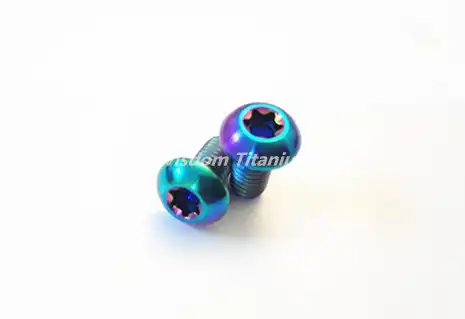
When it comes to high-performance braking systems, every component plays a crucial role in ensuring safety and efficiency. One often overlooked but essential element is the humble brake rotor bolt. In this article, we'll dive deep into the world of titanium T25 brake rotor bolts, exploring their unique properties, recommended torque specifications, and the impact of proper torquing on bolt performance and safety. Whether you're a professional mechanic or an automotive enthusiast, understanding these critical fasteners will help you maintain your vehicle's braking system at its peak.
Recommended Torque Specifications For Titanium Bolts
Determining the correct torque values for titanium T25 brake rotor bolts is not a one-size-fits-all proposition. The specific torque requirements can vary depending on factors such as the bolt size, thread pitch, and the particular application. However, general guidelines can help ensure proper installation and optimal performance.
For most titanium T25 brake rotor bolts, the recommended torque range typically falls between 12 to 14 Newton-meters (Nm) or 106 to 124 inch-pounds (in-lbs). It's crucial to note that these values are general recommendations, and you should always consult your vehicle's service manual or the bolt manufacturer's specifications for the most accurate torque values.
The Society of Automotive Engineers (SAE) provides guidelines for torque specifications based on bolt size and material. For titanium bolts, which are significantly stronger than their steel counterparts, the torque values may be lower to prevent over-tightening and potential damage to the bolt or the components it's securing.
When working with titanium T25 brake rotor bolts, it's essential to use a calibrated torque wrench to ensure accuracy. Apply the torque in a gradual, consistent manner, following a star pattern if multiple bolts are involved. This approach helps distribute the load evenly and prevents warping of the brake rotor.
How does torque affect bolt performance and safety?
The importance of proper torquing cannot be overstated when it comes to titanium T25 brake rotor bolts. Torque is a measure of the twisting force applied to a fastener, and it directly impacts the bolt's ability to create and maintain a secure clamping force. This clamping force is what keeps your brake rotors firmly attached to the wheel hub, ensuring safe and efficient braking performance.
Under-torquing titanium T25 brake rotor bolts can lead to several serious issues. Insufficient clamping force may allow the brake rotor to move or vibrate during operation, potentially causing uneven wear, reduced braking efficiency, and in extreme cases, complete failure of the braking system. Additionally, loose bolts are more susceptible to fatigue failure due to the constant stress cycles they experience during normal driving conditions.
On the other hand, over-torquing can be equally problematic. Titanium, while incredibly strong, can be susceptible to galling when excessive force is applied. Galling occurs when the friction between the bolt threads and the mating surface causes localized welding, potentially leading to bolt seizure or failure. Over-torqued bolts may also stretch beyond their elastic limit, compromising their ability to maintain proper clamping force over time.
Proper torquing ensures that the titanium T25 brake rotor bolts operate within their designed stress range. This optimal state allows the bolts to flex slightly under load, absorbing and distributing forces effectively without compromising their structural integrity. The result is a more reliable, longer-lasting fastener that contributes to the overall safety and performance of your vehicle's braking system.
Common Mistakes in Torquing Titanium Bolts
Even with the best intentions, mistakes can happen when torquing titanium T25 brake rotor bolts. Being aware of these common pitfalls can help you avoid potential issues and ensure proper installation:
1. Neglecting to use anti-seize compound: Titanium's tendency to gall makes the use of an appropriate anti-seize compound crucial. This specially formulated lubricant helps prevent thread seizure and ensures consistent torque readings. However, be cautious not to over-apply, as excess compound can affect the final torque value.
2. Failing to clean and inspect threads: Before installation, both the bolt threads and the threaded holes should be clean and free from debris. Inspect for any signs of damage or wear that could affect the bolt's performance. Even minor imperfections can lead to inaccurate torque readings and potential failure.
3. Ignoring the importance of proper tools: Using a calibrated torque wrench is essential for accurate torquing. Attempting to estimate torque by feel or using improper tools can lead to under or over-tightening. Invest in a quality torque wrench and ensure it's regularly calibrated for precision.
4. Rushing the torquing process: Proper torquing requires patience and attention to detail. Rushing through the process or applying torque too quickly can result in inaccurate readings. Take your time, following the recommended star pattern for multi-bolt applications, and apply torque gradually to achieve the best results.
5. Overlooking re-torquing requirements: Some manufacturers recommend re-torquing titanium T25 brake rotor bolts after a certain period or mileage. This step helps compensate for any initial settling or relaxation of the fasteners. Consult your vehicle's manual or the bolt manufacturer's guidelines for specific re-torquing recommendations.
By avoiding these common mistakes and following proper torquing procedures, you can ensure that your titanium T25 brake rotor bolts perform optimally, contributing to the safety and reliability of your vehicle's braking system.
FAQ
Q1: Can I reuse titanium T25 brake rotor bolts?
A: While titanium T25 brake rotor bolts are known for their durability and resistance to corrosion, it's generally recommended to replace them with new ones during each brake service. This practice ensures optimal performance and safety. However, if you must reuse them, carefully inspect each bolt for any signs of wear, damage, or thread deformation. If they pass inspection, apply fresh thread-locking compound and torque them to the manufacturer's specifications.
Q2: How often should I check the torque on my titanium T25 brake rotor bolts?
A: It's good practice to check the torque on your titanium T25 brake rotor bolts during regular brake maintenance, typically every 12,000 to 15,000 miles or as recommended by your vehicle manufacturer. Additionally, if you notice any unusual vibrations or noises coming from your brakes, it's wise to inspect and re-torque the bolts as part of your troubleshooting process.
Q3: Are titanium T25 brake rotor bolts worth the investment compared to standard steel bolts?
A: Titanium T25 brake rotor bolts offer several advantages over standard steel bolts, including superior strength-to-weight ratio, excellent corrosion resistance, and improved heat dissipation. For high-performance applications or vehicles used in harsh environments, these benefits can justify the higher cost. However, for everyday driving, quality steel bolts properly installed and maintained can perform adequately. Consider your specific needs and budget when making this decision.
Understanding the intricacies of titanium T25 brake rotor bolts is crucial for maintaining the safety and performance of your vehicle's braking system. By following proper torque specifications, avoiding common mistakes, and performing regular maintenance, you can ensure these critical components function as intended.
If you're looking for high-quality titanium T25 brake rotor bolts or need expert advice on their application, Wisdom Titanium is here to help. With our extensive experience in titanium fasteners and commitment to quality, we can provide you with the perfect solution for your braking system needs. Our titanium T25 brake rotor bolts are crafted from grade 5 titanium, offering exceptional strength and lightweight properties. With a size of M5x10 and a hardness of 36 HRC, these bolts are designed to withstand the demanding conditions of high-performance braking systems.
Don't compromise on the safety and efficiency of your vehicle. Contact Wisdom Titanium today for a quote or to discuss your specific requirements. Our team of experts is ready to assist you in finding the ideal titanium fastener solution. Simply send an enquiry to sales@wisdomtitanium.com and let's work together to enhance your vehicle's performance with our premium titanium products.
References
- Society of Automotive Engineers. (2021). Fastener Standards Manual. SAE International.
- Budynas, R. G., & Nisbett, J. K. (2020). Shigley's Mechanical Engineering Design. McGraw-Hill Education.
- ASM International. (2015). ASM Handbook, Volume 1: Properties and Selection: Irons, Steels, and High-Performance Alloys. ASM International.
- Bickford, J. H. (2018). Introduction to the Design and Behavior of Bolted Joints: Non-Gasketed Joints. CRC Press.
- National Highway Traffic Safety Administration. (2022). Brake System Safety. U.S. Department of Transportation.