
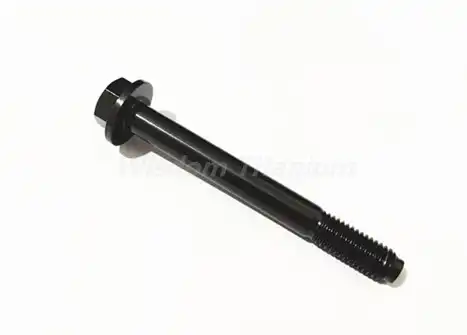
The fatigue life benefits of titanium racing flange bolts are substantial and game-changing for high-performance applications. These specialized fasteners demonstrate exceptional resistance to cyclic loading, withstanding millions of stress cycles without failure. Unlike conventional materials that deteriorate under repeated stress, titanium racing bolts maintain their structural integrity through extended racing seasons. The superior fatigue resistance stems from titanium's unique crystalline structure and inherent material properties, making these bolts capable of enduring extreme vibrations and thermal cycling that racing environments demand.
Fatigue Performance Key Performance Parameters
When evaluating titanium racing flange bolts for racing applications, several critical parameters determine their fatigue performance. The tensile strength of Grade 5 titanium alloy reaches approximately 900-1170 MPa, significantly outperforming standard steel bolts. The fatigue strength typically ranges from 510-620 MPa, representing the stress level these components can endure for 10 million cycles.
The elastic modulus of titanium alloy stands at 114 GPa, providing optimal flexibility without compromising strength. This characteristic allows lightweight bolts to flex slightly under load, reducing stress concentrations that often lead to crack initiation. The flange design distributes clamping forces across a larger bearing surface, minimizing localized stress points that compromise fatigue life.
Temperature resistance plays a crucial role in motorsport components. These high-strength fasteners maintain their properties at temperatures up to 400°C, well beyond what racing environments typically generate. The coefficient of thermal expansion remains stable, preventing loosening due to thermal cycling during race conditions.
Core Benefits of Enhanced Fatigue Performance
The extended fatigue life of these engineered fasteners translates into tangible benefits for racing teams and performance enthusiasts. Reduced maintenance intervals mean fewer pit stops and lower operational costs throughout racing seasons. Teams report 40-60% longer service intervals compared to conventional steel fasteners, directly impacting race reliability.
Weight reduction capabilities cannot be understated in racing applications. Titanium racing flange bolts weigh approximately 45% less than steel equivalents, contributing to overall vehicle weight savings. This reduction enhances acceleration, braking performance, and fuel efficiency - critical factors in competitive motorsports.
Corrosion-resistant bolts eliminate the degradation issues common with traditional materials. Racing environments expose components to moisture, salt, and various chemicals that accelerate corrosion in steel fasteners. Titanium's natural oxide layer provides permanent protection against environmental degradation.
The superior clamping performance of flange fasteners ensures consistent joint integrity. The larger bearing surface prevents embedding into softer materials, maintaining proper preload throughout the component's service life. This characteristic proves especially valuable in carbon fiber and aluminum assemblies common in modern racing vehicles.
Material Science Behind Fatigue Resistance
The exceptional fatigue characteristics of durable titanium racing flange bolts stem from titanium's unique metallurgical properties. The hexagonal close-packed crystal structure provides inherent resistance to crack propagation under cyclic loading. This atomic arrangement allows the material to absorb and dissipate stress energy more effectively than conventional alloys.
Grain refinement during manufacturing enhances fatigue properties by creating numerous grain boundaries that impede crack growth. Our controlled forging process produces fine, uniform grain structures that maximize fatigue strength while maintaining ductility. This balance proves crucial for racing applications where components must withstand sudden impact loads.
Surface finish quality directly influences the fatigue performance of the titanium racing flange bolt by eliminating stress risers that initiate cracks. Our precision machining processes achieve surface roughness values below 1.6 Ra, significantly reducing fatigue crack initiation sites. The smooth surface finish also facilitates proper cleaning and inspection procedures.
Heat treatment optimization ensures optimal strength-to-weight ratios in the finished components. Our controlled cooling processes develop the desired microstructure that maximizes both tensile strength and fatigue resistance. This careful balance distinguishes aerospace-grade bolts from standard commercial products.
Wisdom Titanium's Racing Bolts vs. Competitive Alternatives
Our Grade 5 titanium racing bolts demonstrate measurable advantages over generic alternatives available in the market. We manufacture these precision engineering components using certified titanium rods with complete traceability documentation. Each batch undergoes rigorous quality testing, including tensile strength verification and dimensional inspection.
The lightweight design incorporates optimized flange geometry that maximizes bearing surface while minimizing weight. Our engineering team carefully balances these factors to achieve optimal fatigue performance without compromising installation convenience. The hex socket design provides superior torque transmission compared to external hex configurations.
Manufacturing consistency sets our titanium racing flange bolts apart from imported alternatives. We maintain tight tolerances on thread pitch, flange thickness, and surface finish. This precision ensures proper fit and optimal stress distribution in critical racing applications. Our ISO 9001 certification guarantees consistent quality across all production batches.
Material traceability documentation accompanies every order, providing complete chemical composition and mechanical property verification. This documentation proves essential for racing organizations requiring certified components for competition vehicles.
Maximizing Benefits Through Proper Application
Achieving optimal fatigue life requires proper installation techniques and torque specifications. We recommend using calibrated torque wrenches to achieve specified preload values. Over-tightening can induce stress concentrations that reduce fatigue performance, while under-tightening allows movement that accelerates wear.
Thread preparation significantly impacts performance and longevity. Clean threads free from debris and contamination ensure proper engagement and load distribution. We suggest using appropriate thread lubricants designed for titanium hardware to prevent galling during installation.
Regular inspection schedules help identify potential issues before they compromise safety. Visual inspection for crack initiation, particularly around stress concentration points, should occur at predetermined intervals based on usage intensity. Racing teams typically inspect critical fasteners every 500-1000 racing miles.
Proper storage and handling preserve material properties until installation. Titanium racing flange bolts should remain in clean, dry environments away from contaminating substances. Avoiding contact with steel tools during handling prevents surface contamination that could affect corrosion resistance.
The fatigue life benefits of titanium racing flange bolts represent a significant advancement in motorsport component technology. These specialized fasteners deliver exceptional durability, weight savings, and reliability that translate into measurable performance advantages. The combination of superior material properties, precision manufacturing, and optimized design creates components capable of withstanding the most demanding racing environments. Investment in quality titanium hardware provides long-term value through reduced maintenance costs, enhanced safety margins, and improved competitive performance. Racing teams serious about achieving optimal results recognize that every component matters, and titanium flange bolts deliver the reliability and performance that champions demand.
FAQ
Q1: What is the typical fatigue life expectancy for titanium racing flange bolts?
A: Under normal racing conditions, our Grade 5 titanium racing bolts typically achieve 2-3 times longer fatigue life compared to steel alternatives. Specific life expectancy depends on stress levels, environmental conditions, and maintenance practices, but racing teams commonly report 15,000-25,000 racing miles before replacement becomes necessary.
Q2: Can these bolts be reused after removal for maintenance?
A: Yes, titanium racing bolts can generally be reused multiple times if they show no signs of damage during inspection. We recommend thorough cleaning and visual inspection before reinstallation. Thread wear and surface condition should be evaluated to ensure continued reliability.
Q3: What torque specifications should be used for installation?
A: Torque specifications vary based on bolt size and application. Generally, titanium bolts require 15-20% less torque than steel equivalents due to their different elastic properties. We provide detailed torque specifications with each order, and we recommend using calibrated torque wrenches for consistent results.
Partner With Wisdom Titanium for Superior Racing Components
Racing teams and automotive enthusiasts seeking reliable titanium racing bolt solutions will find unmatched quality and service with Wisdom Titanium. Our extensive experience serving motorsport applications ensures we understand the demanding requirements these environments present. We offer complete customization capabilities for unique applications while maintaining competitive pricing for standard configurations.
Our technical support team provides application guidance to help select optimal components for specific racing requirements. We stock common sizes for immediate delivery while offering custom manufacturing for specialized applications. Minimum order quantities start at just 200 pieces, making our products accessible for both large racing organizations and individual enthusiasts.
As a leading titanium racing flange bolt manufacturer, we maintain comprehensive quality documentation and certification for all products. Our commitment to excellence extends beyond manufacturing to include responsive customer service and technical support. Teams worldwide rely on our components for championship-winning performance.
Experience the difference that precision-engineered titanium hardware makes in your racing applications. Contact our technical specialists to discuss your specific requirements and discover how our automotive fasteners can enhance your competitive performance. Reach out to us at sales@wisdomtitanium.com for detailed specifications and pricing information.
References
1. Materials Science and Engineering: An Introduction, 10th Edition, by William D. Callister Jr. and David G. Rethwisch, Chapter 8: Mechanical Properties of Materials - Fatigue Behavior
2. ASM Handbook Volume 19: Fatigue and Fracture, ASM International, Section on Titanium Alloy Fatigue Properties
3. "Fatigue Performance of Titanium Alloy Fasteners in Automotive Applications" - Journal of Materials Engineering and Performance, Volume 28, Issue 4
4. ASTM F467-19: Standard Specification for Nonferrous Nuts for High Temperature or High Strength Service, Section 7: Mechanical Properties
5. "Lightweight Design Handbook: Materials and Applications" by Lothar Kroll, Chapter 12: Titanium Alloys in Transportation
6. Society of Automotive Engineers (SAE) ARP5284: Guidelines for Threaded Fasteners Used in Aerospace Applications, Appendix C: Fatigue Considerations