
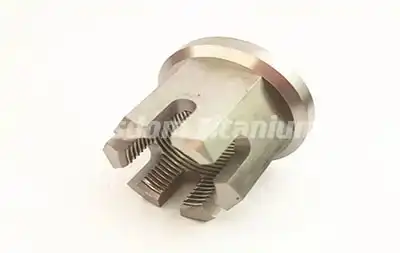
Titanium castle nuts are a big step forward in fastening technology. They are especially useful in the aircraft, racing, and high-performance car industries. These special locking nuts use titanium Grade 5's high strength-to-weight ratio along with new design features to provide unbeatable resistance to rust, high tensile strength, and light weight. These parts, which come in M22 and M24 sizes and are made from aerospace-grade titanium metals, reduce unsprung weight while keeping their structural integrity even when subjected to high vibrations and temperature changes. Their special angled shape fits cotter pins and keeps them from coming loose during high-stress operations. If you choose titanium castle nuts, you'll get maximum stability, better performance, and longer service life in tough situations.
Titanium Castle Nuts: Specifications and Core Advantages
Titanium castle nuts are precisely designed fixing parts that combine advanced metalworking with useful design. Instead of using regular steel, these special nuts use the qualities of titanium Grade 5 (Ti-6Al-4V) to achieve amazing performance levels that change what tools can do.
Material Composition and Metallurgical Properties
Titanium Grade 5 is the base of our castle nuts. It has a tensile strength of over 900 MPa and is 43% lighter than steel in terms of mass. This aerospace-grade metal is made up of 6% aluminum and 4% vanadium, which makes it strong, flexible, and resistant to rust. Even after millions of load cycles, wear cracks don't spread through this material because of its solid structure. Materials lab tests show that Grade 5 titanium stays mechanically strong at temperatures ranging from -200°C to 400°C. This means that these screws can be used in harsh settings where other materials would fail.
Design Features and Locking Mechanisms
The form of the castle nut includes precisely cut slots all around the outside, which let cotter pins fit through holes in bolts that are lined up with them. This mechanical lock stops rotational loosening caused by vibration, which is very important for high-speed machinery and race springs. As part of our manufacturing process, CNC machining is used to keep slot measurements within ±0.05mm standards. This makes sure that cotter pin contact is the same from one production batch to the next. The thicker body design spreads clamping loads out widely, which lowers stress levels that could cause the part to break too soon. Surface processes like polishing, anodizing, and PVD finishing improve both how well they work and how they look. For example, anodized layers create oxide thicknesses of 30 to 300nm for color coding without affecting the accuracy of the dimensions.
Available Sizes and Customization Options
Standard output focuses on M22 and M24 thread sizes, which are the most common sizes for wheel hubs, suspension parts, and drivetrain systems in cars. These sizes fit the bolt widths that are usually required for speed vehicles, like tuning cars or professional race cars. For specific uses, you can get thread pitches, nut heights, and slot setups that aren't standard. You can place an order for as few as 100 pieces, which is the right amount of customization freedom and production efficiency. Engineering support helps buyers figure out the best specs based on the clamping force needed, the fit of the bolt material, and the conditions of the surroundings.
Key Benefits of Titanium Castle Nuts in Industrial Applications
Titanium castle nuts offer real benefits in a number of different application areas. They turn fastener reliability from an everyday concern into a strategic performance advantage.
When procurement managers and engineers know how these parts help certain businesses, they can make decisions that are in line with practical goals. The following benefits are always present in racing, improving car performance, and using specialized tools.
- Weight Optimization for Performance Enhancement: One of the best ways to improve the way a car moves is to lower its unsprung mass. When titanium castle nuts are put on wheel hubs, suspension links, and brake units, the weight that the suspension systems have to control goes down when the vehicle turns or stops. Racing teams can see direct changes in the response times of the suspension, which lets them tune the handling more aggressively without affecting the ride quality. Road-going speed cars can accelerate faster and lose less power in the drivetrain. All titanium fastening gear can save more than 1-2 kilograms of weight per vehicle.
- Uncompromising Structural Integrity: The locking system built into titanium castle nuts and titanium's resistance to fatigue work together to make fastening solutions that keep things safe even in the harshest circumstances. Professional racing groups put their cars through long periods of high-frequency noises, changes in temperature between room temperature and the heat from the brakes, and impact loads from hitting the curb and changes in aerodynamic downforce. Titanium castle nuts keep the preload tension and don't back off, which can happen and be dangerous in these situations. Case studies from endurance racing show that titanium screws stay in place during 24-hour events without needing to be inspected or retorqued in the middle of the race.
- Extended Service Intervals and Reduced Maintenance: Resistance to corrosion directly leads to less maintenance and better operating readiness. Modification shops that work on cars in northern areas say that titanium fasteners come off easily after years of winter driving, while steel ones often need to be taken off in damaging ways. Routine brake repair or changes to the geometry of the suspension take less time, which saves money on labor costs and vehicle downtime. Racing teams with short breaks between events appreciate the dependability that lets them focus on improving performance instead of following bolt inspection routines.
- Multi-Surface Finish Options for Functional Customization: Buyers can choose from different surface processes to make screws work best for their needs, going beyond the qualities of the base material. When installing, polished finishes reduce friction, which is important for getting correct torque-to-preload ratios that are important for suspension geometry. Anodized surfaces have colors that make it easier to find the right size during quick pit service, and they also make it harder for tools to wear down when they touch them over and over again. PVD coatings can give the surface a very high hardness level, close to 2000 HV. This protects the threads from aluminum particles that can get embedded when bolts are installed into wheel hubs. Because they can be changed in so many ways, titanium castle nuts can meet both useful and aesthetic needs in high-visibility settings.
All of these advantages make binding options better than regular ones in terms of performance, dependability, and lifecycle cost. Companies that want to stay ahead of the competition see titanium parts as strategic investments rather than just buying things.
Procuring Titanium Castle Nuts: What B2B Buyers Should Know
To successfully buy titanium fixing components, you need to know what the seller can do, how they make sure the quality of their products, and how to match the specifications to the needs of the application.
Supplier Evaluation and Quality Certification
Good makers keep their ISO 9001 license, which shows that they have standardized quality management systems, can track materials, and can control the production process. The Baoji Wisdom Titanium Industry and Trading Co., Ltd was established in 2016 and is certified by ISO 9001. Its headquarters are in the Baoji Titanium Valley in Shaanxi Province, which is China's biggest titanium industry center and one of the most important production sites in the world. Through a fully integrated environment, this place gives you access to the whole production chain, which includes titanium sponge, ingots, bars, plates, tubes, forgings, and high-performance alloys. Buyers should make sure that providers give them material test results that prove the Grade 5 makeup, data on mechanical property testing, and records of dimensional checking for every production batch. Professional providers are different from commodity dealers because they can make things themselves and offer services like in-house CNC machining, surface treatment facilities, and technical support.
Standard vs Custom Product Selection
Standard M22 and M24 sizes work for most car and motorbike uses, and they are available right away from a well-kept store, which cuts down on wait times. When engineering standards call for different thread pitch, different slot geometries, or special size needs, custom configurations are needed. Due to the high costs of setting up custom CNC programming and tools, minimum order amounts of 100 pieces are set so that race teams and body shops can easily make multiple cars to the same standards. Working together as engineers during the proposal phase helps make designs better by finding standard options that meet functional needs while cutting costs and delivery times.
Pricing Structures and Volume Considerations
The price of titanium raw materials changes depending on the world supply situation. However, well-known sellers keep extra supplies on hand to keep prices stable for regular customers. Volume savings usually start at orders of 100 pieces, and there are more price breaks at 500 and 1000 pieces as setup costs are spread out over longer production runs. Framework deals that lock prices for annual volumes while leaving release schedules open are helpful for buyers who are in charge of multiple car programs or who expect to have ongoing needs. The final price depends on the surface treatment chosen. Polished finishes are the most basic choice, while anodizing or PVD coating add extra costs that are justified by better usefulness or aesthetic needs.
International Logistics and After-Sales Support
With global shipping, goods will always arrive on time, no matter where the buyer is located, and expert providers will take care of all the paperwork for customs, material certifications, and transportation. Warranty coverage handling manufacturing flaws provides trust in product quality, though proper installation and application within design limits remains buyer responsibility. Technical support materials, such as installation instructions, torque specs, and help from application engineers, help make sure that the implementation goes smoothly. Transactional vendors and suppliers who want to build long-term relationships with customers can be told apart by their responsive contact methods, such as email, phone, and expert question systems.
Conclusion
Titanium castle nuts have big benefits for racing, high-performance cars, and specialized tools where strength, light weight, and resistance to rust are important for effective operation. When you combine the properties of Grade 5 titanium with precise production and a number of surface finish choices, you get fastening solutions that work better than standard alternatives in a number of important ways. Even though they cost more at first than steel alternatives, they are worth it in the long run because they require less upkeep, last longer between service visits, and work better. When you choose ISO-certified suppliers with a wide range of skills, you can be sure of the quality of the products, the availability of expert support, and the security of the supply chain. These factors turn fastening components from common items into strategic benefits.
Partner With Wisdom Titanium for Premium Fastening Solutions
Wisdom Titanium makes high-quality titanium castle nuts that are designed to work in racing, high-performance cars, and specialized tools. As a Baoji Titanium Valley-based ISO 9001-certified titanium castle nut supplier, we have full control over where we get our materials, how they are CNC machined, and how they are treated on the outside. This way, we can be sure that the quality of every production batch is the same. Our engineering team can help you find the best specs, and we keep a large stock of Grade 5 titanium raw materials and standard M22/M24 parts to make sure that even pressing needs are met quickly. With a minimum order quantity of just 100 pieces, advanced fastening technology is available to race teams and body shops that make modifications. For bigger buying programs, bulk price is also available. Email our sales team at sales@wisdomtitanium.com to talk about your specific needs, get full technical specs, or get reasonable quotes for both standard and special titanium castle nut combinations.
FAQ
Are titanium castle nuts compatible with standard steel bolts?
Titanium castle nuts work with steel bolts as long as the right anti-seize chemicals are used to stop the galvanic reaction between the metals. The shape of the slot fits standard cotter pin sizes, so it works with gear that you already have. Because titanium has different friction properties than steel-on-steel drilling, torque requirements need to be changed.
How do costs compare between titanium and stainless steel alternatives?
Titanium castle nuts usually cost three to five times more than stainless steel ones at first, but a lifetime study shows that the price difference gets smaller over time. Because titanium is more resistant to corrosion than stainless steel, you won't have to pay as much to repair things that rust because of chloride pitting. Titanium's lighter weight also gives it performance benefits that you can't get with heavy materials. Titanium's value offer is strong for applications that value dependability and weight reduction.
Which industries benefit most from titanium castle nut applications?
Racing teams can stay ahead of the competition by lowering their weight and making their cars more reliable in harsh circumstances. Modification shops for cars serve people who are performance-minded and want high-quality parts. Titanium screws are only used on high-end motorcycles, where the extra features justify the higher price. These parts are used in aerospace and military uses that need certified materials and clear documentation of their origin.
References
1. Boyer, R., Welsch, G., & Collings, E.W. (2007). Materials Properties Handbook: Titanium Alloys. ASM International, Materials Park, Ohio.
2. Donachie, M.J. (2000). Titanium: A Technical Guide, 2nd Edition. ASM International, Materials Park, Ohio.
3. Bickford, J.H. (2008). Introduction to the Design and Behavior of Bolted Joints: Non-Gasketed Joints, 4th Edition. CRC Press, Boca Raton, Florida.
4. SAE International. (2019). Aerospace Material Specification AMS 2488: Anodic Treatment of Titanium and Titanium Alloys. Society of Automotive Engineers, Warrendale, Pennsylvania.
5. Schutz, R.W. & Watkins, H.B. (1998). "Recent Developments in Titanium Alloy Application in the Energy Industry," Materials Science and Engineering A, Volume 243, Issues 1-2, Pages 305-315.
6. Campbell, F.C. (2008). Elements of Metallurgy and Engineering Alloys. ASM International, Materials Park, Ohio.