
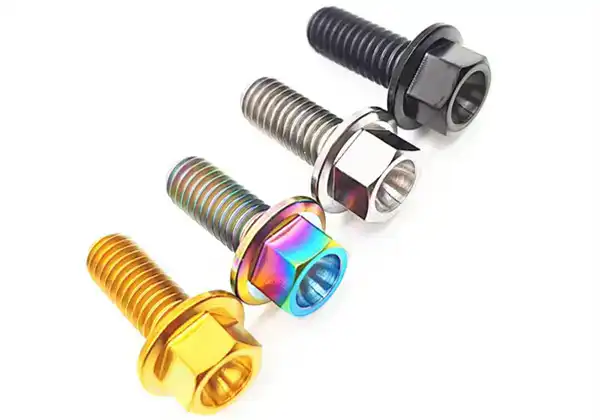
Titanium flange bolts are the ultimate in technical perfection when it comes to industrial fastening solutions. These specialty fasteners combine integrated flanges' improved load distribution capabilities with titanium's unparalleled strength-to-weight ratio. Their importance in challenging situations where conventional fasteners just cannot provide the necessary performance is being more and more recognized by industries worldwide. Recognizing their significance entails recognizing the ways in which these outstanding parts address important problems in the automotive, chemical processing, aerospace, and marine industries.
What Makes Titanium Flange Bolts Essential for Modern Industries
Beyond its remarkable material qualities, aerospace-grade titanium fasteners have many more uses. Since the beginning of mechanization, industries have faced basic engineering issues, which these components attempt to answer. Conventional steel fasteners often corrode, add more weight, and need to be replaced frequently under hard conditions.
Particularly when they satisfy DIN 6921 requirements, titanium grade 5 fasteners provide exceptional corrosion resistance and tensile strength up to 950 MPa. This combination turns out to be essential in circumstances when failure is just not an option.The integrated flange design reduces assembly complexity and possible failure sites by doing away with the need for separate washers.
Modern manufacturing procedures provide a consistent degree of quality in large production runs of these fasteners. Strict quality control methods are used by manufacturers that have earned ISO 9001 certification throughout the whole production process, from raw material selection to final inspection. Every bolt will meet strict performance requirements thanks to this painstaking attention to detail.
Critical Applications Across Key Industries
Aerospace Engineering Excellence
Because they optimize fuel efficiency without compromising structural integrity, lightweight titanium fasteners are crucial to the aerospace industry.These bolts are used by commercial aircraft manufacturers in landing gear assembly, engine mounts, and wing attachments, where weight reduction immediately results in lower operating costs.
Even greater performance requirements apply to spacecraft applications. The severe conditions of space, radiation exposure, and temperature fluctuations can only be endured by the strongest materials. Because high strength titanium bolts maintain their mechanical properties at temperatures between -250°F and +800°F, they are crucial for the construction of spacecraft and the upkeep of space stations.
Automotive Performance Enhancement
In high-performance automotive applications, titanium flange bolts are becoming more and more necessary for essential components. Motorsport teams are aware that improved handling and performance are the outcomes of every gram of weight removed. These fasteners are used in engine blocks, transmission housings, and suspension components where vibration resistance is essential.
The ability of titanium fasteners to prevent corrosion is particularly sought by manufacturers of electric cars. Battery pack assemblies need fasteners that maintain their electrical isolation properties while being resistant to chemical damage. Because titanium is non-magnetic, it helps protect sensitive electronic equipment from interference.
Marine Environment Durability
The unique requirements presented by saltwater environments cannot be met by conventional fasteners. In maritime applications, fasteners need to be able to withstand constant exposure to chlorides, temperature changes, and mechanical stress. Because titanium's natural oxide coating provides exceptional protection against seawater corrosion, these bolts are ideal for shipbuilding and offshore platform construction.
Submarine applications need fasteners that maintain their properties under extreme pressure. Because of its remarkable strength and corrosion resistance, titanium flange bolts are perfect for hull penetrations, propulsion systems, and life support equipment where reliability becomes essential.
Chemical Processing Reliability
Most metals degrade rapidly in the conditions in which chemical processing plants operate. Extreme material performance is required due to circumstances created by aggressive chemicals, high temperatures, and pressure cycling. Titanium flange bolts used in industry are resistant to organic solvents, acids, and bases that would swiftly degrade steel substitutes.
Fasteners that don't contaminate goods or react with process chemicals are necessary for pharmaceutical manufacture. These fasteners are perfect for equipment that comes into touch with medications or medical devices during manufacture since titanium is biocompatible.
Energy Sector Applications
Whether using nuclear, fossil fuels, or renewable energy, power producing facilities need fasteners that can function dependably for many years. Titanium's resistance to radiation damage and capacity to preserve structural integrity in high-temperature, high-pressure settings are especially advantageous for nuclear applications.
These fasteners are used in wind turbine construction in nacelle assemblies and blade attachments, where corrosion resistance prolongs service life and weight reduction increases efficiency. Custom size specifications guarantee the best fit for certain design specifications.
Medical Device Innovation
Titanium fasteners are becoming more and more required by medical device makers for surgical tools and implanted devices. While the durability ensures long-term functioning, the biocompatible qualities assure patient safety. The particular qualities of these specialty fasteners are advantageous for surgical robots, dental prosthesis, and orthopedic implants.
When dealing with precision medical equipment, where surface quality has an impact on functioning, titanium bolts with anti-seize coating choices avoid galling during installation.
Advanced Manufacturing Solutions
The speed and temperature at which modern industrial equipment works have never been greater. Fasteners for precision equipment must provide a constant clamping force while maintaining dimensional stability during temperature cycling. Titanium's low thermal expansion coefficient guarantees joint integrity across a broad temperature range.
The non-magnetic characteristics of titanium fasteners are very advantageous for semiconductor fabrication equipment. The sensitive procedures utilized to make microprocessors and memory devices may be interfered with by any magnetic disturbance.
Technical Advantages That Drive Performance
These fasteners' outstanding performance is the result of many significant technological benefits. In order to provide long-term protection without the need for further coatings, corrosion-resistant titanium naturally produces a protective oxide layer that self-heals when damaged. Applications where maintenance access is restricted or impossible benefit greatly from this feature.
At temperatures when steel fasteners would lose strength or experience creep deformation, these fasteners' heat resistant qualities enable them to retain their mechanical qualities. Their employment in gas turbines, exhaust systems, and other high-temperature applications is made possible by this feature.
The DIN 6921 design's flange compatibility guarantees appropriate load distribution between connected surfaces, minimizing stress concentrations that can cause an early failure. The integrated flange makes installation easier and increases dependability by doing away with the need for separate washers.
The torque requirements for titanium fasteners vary from those for steel fasteners due to the material's unique friction characteristics. Proper installation methods provide optimal joint performance while preventing damage to the thread or flange surface.
Quality Standards and Manufacturing Excellence
Fastener standards provide dependability and uniformity across various producers and uses. For the majority of industrial applications, grade 5 titanium (Ti-6Al-4V) offers the best combination of strength, ductility, and corrosion resistance. The addition of 4% vanadium and 6% aluminum to this alloy improves its strength without sacrificing workability.
Metric and imperial thread types are available for titanium flange bolts, and unique applications may need bespoke pitch parameters. Optimal engagement with mating components is ensured by the flexibility to set precise thread specifications.
Damage during assembly is avoided using installation tools made especially for titanium fasteners. By taking into consideration the particular characteristics of the material, these tools guarantee appropriate torque application without galling or thread damage.
Partner with Wisdom Titanium for Superior Fastening Solutions
When choosing a titanium flange bolt manufacturer, quality standards, technical proficiency, and customer service must all be carefully taken into account. Wisdom Titanium has been manufacturing precise titanium fasteners that satisfy the exacting demands of contemporary industry for more than eight years.
Our ISO 9001-certified manufacturing processes provide consistent quality throughout every production cycle. Our extensive stock of standard parts and raw materials allows us to react swiftly to customer demands. Our skilled engineering team can create solutions that precisely meet your needs, whether you need standard DIN 6921 bolts or completely innovative combinations.
Offering both PVD and anodized coating choices guarantees the best results in your particular application. The majority of industrial needs are met by our size range of M4 to M48 with lengths up to 200mm, and special demands are handled by our custom production capabilities.
From the examination of incoming materials to the final dimensional verification, quality control permeates every step of our operation. Detailed certificates attesting to material qualities and dimensional conformity are included with every shipment. Contact us at sales@wisdomtitanium.com to discuss your unique needs if you're looking for dependable titanium flange bolts for sale with performance guarantees.
FAQs
1. For custom titanium flange bolts, what is the minimum order quantity?
For both regular and bespoke configurations, a minimum purchase quantity of 200 pieces is required. This guarantees effective production scheduling while enabling us to keep prices reasonable. Lead times for custom orders may be longer based on their complexity and material needs.
2. What are the differences in torque parameters between steel and titanium fasteners?
Because of their distinct friction coefficients, titanium fasteners usually need torque levels that are 15–25% lower than their steel counterparts. To guarantee correct installation, we provide comprehensive torque specs with every shipment. By using anti-seize chemicals made especially for titanium, galling during assembly is avoided.
3. Can titanium flange bolts be utilized in high-temperature applications?
Grade 5 titanium is appropriate for the majority of high-temperature applications since it retains its mechanical qualities at temperatures as high as 400°C (750°F). Depending on your particular needs, we may suggest other titanium alloys or unique
Moving Forward with Confidence
Recognizing the significance of high-quality titanium flange bolts in industrial settings entails acknowledging their function as essential elements that facilitate contemporary technical advancements. These incredible fasteners continue to prove their value in various applications, from medical equipment saving lives to spacecraft probing the farthest reaches of our solar system. They are essential for sectors that are pushing the limits of what is feasible because of their special blend of strength, low weight, and corrosion resistance. Purchasing high-quality titanium fasteners is an investment in long-term success, performance, and dependability.
References
1. Boyer, R.R. "An Overview on the Use of Titanium in the Aerospace Industry." Materials Science and Engineering: A, Volume 213, Issues 1-2, 1996, Pages 103-114.
2. Donachie, Matthew J. "Titanium: A Technical Guide, 2nd Edition." ASM International, Materials Park, Ohio, 2000.
3. Peters, M., Kumpfert, J., Ward, C.H., and Leyens, C. "Titanium Alloys for Aerospace Applications." Advanced Engineering Materials, Volume 5, Issue 6, 2003, Pages 419-427.
4. Schutz, R.W. and Thomas, D.E. "Corrosion of Titanium and Titanium Alloys in Marine Applications." ASM Handbook Volume 13A: Corrosion: Fundamentals, Testing, and Protection, 2003, Pages 252-299.
5. Williams, J.C. and Boyer, R.R. "Opportunities and Issues in the Application of Titanium Alloys for Aerospace Components." Metals, Volume 10, Issue 6, 2020, Article 705.
6. Yamada, M. "An Overview of the Development of Titanium Alloys for Non-Aerospace Application in Japan." Materials Science and Engineering: A, Volume 213, Issues 1-2, 1996, Pages 8-15.