
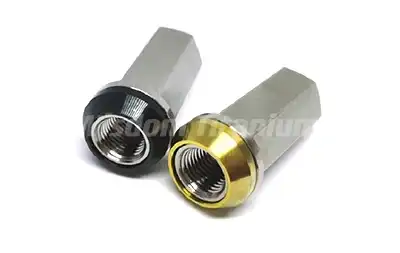
When it comes time to upgrade their wheels, every car owner has to make a big choice: should they get titanium wheel lug nuts or stick with steel? Performance fans, weekend racers, and even regular drivers who just want the best for their cars argue passionately about this question. Picking between these two materials isn't just a matter of personal taste; it also affects performance, longevity, upkeep needs, and long-term value.
Material Properties: What Sets Titanium Apart from Steel
Before comparing performance, it's important to understand the basic properties of the materials to see why they behave in such different ways. This is an alpha-beta titanium metal with a high specific strength and great rust protection. It is also known as TC4, Ti64, or ASTM Grade 5. It is one of the titanium metals that is used the most. This material is good enough for use in spacecraft and has a good image thanks to years of hard use.
Density and Weight Differences
The difference in weight between these materials has a huge effect on how the car moves. Steel is 7.8g/cm³ dense, but titanium metal is only 4.5g/cm³ dense. This means that just one nut can cut the weight by 40%. When you multiply this number by all four wheel places, you get differences that matter in the real world.
Adding a full set of lightweight titanium lug nuts can lower the unsprung mass by about 2 to 3 kg, which makes the car much faster to accelerate and the suspension respond faster. Why does this matter? How quickly your wheels react to road surfaces is directly related to the amount of weight that isn't held by your suspension. When wheel nuts are lighter, the vehicle's unsprung weight goes down. This makes the suspension more sensitive and the driving more precise. Unlike steel alternatives that are heavier and more likely to rust, these titanium alternatives don't rust and can withstand tough circumstances.
It works over 8 times better for moving parts, like lug bolts, to have less weight than stationary parts. So, taking 5 pounds off the spinning mass is the same as taking 40 pounds off of somewhere else in the car. This multiplier effect makes titanium wheel lug nuts particularly alluring for drivers who are focused on performance.
Tensile Strength Comparison
Fans often don't consider titanium because they are worried about its strength. Can a lighter material really hold as well as steel? The numbers tell an interesting story. Grade 5 titanium (Ti-6Al-4V) is 950 MPa strong when pulled apart, while Grade 8.8 steel bolts are only 800 MPa strong. In terms of raw mechanical strength, this means that aerospace-grade titanium is better than regular steel bolts.
Grade 8 steel lug nuts have a tensile strength of 150,000 PSI, but aerospace-grade titanium can handle the same load at 130,000 PSI and doesn't vibrate as much. When you think about how much stronger titanium is compared to its weight, the small number difference doesn't seem as important. When it comes to specific strength to weight, Gr5 titanium metal is 1.5 times better than high-quality alloy steel.
Most of the time, grade 5 is used for alpha + beta alloys. Half of all the titanium used in the world is grade 5 metal. This wide use in industry shows that people are confident in the material's ability to perform well in a variety of tough situations.
Performance Benefits: When Titanium Wheel Lug Nuts Excel
Putting aside the features of the materials themselves, how do these differences show up in real-life driving situations? Figuring out what the performance effects are in real life helps you decide if titanium's high price is worth it.
Acceleration and Braking Improvements
Titanium wheel studs, bolts, and lug nuts are better than steel ones in a number of ways. For example, they allow for faster acceleration because they have less spinning mass. Less weight on the wheel system means better stopping power. These improvements come from simple physics: moving things with less mass takes less energy.
Titanium ring nuts are first and foremost chosen by racers and fans because they are lighter. Every gram that is taken off the wheels helps when you are speeding up or slowing down. Less rotating mass means better balance, the ability to change direction more quickly, and less stress on the frame. Fans of track days really like how titanium wheel lug nuts make the car respond faster when moving quickly.
Every gram that is taken off the wheels helps when you are speeding up or slowing down. Less rotating mass means better balance, the ability to change direction more quickly, and less stress on the frame. Titanium metal is also great for high-performance uses because it is very strong for how light it is.
Thermal Stability Under Stress
When people race or drive very fast, they make brake systems very hot. How your lug nuts react to changing temperatures has an impact on their safety and dependability. Under heat cycles, steel grows and shrinks, which can make screws come loose. Titanium keeps its shape and strength even when it's exposed to high temperatures.
When heated to 300°C, titanium metal can still keep 90% of its strength. And when driving very hard for a long time, heat-resistant titanium lug nuts can keep the pressure from dropping due to thermal absorption. This temperature steadiness is especially helpful for cars that have to stop quickly and often.
It is suggested that Ti 6Al-4V be used at temperatures up to about 350°C (660°F). Because it is strong, light, easy to shape, and doesn't rust, Ti 6Al-4V has become a world standard substance. These temperature ranges are higher than what most vehicle uses need, giving you a lot of extra safety.
Vibration Damping and Torque Retention
Its unique tensile strength makes it very hard to cut and break, and its hardness stops it from being stripped. Titanium bolt nuts last longer and stay tighter. Keeping the locking force constant stops the wheel from coming loose, which is a safety-critical issue.
When you tighten titanium bolts to higher torque settings, they won't stretch, bend, or break. This means that the wheels are safer, even when big loads are being turned. This protection is very helpful for speed drivers who push their cars to the edge.
Corrosion Resistance: The Long-Term Durability Factor
Over many years of use, materials change how they react to problems in the world. Corrosion resistance tells you how your lug nuts will look and work after being exposed to road salt, water, and chemicals for many years.
How Titanium Naturally Resists Rust
Titanium metal surfaces naturally form a thick oxide film of 5 to 7 nm. Anti-corrosion titanium wheel bolts can stay bright as new even after being exposed to snow melt for a long time. This makes them perfect for use in marine or high-humidity areas. This self-healing oxide layer keeps growing back when it gets broken, protecting you forever.
Titanium doesn't rust like steel does. Steel can rust over time. Titanium is great for use in wet, salty, and cold weather because of this. This resistance to rust is especially helpful for people who live in northern countries, seaside areas, or places that get a lot of rain.
One of the best things about titanium lug nuts is how long they last. Even in tough settings where steel or aluminum might break down over time, titanium doesn't rust. Because they don't rust, titanium lug nuts stay in good shape and look good for a long time, so you don't have to change them as often.
Steel's Corrosion Protection Limitations
Once the Dacromet process is done on steel nuts, they can rust for 1000 hours after a salt spray test. If you keep up with the upkeep, rusted steel wheel bolts can also meet most of your daily needs. Steel needs coats to protect it, but these coatings wear off over time, leaving the steel's base material open to harmful substances.
It is suggested that treated steel lug nuts be checked for rust every 5,000 km and protection wax should be applied again at that time. This ongoing repair needs add time and money to owning a steel lug nut. With titanium wheel lug nuts, you don't have to do any of these upkeep tasks.
Titanium is also naturally resistant to rusting. It will not rust even if it is exposed to rain, snow melt, or salt spray for a long time. It can last up to 10 years or more. When you look at the overall time you own the car, this longer lifespan often makes up for the higher original cost.
Steel Lug Nuts: Where Traditional Hardware Still Makes Sense
Even though titanium has a lot of great benefits, steel lug nuts are still the best choice for some situations. Knowing when steel performs best helps you avoid spending money on performance parts that don't add much value.
Heavy-Duty Vehicle Applications
If you heat treat 12.9 steel bolts, they can reach a maximum tensile strength of 1220 MPa. Heavy duty steel lug nuts are still the best choice for super heavy duty cars or building equipment. Steel's absolute strength ceiling may be useful for heavy-duty uses like business trucks, building equipment, or wagons that are very full.
Steel lug nuts are a bit heavy, but they may be less likely to crack when they get hit. So, they can handle worse driving conditions and weather. Off-road cars that take hard hits might benefit from steel's ability to absorb force in some situations.
Budget-Conscious Daily Driving
Even though steel lug nuts are heavy, most cars don't notice the change in weight when they're moving on the road. The inexpensive steel wheel bolt set is still a good choice for people who don't want to spend a lot of money. People who move or drive at moderate speeds might not notice the efficiency benefits that titanium offers.
As a single piece of standard steel lug nuts costs less, the economy steel wheel nuts set is still the most cost-effective option for family cars that are driven less than 20,000 kilometers a year. If speed isn't important, steel may be cheaper up front, but it may not be better in the long run.
Cost Analysis: Initial Investment vs. Lifecycle Value
Buying choices aren't usually based on performance alone—budget always plays a role in what materials are chosen. How does the higher cost of titanium relate to the low cost of steel when looked at in its entirety?
Understanding the Price Differential
Although a single titanium wheel nut costs 5 to 8 times as much as a steel product, race-grade titanium wheel nuts are cheaper in the long run because they last longer and need less upkeep. This view of the process changes the value balance in a big way.
It is hard to find titanium and it costs a lot, so titanium lug nuts cost more than standard ones. Titanium lug nuts can cost anywhere from $50 to $500 for a set, depending on who makes them, how good they are, and how many you need. Quality changes a lot between makers. Choosing reliable sources will make sure you get real aerospace-grade material instead of cheaper copies.
Total Cost of Ownership Considerations
JDC Titanium Lug Nuts may cost more up front than steel or aluminum options, but they will pay for themselves in the long run. Due to their low weight, high sturdiness, and resistance to rust, they will last longer and need less upkeep. Titanium has a high long-term value because it doesn't need to be replaced as often, doesn't need to be maintained, and stays in good shape.
Titanium is also stronger than steel and aluminum, and it can handle more pressure and heat. In other words, titanium lug nuts last longer and are less likely to crack, strip, bend, or rust over time. This will save you time and money in the long run. When you think about how much it might cost to repair something, how long it will last, and how long it takes to maintain, titanium often ends up being as cheap or cheaper over longer ownership times.
Make the Right Choice for Your Wheels
Make sure that the material of the wheel nuts fits your driving style and how often you do upkeep. Titanium wheel lug nuts provide measured benefits that support their top placement for performance fans, track day players, or vehicle owners in toxic environments. Steel might be good enough for daily drivers who don't expect too much from it.
High-quality titanium wheel lug nuts can be bought at reasonable prices from Baoji Wisdom Titanium, which has manufacturing experience, ISO 9001 certification, and access to resources in China's Titanium Valley. Our factory-direct plan cuts out markups that aren't needed and makes sure that only real aerospace-grade material gets to your wheels.
Are you ready to improve your car's wheel hardware? Our expert team is happy to answer questions about both standard goods and products made to special needs. We have the ability and supplies to meet your needs quickly, whether you need a single set for your own use or a lot of them to give to other people.
Contact Baoji Wisdom Titanium today:
Email: sales@wisdomtitanium.com
Share your specifications and quantities for competitive quotations and professional guidance. Transform your wheels with titanium fasteners that deliver lasting performance, corrosion immunity, and weight reduction benefits.
FAQ
Q1: How much weight can I save by switching to titanium wheel lug nuts?
A: The density of titanium alloy is only 4.5g/cm³, compared to the density of steel 7.8g/cm³, a single nut can reduce the weight by 40%. Retrofitting a full set of lightweight titanium lug nuts can reduce the unsprung mass by about 2-3kg. The exact savings depend on your original fastener specifications and the number of wheel positions on your vehicle.
Q2: Are titanium lug nuts strong enough for daily driving and track use?
A: Absolutely. Grade 5 titanium (Ti-6Al-4V) has a tensile strength of 950 MPa, while standard steel bolts (Grade 8.8) have 800 MPa. Titanium also resists cracking and deformation under stress. When properly torqued according to specifications, titanium wheel lug nuts provide secure fastening for both street and track applications.
Q3: Do titanium lug nuts require special maintenance?
A: Titanium requires minimal maintenance compared to steel. Titanium does not rust, unlike steel, which can corrode over time. This makes titanium ideal for wet, salty, and extreme weather conditions. Simply apply anti-seize compound during installation and inspect periodically during tire rotations. No rust prevention treatments or protective coatings need reapplication.
Q4: Will titanium lug nuts work with my existing steel wheel studs?
A: Yes, titanium lug nuts are compatible with steel wheel studs. So far I've never seen anyone talk of corrosion on lug bolts due to titanium lug nuts. They also reduce the mass of the spinning wheel to a small degree. The combination works effectively when proper anti-seize compound is applied to prevent galling between dissimilar metals.
Q5: What is the minimum order quantity for Baoji Wisdom Titanium lug nuts?
A: Our minimum order quantity is 100 pieces per specification. We offer factory-direct competitive pricing with abundant inventory ready to ship. Whether you're outfitting a single vehicle or stocking inventory for a performance shop, we accommodate orders that match your requirements.
References
1. Titanium vs. Steel: Are Titanium Wheel Studs, Bolts, and Lug Nuts Worth the Upgrade? TireHardware.com. February 2025.
2. Ti-6Al-4V.Wikipedia, The Free Encyclopedia.
3. Benefits of Using Titanium Lug Nuts.
4. Grade 5 Titanium Alloy – Ti-6Al-4V." Nuclear-Power.com. September 2022.
5. Ti 6Al 4V (Grade 5) Titanium Alloy Data Sheet.Kyocera-SGSTool.co.uk. August 2019.




