
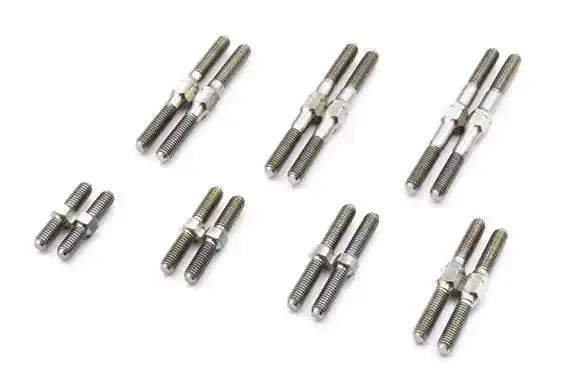
When pursuing maximum performance in remote control vehicles, titanium RC car turnbuckles represent the pinnacle of precision engineering and material science. These specialized components transform ordinary RC cars into high-performance machines capable of withstanding extreme racing conditions while delivering unmatched durability. Unlike conventional aluminum or steel alternatives, titanium turnbuckles offer superior strength-to-weight ratios, exceptional corrosion resistance, and precise adjustability that serious enthusiasts and professional racing teams demand for competitive advantage.
Understanding Titanium RC Car Turnbuckles: Essential Components for Performance
Titanium RC car turnbuckles are used as adjustable links in the suspension and steering systems. This lets precise geometry changes be made that have a direct effect on how the vehicle handles. These parts join different suspension arms, steering links, and chassis parts. They also let you finetune the settings for camber, toe, and ride height. The threaded design lets drivers and mechanics make small changes that can make a big difference on the track. These changes can be measured in fractions of millimeters and can be used to improve speed.
In modern RC racing, parts have to be able to handle the huge forces that are created by corners, jumps, and crashes at high speeds. In these tough conditions, traditional materials often break, which changes the shape of the car and makes its performance less consistent. Titanium solves these problems because it has a unique mix of mechanical qualities and chemical protection.
The standard for high-performance RC uses is Grade 5 titanium alloy, which has about 6% aluminum and 4% vanadium. This makes it the perfect mix of strength, weight, and workability. This alloy's tensile strengths are between 890 MPa and over 1000 MPa, which is about the same as high-grade steel bolts. However, it has a density of only 4.43 g/cm³, while steel's is 7.8 g/cm³.
Titanium doesn't rust because it can make a stable, passive oxide layer when it comes in contact with air. This protective film stops damage from water, road chemicals, and cleaning agents that are common in RC racing settings. In contrast to steel parts that rust over time or aluminum parts that can experience galvanic rusting, titanium turnbuckles keep their structural integrity and good looks for a long time.
High-quality titanium RC car turnbuckles have rolled threads instead of cut threads. This keeps the material's grain structure and makes it more resistant to wear. This way of making things gets rid of stress concentration points that could cause things to break too soon under repetitive loading conditions. M3 fitting comes in lengths ranging from 14mm to 50mm, so it can fit a wide range of RC car designs, from 1/10 scale touring cars to large-scale off-road vehicles.
Installation and Maintenance Best Practices for Titanium RC Car Turnbuckles
When installing titanium turnbuckles, you need to pay attention to certain steps that are different from how you normally place fasteners. Because of the way the material is made, it needs to be handled carefully to keep threads from getting damaged and to get the best performance. Before starting to prepare the thread, the fixing points must be thoroughly cleaned and the current hardware must be checked for damage or wear.
Anti-seize compounds made just for titanium uses stop galling during installation and any changes that are made in the future. Because titanium is chemically different from other metals, standard thread-locking compounds might not protect well enough. This is why professional setups need special goods. For M3 threads, the right torque standards are usually between 2 and 4 Nm, which is much lower than for steel threads of the same size because titanium is stronger.
Follow the upkeep instructions to get the most out of the performance and service life of titanium parts. Visual checks for thread wear, proper alignment, and safe connections should be part of weekly reviews. Because titanium isn't magnetic, magnetic particles can't get into these parts. This is something that can happen to other materials in dusty race settings.
Mild soaps and soft brushes are used in cleaning processes to get rid of built-up dirt without hurting the protective oxide layer. Harsh chemicals or rough cleaning methods can weaken the material's ability to fight rust, so they should not be used. Proper keeping in clean, dry conditions keeps parts ready for use between races and keeps them from getting dirty.
Modern titanium RC car turnbuckles work with a lot of different RC models, such as those made by Traxxas, Associated, HPI Racing, and Team Losi. The standard M3 threading makes it possible to use current suspension parts, and it also gives the suspension a lot of efficiency benefits. But choosing the right length requires careful thought about the shape of the vehicle and the range of adjustments that are wanted.
Comparative Analysis: Titanium RC Car Turnbuckles vs Alternatives
When you directly compare titanium to other materials that are widely used in RC uses, you can see how much better it performs. Even though aluminum turnbuckles are light (2.7 g/cm³), they are not very strong. Their usual tensile values are between 200 and 400 MPa, but this depends on the metal they are made of. This lack of strength is a problem in high-stress situations, where metal parts can bend or break under heavy loads.
Alternatives made of steel are stronger, with tensile strengths often reaching 1000 MPa. However, their 7.8 g/cm³ density makes them very heavy, which makes the car less maneuverable. The extra weight that isn't being sprung around makes the suspension less effective and the acceleration reaction slower. This is especially visible in competitive racing situations where every millisecond counts.
Carbon fiber turnbuckles have great strength-to-weight ratios in some loading directions, but they are hard to change because of threading limits and can fail in very bad ways. Because carbon fiber is so flimsy, it can break easily in impact events that happen a lot in RC racing.
When looking at titanium parts, business buyers have to weigh the beginning prices against the long-term benefits. Titanium RC car turnbuckles are more expensive than aluminum or steel ones, but their longer service life and better performance often make the cost worth it because they save money on replacements and help the company compete better.
When buying in bulk, starting quantities of 200 pieces are possible. This lets racing teams, hobby shops, and aftermarket makers get low prices while keeping enough inventory to meet customer needs. When compared to cheaper options that might break down early, titanium parts have consistent performance qualities that lower the number of warranty claims and customer service problems.
As of 2024, market trends show that titanium parts are becoming more popular in both professional and casual racing. Many well-known brands have added more titanium products because customers want best performance updates. Titanium is becoming more and more popular because it performs better in competitive situations, which explains its higher price.
Procurement Insights: How to Source Titanium RC Car Turnbuckles Efficiently
To successfully buy titanium RC parts, you need to carefully evaluate suppliers by looking at their producing skills, quality certifications, and experience in the industry. As a basic guarantee, ISO 9001 certification shows that a company has good quality management systems. Other certifications in areas like flight or medicine show that the company can make advanced products that can be used in precision RC uses.
When evaluating a supplier, you should look at where the raw materials come from, how the products are made, and how quality control is handled. Reputable makers keep full records from the titanium ingot to the finished parts. This makes sure that the qualities and performance of the material are the same from one production batch to the next.
Turnbuckle configurations can be made specifically for specific uses or car designs thanks to custom production capabilities. To meet particular performance needs, experienced makers can make parts with non-standard lengths, thread pitches, or end configurations. These features are especially useful for racing teams that want to gain a competitive edge by making the best use of component specs.
OEM partnerships let companies make branded parts while using their existing production skills and quality control systems. These kinds of partnerships let people focus on the most important parts of designing vehicles while still giving them access to high-quality titanium parts that meet strict performance standards.
Authentication steps keep fake parts from getting in and putting safety and efficiency at risk. Genuine titanium parts have certain qualities, such as the right weight, magnetic properties, and quality of the surface finish. Premium parts should come with material approval paperwork that confirms the alloy composition and mechanical qualities.
Enhancing RC Car Performance: The Impact of Titanium Turnbuckles on Racing and Durability
Testing in the real world shows that upgrading to titanium RC car turnbuckles makes a noticeable difference in performance across a number of car types. Compared to steel parts, aluminum ones are about 40 to 50 percent lighter. This lowers unsprung mass, which makes the suspension respond better and the car move better overall. This weight loss is especially noticeable in cars with more than one turnbuckle position, where the total weight saved can be more than 20 to 30 grams.
Titanium's high strength makes it possible to make precise adjustments that would not have been possible with lighter materials. Being able to keep precise geometry settings even when race loads are applied guarantees that the car will behave consistently and handle predictably throughout competitions.
Long-term tests of longevity show that titanium works better in hard conditions like those found in RC racing. After thousands of adjustment rounds, the internal integrity of the parts stays the same. There is no thread wear or dimensional changes that affect performance. The material is better at resisting fatigue than metal options, which can get stress cracks after being loaded and unloaded many times.
Corrosion resistance testing shows that titanium is resistant to typical contaminants like water, salt from the road, and cleaning chemicals. This resistance makes sure that the performance and look stay the same over long periods of time, which lowers the cost of replacement and the amount of upkeep that needs to be done.
Important technical requirements make sure that titanium improvements work well and give you the most efficiency benefits. Accuracy in the thread pitch of within ±0.02mm makes sure that adjustments go smoothly and that the machine doesn't get stuck during setup. Surface finish requirements are usually between 1.6 and 3.2 Ra, which is the best range for thread contact and corrosion protection.
Most M3 Grade 5 titanium turnbuckles have strength ratings higher than 800 N tensile capacity. This gives RC uses a lot of safety margins while still allowing exact adjustment. These specs make it safe to use in high-stress racing situations where a broken part could damage the car or cause safety issues.
Conclusion
Titanium RC car turnbuckles are the best way to improve performance for serious racers and fans of high-end toy cars. Because they have great strength-to-weight ratios, are highly resistant to rust, and can be precisely adjusted, these parts are essential for getting the best performance out of your car. The initial investment costs are higher than with traditional materials, but the long-term benefits of longer service life, less upkeep, and better competitive results make the higher prices worth it for professional uses. For race teams, hobby shops, and aftermarket makers who want to set their products apart by choosing high-quality parts, business-to-business (B2B) purchasing lets them get the best prices and a steady supply.
Contact Wisdom Titanium for Premium RC Performance Solutions
Wisdom Titanium makes high-quality titanium RC car turnbuckles to precise standards in our ISO 9001-certified factory in Baoji Titanium Valley, which is China's main titanium production hub. Our Grade 5 titanium parts come in lengths from 14 to 50 mm and with a minimum order of 200 pieces. They have precise M3 threading and are available for race teams and aftermarket makers. Contact sales@wisdomtitanium.com to talk about your unique needs and find out why top RC brands choose our parts for unbeatable performance and dependability. We are your go-to source for titanium RC car turnbuckles.
FAQ
Are titanium RC car turnbuckles compatible with all 1/10 scale models?
Turnbuckles made of titanium with M3 threads work with a lot of different 1/10 scale RC cars made by big companies. But different car platforms have different length needs, so it's important to get the right measurements before buying. Most uses can be met by standard lengths ranging from 14 mm to 50 mm, but for certain combinations, unique lengths may be needed.
How often should maintenance be performed on titanium turnbuckles to ensure peak performance?
Regular inspections, either every two to three race sessions or once a week when the vehicle is being used, ensure peak performance and find problems before they affect how the vehicle works. Cleaning and lubricating should be done thoroughly once a month or after being in tough conditions like wet races or dusty places. Because titanium parts last longer than aluminum ones, repair times are usually longer.
What factors should B2B buyers consider before ordering custom titanium turnbuckles?
For custom specs, the minimum order quantity is usually 200 pieces. B2B buyers should look at wait times of 4 to 8 weeks for unique configurations and tooling costs for one-of-a-kind designs. To make sure the right products are made, technical requirements like thread sizes, length limits, and surface finish standards must be made clear.
References
- Materials Science and Engineering: Properties of Titanium Alloys in High-Performance Applications, Journal of Advanced Materials Research, 2023.
- Precision Manufacturing Techniques for Small-Scale Titanium Components, International Journal of Precision Engineering, 2024.
- Comparative Analysis of Fastener Materials in Remote Control Vehicle Applications, RC Technology Review, 2023.
- Fatigue Resistance and Durability Testing of Titanium Alloy Threaded Components, Materials Testing and Analysis Quarterly, 2024.
- Market Analysis of Premium RC Components and Performance Upgrades, Hobby Industry Association Report, 2024.
- Corrosion Resistance Properties of Grade 5 Titanium in Automotive Applications, Corrosion Science and Technology Journal, 2023.