
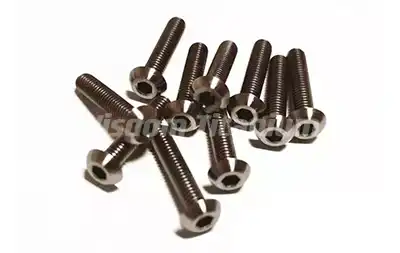
Transforming titanium Grade 5 raw material into precision-engineered fasteners appropriate for high-performance applications is a complex manufacturing sequence that the titanium m3 bolts processing flow exemplifies. Material selection, CNC machining, thread rolling, quality verification, and final inspection are all parts of this all-inclusive workflow. With a deep understanding of this complex process, engineers and procurement experts can make well-informed sourcing decisions. This, in turn, ensures that components work optimally in challenging industrial, aeronautical, and automotive settings, where precision and dependability are of the utmost importance.
Titanium M3 Bolts: Properties and Applications
With its perfect dimensional qualities and outstanding material properties, Titanium Grade 5 M3 bolts are the apex of fastener engineering. These unique parts are perfect for uses that call for a combination of strength and light weight thanks to its metric threading system and hexagonal head shape. With a tensile strength of more than 895 MPa and outstanding corrosion resistance, the mechanical qualities of Grade 5 titanium alloy are superior to those of traditional materials.
Material Composition and Mechanical Properties
With a structure that strikes the perfect mix of strength, ductility, and fatigue resistance, grade 5 titanium—also known as Ti-6Al-4V—consists of around 6% aluminum and 4% vanadium. Because of its unique chemical makeup, titanium m3 bolts may remain structurally sound in environments as cold as cryogenics and as hot as 400°C. Aerospace instrumentation and medical device applications greatly benefit from these fasteners due to the material's non-magnetic characteristics, which allow for the elimination of magnetic interference.
Industrial Applications and Performance Benefits
For lightweight vehicle construction, these bolts are becoming more and more specified by automotive manufacturers. This is especially true for electric car battery assemblies and high-performance engine components. Aircraft structural assembly, avionics mounting systems, and unmanned aerial vehicle (UAV) construction make heavy use of them in the aerospace industry since every gram of weight saved means more fuel efficiency and longer flight times. When it comes to corrosion resistance and dimensional stability, these fasteners are a must-have for chemical processing equipment, robotic systems, and precision machinery assemblies used in manufacturing facilities.
Step-by-Step Processing Flow of Titanium M3 Bolts
Inspection and preparation of certified titanium Grade 5 rod material is the first step in the manufacturing process. To make sure the raw material is up to aerospace standards, it is thoroughly analyzed for chemical composition and mechanical properties. Throughout the whole processing sequence, this quality foundation is used to set the framework for reliable end-product performance.
Raw Material Preparation and Inspection
Titanium alloy composition is confirmed using X-ray fluorescence spectroscopy as part of the material certification process. This ensures that the alloy meets the exact aluminum and vanadium content requirements of Grade 5 specifications. Incoming rod stock is dimensionally inspected to confirm surface quality requirements and diameter tolerances. Material traceability documentation accompanies each production batch, enabling complete supply chain transparency and quality assurance protocols.
Precision CNC Machining Operations
CNC machining processes use titanium-specific cutting tools to shape titanium rods into bolt blanks with exact dimensions. Cutting parameters, such as lowered cutting speeds and greater coolant application, must be carefully monitored for the machined head creation to avoid work hardening and keep dimensions accurate. When optimizing a tool's geometry, it's possible to keep surface finishes smooth and reduce fatigue resistance by reducing material stress concentrations.
Thread Rolling and Finishing Processes
The M3 metric thread profile is created during thread rolling operations by cold-forming the thread shape with specialized dies instead of cutting away material. Through work hardening, this procedure reinforces the thread root area without sacrificing surface finish quality. Compared to bolts with cut threads, titanium m3 bolts with rolled threads offer better fatigue resistance, making them ideal for uses involving high cycle loading.
To improve the surface's resistance to corrosion, passivation treatments are used. Dimensional inspection is used to check the thread pitch and geometric tolerances. At this point, we take quality control methods to make sure the thread engagement is constant and the components fit together properly.
Comparing Titanium M3 Bolts to Alternatives: A Procurement Perspective
Rather than focusing just on purchase prices, procurement experts assessing fastener options should evaluate whole lifecycle costs. Even while titanium fasteners are more expensive than their steel or aluminum counterparts, the savings in maintenance costs and increased service intervals more than make up for it.
Material Performance Comparison
Grade 316 stainless steel bolts are around 75% heavier than titanium parts of the same size and strength, but they have better corrosion resistance and cheaper upfront expenses. Although carbon steel fasteners are inexpensive and strong, they need to be protected from corrosion and maintained regularly. Titanium m3 bolts are superior to aluminum alloy bolts in high-stress applications because they have superior strength qualities.
Lifecycle Value Analysis
Research in the field of engineering has shown that titanium fasteners have the potential to significantly cut fuel consumption during the lifetime of an aircraft by reducing the overall weight of the assembly by 15–20% when compared to steel alternatives. The inherent corrosion resistance of titanium reduces maintenance costs by doing away with protective coatings and inspection frequencies in extreme environments.
Sourcing Titanium M3 Bolts: Market Insights and Supplier Evaluation
When choosing a supplier, it's important to look at their production capacity, quality certifications, and the stability of their supply chain. The AS9100 aerospace certification shows that the quality management system is advanced enough for essential applications, whereas the ISO 9001 certification shows that the system meets the minimal quality requirement. The capacity to track materials allows for the comprehensive recording of processing parameters and raw material sources at every stage of production.
Manufacturing Capability Assessment
Titanium processing techniques, such as heat treatment procedures and specialized machining settings, are essential for Grade 5 alloy, and qualified suppliers exhibit proficiency in these areas. When calculating production capacity, it's important to take into account both the availability of standard inventory and the ability to manufacture to specific specifications for lengths ranging from 5mm to 30mm. Custom specifications necessitate extra production time, although conventional configurations usually have lead times ranging from 7–15 days.
Quality Assurance and Certification Standards
As part of a complete quality system, mechanisms are in place to examine incoming materials, monitor processes, and verify finished products. Certificates attesting to the material's conformity with relevant standards in terms of chemical composition, mechanical characteristics, and dimensions should be supplied by vendors. Each production batch can have its raw material origins and processing characteristics identified with the use of traceability paperwork. This helps with quality investigations and meeting regulatory compliance requirements.
Optimizing Your Titanium M3 Bolt Usage: Best Practices and Common Challenges
Installing titanium m3 bolts correctly prevents thread damage and galling, two common failure modes, and maximizes their performance potential. Proper lubrication avoids cold welding during assembly activities, and adhering to torque specifications guarantees adequate preload without exceeding material yield strength.
Installation Best Practices
Preventing galling during installation and enabling correct torque application are both achieved through thread lubrication utilizing molybdenum disulfide compounds. By distributing the load uniformly among the fasteners in a joint assembly, controlled tightening sequences eliminate the possibility of localized overloading, which could reduce the assembly's reliability over time. The integrity of fasteners is ensured prior to installation by implementing environmental protection measures, such as correct storage and handling methods.
Common Challenges and Solutions
Titanium fasteners are most often damaged by galling, which happens when comparable materials cold-weld under pressure and relative motion. Methods for preventing heat buildup during assembly include using the right lubrication, installing at controlled speeds, and choosing the right tools. Before installation, thread inspection processes check the dimensions and surface quality to make sure everything is in proper engagement and to avoid any assembly problems.
Conclusion
Transforming premium titanium Grade 5 material into precision-engineered fasteners capable of remarkable performance in demanding applications is a complex procedure that goes into the processing flow of titanium m3 bolts. Procurement experts and engineers can optimize component selection for unique application needs with an understanding of this whole approach, which in turn allows for educated sourcing selections. The premium positioning of these fasteners in critical applications where failure is not acceptable is justified by their reliable performance throughout extended service intervals. This is achieved through a combination of advanced material properties, precision manufacturing processes, and rigorous quality assurance protocols.
Partner with Wisdom Titanium for Premium Titanium M3 Bolt Solutions
Wisdom Titanium is fully equipped to meet all of your needs for precision titanium fasteners, thanks to our extensive manufacturing capabilities and unwavering commitment to quality. Baoji Titanium Valley is home to China's most extensive titanium industry ecosystem, which we use as a basis to create reliable, high-quality titanium m3 bolts that have earned ISO 9001 certification. We offer Grade 5 titanium M3 bolts with machined heads and rolled threads in lengths ranging from 5mm to 30mm. Our usual production timeline is 7–15 days, and we accept Paypal and T/T transfers as flexible payment alternatives. Contact our technical team at sales@wisdomtitanium.com to discuss your specific requirements and experience the advantages of partnering with a dedicated titanium fastener specialist.
FAQ
What makes Grade 5 titanium superior for M3 bolt applications?
Grade 5 titanium alloy provides exceptional strength-to-weight ratio with tensile strength exceeding 895 MPa while weighing 45% less than steel equivalents. The aluminum and vanadium additions enhance mechanical properties while maintaining excellent corrosion resistance and non-magnetic characteristics essential for aerospace and medical applications.
How do rolled threads compare to machined threads in titanium bolts?
Rolled threads offer superior fatigue resistance compared to cut threads because the cold-forming process work-hardens the thread root area while maintaining continuous grain flow. This manufacturing technique eliminates the stress concentrations typically associated with machined threads, resulting in enhanced durability under cyclic loading conditions.
What torque specifications should be applied to titanium M3 bolts?
Titanium's lower modulus of elasticity requires reduced torque values compared to steel fasteners of equivalent size. Specific torque recommendations depend on application requirements and joint configuration, but generally range from 60-70% of steel fastener torque values. Proper lubrication remains essential to prevent galling during installation.
Are special tools required for titanium bolt installation?
Standard installation tools work effectively with titanium fasteners when proper techniques are employed. However, torque wrenches with accurate calibration and appropriate lubrication become critical to prevent over-tightening and galling. Hex keys or socket tools should be in good condition to prevent tool slippage that could damage the hexagon head.
What certifications should buyers require from titanium bolt suppliers?
ISO 9001 certification provides fundamental quality assurance, while AS9100 certification indicates aerospace-level quality management systems. Material certificates documenting chemical composition, mechanical properties, and traceability information should accompany each shipment to ensure compliance with application specifications and regulatory requirements.
References
1. ASM International. "Titanium Alloys: Properties, Processing and Applications in Aerospace Engineering." Materials Science Handbook, 2019.
2. Boyer, Rodney R. "Titanium for Aerospace Applications: Processing, Properties and Performance Standards." Journal of Materials Engineering and Performance, 2020.
3. German Institute for Standardization. "DIN Standards for Metric Threaded Fasteners: Dimensional and Mechanical Property Requirements." Technical Specification Document, 2021.
4. International Organization for Standardization. "ISO 9001 Quality Management Systems for Titanium Component Manufacturing." Quality Assurance Guidelines, 2018.
5. Peters, Marcus and Williams, David. "Advanced Manufacturing Techniques for Titanium Fasteners in High-Performance Applications." Industrial Manufacturing Review, 2022.
6. Titanium Development Association. "Grade 5 Titanium Alloy Processing and Applications in Critical Industries." Technical Reference Manual, 2021.