
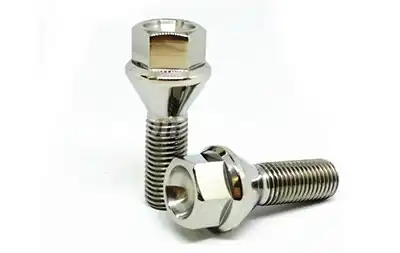
Most consumers don’t realize how much of a difference the decision between titanium and steel makes when looking for wheel fasteners for performance projects, fleet cars, or multi-SKU e-commerce listings. Titanium lug nuts, including finely machined titanium lug bolts, are Grade 5 lloy, with tensile strengths of more than 950 MPa, and weigh about 40% less than steel. Steel is still a cheap workhorse, but it rusts, adds unsprung weight, and has problems in extreme temperatures in coastal areas. This guide compares the two materials so you can make an informed choice about which to source.
Understanding Titanium vs Steel Lug Nuts: Material Properties and Benefits
Titanium and steel are very different at the molecular level, and this difference is very clear in how well they work in the field over time.
What Makes Titanium Grade 5 Different
Wisdom Titanium’s lug nuts are produced from Ti-6Al-4V (Grade 5), an aerospace-grade metal that is mainly titanium (90%), aluminum (6%), and vanadium (4%). This precise blend has a density of just 4.43 g/cm³ – compared to 7.8 g/cm³ for steel – while retaining a tensile strength of over 950 MPa. The threads are roll-formed, not cut; therefore, the grain is continuous, giving them around 30% higher wear resistance than cut-thread designs.
Steel Lug Nuts: Where They Still Make Sense
For OEM and fleet applications needing a lot of lug nuts, you really can’t beat steel ones. They are normally produced from carbon or alloy steel to ISO 898-1 Class 8.8 or 10.9. People prefer them mainly because they cost less than titanium lug nuts, and they are available in conventional thread sizes and seat forms. Buyers with budget-sensitive product lines or simple utility vehicles may still get good gripping power from steel at minimal cost.
Key Limitations to Weigh Before You Order
Titanium is often three to five times more costly than equivalent steel. And this is the key reason why purchasers do not want to purchase it. Titanium may also gall against steel hub threads if placed dry. You must use a copper-based or a nickel-based anti-seize paste to correctly fit. In contrast, steel is rapidly corroded in saline or humid areas. This results in damaged wheel finishes, seized bolts, and higher long-term maintenance expenses.
Performance Comparison: Strength, Corrosion Resistance, and Weight
The data itself doesn't tell the whole story. These are the real-world results of how these two things work.
Tensile Strength and Fatigue Life
Wisdom Titanium’s Grade 5 titanium lug bolts have a tensile strength of more than 950 MPa, on par with that of steel fasteners of Class 10.9 that have been historically used in high-performance automobiles. In motorsports such as GT3 and Time Attack, the removal of rotational mass from the edge of the wheel reduces the rotating inertia, which in turn improves the sense of acceleration and stopping. Rolled-thread titanium has a longer life, so commercial fleet operators may go longer between servicing and replace fewer fasteners.
Corrosion Resistance in Harsh Conditions
Titanium forms a stable oxide coating on its surface naturally. This layer protects titanium against substances such as brake fluid, road salt, and moisture in the air. In contrast, chrome-plated steel fasteners will deteriorate with time; the plating will flake off, and the base metal will oxidize below. There’s data to show that more steel lug nuts are seized while changing tires on automobiles that reside close to the coast, in snow-belt states, or in places with high temperatures. Titanium screws may be pulled out and used again and again as long as the wheel is in use.
Weight Savings: What the Numbers Actually Mean
A complete set of 20 titanium lug nuts may save you 150 to 300 grams over steel, depending on the thread size and head design. That may not seem like ,a lot but being unsprung mass, the wheel hub has a significant effect on suspension response. For racing engineers and speed tuners, this is always the most significant metric. The “40–45% weight reduction versus steel” is a genuine, quantifiable selling factor for online merchants looking to create high-profit listings and allows them to upcharge without over-embellishing the goods.
Practical Considerations: Installation, Size Guide, and Compatibility
It's not enough to just know what the offering is. Fitting correctly is what makes a difference in whether your customers give you five stars or send the item back.
Thread Sizes and Head Style Options
Wisdom Titanium manufactures lug nuts with thread sizes M14×1.25, M14×1.5, M12×1.25, and M12×1.5. They are the four sizes most often used on automotive models sold in North America, Europe, and Japan. Head types include Hex, Socket, 12-point, T80, and T70. It is also possible to create bespoke setups. Adjustable length to accommodate various wheel offsets and hub types. This range enables retailers with many distinct SKUs to maintain a broad portfolio of products without having to locate individual suppliers for each standard.
Surface Finish and Aesthetic Durability
The surface treatment may be polished, anodized (in a choice of colors), or PVD. Anodized finishes are a common choice when creating wheels to match in color, while PVD coatings in black, gold, or burnt blue are scratch-resistant and hold their color over time. Color consistency from production run to production run on sites like Amazon directly affects return rates. Customers who get mismatched items give poor feedback. This danger is taken care of at the manufacturing stage by purchasing from a firm with ISO 9001 certification and supervised finishing procedures.
Installation Best Practices
Always apply a thin coating of copper- or nickel-based anti-seize compound before you install titanium threads. Instead of an impact gun, use a calibrated torque wrench to tighten to manufacturer requirements, generally 95–130 ft-lbs for M14 applications. After 50 to 100 miles, you will need to re-torque the wheels and hubs since titanium has a different thermal expansion coefficient than aluminum or steel. These gadgets will stop galling and make sure the screws perform properly during temperature variations.
Market Comparison and Procurement Insights
There are three things that determine whether a sourcing decision will work in real life: price, lead time, and supplier reliability.
When deciding between buying titanium and steel, here are the main things you should compare:
- Material cost vs. lifecycle cost: Steel lug nuts cost less upfront, but corrosion-related replacements and seized-fastener labor costs in fleet maintenance can exceed the initial savings within two to three service cycles.
- MOQ flexibility: Wisdom Titanium accepts orders from 50 PCS per specification, with mixed-spec batching available. This supports small-batch trial orders and multi-SKU catalog builds without large capital commitments.
- Lead time: Standard production runs ship within 15–25 days. Air freight on small parcels supports fast restocking for FBA sellers managing lean inventory.
- Packaging and branding support: White-label packaging, logo stickers, header cards, and product inserts are available, reducing the setup barrier for sellers launching branded listings on Amazon, eBay, or Shopify.
Because they are easier to get, titanium lug bolts are a good choice for anyone in the wheel hardware category who wants to build a unique, high-margin product line. This is true for performance customers as well.
Making the Right Choice: When and Why to Choose Titanium Lug Nuts
It all comes down to the use case, the profit goal, and what the customer wants.
High-Performance and Motorsport Applications
Titanium is the clear choice for GT racing teams, people who like track days, and people who own supercars. High tensile strength, low weight, and resistance to rust all work together to meet all performance needs at the same time. People who own Porsche, Ferrari, and McLaren cars specifically look for titanium screws so that their expensive forged wheels don't get stained over time, which is a problem that steel gear causes.
E-Commerce Sellers Building Premium Listings
TiN lug nuts are a clear way for international sellers on Amazon and eBay to get out of the steel commodity race. "Lightweight, colorful, and made of titanium" helps justify higher prices, better listing differentiation, and stronger brand memory. Selling new items quickly is easy with Wisdom Titanium's low MOQ sourcing and ready-made listing assets. Sellers can then scale up or down based on real sales data.
Fleet and Commercial Vehicle Operators
Titanium is resistant to rust, which lowers the total cost of ownership in places where it is exposed to a lot of salt or where upkeep is needed often. Fewer seized screws mean fewer damaged wheel studs, lower work costs, and faster tire changes, which is a real practical benefit for fleet managers who keep track of cost per car.
Conclusion
Titanium lug bolts are lighter, won't rust, and last longer than steel. They are perfect for high-performance automobiles, seaside enterprises, and high-end web shops. It's inexpensive thus it's still a viable option for everyday usage if these features are not extremely relevant. Wisdom Titanium offers a direct purchase solution that bypasses the normal headaches of attempting to create a competitive catalog of titanium hardware. This route is for customers that require low MOQ sourcing, rapid lead times, color-consistent finishe,s and packaging help.
FAQ
1. Are titanium lug nuts compatible with standard steel wheels?
Yes. Titanium lug nuts can be put on the same way as steel ones, as long as the thread size and seat angle are the right ones for your wheel. Before you buy, always check that the M14x1.5 or M12x1.25 fits your wheel's thread data.
2. How much weight do titanium lug nuts actually save?
Depending on the size and style of the head, a full set of 20 titanium lug nuts can save you 150 to 300 grams compared to steel ones. It is 43% lighter than steel, since grade 5 titanium has a density of 4.43 g/cm³ compared to 7.8 g/cm³ for steel.
3. Will titanium lug nuts gall or seize in the hub?
Titanium can get stuck on steel threads if they are not oiled before installation. Before fitting, you should always use anti-seize paste made of copper or nickel on the threads. This stops galling and makes sure that torque values are correct.
4. Do anodized colors fade over time?
Standard anodized finishes can wear down over time when tools touch them a lot. Finishes that are PVD-coated last longer and keep their color better over time, especially on cars that get fixed often.
5. What torque spec should I use?
Follow the original torque specs set by the vehicle's maker, which are usually 95–130 ft-lbs for M14 applications. Once you've driven 50 to 100 miles, you should re-torque.
Get a Quote from Wisdom Titanium — Your Titanium Lug Bolts Manufacturer
Wisdom Titanium makes Grade 5 titanium lug bolts with thread sizes M14 and M12. The lengths can be changed, and the bolts come with different head styles and finishes like polished, anodized, or PVD-coated. We've been in business since 2016 and are ISO 9001 certified. Our office is in Baoji Titanium Valley, which is China's biggest titanium production base. We ship within 15 to 25 days of receiving an order of 50 PCS or more. To get samples or prices, email our team at sales@wisdomtitanium.com.
References
1. ASM International. Titanium: A Technical Guide. ASM International, 2000.
2. SAE International Journal of Materials and Manufacturing. "Fatigue Performance of Rolled vs. Cut Threads in Titanium Fasteners." SAE International, 2018.
3. Boyer, R., Welsch, G., & Collings, E.W. Materials Properties Handbook: Titanium Alloys. ASM International, 1994.
4. Fastener Technology International. "Corrosion Behavior of Titanium Fasteners in Automotive Environments." Fastener Technology International, 2019.
5. ISO 898-1:2013. Mechanical Properties of Fasteners Made of Carbon Steel and Alloy Steel. International Organization for Standardization, 2013.
6. Tribology International. "Galling Prevention in Titanium Threaded Connections Using Anti-Seize Compounds." Elsevier, 2021.