
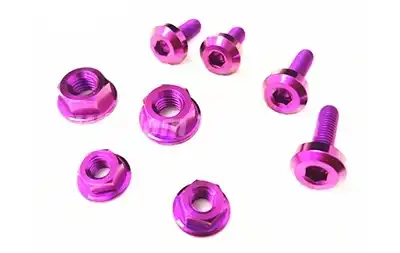
Titanium hardware is the best option among riding pros and makers around the world when it comes to lightweight upgrades for high-performance bicycles. These precision-engineered fasteners and parts are important for competitive bicycle uses because they are very strong while also being very light. Titanium alloy bolts, nuts, and special fittings are better than other materials at resisting corrosion and wearing out over time, even in rough ride situations. Titanium solutions are being used more and more in the cycling industry for important tasks where speed and dependability can't be neglected, like putting together frames and brake systems.
Titanium Hardware for Bikes
What Makes Titanium Hardware Different
There is a special group of screws and parts made of titanium alloy that are designed to be used in riding. Titanium is different from other materials because it has a special set of properties that help bike makers and users who are focused on performance. Because titanium has a very high strength-to-weight ratio, a bolt made of it can hold as well as or better than steel while weighing about 45% less. When this weight advantage is added up over dozens of attachment places in a full bicycle system, it becomes very noticeable.
Titanium is naturally resistant to corrosion because it has a stable oxide layer that forms on its uncovered areas. This passive shield keeps out water, salt from the roads, and other things in the environment that can damage steel and metal fasteners over time. This benefit to sturdiness is especially helpful for riders who train near the coast or store their bikes in damp places.
Key Titanium Grades Used in Cycling Components
Because it has better mechanical qualities, Grade 5 titanium, which is officially called Ti-6Al-4V, is used most often in high-performance cycling uses. This aerospace-grade metal is made up of 6% aluminum and 4% vanadium. Its lattice gives it a tensile strength of 900 to 1050 MPa (130,000 to 152,000 psi). With these amounts of strength, manufacturers can make parts that are thinner and lighter without losing safety. This high-quality Grade 5 material is used in our Titanium Engine Bay Bolts in M6, M8, and M10 sizes. They are made through precise CNC cutting with rolled threads to make them more resistant to wear.
Commercial Grade 2 titanium is easier to get and has better rust protection and shapeability. Even though its tensile strength (345–480 MPa) is lower than Grade 5, this unalloyed titanium works great in situations where mild to high amounts of stress are present. For non-critical bolts and decorative hardware, where weight saves and looks are more important than maximum strength, custom frame makers often choose Grade 2.
Material Comparison: Titanium Versus Alternatives
When looking at different metals for fasteners used in bicycle making, the performance traits are very different. The 304 or 316 types of stainless steel are usually used. They are good at resisting corrosion, but they are about twice as heavy as titanium at the same amount of strength. When riders switch from stainless steel to titanium hardware on weight-sensitive parts like race wheelsets, they can quickly tell the difference in density.
Aluminum alloy fasteners are lighter than titanium fasteners, but they have much lower tensile strength and poor wear resistance. In the bicycle business, many aluminum bolts have broken when they were put through high torque situations, mostly in brake mounting and suspension hardware. Because aluminum tends to cold-weld with aluminum frames, upkeep tasks are made more difficult.
Even though carbon steel bolts are cheap and easy to find, they rust quickly outside if they aren't covered by coatings that make them heavier and finally break down. While brass gear is sometimes used for decoration, it is not strong enough for structural use and has a density even higher than steel.
Applications of Titanium Hardware in Bike Manufacturing
Critical Fastening Applications
Frame assembly is the toughest job for bicycle screws. Titanium bolts hold rear dropouts, cable stops, and extra mounts in place. Because Grade 5 titanium is so resistant to fatigue, stress cracks don't form around threaded joints that are constantly vibrating and rotating loads. Premium frame makers are specifying titanium hardware as original equipment more and more. They know that a broken bolt can put riders at risk and hurt the brand's image.
When installing a brake system, you need screws that can handle high loads and extreme temperatures. During emergency stopping, caliper mounting bolts are subjected to strong shear forces, while rotor bolts are exposed to thermal cycles, which weakens less durable materials. No matter the temperature, our polished titanium brake gear keeps its clamping force, even when the brake wheels are red-hot from long descents in the arctic.
To make sure steering control without damaging carbon fiber parts, handlebar and stem sections need exact torque specs. Because aerospace-grade titanium's mechanical qualities are reliable, engineers can figure out exact torque values. This keeps parts from being under-tightened, which can cause them to slip, or over-tightened, which can damage expensive carbon parts.
Performance Benefits in Real-World Cycling
In professional riding, where every gram matters for speed and climbs, weight optimization is still very important. A full titanium hardware change usually saves between 80 and 120 grams compared to stainless steel alternatives. That's about the same weight difference between wheelsets that cost hundreds of dollars more. Professional race teams have seen real performance gains when lighter titanium screws are used instead of heavier ones in bike builds.
Resistance to corrosion greatly increases the life of parts in harsh settings. Cyclocross racers who compete in muddy conditions and mountain bikes who ride through stream crossings say that titanium bolts look almost brand new after being used for years, while steel screws need to be replaced more often. The higher starting cost is more than made up for by the lower long-term costs, especially for riders who take care of multiple bikes or fleet owners who manage rental inventories.
Maintenance times are much shorter because titanium's galling resistance keeps screws from seizing up, which happens a lot with aluminum and stainless steel mixes. Mechanics like that titanium bolts come off easily, even after years of use. This saves them money on work and keeps the frame from getting damaged when frozen screws are taken out.
Enhancing Product Quality and Rider Experience
Bicycle companies that use titanium parts to make their goods stand out in crowded markets where performance gaps are getting smaller and smaller. People who are ready to spend a lot of money on high-quality gear will notice that polished or anodized titanium hardware looks very nice. Builders can use colors like black, gold, rainbow, blue, and purple to make unique visual themes that improve brand recognition and customer happiness.
The vibration-damping properties of titanium help make the ride better on rough areas. Even though it's not as noticeable as the choice of frame material, riders who switch to titanium hardware often say that it feels easier, which makes their hands less tired after long rides. Having the mental peace of mind that comes from knowing that important fasteners go above and beyond safety standards is an added bonus.
How to Choose the Right Titanium Hardware for Your Bike Projects?
Technical Selection Criteria
Knowing the grade specs helps you choose the right material for the job. Grade 5 (Ti-6Al-4V) is best for places with a lot of stress, like brake calipers, suspension pivots, stem bolts, and bottom bracket systems. Its high strength makes it worth the extra cost. Tensile strengths between 900 and 1050 MPa provide safety factors that protect against sudden overloading and flaws in the material.
Grade 2 titanium works great for lower-stress tasks like bottle cage mounts, fender fittings, rack hardware, and artistic details where resistance to corrosion and weight saves are more important than ultimate strength. Procurement experts with a lot of experience find the best mix between performance needs and budget constraints by selecting Grade 5 fasteners for important parts and Grade 2 fasteners for other parts.
Mechanical traits besides tensile strength affect how well something works in certain situations. Yield strength tells you when lasting deformation starts, elastic modulus tells you how much screws stretch under load, and fatigue strength tells you how long they will last when loaded and unloaded many times. When compared to cut threads, CNC machined titanium bolts with rolled threads have better wear performance. This is because the rolling process strengthens the material and leaves behind compressive residue loads that stop cracks from starting.
Evaluating Suppliers and Certifications
When choosing a supplier, quality control starts with making sure they have ISO 9001 certification, which shows they are committed to consistent paperwork and manufacturing methods. The Baoji Wisdom Titanium Industry and Trading Co., Ltd. is certified by ISO 9001 and is based in Shaanxi Province's Baoji Titanium Valley, which is China's biggest and best-connected titanium industry center. This site gives access to the whole supply chain, from making titanium sponges to making finished parts. This makes it possible to track materials and make sure they are of good quality.
Material certificates and test results show that fasteners have the right chemical and mechanical properties. Reliable providers give proof of real test results for each production batch. These results include tensile strength, yield strength, elongation, and the alloy makeup checked by spectroscopy. These records are necessary for companies that sell to controlled markets or users who want full traceability.
Custom production is what sets flexible suppliers apart from simple resellers. Working directly with makers who can do CNC cutting and small-batch production is best for projects that need non-standard sizes, head styles, or thread pitches. OEM relationships allow suppliers to work together on engineering projects, where their knowledge helps create the best fasteners instead of just processing orders.
Cost-Benefit Analysis for Procurement Decisions
Titanium screws cost three to five times more than options when it comes to stainless steel and eight to twelve times more when it comes to carbon steel. People who don't know how to figure out the total cost of ownership (which takes into account things like lifespan) can be shocked by this difference in prices. When looking at high-value bike builds where fastener costs only make up a small part of the total product value, the study changes in favor of titanium.
Lifecycle benefits build up over time by increasing service life, lowering upkeep work, and getting rid of the need to replace things. A titanium rivet that lasts the life of the bike is cheaper than a stainless steel bolt that needs to be replaced every two to three years because of rust or wear and tear. Fleet owners and rental companies figure out their return on investment by keeping track of the number of repair hours they save and the number of years that parts last longer.
When weight loss affects competitive results or customer happiness, performance gains are worth more than simple cost comparisons. Racing teams know that upgrades to titanium hardware cost less than changes to wheelsets that save the same amount of weight. Custom frame makers know that using high-quality screws makes the frame look better and allows them to charge more at retail, which increases their profit margins above and beyond the extra cost of the materials.
Conclusion
Titanium hardware and parts have real performance benefits that make the higher price point worth it in high-performance bicycle uses. The great strength-to-weight ratio, better corrosion resistance, and amazing fatigue endurance meet important needs for elite riders and makers who care about quality. Grade 5 titanium hardware, which is precision CNC machined and has rolled threads, has the mechanical qualities needed for tough jobs like brake systems and suspension parts. Cost-effectiveness is best achieved by carefully choosing materials, matching Grade 5 for important bolts with Grade 2 for supporting parts. In competitive markets, manufacturers can set their goods apart from others by working with reliable providers that have ISO 9001 approval, the ability to customize, and consistent quality. Investing in high-quality titanium parts pays off in the form of less upkeep, longer component life, and a better riding experience for the rider, which builds brand trust and gives the company a competitive edge.
Partner With Wisdom Titanium for Premium Cycling Components
Wisdom Titanium makes precision-engineered titanium screws and custom CNC parts that improve the speed and dependability of bicycles. Manufacturers who are very picky about quality can get Grade 5 titanium bolts in M6, M8, and M10 sizes. These bolts have a tensile strength of up to 1050 MPa and come in polished styles like black, gold, rainbow, blue, and purple. We are in the Baoji Titanium Valley and have full supply chain integration and ISO 9001 certification. Our production steadiness, technical know-how, and ability to customize products will help you reach your product development goals. Whether you need a lot of standard fasteners or custom-engineered solutions for a specific use, our experienced team can get them to you at a price that doesn't compromise the performance and longevity that make quality cycling goods stand out. Get in touch with our experts at sales@wisdomtitanium.com to talk about your titanium hardware needs and find out how working with a dedicated titanium fastener source can help you stay competitive.
FAQs
When Should You Choose Titanium Over Stainless Steel Fasteners?
Titanium is the best material when reducing weight has a direct effect on speed or when rust is a bigger problem than stainless steel can handle. The extra cost is worth it for racing where every gram counts and for bikes that are often in salty conditions. Titanium's good looks and perceived quality make it a good choice for custom builds aimed at high-end markets.
Can Titanium Bolts Replace Stainless Steel Components Directly?
For direct replacement, you need to make sure that the thread size, head style, and length are all the same as the original. You also need to lower the torque numbers by 10 to 15 percent. Grade 5 titanium is strong enough for most uses that used stainless steel before. However, special high-strength steel bolts in suspension systems may need to be evaluated by engineers before they can be replaced.
Does Titanium Hardware Require Special Maintenance Compared to Other Materials?
Due to its better resistance to rust, titanium needs less upkeep than steel or aluminum options. Inspection is mostly about finding stress cracks instead of keeping an eye on rust. Installing something needs the right amount of force and the right kind of grease. Taking it off is usually easier than with materials that tend to gall and seize.
References
- Boyer, R., Welsch, G., & Collings, E.W. (1994). Materials Properties Handbook: Titanium Alloys. ASM International, Materials Park, Ohio.
- Donachie, M.J. (2000). Titanium: A Technical Guide, 2nd Edition. ASM International, Materials Park, Ohio.
- Schutz, R.W. & Watkins, H.B. (1998). Recent developments in titanium alloy application in the energy industry. Materials Science and Engineering: A, 243(1-2), 305-315.
- Titanium Information Group (2019). Titanium Design and Fabrication Handbook. Titanium Information Group, London.
- Veiga, C., Davim, J.P., & Loureiro, A.J.R. (2012). Properties and applications of titanium alloys: A brief review. Reviews on Advanced Materials Science, 32(2), 133-148.
- Zimmer, C. & Davis, J. (2021). Advanced Materials in Bicycle Frame Construction: Performance Analysis of Titanium, Carbon Fiber, and Steel Alloys. Journal of Sports Engineering and Technology, 235(4), 412-428.