
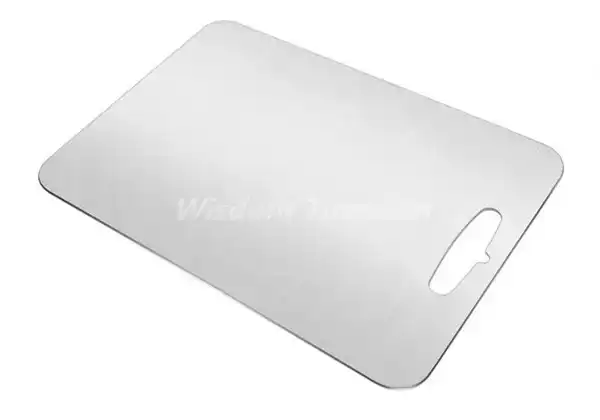
Professional and amateur cooks alike are increasingly turning to titanium cutting boards when looking for the ideal surface to prepare meat. The unique kitchen tools are made of industrial-grade titanium and combine the durability with the basic hygiene standards for safe meat preparation. Titanium cutting boards, in contrast to their plastic or wood counterparts, provide an unrivaled barrier against the development of germs, guaranteeing that your meat preparation is up to par in terms of safety and providing outstanding durability that pays for itself.
Understanding Titanium Cutting Boards for Meat Processing
When choosing the best cutting surfaces for commercial kitchens and butcher shops, two of the most crucial things to think about are how easy they are to clean and how long they will last. The unique properties of 99.9% pure titanium cutting boards that fulfill these strict specifications are what make them so great at what they do.
Superior Material Properties for Meat Applications
Titanium is impermeable, so it won't soak up any harmful germs that may be present in things like meat fluids or blood. Processing raw meats, where cross-contamination is a major health concern, is an area where this quality really shines. Due to titanium's chemical resilience, the cutting surface will remain structurally intact even after years of heavy usage, unaffected by acidic marinades or meat enzymes.
Surfaces that are both scratch-resistant and soft on knife edges are the result of modern production processes, like as precise CNC finishing. From home kitchens to large meat processing facilities, enterprises may choose boards with thickness choices of 1.75mm, 2mm, 2.5mm, or 3mm, balancing durability with weight concerns.
Hygiene Advantages in Meat Processing
Surfaces used for slicing raw meat must be able to withstand high levels of disinfection without deteriorating. The ability of titanium to withstand high temperatures and corrosion makes it suitable for use in industrial cleaning solutions and sterilisation procedures. A typical problem with hardwood cutting boards is the slow accumulation of germs and other contaminants due to the material's inability to absorb smells, liquids, and bacteria.
Titanium prevents the flavor from transferring between cuts or cooking sessions, which is appreciated by professional meat cutters as it preserves the natural taste of ingredients. In restaurants that serve a wide variety of meats, this quality is crucial since it affects the level of pleasure customers have with the meat's taste.
Titanium Cutting Boards vs. Alternative Materials: A Comparative Analysis
While comparing various materials for cutting boards, procurement experts should think about how well they hold up over time, how well they clean, and how much it will cost to own the board altogether. After comparing the two materials, it's clear that titanium is the way to go for any significant meat processing task.
Performance Against Traditional Materials
Although they are classic and safe for use with knives, wood cutting boards pose serious hygiene issues in settings where meat is prepared. Despite being cleaned thoroughly, their porous nature allows them to collect meat fluids and contain germs. Plastic boards are more hygienic than wood ones, but they wear out fast and have grooves that make them less sanitary. In addition to being a safety hazard due to the possibility of breakage, cutting glass surfaces quickly dull knife blades.
When it comes to acidic meat marinades, titanium is more resistant to corrosion than stainless steel, but stainless steel boards still provide adequate cleanliness. Although bamboo products are better for the environment, they still have the same problems with absorption as regular wood and aren't as durable in a business setting.
Long-term Value Proposition
Titanium cutting boards are the best investment for businesses that handle meat because of the following primary benefits:
- Long-term savings are achieved via reduced replacement costs due to exceptional durability, which is achieved despite a larger initial investment
- Surfaces remain unharmed by acidic marinades and cleaning solutions thanks to chemical resistance
- The lightweight design helps users stay comfortable even throughout long periods of preparation
- Consistent performance with little effort is possible thanks to the maintenance-free design
- Capabilities for customization allow for individualized size and finishing to meet operating needs
The premium status of titanium cutting boards in professional settings is justified by these benefits, which together solve the main problems with alternative materials and provide operational efficiency increases.
Buying Guide: How to Choose the Best Titanium Cutting Board for Meat
It is important to consider operational needs, user preferences, and long-term performance expectations when choosing the best titanium cutting board. Proactive purchasing selections take both short-term requirements and long-term scalability into account.
Critical Selection Criteria
Space constraints and common cutting activities should be considered while choosing a size. While smaller boards are more suited to household kitchens and specific uses, larger ones can handle full muscle cuts and large-volume processing. Boards with a higher thickness provide more stability while cutting aggressively, whereas thinner boards are easier on the user's muscles.
The performance and maintenance needs are influenced by surface finishing. While preserving the right texture for safe ingredient handling, precision CNC finishing achieves ideal smoothness for simple cleaning. With the ability to create a one-of-a-kind design, businesses may include useful features like juice grooves or measurement markers.
Supplier Evaluation Parameters
Certifications like ISO 9001 show that a supplier is knowledgeable about production and has consistent quality control procedures in place. Reputable manufacturers provide extensive customization possibilities, allowing for customized solutions to meet specific operating needs. The manufacturer's trust in the product's endurance is reflected in the warranty conditions, which provide protection against premature failure.
Particularly for large purchases, shipping prices and delivery times are affected by geographical factors. International providers may offer better deals for bulk orders, while domestic suppliers may give quicker delivery and more convenient communication.
Procurement and Logistics for Titanium Cutting Boards in Meat Industries
Choosing the right vendors, keeping track of orders, and coordinating logistics are all part of an effective procurement strategy that guarantees high-quality cutting boards are available when needed. Procurement managers may improve their supply chain, save costs, and minimize delivery delays by understanding these procedures.
Sourcing Strategy Development
The greatest price-to-customization-to-quality control ratio is often achieved via direct manufacturer connections. As an ISO 9001-certified factory situated in Baoji Titanium Valley, Shaanxi Province—the biggest titanium industrial cluster in China—Baoji Wisdom Titanium industrial and Trading Co., Ltd is a prime example of this benefit. Because of its central position, this production facility has access to extensive titanium supply networks.
Major titanium manufacturing sites are surrounded by an integrated ecosystem that guarantees high-quality raw materials and excellent processing capabilities. Businesses like as Wisdom Titanium take use of this system to provide customized solutions at affordable prices for large orders.
Order Management and Quality Assurance
You may save a lot of money by buying in bulk, but you have to plan ahead to make sure you have the space to store all of your goods. You can control your cash flow and make sure you have enough stock using a phased delivery plan. Before accepting anything, quality inspection procedures should check its chemical make-up, surface polish, and dimensions.
Proactively resolving issues and coordinating deliveries are made possible by communication channels between procurement staff and suppliers. Customer care representatives from well-established brands are well-equipped to handle technical inquiries and ensure a seamless ordering procedure.
Future Trends and Innovations in Titanium Cutting Boards for Meat Processing
As new technologies improve performance and meet new industrial needs, the titanium cutting board market is always changing. Procurement experts may better plan for the future by keeping an eye on these trends.
Technological Advancements
Titanium already has inherent antibacterial characteristics, but modern surface treatments make them much more effective by adding specific coatings that prevent microbes from growing. In high-risk industrial situations, where preventing contamination is of the utmost importance, these advances are very helpful.
Complex shapes and integrated features that benefit certain cutting jobs are just a few examples of the more precise customisation possibilities made possible by advances to the manufacturing process. Surface textures that strike a compromise between cutting performance and cleaning convenience are becoming more advanced thanks to computer-controlled machining.
Sustainability and Environmental Considerations
Sustainability in manufacturing is becoming more important in the titanium supply chain as people become more conscious of the need to protect the environment. Cutting boards have a high titanium content, and recycling initiatives may help recover some of that material for use in other products. Reducing the negative effects of manufacturing on the environment without sacrificing product quality is possible with energy-efficient production processes.
By enhancing resource use and implementing waste reduction programs, these sustainability measures may possibly lower long-term expenses while also aligning with corporate responsibility objectives.
Conclusion
Titanium cutting boards are the best there is for handling meat since they are both very durable and have unparalleled cleanliness characteristics. Even when subjected to the high temperatures and constant motion of industrial meat processing plants, their non-porous surfaces remain germ-free. The investment is justified by the long-term performance, decreased replacement costs, and better food safety, thanks to the superior corrosion resistance and chemical stability. Titanium cutting boards have become the go-to for businesses that value efficiency, safety, and quality in their operations as the industry continues to embrace cutting-edge materials and sustainable methods.
Partner with Wisdom Titanium for Premium Cutting Solutions
Titanium cutting boards made by Wisdom Titanium are the best in the business and are designed for tough meat processing tasks. Consistent quality and low price are guaranteed by our ISO 9001-certified production plant in Baoji Titanium Valley, which gives access to the world's most complete titanium supply chain. Precision CNC finishing and a range of thickness choices are just a few of the ways our extensive expertise as a titanium cutting board provider allows us to cater to your every need. Contact our expert team at sales@wisdomtitanium.com to discuss your requirements and receive detailed quotations for premium cutting boards that enhance safety, efficiency, and long-term value in your meat processing operations.
FAQ
Can titanium cutting boards safely handle direct contact with raw meat?
Titanium cutting boards excel in raw meat applications due to their non-porous surface that prevents bacterial absorption and growth. The 99.9% pure titanium construction provides natural antimicrobial properties that inhibit pathogen development, making these boards exceptionally safe for direct meat contact compared to traditional alternatives.
How do titanium cutting boards perform in commercial dishwashers and sterilization equipment?
The corrosion resistance of titanium enables compatibility with industrial cleaning chemicals and high-temperature sterilization cycles without surface degradation. These boards withstand repeated exposure to harsh sanitizing agents and extreme temperatures that would damage plastic or wooden alternatives.
What weight considerations affect usability in commercial meat processing environments?
Available thickness options from 1.75mm to 3mm allow operations to balance durability requirements with weight preferences. Thinner boards reduce user fatigue during extended preparation sessions, while thicker options provide enhanced stability for aggressive cutting tasks and heavy-duty applications.
References
1. Journal of Food Protection - "Comparative Analysis of Cutting Board Materials in Commercial Meat Processing Environments"
2. International Journal of Food Science and Technology - "Antibacterial Properties of Titanium Surfaces in Food Preparation Applications"
3. Food Safety Magazine - "Material Selection Guidelines for Commercial Kitchen Cutting Surfaces"
4. Meat Science Research Quarterly - "Hygiene Standards and Equipment Requirements in Modern Meat Processing Facilities"
5. Industrial Kitchen Design and Safety Manual - "Best Practices for Cutting Board Selection in Professional Food Service"
6. Materials Engineering in Food Processing - "Corrosion Resistance and Durability Testing of Metal Cutting Surfaces"