
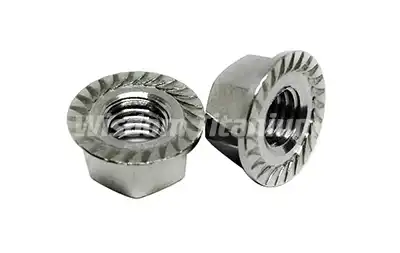
Surface treatment for titanium nuts turns Grade 5 titanium fasteners into precision-engineered pieces that can withstand demanding operational conditions. A Ti-6Al-4V titanium nut offers a high strength-to-weight ratio and corrosion resistance. However, surface treatments increase these properties to aeronautical, automobile performance, and marine durability requirements. Whether you require anodized finishes for color-coded labeling or PVD coatings for wear protection, the correct surface treatment affects price, lifespan, and ownership expenses.
Understanding the Need for Surface Treatment on Titanium Nuts
In industrial applications, raw titanium screws can be weak despite their fundamental features. These issues can be fixed by surface treatments. When titanium contacts titanium, thread galling occurs. Two titanium surfaces pressing together generate microscopical friction and heat. This happens when motorbike rear hub axle nuts or racing car brake caliper bolts are tightened. Cold welds that grab threads and damage components beyond repair result from this phenomenon.
Galling occurs when vehicle shops torque titanium wheel lug nuts without sufficient surface preparation. Championship racing teams require bolts that maintain their torque values across numerous race seasons, when temperature fluctuations and vibrations stress the threads. Marine usage are risky. Titanium's inherent passivation layer accelerates surface oxidation. Pitting rust can form on untreated boat trailer wheel bolts.
Why Raw Titanium Falls Short in Critical Applications?
Grade 5 titanium has a tensile strength of 130,000–152,000 psi, however its surface hardness is lower than heat-treated steels. Power transfer continually shears the chainring nuts that keep carbon fiber cranks in place in high-performance biking. Titanium threads wear down without surface hardening from torque application and removal. This weakens the connection and might cause engine failure during competition.
Manufacturing experts realize that uncleaned titanium surfaces seem uneven. CNC machined titanium nuts contain tool marks and silver-gray to straw-yellow natural oxide hues. Luxury electric car manufacturers want all bolts to match. This requires regulated surface finishing processes that maintain color consistency between batches.
Overview of Common Surface Treatment Processes for Titanium Nuts
Modern surface treatment methods can increase titanium fastener performance. Each has technical and visual advantages for distinct purchase purposes.
Anodizing: Electrochemical Oxide Layer Formation
Controlled electrolytic oxidation thickens titanium's natural oxide layer from a few nanometers to several microns during anodizing. Machined titanium nuts are placed in a decreased phosphoric or sulfuric acid electrolyte solution with 20 to 120 volts DC. The finish color depends on voltage. 15V gives motorcycle customizers golden tones, 65V rich blues for bicycle parts, and 100V brilliant purples for aftermarket automotive parts.
Type II, the most common anodizing method, creates 2–25 micron oxide layers. This procedure increases surface hardness from 200 HV to 300–400 HV, reducing surface pain. While creative metal anodizing absorbs dye, titanium anodizing adds color by interfering with light. This inhibits UV rays and chemicals from changing the hue. Aerospace fastener manufactures frequently anodize Grade 5 titanium nuts for aircraft exterior usage. This simplifies hardware selection for maintenance crews during service intervals.
Passivation: Chemical Enhancement of Natural Corrosion Resistance
Chemical passivation strengthens natural corrosion resistance. Nitric or citric acid solutions remove surface debris and grinding-introduced iron during passivation. Meanwhile, titanium dioxide is thickened. Medical equipment manufacturers that utilize titanium nuts to assemble surgery tools must treat them since even little levels of iron can trigger allergic responses or accelerate corrosion during autoclave sterilization.
Clean screws are immersed in acid for 30–90 minutes at room temperature, depending on the alloy and acid quantity. Passivation, unlike anodizing, doesn't affect metal size or color. In salt, nuts retain their shine and avoid pitting. Marine manufacturers employ passivated titanium fasteners in saltwater pump and coastal infrastructure systems. Treatment keeps titanium robust for decades, but stainless steel corrodes in months.
Physical Vapor Deposition (PVD): Hard Coating Application
PVD coating is great for surfaces. It deposits small coatings of TiN, CrN, or DLC on fastener surfaces utilizing vapor-phase deposition in pressure chambers. The layers are 2–5 microns thick yet have a surface hardness above 2000 HV, similar to carbide tools.
Formula 1 and MotoGP require DLC-coated titanium axle nuts for parts that must handle over 15,000 Hz and temperatures from -20°C during shipment to 200°C during stops. The coating's low friction coefficient (0.1–0.2) minimizes galling, and its black appearance makes thermal imaging heat signatures easier to spot. Supercar performance shops often request PVD-treated wheel hub bolts. The extra expense is worth it because this technology makes bolts stronger and last longer.
Selecting the Right Titanium Nuts and Surface Treatments for Your Industry
Industry operating conditions determine surface treatment goals. Procurement teams must balance technical standards with application pressures.
Automotive and Racing Applications
Weight reduction without compromising safety is especially crucial for high-performance cars. Because they lose 45% of their spinning mass, anodized titanium nuts are better for track performance automobiles than steel ones. Aluminum wheels don't corrode when they touch nuts because of the oxide coating. Flanged axle nuts spread gripping load. Interference-fit colors from Type II anodizing at 65V allow pit stop hardware installation verification by sight.
Different brake bolt issues might occur. For emergency stopping at 180 mph, the four-piston race caliper bolts must sustain shear stresses of over 5,000 lbs. They must heat cycle between room and 800°F rotor temperatures. PVD-coated Grade 5 titanium provides strength and thermal barrier to threaded contact zones. This prevents heat expansion in uncoated fasteners.
Motorcycle Performance and Customization
Motorcycle repair companies help consumers speed up or beautify their bikes. Sprocket nuts and rear axle bolts look amazing anodized to match frame colors. Aluminum cannot achieve this structurally. Only titanium can. Not wearing down easily is another issue the therapy helps. Gear changes need repeated chain tension adjustments, which can harm unprotected threads. After 50 adjustment rounds, anodised surfaces retain their form.
Special demands can be handled using banjo nuts in high-performance braking systems. Hollow bolts transport hydraulic fluid and support the structure during 1,200 PSI pressure jumps. Passivating removes machining waste from internal fluid routes and increases corrosion resistance against moisture-contaminated brake fluid. Internal pitting that might weaken the hydraulic seal is prevented.
Bicycle Industry Standards
Premium road and mountain bike companies use titanium's strength and lightness to compete. Bolts connect crank spiders to carbon or aluminum chainrings. This galvanic interaction accelerates steel fastener corrosion. Grade 5 titanium doesn't undergo this electrolytic reaction, and when anodized, the chainring arrangement color-coding (53/39T, 52/36T) simplifies wheel construction.
Custom bike shops that work with elite riders need UCI-compliant fasteners that are lightweight. Full sets of titanium and steel stem bolts, seatpost clamps, bottle cage screws, and gear installation hardware weigh 40–60 grams and 140–180 grams, respectively. Power-washing and getting wet during hot training rides is made possible by passivation, which adds little weight.
Conclusion
The appropriate surface treatment transforms titanium nuts from precision-machined parts to fastening solutions for the automotive, motorbike, bicycle, and industrial industries. Anodizing protects metal from corrosion cheaply without changing its appearance. Passivation increases chemical resistance without affecting metal size, and PVD coatings provide the highest wear resistance, making them worth the extra money for heavy-duty purposes. Acquisition success depends on matching treatment powers to practical pressures, such as vibration-resistant settings, saltwater-resistant maritime usage, or visual-differentiated unique projects. Understanding treatment costs, duration, and provider approval criteria helps you make sensible decisions that match performance needs with budgetary constraints, obey the regulations, and rely on the product for a long time.
Partner with Wisdom Titanium for Premium Surface-Treated Fasteners
Wisdom Titanium offers ISO 9001-certified Grade 5 titanium nuts that are precisely constructed, have a range of surface treatments, and fulfill rigorous automobile, motorbike, and industrial applications. Because we're in Baoji Titanium Valley, China's largest titanium manufacturing center, we manage materials, CNC cutting with rolled threads, and authorized surface finishing procedures including Type II anodizing, passivation, and PVD coating. Our experts advise you on the optimal treatment for your business depending on its demands. Complete material tracking papers and ASTM B348 compliance certificates support this. Our titanium nuts are reliable for prototype development and mass manufacturing. Our logistical networks service North American markets, and our low pricing demonstrate factory integration. Contact our purchasing professionals at sales@wisdomtitanium.com to discuss your project and receive full quotations with treatment options that meet your performance and pricing demands.
FAQ
Does anodizing affect the tensile strength of Grade 5 titanium nuts?
Anodizing does not reduce tensile strength. Changing the surface instead of removing material adds oxide layers. The titanium foundation underneath retains its 900–1050 MPa strength. The technique removes surface imperfections that might create cracks when loaded and unloaded, making the material more wear-resistant.
Can I specify custom surface treatments for small production runs?
Reliable producers can finish 100 items uniquely. Custom anodizing voltages for accurate color matching take two to three weeks and $150 to $300 each batch. Custom PVD coatings require 500+ pieces due to vacuum chamber batch processing expenses.
How do I prevent galling when installing titanium nuts on titanium bolts?
Add titanium-specific anti-seize additives to nickel or copper-based lubricants that can tolerate temperatures exceeding 1800°F. PVD-coated screws' low-friction hard coatings eliminate galling. Anodized surfaces resist galling better than titanium, but torque techniques are still necessary.
References
1. Boyer, R., Welsch, G., & Collings, E.W. (1994). Materials Properties Handbook: Titanium Alloys. ASM International, Materials Park, Ohio.
2. Donachie, M.J. (2000). Titanium: A Technical Guide, 2nd Edition. ASM International, Materials Park, Ohio.
3. Lutjering, G. & Williams, J.C. (2007). Titanium, 2nd Edition. Springer-Verlag, Berlin Heidelberg.
4. ASM Handbook Volume 5: Surface Engineering (1994). ASM International, Materials Park, Ohio.
5. Bhushan, B. & Gupta, B.K. (1997). Handbook of Tribology: Materials, Coatings, and Surface Treatments. McGraw-Hill, New York.
6. Rack, H.J. & Qazi, J.I. (2006). Titanium alloys for biomedical applications. Materials Science and Engineering C, 26(8), 1269-1277.




