
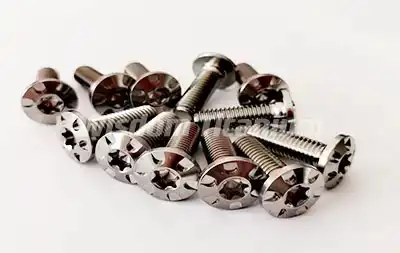
Surface finishes for custom titanium screws are controlled treatments, such as polishing, bead blasting, anodizing, or coating, that change how a screw looks, wears, and performs. The right finish depends on the titanium grade, the operating environment, and the thread fit. Anodizing creates colors such as blue, purple, gold, and green through a thin oxide film. Polishing gives a bright, clean surface. Coatings can reduce galling when tested with the mating parts. I wrote this guide to help buyers compare finishes, avoid ordering errors, and prepare a clear quote request.
What Are Surface Finishes for Custom Titanium Screws?
Finish is more than just how something looks. Your parts will not rust as well, be smoother, wear down more quickly, and look different from one lot to the next. Let me start with the basics.
Grade, Process, and Finish Work Together
I tell people who buy something that grade, manufacturing process, and finish are three options that all affect each other. Grade 2 titanium is the purest titanium that can be bought. It doesn't rust and is easy to shape. Aluminum makes up about 6% of Grade 5, and vanadium makes up 4%. It's also called Ti-6Al-4V. It's much stronger, so it can be used for parts in spacecraft, motorcycles, and racing bikes. The way things are done is also important. CNC milling, thread rolling, and deburring all change the surface before the finishing step. If a finish looks great on a Grade 5 hex socket screw, it might not look so great on a Grade 2 part. That's why I believe you should review the engineering work first, before you decide to finish.
Main Types of Finishes
This is how I set up the key finishes for my custom titanium screws. Samples and internal parts work well with surfaces that are as-machined and smooth. When you polish something, it looks better and is easy to clean. When you bead blast something, you leave it smooth and matte, which hides small tool lines. When titanium is anodized, a thin oxide film forms on it. Research into this process has shown that the color we see depends on how thick the film is. Cleaning with chemicals gets rid of scale and dirt, and ASTM B600 is a common standard for getting titanium surfaces clean and descaled. PVD, DLC, and ceramic coats that make the surface harder can slow down wear. The thread fit needs to be checked because they make the hole wider.
Colors and Logo Options We Supply
They are made to order and come in sizes from M3 to M24. The drives can be Torx or hex. We can make the head style out of Grade 2 or Grade 5 titanium, based on what you need. It comes in blue, red, purple, green, black, gold, shiny blue, and burned blue. We mark names with a laser or by carving them in. You can buy at least 200 items. People use these screws to build things like boats, cars, bikes, and motorcycles. For outdoor and bike brands, color is often a big part of the planning process. Also, a clear logo helps people remember your brand and tell the difference between real and fake items.
How to Choose the Best Finish for Custom Titanium Screws?
It's important to make sure that your choices fit your needs once you know what they are. After you check these three things, the list gets very short very fast.
Start With the Operating Environment
I always check to see where the screw goes first. Depending on whether it's muggy, salty, cleaning, hot, vacuuming, or sunny outside, the answer changes. Chloride and salt can't damage titanium because it makes a solid oxide film around it. In other words, the base metal already keeps corrosion from happening. It's not supposed to hide the fact that the material was bad; the finish should make it even stronger. Someone who works with marine fasteners might only need to clean or polish them, but a bike bolt on a frame that people can see might need color and a brand. Before you pick a finish, sketch out the setting and give a copy to the seller.
Check Galling, Torque, and Thread Fit
Titanium can gall, which means that as the threads are tightened, surface material moves between them and stops the parts from moving. A lot of the time, custom titanium screws scratch or gall. There is less risk if you look at the mating material, the lubricant, how fast the joint will be put together, and how often it will be put back together. It might help to coat the parts, but you should only do that on the ones that will actually fit together. It's also important to change the sizes. PVD and other layers make anodic sheets thicker, but they are still very thin. Check the threads or hide them if the pattern tells you to when you're done. It is always best to talk about torque and fatigue goals at the same time.
Compare Finishes by Application
When it comes to priorities, different fields set them in different ways. This is how I see our big groups of goods.
- Aerospace and motorcycle: Grade 5 is often used for airplanes and motorbikes because it is strong for its weight. A lot of the time, they want a finish like polished, bead blasted, or controlled coating that doesn't make the metal denser. It's more important to be able to track the lot, handle fatigue, and keep the torque on these parts than the color.
- Marine: There are two grades that work well with salt water: 2 and 5. You can get rid of surface dirt by cleaning or getting a cleaner. On a ship, anodized colors can help workers find maintenance points or types of fasteners without the need for extra signs.
- Bicycle and automobile: For bikes and cars, blue, purple, gold, red, or green anodized parts are often matched to frames, brake parts, or trim by brand. Its name comes from a laser-etched logo. The main goal for quality is for all lots to have the same color, which is why approved samples are important.
These comparisons show why one finish doesn't always work with every program.
Specifying Finishes and Avoiding Ordering Mistakes
It doesn't matter how good the finish is if the order isn't clear. It's good for everyone when there are clear instructions.
What a Clear Specification Includes
With a good drawing or buy guidance, you won't have to do any extra work. If it applies, you should list the thread type, drive type, head style, surface roughness, finish type, color, coating thickness, and size of the titanium. Cover up areas, set cleaning limits, check criteria, packing needs, and edge standards. It's not always clear what "premium" or "matte" mean, so give an example of a roughness value, a gloss target, or a quality that can be seen. To make sure that the thread and finish work well together, you should use a measure and, if needed, torque-tension tests. In business, buyers can also ask for tags, inspection records, and the ability to keep track of numbers.
Color Matching and Approved Samples
When people buy a brand, color is the most dangerous thing. You only need to make small changes to the process to change the color of anodized metal. This means every lot might have a different color. Typing color names like "blue" or "purple" is too simple to get wrong. Before the real thing is made, you should sign off on a sample, and then every order after that should be based on that sample. We can also make parts from a drawing or idea you give us. Note down the finish, grade, and process information for the accepted example so that other lots can follow the same path. Because of this habit, most color fights don't happen.
Common Ordering Mistakes
People keep making the same mistakes. A lot of times, people buy a finish because they like the way it looks, but then they find out that it makes their tools twist or gall. Many people forget that coating, polishing, or blasting can change how the threads fit together, which can make the clamping force wrong or the incoming inspection fail. People who ask for vague things like "blue titanium" or "high quality" can't be measured, so there are arguments. Some companies don't talk to their providers about how to work with titanium or how to keep making the same thing. Simple: agree on the inspection papers, acceptance standards, samples, and terms of use and installation before the first order. This is the right way to do things.
Manufacturing, Marking, and Supplier Checks
It doesn't matter how good the specs are; you still need a factory that can make the goods. After you send your picture, this part tells you what to do.
From Drawing Review to Final Inspection
A good program will first look at your drawings, CAD files, grade, dimensions, tolerances, number, finish, and delivery date to see if they can be created and made. CNC cutting is good for making samples, small amounts, and shapes with lots of features. When you need to work with more, thread rolling or other similar methods may be better. After cutting out the shape, we clean, deburr, and prepare the surface because burrs or dirt make the finish uneven. What comes next is the method that was picked. It could be chemical treatment, blasting, finishing, anodizing, or sealing. The final review checks the size, threads, appearance, cleanliness, and regularity of the finish before it is put in secure packing.
Laser Etched and Carved Logos
Logos turn a plain clip into a part that has a brand name on it. Because we can laser etch and carve, you can pick between a small, outline-like mark or a bigger, more substantial one. The order in which things are done is important. If you mark on colored parts before or after finishing, the name may not look the same against the surface. Talk to our engineers early on about where to put the name, how big it should be, and how deep it should go. Then, accept a marked sample before the full run. For small heads like M3, the art should be easier than for bigger heads. If the mark is neat and easy to read, it will look better in pictures and on social media.
Selection Matrix and Ordering Custom Titanium Screws
We've talked about the technical stuff. Now let me show you how I help buyers choose and place an order.
A Simple Selection Matrix
A short grid helps me see how wins compare to the main goal. It is cheap to process custom titanium screws that are as-machined and deburred. Things look clean and shiny after being polished. Using beads to blast the surface makes it look flat and matte. Anodizing gives things color so that they can be marked or identified. Coatings that do certain things stop friction, wear, and galling. After that, I connect the business to the goal. Aerospace checks to see if someone is tired, strong, and able to track. Marine has to be able to work with nature for a long time. For bikes and motorcycles, brands care about color, logo, and how things look all the time. Before you place your order, make sure you know the grade, climate, torque, surface effects, volume, papers, and arrival date.
Low MOQ and Mixed Projects
It's not often that thousands of pieces are needed to launch a new product or make a limited version. With a minimum order of 200 pieces, you can use colors that are in style, do test runs, or begin a small brand program. A lot of projects need more than one size or color of something, like M5 and M6 screws in blue and gold. Our team will figure out how to plan the order after you tell us the full size and color mix. It's faster to place another order once you have drawings, approved samples, and records of work done on file. You can finish and check everything before the launch date if you plan it early.
What to Send for a Quote
It takes days less to make a full request. Draw or send CAD files that show the type of titanium, the size (M3 to M24), the threads, the drive type, and the head style. Type in the finish color, logo method, number, use, and date you expect to ship. Make a list of all the papers you need, such as certificates of materials or reports of inspections. If you know what color to send, send a hard copy or clear pictures. After that, our engineers will give you a fair price and lead time, suggest a finish, and check that the threads fit.
Conclusion
The surface finish of custom titanium screws determines how they fit, how look, and how wear. It is better to use Grade 2 for shaping and not rusting, and Grade 5 makes it tougher for use in space, motorbikes, and racing. Polishing, bead blasting, anodizing, acid cleaning, and coats are some of the different methods that can be used to fix different problems. Thick coatings can change how the thread fits by making it different. It's best to start with the area, the chance of hurting someone, the power requirements, and the parts that will be combined. Clear drawings, color standards that can be measured, and approved samples can help keep most disagreements from happening. This is very true for outdoor and bike parts that are colored. When someone makes something out of titanium, they can do the same thing for all orders if they know how to check the quality and keep track of each lot.
FAQ
Which finish works best for colored titanium screws?
Anodizing is usually the one that is picked. It is blue, purple, gold, green, and other colors because of a thin oxide film. It doesn't use paint. Because the color depends on how thick the film is, I think you should approve a real sample before production starts.
Does a finish change thread fit?
Yes. Anodic sheets are still very thin, even with PVD, DLC, and ceramic layers on top of them. When you're done with the threads, you can either mask them or finish them and gage them. To test them, use the real parts that come with the coatings.
Should I choose Grade 5 or Grade 2?
Grade 2 is good because it doesn't rust and is easy to shape. Grade 5 is good for parts for airplanes and motorcycles that need to be strong. Both can have a colored or smooth finish.
What is the minimum order, and what do you need for a quote?
We need at least 200 items to process an order. Send drawings or CAD files that show the grade, size, type of drive, head style, color, logo method, quantity, use, and application.
Request Custom Titanium Screws From Wisdom Titanium
Once you send us your plans or samples, our engineers will go over the finish, grade, and thread fit with you. We sell custom titanium screws in Baoji and have ISO 9001 certification. We have sizes from M3 to M24 and grades 2 and 5. You can also get logos laser-etched or carved, and you only have to order 200 pieces to start. The drives can be Torx or hex. You can email sales@wisdomtitanium.com or visit wisdomtitanium.com to learn more.
References
- Titanium: A Technical Guide, ASM International, 2000
- Titanium and Titanium Alloys: Fundamentals and Applications, Wiley-VCH, 2003
- Materials Properties Handbook: Titanium Alloys, ASM International, 1994
- ASTM B600, Standard Guide for Descaling and Cleaning Titanium and Titanium Alloy Surfaces, ASTM International, 2011
- Effect of Anodic Oxidation Parameters on the Titanium Oxides Formation, Corrosion Science, 2007
- ASTM B348/B348M, Standard Specification for Titanium and Titanium Alloy Bars and Billets, ASTM International, 2019