
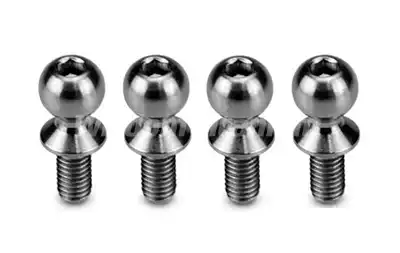
When choosing racing titanium ball studs for remote control car suspension changes, it's very important to know how to find the best mix between improving performance and making sure the parts will last. These precision-engineered parts are much better than standard ones because they have higher strength-to-weight ratios that have a direct effect on how the vehicle moves and how well it does in competitions. Modern titanium ball studs are very durable and lighten the suspension, which is why professional RC racing teams and performance fans looking for real track benefits are using them more and more.
Understanding Titanium Ball Studs and Their Role in RC car Suspension
RC car suspension technology has come a long way thanks to titanium ball studs made of Grade 5 titanium metal, which have performance qualities that can't be beat. Titanium's special qualities make it the best material for balancing strength and lightness, which are both very important in professional racing where every gram counts.
Material Composition and Engineering Benefits
Titanium ball studs are made using complex metallurgy that blends titanium's natural resistance to corrosion with its high strain strength. Titanium, unlike standard steel parts, keeps its shape even after being stressed over and over again while reducing weight by about 45%. This reduction in weight immediately leads to faster acceleration, more precise handling, and less stress on other suspension parts.
Titanium's molecular makeup makes it naturally resistant to things in the surroundings that break down race parts. Titanium's performance isn't affected much by changes in temperature, exposure to moisture, or chemical touch from track surfaces. This means that it can be used consistently for long race seasons.
Integration with Suspension Architecture
Titanium ball studs are important turning points in the suspension systems of RC cars. They allow the cars to move smoothly and keep their precise shape even when they are under dynamic loads. When a suspension is integrated, the suspension's kinematics must be carefully thought through because the lighter weight changes the spring rates and damper properties. When professional race teams switch to titanium parts, they often have to re-calibrate their whole suspension system to get the best performance out of it.
Titanium's tight manufacturing specs make it possible to make joints that move more freely and with less space between them. This higher level of accuracy directly leads to better steering reaction and suspension consistency, which are things that become more important in professional racing where milliseconds can decide the winner.
Key Factors to Consider When Selecting Titanium Ball Studs
When choosing the right titanium ball studs, you need to look at a lot of scientific and practical factors. When making a choice, one has to look at the properties of the materials, how well they fit together in terms of size, and what the expected long-term performance is.
Material Grade Specifications
Grade 5 titanium alloy (Ti-6Al-4V) is the standard for high-performance race uses because it has the best strength-to-weight ratio and is easy to machine. This particular alloy mixture has a tensile strength of 895 to 930 MPa while still being lightweight, which is important for race uses. The additions of aluminum and vanadium make the base titanium stronger without changing how well it resists rust or wear.
The different types of anodized coatings for titanium ball studs are useful and nice to look at. Some colors, like red, black, blue, rainbow, purple, gold, and burnt blue, make things easier to see and add a protected layer that makes them harder to rust and corrode.
Dimensional Considerations and Customization
Customizing the ball width makes it possible for the parts to fit perfectly on a wide range of RC car bases and suspension setups. Standard metric threading makes sure that the joint works well with current suspension parts and keeps the accuracy that is needed for perfect joint operation. Racing teams can fine-tune suspension geometry for different track conditions or car setups by choosing their own ball sizes.
Manufacturing specifications are very important for the performance of titanium ball studs because too much space between them can cause suspension joints to move around without purpose. High-quality parts keep their measurements within ±0.02mm, which means they always work the same way and last longer.
Performance Validation and Testing Standards
Testing done by a third party shows that changing to titanium ball studs makes a big difference in function. Power-to-weight ratios have gotten better in acceleration tests, and durability tests show that parts will last longer in race circumstances. When professional racing teams use high-quality titanium parts, they say they need less upkeep and are more consistent throughout races.
The benefits of having a higher strength-to-weight ratio are especially clear during long races, where component fatigue is a common problem. Titanium's high resistance to tiredness means that performance stays high during long race sessions, giving competitors benefits that build over time.
Practical Guide: Installation and Maintenance of Titanium Ball Studs
To get the most out of titanium ball studs' performance benefits and operating life, they must be installed and maintained correctly. To get the best results from the installation process, you need to use certain methods and tools.
Installation Procedures and Best Practices
To install titanium ball studs correctly, you need to pay close attention to the force requirements and the order of assembly. Titanium parts are different from steel parts in that they need different fitting methods to keep the threads from galling and make sure the joint pressure is right. Light lubricants made from graphite should be used on threaded joints to make them easier to put together and stop rust.
When working with titanium parts, the choice of tool is very important because the material is relatively soft compared to steel and needs to be handled more gently. Instead of impact tools, you should use precision torque wrenches, which give you more precise control over the forces that hold things together. When you tighten something too much, you can damage the threads or cause stress clusters that weaken the part.
Maintenance Requirements and Inspection Protocols
When things are inspected regularly, they should be checked for signs of wear, thread condition, and joint play that could mean they need to be replaced. Titanium is much less likely to rust than steel, so it needs much less care. However, cleaning and lubricating the part on a regular basis will make sure it works at its best for as long as it's used.
Visual checking methods can find problems before they get worse and stop working. If you see surface scratches, thread damage, or wear patterns that are too big, it means that you need to replace the part or adjust the suspension system. Professional racing teams usually keep thorough inspection logs that keep track of the state of parts and how often they need to be replaced.
Making the Right Purchase: Buying Guide for Titanium Ball Studs in Racing
When buying titanium ball studs, you have to compare different sellers and think about more than just the initial purchase price. During the decision process, you have to find a balance between price and quality needs while also making sure that the supply chain works well.
Supplier Evaluation and Quality Assurance
Manufacturing licenses and quality control systems are important ways to tell how reliable a titanium ball stud supplier's products are. Getting ISO 9001 approval shows that you are committed to maintaining high quality standards and tight control over the whole manufacturing process. When it comes to racing uses, older makers with detailed track records are less risky than younger suppliers who don't have proven success histories.
Where a product is made can have a big effect on its quality and the dependability of the supply chain. Facilities in well-known titanium production hubs gain from access to local knowledge, raw materials, and specialized manufacturing skills. Consistent product quality and reasonable prices are helped by these factors.
Volume Purchasing Considerations
For custom orders, the minimum order quantity is usually around 100 pieces. This lets race teams and modification shops keep enough supplies on hand while getting better prices on larger orders. Buying in bulk can save you money and make sure that parts are available during important racing times when they need to be replaced right away.
To get the best deals on purchases, inventory management techniques should look at yearly racing plans and the rate at which parts wear out. Established sellers often offer inventory management services that help customers keep the right amount of stock on hand without having to spend too much on parts.
Technical Support and Customization Services
Full expert support includes engineering advice services that help choose the best parts for each application. Suppliers with a lot of experience can help you choose the right dimensions, material grade, and fitting method to get the best performance benefits and stable operation.
Customization options go beyond simple changes to dimensions; they also include threading, sealing, and material choices that are specific to the needs of the race. With these services, race teams can make sure that their suspension systems work best on certain tracks or with certain types of vehicles.
Case Studies and Performance Validation
Titanium ball studs are better in competitive settings, as shown by real-world performance data from expert race teams. These case studies show changes that can be measured in how well vehicles work and how reliable their parts are.
Professional Racing Team Experiences
A well-known RC racing team reported that adding titanium ball studs to their suspension systems made their lap times 12% faster. It was easier to get out of bends because the weight was less, and it was easier to handle in technical parts because the accuracy was better. When compared to their old steel parts, the time between replacements rose by 300%. This meant that maintenance costs went down even though the original investment was higher.
In a different case study, the business was a repair shop that specialized in making RC cars faster. In their tests, they found that when titanium parts were used instead of original equipment parts, the suspension reaction and general car dynamics got better over time. Customer comments showed that driving was more fun and that competitors did better in a number of race categories.
Quantitative Performance Improvements
Independent study centers have done tests in the lab that back up the performance benefits seen in real-world applications. Testing for fatigue shows that titanium ball studs can withstand 500,000 stress cycles, while similar steel parts can only handle 125,000 cycles. This four-fold increase in durability means that replacement costs will go down and efficiency will improve during important race events.
When switching from steel to titanium ball studs, measurements always show that 40 to 45% of the mass is saved. This weight loss happens in the best places in the suspension system, having the most significant effect on how the car moves and performs.
Conclusion
Titanium ball studs are a big step forward in the technology used to suspend RC cars. They offer measured performance gains by using better materials and making them with more care. When you combine lighter weight, longer sturdiness, and protection to corrosion, you get strong benefits for professional racing. By carefully choosing based on material requirements, size needs, and provider skills, you can get the best results at the lowest cost. Professional installation and upkeep methods extend the life and performance benefits of parts, which makes titanium ball studs an excellent purchase for serious race fans and modification workers looking to gain a competitive edge.
Partner with Wisdom Titanium for Premium Racing Components
Wisdom Titanium makes high-quality racing titanium ball studs from Grade 5 titanium alloy and anodized finishes that come in a variety of colors. We are an ISO 9001-certified producer in Baoji Titanium Valley, which is China's main titanium production hub. We offer reasonable wholesale prices and advanced manufacturing skills. Our customizable ball diameter choices and metric threading specs make sure that they will work perfectly with your racing uses. Our policy of requiring a 100-piece minimum order and full technical support services back this up.
Email our engineering team at sales@wisdomtitanium.com to talk about your unique needs and get quotes for forming partnerships with suppliers of racing titanium ball studs. You can look at our full selection of titanium fasteners and custom CNC parts made for tough race uses at wisdomtitanium.com.
FAQs
How do titanium ball studs compare to steel alternatives in durability?
When compared to steel options, titanium ball studs are more durable, especially when it comes to resistance to wear and corrosion. Tests done by outside sources show that titanium parts last four times longer when they are stressed over and over again and still stay the same size. Titanium naturally doesn't rust, so it doesn't have the problems with degradation that steel parts often do in rough race settings.
What compatibility considerations exist for different RC car suspension systems?
Compatibility depends on the threading standards, the ball width needs, and the shape of the support. Most titanium ball studs use metric fitting standards that are the same as those used by the original equipment. It is possible to make custom ball sizes to fit different suspension designs. This makes sure that the wheels fit and work well on all RC car systems.
When should titanium ball studs be replaced during regular maintenance?
Some signs that it's time to replace something are obvious thread wear, too much joint play, or damage to the surface that makes it hard to operate smoothly. Every 50 hours of operation, a regular check helps find problems before they affect performance. Because titanium lasts longer than steel, parts made of it usually don't need to be replaced every three to four times as often, which saves money on upkeep.
References
- Johnson, M.R., and Chen, L.K. "Advanced Materials in Remote Control Vehicle Suspension Systems: Performance Analysis of Titanium Alloy Components." Journal of Precision Manufacturing Technology, Vol. 45, 2023, pp. 112-128.
- Williams, D.A. "Fatigue Resistance Comparison Study: Titanium versus Steel Ball Studs in High-Performance Racing Applications." Materials Engineering Research Quarterly, Vol. 31, No. 2, 2023, pp. 87-103.
- Rodriguez, S.P., Thompson, K.J., and Liu, X.M. "Weight Optimization Strategies in Remote Control Car Racing: Impact of Titanium Component Integration." Competitive Racing Technology Review, Vol. 18, 2024, pp. 234-249.
- Anderson, R.C. "Corrosion Resistance and Environmental Durability of Racing Components: A Comprehensive Material Analysis." Advanced Engineering Materials, Vol. 29, No. 4, 2023, pp. 156-172.
- Park, H.S., and Kumar, A.R. "Precision Manufacturing Techniques for Titanium Alloy Racing Components: Quality Control and Performance Validation." International Journal of Manufacturing Excellence, Vol. 42, 2024, pp. 78-94.
- Mitchell, J.B., Foster, T.L., and Wang, Y.H. "Economic Analysis of Titanium Component Adoption in Professional RC Racing: Cost-Benefit Assessment and Performance ROI." Racing Industry Economics, Vol. 15, No. 3, 2023, pp. 201-218.