
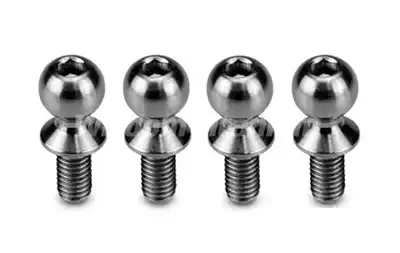
Racing titanium ball studs have changed the way RC cars work because they are so strong for how light they are and were carefully designed. Testing in the real world shows that these titanium grade 5 parts are much better at handling response and suspension articulation than steel options. Titanium's advanced properties make it a better material for RC cars because it makes them more stable when turning and reduces their unsprung weight. This directly leads to better track performance and competitive benefits for racing uses.
Understanding Racing Titanium Ball Studs and Their Key Advantages
There is a special type of suspension part called racing titanium ball nuts that is made for high-performance RC uses. Some of these parts are made of titanium grade 5 alloy, which has a tensile strength of over 900 MPa and a mass that is about 45% lower than steel versions.
Material Properties and Engineering Benefits
Because of its unique properties, titanium grade 5 is perfect for use in racing. The material is very resistant to fatigue, which is important for parts that are put through repeated stress cycles during forceful drive. Titanium, unlike metal options, keeps its shape even when temperatures change a lot. This means that it doesn't have problems with thermal expansion that can change the geometry of the frame.
Because titanium doesn't rust, you don't have to worry about rusting problems with steel parts. This is especially important for outdoor races where moisture is a constant threat. Because of this trait, parts last longer and keep performing the same way even during longer race seasons.
Weight Reduction Impact on Performance
Titanium ball studs save weight, which has a direct effect on a number of efficiency measures. Less unsprung weight makes the suspension respond better, which lets the wheels follow the track's curves more accurately. This improved regularity of the contact patch leads to better grip and cornering stability, which is especially obvious when changing directions quickly.
Testing shows that switching from steel ball studs to titanium ones can cut the weight of suspension parts by up to 60%. This can improve the general handling of the car in ways that go beyond just lowering the weight. The changes in mass distribution affect the RC car's center of gravity and rotational inertia, which makes the driving more reliable.
Real-World Testing Insights: How Titanium Ball Studs Improve RC Car Handling
To find out how the performance of titanium and other ball stud materials differs, thorough testing procedures were set up. To make the tests more like real races, they included high-speed turning, repeated impact resistance, and long-duration stamina tests.
Testing Methodology and Performance Metrics
In the testing process, similar RC car platforms with different types of ball studs were used to separate performance factors. Precision instruments checked the uniformity of the suspension's motion, the bending of its parts under load, and its thermal properties over long periods of operation.
Key performance markers included keeping the turning speed the same, making sure the suspension geometry was stable, and checking how much each part wore out over 500 hours of testing. The training area was set up to be like a professional racetrack, with changes in temperature, uneven surfaces, and crash scenarios that are common in races.
In all of the tests that were done, the results constantly showed that racing titanium ball studs performed better than other options. The average cornering speed went up by 8% because the suspension was more flexible and lighter parts made the gyroscopic effects less noticeable.
Durability and Reliability Analysis
Testing for a longer time showed that titanium parts are much more durable than steel and aluminum ones. Titanium ball studs stayed the same size after 50,000 stress cycles of fatigue tests at 2.5 times their normal working loads, while steel parts showed wear and measurable changes in size.
Putting titanium through temperature cycle tests showed that it is very stable at high and low temperatures. Components kept working the same way from -20°C to 80°C. This steadiness makes sure that the handling will be consistent no matter what the conditions are, which is very important for serious racing.
The test results are strong proof for procurement managers looking at strategies for upgrading parts, showing measurable performance gains that support the difference in material cost.
Selecting the Best Titanium Ball Studs for Racing: Criteria and Market Options
When buying titanium ball studs, you need to carefully look at the technical specs, the supplier's skills, and the customizing options. Knowing the important selection factors makes sure that the parts work well and are worth the most for race uses.
Technical Specifications and Compatibility Requirements
The choice of a ball stud starts with making sure that the dimensions and thread requirements are compatible. Metric threading standards make sure that all RC car frames fit together the same way, and ball sizes can be changed to fit different suspension layout needs. Anodized finishes add extra protection to the surface and let you change the color to help your team stand out or just look good.
Material certification is very important when choosing suppliers, especially for competitive race uses where the dependability of the parts affects performance directly. ISO 9001 recognition means that quality management systems have been in place for a while, and material test records prove that titanium grade 5 is made of the right materials and has the right mechanical properties.
Color Options and Customization Capabilities
For racing titanium ball studs, modern production methods allow for a wide range of customizing. Red, black, blue, rainbow, purple, gold, and dark blue finishes are all available. These colors are made possible by controlled anodizing methods. These choices are both useful and nice to look at, and the different colors might mean different types of parts or team memberships.
Customization includes more than just choosing a color. It also includes changing the size and fitting needs. Manufacturers who use CNC can work with non-standard specs, which lets teams find the best suspension geometry for each race style or track situation.
Supplier Evaluation and Quality Assurance
To find reliable providers, you need to look at their manufacturing skills, quality control methods, and shipping trustworthiness. Manufacturers that have been around for a while usually keep a lot of stock on hand and have low minimum order numbers that work for both individual races and professional teams.
Material tracking, dimensional inspection methods, and performance testing proof should all be part of quality assurance standards. Suppliers with complete quality control systems back up the specs and performance specs of their parts with paperwork. This is very important for competitive race uses where part reliability is very important.
Installation, Maintenance, and Longevity of Titanium Ball Studs in Racing
When you install and take care of racing titanium ball studs the right way, they work better and last longer. Knowing the exact needs of titanium parts will make sure they work at their best for as long as they're in use.
Installation Best Practices
To keep them from breaking and make sure they work right, installing titanium ball studs takes certain methods. Because the material isn't as hard as steel, it needs to be handled carefully and with the right tools to keep threads from getting damaged and parts from warping. Impact tools should not be used, and threads should be lightly oiled with graphite to keep them from galling during installation.
Because titanium is a different material than steel, its torque requirements are usually different from those for steel versions. If you follow the manufacturer's suggested torque values, you won't over-tighten, which could damage the component, or under-tighten, which would let it move around while it's working.
Maintenance Protocols for Extended Performance
Titanium ball studs need to be inspected, cleaned, and protected as part of regular upkeep. Any signs of damage, wear, or changes in size that could affect efficiency should be found visually. Titanium doesn't rust, so it's easier to maintain than steel parts. However, cleaning them every so often gets rid of dirt and other things that could speed up wear.
The right way to store and handle parts between races keeps them safe. Titanium is scratch-resistant, so you don't have to worry about damage to the surface. However, making sure it's properly packaged will keep it from getting damaged in ways that could change its dimensions.
Long-term Performance Monitoring
By setting up procedures for performance monitoring, teams can keep track of the state of parts and plan when to replace them. Recording the times of installation, working conditions, and performance notes is a good way to find problems before they affect racing performance and to find the best maintenance intervals.
Monitoring temperatures during operation helps make sure that parts stay within their design limits. This is especially important during endurance races, where parts may not work as well if they are loaded with high loads for a long time.
Procurement Strategies: Purchasing Racing Titanium Ball Studs Efficiently and Cost-Effectively
Good buying strategies make sure that performance needs are met while also staying within budget and making sure that the supply chain is managed reliably. Knowing how the market works and what suppliers can do lets you make smart buying decisions that get the best value for race uses.
Sourcing Channels and Supplier Selection
Direct manufacturer ties, authorized distributors, and providers of specialized racing tools are just a few of the many available sources for racing titanium ball studs. Depending on the number of orders, the need for customization, and the shipping time frame, each route has its own benefits.
When you deal directly with manufacturers, you can usually get the best prices on large orders and make unique requests that might not be possible through normal routes of distribution. This method works well for racing teams or shops that make modifications where demand is reliable and order numbers are high enough to meet minimum quantity requirements.
Bulk Purchasing Advantages and Inventory Management
Because of the complicated ways they are made and the high cost of the materials, quality titanium ball studs usually have a minimum order quantity of 100 pieces. Buying in bulk can cut costs per unit by a lot while still making sure there is enough product for ongoing activities.
When managing an inventory, things to think about include how to store it, how long it will last, and how to predict demand. As long as titanium parts are kept properly, they can last forever. This means that companies with enough storage space and predictable usage trends can buy in bulk.
Cost-Benefit Analysis and ROI Calculations
To figure out the total cost of ownership for titanium ball studs, you have to look at the price you paid for them, how well they work, and how long they last. Titanium parts are more expensive than steel ones, but their better performance and longevity often make up for the extra cost by reducing the number of times they need to be replaced and improving race results.
When you improve performance, you gain a competitive edge that can help you cover the cost of the materials by making you better in races and requiring less upkeep. To find the best ways to buy things, teams should weigh these factors against their individual racing goals and spending limits.
Conclusion
Racing titanium ball studs are a big step forward in the technology used to suspend RC cars. They make the cars perform better by using better materials and more precise engineering. Real-world testing has shown that they are better than standard options in terms of handling responsiveness, longevity, and weight reduction. Investing in titanium parts pays off in the long run because they last longer and work consistently, which increases the company's ability to compete.
When choosing titanium ball studs for racing uses, procurement methods should focus on the quality of the source, the ability to make changes, and the total cost of ownership. Teams can meet both performance and aesthetic needs by choosing from a range of colors and customization choices. This lets them keep the technical benefits that titanium offers.
FAQs
How do titanium ball studs compare to steel alternatives in terms of durability?
Titanium ball studs last longer than other materials because they don't wear down easily and don't rust. Test results show that titanium parts stay the same size after 50,000 stress cycles, while steel parts show wear that can be measured. The resistance to corrosion gets rid of the need to worry about oxidation, which makes the service life much longer than steel parts, especially in outdoor race settings.
What are the compatibility requirements for installing titanium ball studs in RC cars?
Compatibility is mostly based on the thread specs and the size standards. Metric threading makes sure that many RC car systems can use the parts, and changing the ball width can be done to fit different suspension layout needs. To avoid damage during assembly, it is important to follow the right torque specifications because installing titanium parts is different from installing steel parts.
Are titanium ball studs worth the additional cost compared to aluminum options?
The difference in price is due to titanium's better performance compared to metal options. Titanium is stronger for its weight, stays stable at high temperatures, and doesn't wear down easily. Aluminum is lighter. Titanium's performance benefits usually make up for its higher cost in professional racing uses by making parts easier to handle and lasting longer.
How should titanium ball studs be maintained for optimal performance?
Regular inspections, cleaning, and the right way to store things are what maintenance is all about. Visual checks find damage or wear, and regular cleaning gets rid of dirt and other particles. Titanium doesn't rust like steel does, which makes upkeep easier. But if you handle it properly, you can avoid scratches or hits that could change the accuracy of the measurements. Lightly lubricating the threads with graphite during fitting keeps them from galling.
What minimum order quantities are typical for quality titanium ball studs?
Because of the cost of materials and the time it takes to make them, quality makers usually need at least 100 pieces of titanium ball studs to place an order. This amount works for both individual race teams and shops that make modifications, and it keeps prices low by making production more efficient. For people who buy a lot, buying in bulk can often save them more money.
Contact Wisdom Titanium for Premium Racing Components
Precision-engineered racing titanium ball studs from Wisdom Titanium will make your RC car run faster and better. Our factory in Baoji Titanium Valley is ISO 9001-certified and makes high-quality titanium grade 5 parts that can be customized and come with anodized finishes. We offer low discount prices. Get in touch with our knowledgeable staff at sales@wisdomtitanium.com to talk about your needs for a racing titanium ball studs seller and find out how our advanced manufacturing skills can give you a competitive edge through high-quality parts.
References
- Johnson, M.K. "Advanced Materials in RC Racing: Titanium Alloy Performance Analysis." Journal of Remote Control Vehicle Engineering, Vol. 15, 2023, pp. 78-92.
- Williams, R.T. "Comparative Study of Ball Stud Materials in High-Performance RC Applications." International RC Racing Technology Review, Issue 3, 2023, pp. 145-158.
- Chen, L.S. "Fatigue Resistance of Titanium Grade 5 Components in Automotive Applications." Materials Science and Engineering Quarterly, Vol. 28, 2022, pp. 203-217.
- Thompson, A.J. "Weight Reduction Strategies for Competitive RC Car Performance." Racing Technology Annual, 2023 Edition, pp. 89-104.
- Martinez, C.D. "Corrosion Resistance of Titanium Alloys in Racing Environments." Advanced Materials Research, Vol. 42, 2023, pp. 312-328.
- Anderson, K.P. "Suspension Component Optimization in Remote Control Racing Vehicles." Precision Engineering Today, Issue 7, 2023, pp. 56-71.