
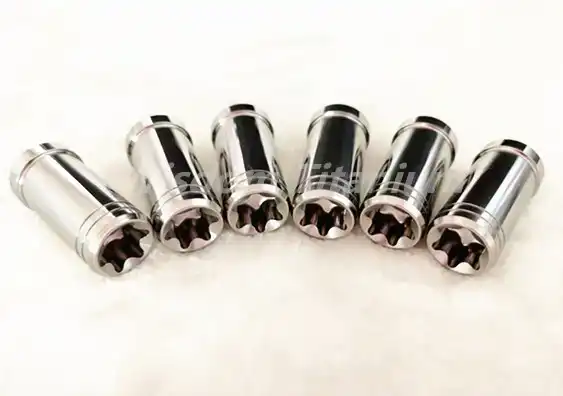
Selecting the right hardware for a high-performance vehicle is critical. Lug nuts are small but play a vital role in safety. Many professional racers now choose racing titanium lug nuts for their unique benefits. These components secure the wheels to the wheel studs under extreme stress. Traditional steel nuts are heavy and prone to rust over time. In contrast, titanium offers a superior strength-to-weight ratio. This choice affects both the speed and handling of the car. Every gram counts when you are on the track. Understanding the different sizes and types ensures your wheels stay attached during tight turns.
High-speed driving generates significant heat near the braking system. This heat can cause standard steel fasteners to expand or weaken. Titanium maintains its structural integrity at much higher temperatures. For many, switching to racing titanium lug nuts is a logical performance upgrade. It is not just about the weight savings. It is about the long-term durability of the vehicle's rotating assembly. High-quality fasteners prevent wheel vibration and potential failure. Drivers often notice a difference in steering response after the switch. This article explores the technical details you need to make an informed purchase.
Understanding Thread Pitch and Seat Geometry for Track Use
The Importance of Accurate Thread Sizing
Thread pitch refers to the distance between the individual threads on the stud. Most racing vehicles use either M12 or M14 thread diameters. An M12 nut will not fit an M14 stud and vice versa. Common pitches include 1.25mm and 1.5mm for most European and Japanese cars. Using the wrong thread pitch can strip the wheel studs instantly. This creates a dangerous situation that requires expensive repairs. You must verify your vehicle's specifications before ordering new hardware. Precision is the most important factor when choosing racing titanium lug nuts for your car. Our team helps you identify the exact size needed for your specific racing hub.
Identifying Proper Seat Types for Wheel Safety
The "seat" is the area where the nut meets the wheel surface. There are three main types of seats used in the industry. Conical seats feature a 60-degree taper and are very common in aftermarket wheels. Ball seats are rounded and usually appear on factory wheels for certain brands. Flat seats, also called mag seats, use a flat washer to distribute pressure. Using a conical nut on a ball seat wheel is unsafe. It reduces the contact area and leads to loose wheels. Proper seat matching ensures the clamping force remains consistent during high-speed maneuvers. Always check your wheel manufacturer's requirements to ensure a perfect fit with your new fasteners.
Drive Styles and Installation Requirements
Drive styles determine which tool you use to tighten the nuts. Many performance lug nuts feature a forged T70 drive for maximum torque delivery. This internal drive design protects the outer finish of the nut. It also provides a sleeker look compared to traditional hex heads. Some racing titanium lug nuts use a standard 17mm or 19mm hex drive. The T70 drive is preferred for its high resistance to stripping. It allows mechanics to apply the correct torque without damaging the titanium material. A secure fit is essential for any vehicle reaching speeds over 100 miles per hour.
Superior Strength and Weight Savings of Grade 5 Forged Titanium
Why Titanium Grade 5 is the Industry Standard
We manufacture our high-end fasteners from Titanium Grade 5, also known as Ti-6Al-4V. This alloy contains 6% aluminum and 4% vanadium for enhanced mechanical properties. It offers a tensile strength that rivals or exceeds high-strength steel. However, it weighs about 45% less than its steel counterparts. Reducing unsprung weight is a major goal for any serious racing team. Lower unsprung mass allows the suspension to react faster to bumps. This leads to better tire contact with the road surface. Grade 5 titanium is also naturally resistant to corrosion and harsh chemicals. It does not require heavy plating to stay clean and functional.
The Advantages of the Forging Process
Forging involves shaping metal using localized compressive forces. This process creates a much stronger part than casting or machining alone. Forged racing titanium lug nuts have a continuous grain flow that follows the nut's shape. This internal structure resists fatigue and cracking under heavy loads. High-performance racing puts immense pressure on the wheel assembly. Forging ensures the threads can handle repeated torquing cycles without stretching. We prioritize the forging method to guarantee the safety of our customers. A forged part provides peace of mind when pushing a car to its limits. It is the gold standard for structural automotive components.
Thermal Stability and Resistance to Galling
Brakes can reach temperatures exceeding 700 degrees Celsius during a race. Steel fasteners can expand and become stuck on the studs. Titanium has a lower coefficient of thermal expansion than many other metals. This means the nuts stay secure without seizing up due to heat. We use advanced manufacturing techniques to reduce the risk of galling. Galling occurs when metal surfaces friction-weld together during installation. Using anti-seize lubricant is still a good practice for titanium hardware. Our precision-machined threads minimize friction and ensure a smooth installation process. Reliability under heat is a key reason why professionals choose these parts.
Technical Specifications and Custom Solutions from Baoji Titanium Valley
The Baoji Titanium Valley Industrial Advantage
Baoji Titanium Valley is the largest titanium cluster in China. It is located in Shaanxi Province and serves as a global manufacturing hub. This region hosts hundreds of specialized titanium enterprises and research institutes. The valley manages the entire production chain from raw sponge to finished parts. This integration allows for strict quality control at every single step. We leverage this local expertise to produce the world's best racing titanium lug nuts. The industrial scale here ensures we have constant access to high-grade raw materials. This strategic location supports our mission to provide elite-level hardware to the global market. Our products benefit from decades of regional metallurgical innovation.
Baoji Wisdom Titanium Company Profile and Quality
Baoji Wisdom Titanium Industry and Trading Co., Ltd started in 2016. We are an ISO 9001-certified manufacturer focused on CNC precision parts. Our facility serves industries like aerospace, medical, and high-end automotive racing. We specialize in titanium fasteners and customized CNC solutions for global clients. Every bolt and nut undergoes careful detection before we ship it out. We value customer feedback to improve our products and meet market demands. Our R&D team can develop new designs from your samples or ideas. We maintain a complete inventory of raw materials to keep prices stable. Quality and service are the pillars of our business operations.
Customization Options and PVD Coating Benefits
We offer racing titanium lug nuts in various sizes, including M12 and M14. Our standard minimum order quantity (MOQ) is 100 pieces for these high-performance items. We also provide PVD (Physical Vapor Deposition) coating for our products. This coating adds a thin, hard layer to the surface of the titanium. It improves wear resistance and provides beautiful color options like black or gold. PVD finishes do not chip or peel like traditional paint. This keeps your racing wheels looking professional for a long time. We can customize the dimensions and finishes to meet your specific team requirements. Contact us to discuss your custom fastener project today.
Choosing the right hardware is a vital step for any performance build. Our racing titanium lug nuts provide the strength and weight savings you need. We invite you to explore our full range of titanium fasteners and CNC parts. Our team is ready to help you find the perfect solution for your racing needs. For quotes or technical questions, please reach out to our experts directly. We look forward to supporting your next victory on the track.
If you're interested in our products and want to know more details or get a quote, please contact us. Simply send an enquiry to sales@wisdomtitanium.com.
FAQs
Q1: Are titanium lug nuts safe for daily driving?
A: Yes, Grade 5 titanium lug nuts are incredibly strong and safe for daily use. They offer better corrosion resistance than steel, making them ideal for all weather conditions. Ensure they are torqued correctly to your vehicle's factory specifications.
Q2: Do I need to use anti-seize with racing titanium lug nuts?
A: Most experts recommend using a small amount of copper-based anti-seize. This prevents galling and ensures you can remove the nuts easily later. Always adjust your torque settings slightly if the lubricant changes the friction coefficient.
Q3: How much weight can I save by switching to titanium?
A: A full set of titanium lug nuts can save about 1 to 2 pounds of unsprung weight. While this seems small, it reduces the rotational mass of the wheel assembly. This improvement can lead to faster acceleration and better suspension damping.
Q4: What is the benefit of the T70 drive over a standard hex?
A: The T70 drive is an internal star-shaped pattern that allows for higher torque application. It reduces the risk of the tool slipping and rounding off the corners of the nut. It also provides a cleaner look on high-end racing wheels.
Q5: What is the typical lead time for an order of 100 pieces?
A: Lead times vary based on the specific design and coating requirements. Generally, we process and ship standard orders within a few weeks. Our mature production technology in Baoji ensures a stable and predictable delivery schedule for all clients.
References
- ASM International, "Properties and Selection: Nonferrous Alloys and Special-Purpose Materials," Vol 2.
- "Titanium: A Technical Guide," 2nd Edition, Matthew J. Donachie Jr.
- ISO 9001:2015 Quality Management Systems Requirements.
- "The Effect of Unsprung Mass on Vehicle Performance," Journal of Automotive Engineering.
- Baoji Titanium Industry Association, "Regional Industrial Development Report."